The Roof Structural Inspection: After Heavy Snow or Wind
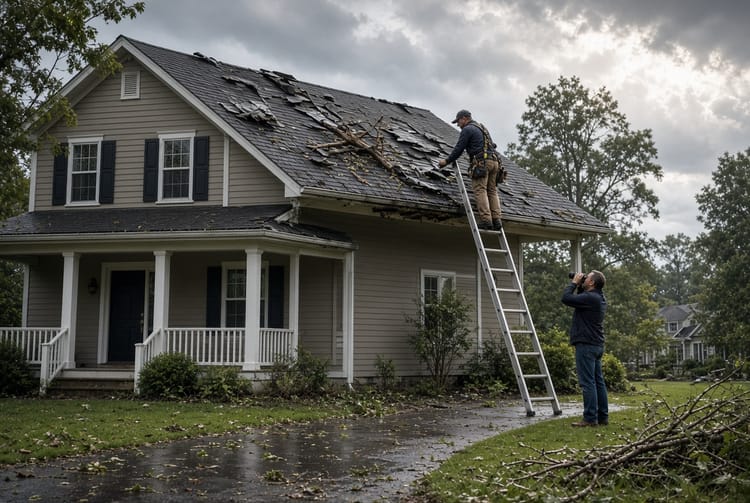
Severe weather events leave more than just temporary messes behind. Heavy snow accumulation and high winds place extraordinary stress on a home’s most critical protective layer—the roof. What begins as a picturesque winter scene or a blustery day can quietly evolve into structural concerns that compromise safety, comfort, and long-term property value. A roof structural inspection after such events is not merely a precaution; it is an essential safety check that identifies hidden vulnerabilities before they escalate into costly or dangerous problems.
Call Now for Expert Insulation & Sealing Service
This comprehensive guide walks homeowners through the precise process of evaluating a roof’s integrity following intense snow or wind. You will learn exactly what warning signs demand attention, the ideal timing for inspections, and the clear thresholds that signal the need for professional intervention. The tone throughout remains practical, measured, and reassuring: most issues, when caught early, are fully manageable with the right expertise.
Understanding the Forces at Work
Snow does not simply sit on a roof—it accumulates weight. Fresh powder may appear light, yet as temperatures fluctuate, it densifies into heavy, water-laden mass. A single foot of dense snow can exert dozens of pounds of pressure per square foot. Wind, meanwhile, creates uplift forces that pry at edges, loosen fasteners, and twist framing members. Together, these elements test every connection point from the ridge to the foundation.
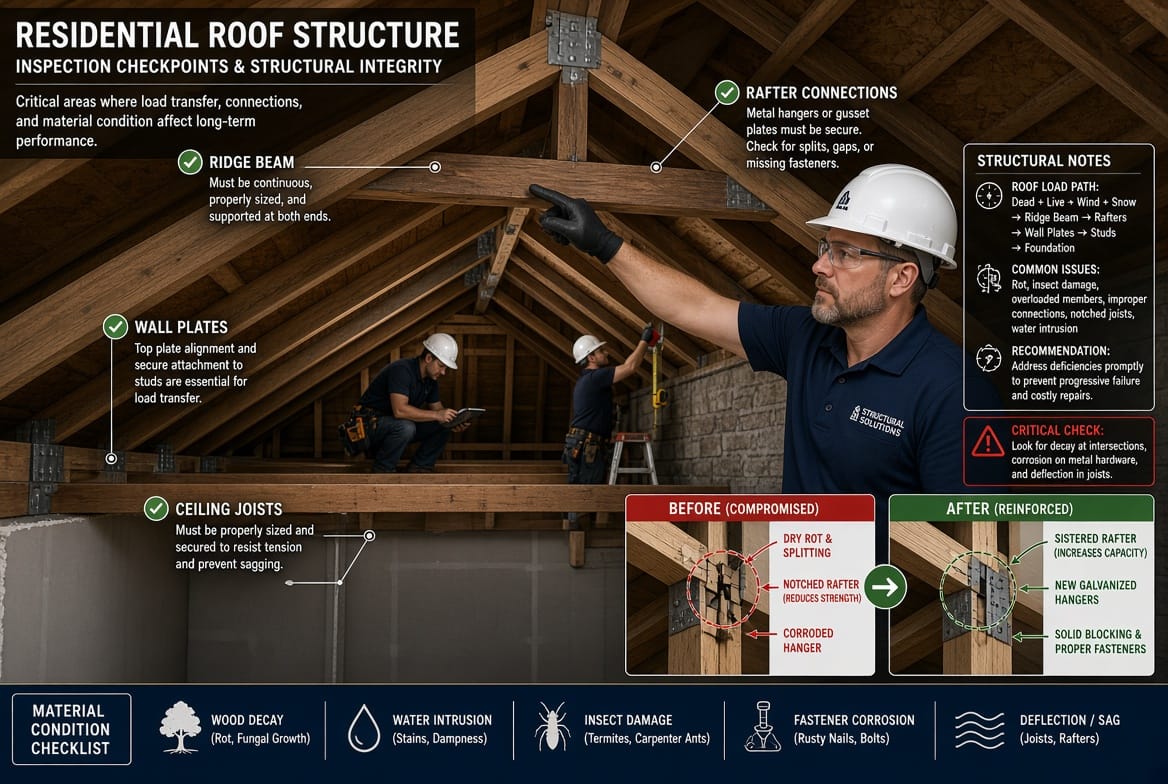
The structural system of a roof—rafters, trusses, sheathing, and supporting walls—must distribute these loads evenly. When one component yields, stress transfers unevenly, producing the visible and invisible indicators that an inspection is designed to uncover. Recognizing these dynamics allows homeowners to approach the post-storm period with informed confidence rather than anxiety.
Why Immediate Attention Matters
Delaying evaluation after heavy snow or wind invites progressive deterioration. Moisture intrusion accelerates wood rot, metal corrosion, and insulation degradation. Subtle shifts in alignment can place continuous pressure on interior finishes, leading to cosmetic and functional damage far beyond the roof plane itself. Early detection preserves both the structure and the peace of mind that comes with knowing the home remains secure.
A professional roof structural inspection also documents conditions for insurance purposes when applicable, creating a clear record of storm-related impacts. More importantly, it restores the protective envelope that shields everything beneath it.
Key Visual Indicators to Examine
A thorough safety check begins with systematic observation from both exterior and interior vantage points. Focus on three primary categories of evidence that reliably signal compromised integrity.
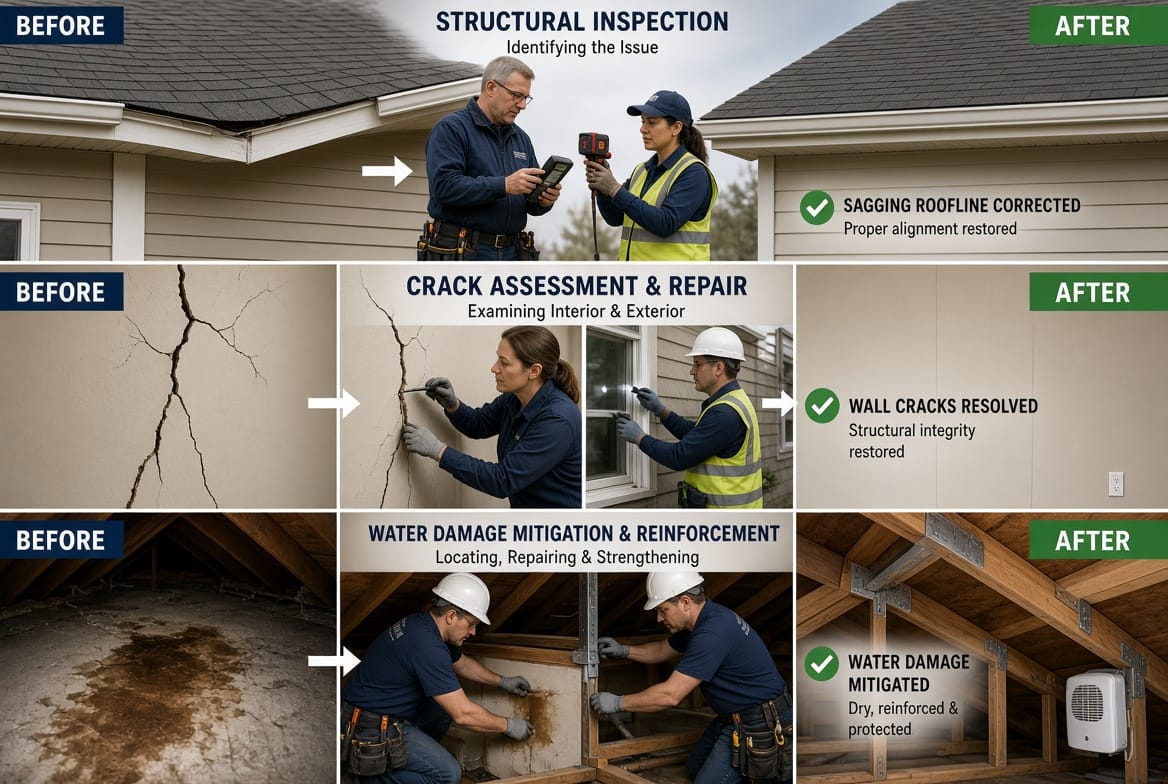
Sagging Rooflines
A straight, even ridge and consistent plane across the roof surface indicate healthy load distribution. Sagging rooflines appear as dips, waves, or noticeable downward curves, especially between supports or along valleys. These deformations often develop gradually under sustained snow weight or after sudden wind-driven shifts. View the profile from ground level at multiple angles and from neighboring properties if possible. Any deviation from a true horizontal or designed slope warrants closer scrutiny.
Cracks in Walls
Structural movement rarely confines itself to the roof. Look for cracks in walls, particularly vertical or diagonal fractures near ceilings, around window and door frames, and at the junctions where interior walls meet exterior ones. Hairline cracks may result from normal settling, yet those that widen, lengthen, or appear suddenly after a storm frequently trace back to roof-frame stress transferring downward. Exterior masonry or stucco surfaces can reveal corresponding patterns that confirm the connection.
Water Stains
Moisture evidence is among the most straightforward yet critical signs. Water stains on ceilings, upper walls, or attic sheathing appear as discolored rings, streaks, or diffuse patches. Fresh stains following melt or wind-driven rain indicate breaches that allow water to travel along framing members. Even dry historical marks deserve documentation, as they may point to previous vulnerabilities reactivated by new weather stress. In attics, examine the underside of the roof deck for dampness, darkening, or mineral deposits left by evaporating moisture.
Additional supporting clues include displaced shingles or underlayment, gaps at flashing locations, and unusual creaking or movement during high winds. Collectively these observations form a diagnostic picture.
Timing the Inspection Correctly
Perform the initial visual survey as soon as conditions allow safe access—ideally within 24 to 48 hours after the storm subsides and snow or debris no longer pose immediate hazards. Waiting until complete melt can obscure certain clues, while rushing onto an icy surface introduces unnecessary personal risk. Schedule a full professional assessment within the following week if any of the primary indicators appear or if the weather event exceeded regional norms for intensity or duration.
Seasonal patterns also influence priority. Late-winter storms that deliver heavy, wet snow followed by rapid thaw create particularly high risk. Wind events accompanying frontal passages or tropical systems demand equal urgency, especially in exposed or older structures.
Conducting a Safe Preliminary Check
Homeowners can perform a limited exterior and interior walkthrough without specialized equipment, provided safety remains paramount. Never climb onto a roof that retains ice, snow, or instability. Instead:
- Observe the entire roofline silhouette from ground level at dawn or dusk when shadows accentuate irregularities.
- Walk the perimeter noting any debris, displaced materials, or grounding of downed branches that may have struck the structure.
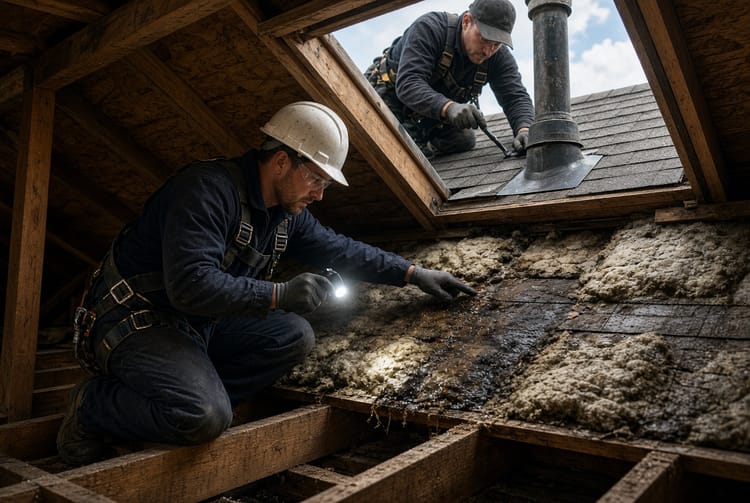
- Enter the attic with a bright flashlight, scanning for daylight penetration, damp insulation, or shifted supports.
- Document findings with dated photographs from consistent angles for comparison over time.
These steps establish a baseline and help prioritize professional resources. They do not replace a comprehensive evaluation performed by trained personnel equipped with moisture meters, structural levels, and access tools.
Distinguishing Minor Issues from Serious Concerns
Not every mark or irregularity signals catastrophe. Minor surface wear, isolated loose fasteners, or cosmetic staining often respond to routine maintenance. Serious concerns emerge when multiple indicators coincide—sagging paired with wall cracks, or active water intrusion accompanying framing movement. Persistent deflection under residual snow load, audible structural noise, or doors and windows that suddenly bind also elevate priority.
An authoritative assessment weighs these factors against the age of the roof, original construction quality, and history of prior repairs. The goal is clarity: reassurance when conditions remain sound, and decisive action when intervention protects the larger investment.
The Professional Inspection Process
When warning signs appear or when the storm’s severity exceeds ordinary experience, engage qualified structural roofing specialists. A complete professional service typically includes:
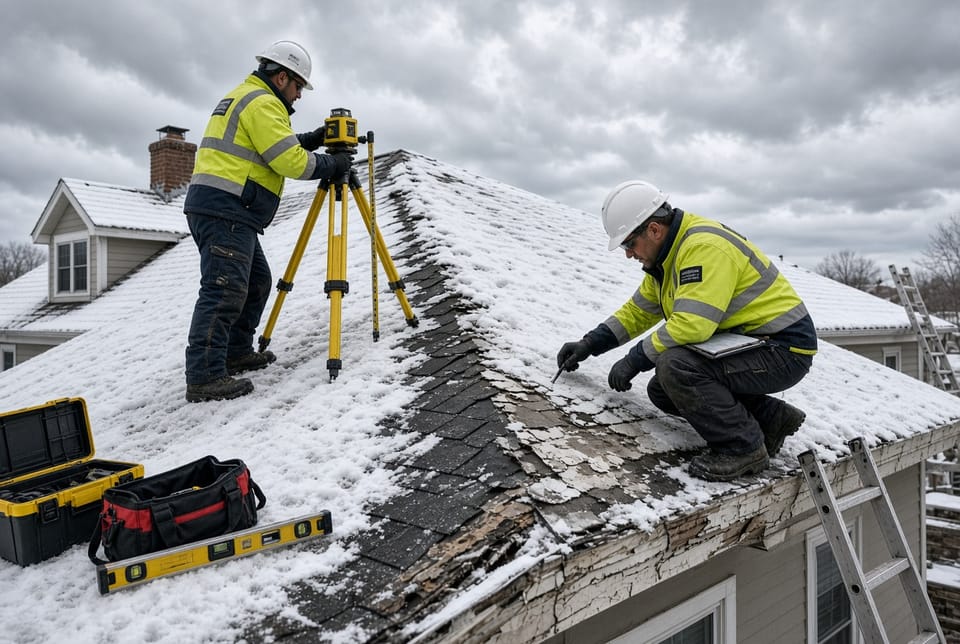
- Exterior examination of the roof covering, flashing, penetrations, and drainage systems.
- Interior attic or crawl-space evaluation of framing members, connections, and sheathing.
- Measurement of deflections and alignment using calibrated instruments.
- Moisture mapping and identification of pathways for water entry.
- Written documentation with photographs and prioritized recommendations.
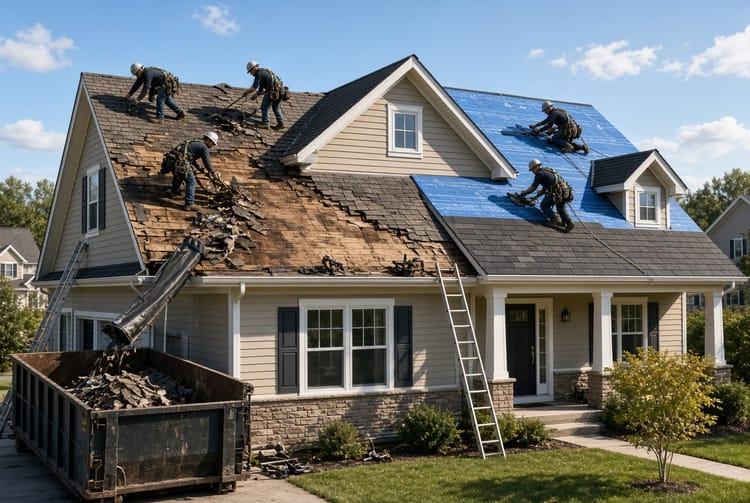
Technicians trained in post-storm protocols understand the difference between weather-related stress and unrelated aging. Their findings guide targeted repairs that restore load-bearing capacity without unnecessary replacement.
Long-Term Benefits of Regular Post-Storm Vigilance
Homes that receive consistent attention after severe weather demonstrate measurably greater resilience. Framing remains aligned, water barriers stay intact, and interior environments avoid the secondary effects of hidden moisture. Insurance claims, when needed, proceed more smoothly with contemporaneous evidence. Property value holds more firmly when prospective buyers or appraisers encounter a documented history of proactive care.
Beyond the tangible, the practice cultivates a mindset of stewardship. Rather than reacting to emergencies, owners anticipate and neutralize risks, preserving the sanctuary that a well-maintained roof provides.
Practical Preparation for Future Events
While no structure is immune to extreme weather, several preparatory measures reduce vulnerability. Ensure gutters and downspouts remain clear so meltwater exits efficiently. Maintain adequate attic ventilation and insulation to moderate temperature differentials that encourage ice formation. Address minor deficiencies promptly rather than allowing them to compound under subsequent loads. Keep emergency contact information for structural inspectors readily available so response time stays minimal when needed.
These habits transform the post-storm period from a source of worry into a routine checkpoint within a broader maintenance rhythm.
Reassurance Through Knowledge and Action
The appearance of sagging, cracks, or stains after heavy snow or wind can feel unsettling. Knowledge converts that reaction into productive steps. Most roofs, when inspected and addressed in a timely manner, continue to perform their protective role for decades. The combination of careful observation, appropriate timing, and professional partnership ensures that temporary weather forces do not become permanent liabilities.
Homeowners who treat the roof structural inspection as a standard safety protocol after severe weather position themselves for lasting security. The process is straightforward, the indicators are recognizable, and the support of experienced technicians is readily accessible.
Get a Professional Roof Structural Assessment – Call Now!