The Roof Solar Panel Flashings: Integrating Panels Without Leaks
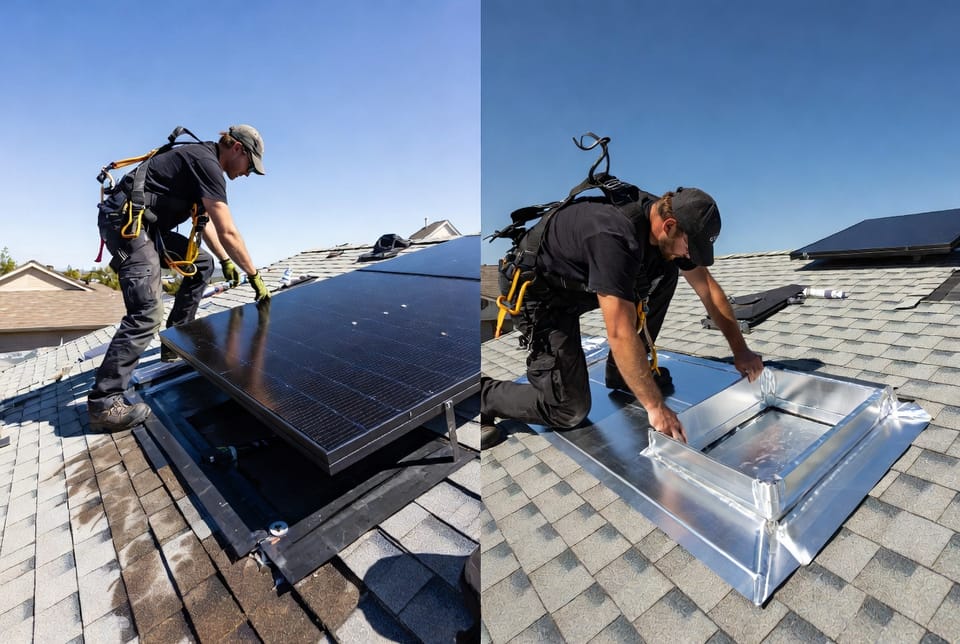
Solar energy continues to transform American homes, delivering clean power and significant utility savings. Yet many homeowners hesitate because of one valid concern: roof penetrations. When solar panels must attach directly through your existing roof, the risk of leaks becomes real—unless the installation uses proper roof solar panel flashings
Protect Your Roof with Expert Solar Flashings – Call Today
At its core, every solar array requires secure mounting points. These attachments penetrate the roof surface, creating potential pathways for water. The solution lies in engineered flashings that redirect water around each penetration while maintaining the roof’s structural integrity and warranty. When performed by trained professionals, this integration protects your home for decades.
Understanding Roof Penetrations for Solar Installations
Roof penetrations occur whenever a mounting foot, rail, or bracket passes through the roofing material to reach the underlying deck or rafters. On a typical residential system, you may have 20 to 40 such penetrations depending on array size and layout. Each one represents a potential weak point if not addressed correctly.
Water naturally flows downhill. Without proper sealing, even a small gap can allow rain, snow melt, or wind-driven moisture to enter the attic or living space. Over time, this leads to rot, mold, insulation damage, and costly repairs. Proper flashings eliminate this risk by creating a continuous waterproof barrier that channels water away from the penetration and back onto the roof surface.
Professional installers evaluate roof pitch, material type, climate zone, and local building codes before choosing the flashing method. This attention to detail ensures your solar investment enhances rather than compromises your home’s protection.
How Solar Panel Mounts Attach Through Roofing
Solar mounts typically use rails that support the panels. These rails connect to the roof via specialized brackets. The attachment hardware must penetrate the shingles, underlayment, and sometimes the deck itself to achieve secure hold against wind uplift.
Common attachment methods include:
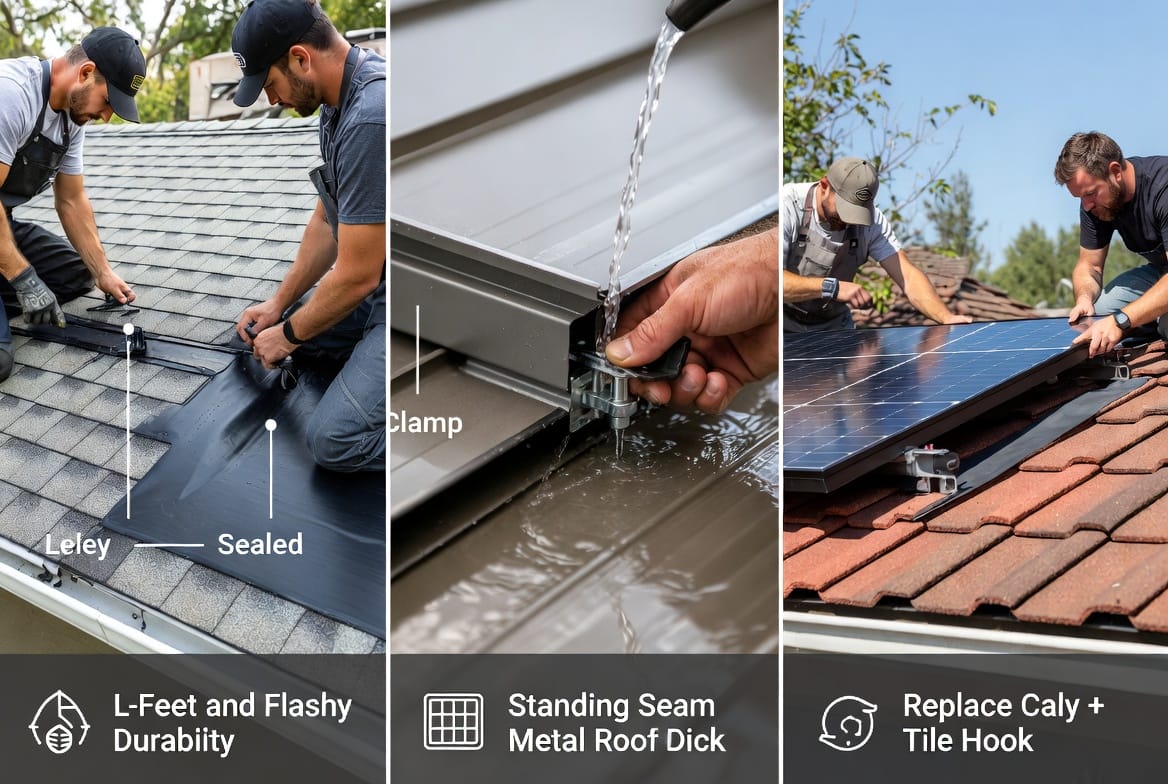
- L-foot brackets bolted through shingles into rafters
- Tile hooks that replace or slide under existing tiles
- Standing seam clamps that grip metal seams without drilling
Each method requires a custom flashing solution tailored to the roof type. The flashing material—usually aluminum, stainless steel, or coated metals—must resist corrosion, thermal expansion, and UV degradation for 25+ years.
Why Proper Flashings Are Non-Negotiable
Roof solar panel flashings do more than cover holes. They form a multi-layer waterproof system. A high-quality flashing kit includes a base plate, counter-flashing, sealant tape, and sometimes a rubber boot or pipe boot for additional protection.
When installed correctly, the flashing overlaps the roofing material in a stepped pattern, similar to how roof valleys and chimneys are waterproofed. This design ensures water cannot back up under the shingles or tiles. Professional crews test every penetration with controlled water flow before leaving the job site, guaranteeing zero leaks from day one.
Homeowners often ask whether DIY kits can achieve the same result. The answer is clear: professional integration accounts for variables that kits cannot. Factors like exact rafter spacing, roof age, and micro-climate conditions demand on-site expertise.
Types of Flashings and Their Best Applications
Different roofing materials require different flashing approaches. Here’s how professionals match the solution to your roof:
- L-foot with flashing (asphalt shingles or composites): The L-foot is bolted through the roof deck. A large aluminum flashing base slides under the upper shingles and over the lower ones, creating a shingle-like overlap. Butyl tape and roofing sealant complete the seal.
- Tile hooks or replacement mounts (clay or concrete tiles): Instead of drilling through tiles, professionals remove one tile and install a specialized hook or replacement mount that matches the tile profile. The flashing integrates seamlessly beneath surrounding tiles.
- Standing seam clamps (metal roofs): No penetration is required. Clamps grip the raised seams, and a low-profile flashing skirt diverts water around the clamp base.
Each option maintains the roof’s original waterproofing while providing rock-solid panel support.
Risks of Skipping or Improperly Installing Flashings
The consequences of poor flashing installation extend far beyond a simple drip. Water intrusion can void your roof warranty, damage your solar equipment warranty, and trigger insurance complications. Hidden leaks often go unnoticed until black mold appears or ceilings sag.
In extreme cases, repeated moisture exposure compromises rafters and sheathing, leading to structural concerns that cost tens of thousands to repair. Professional installers eliminate these risks by following manufacturer-tested protocols and local code requirements.
The Professional Advantage: Integrated Installation
Choosing a certified team for your solar project means every penetration receives the same meticulous care your roof received when it was new. Installers use manufacturer-approved components, apply the exact torque specifications, and document each step with photographs for your records.
This level of care delivers:
- Peace of mind that your roof remains watertight
- Full preservation of all existing warranties
- Optimal panel performance without vibration or movement
- Compliance with stringent wind and seismic standards
Homeowners who invest in professional integration report zero leak issues even after major storms and hail events.
Step-by-Step Process for Leak-Free Solar Attachment
- Roof assessment – Inspect decking, underlayment, and shingle condition.
- Layout planning – Position mounts directly over rafters for maximum strength.
- Penetration sealing – Install base flashing with generous overlap and sealant.
- Mount attachment – Secure brackets with corrosion-resistant hardware.
- Counter-flashing – Layer upper flashing to shed water completely.
- Final testing – Hose test every penetration before panel placement.
This systematic approach leaves nothing to chance.
Selecting the Right Mounting Option for Your Roof
L-feet with flashing excel on shingle roofs and offer excellent adjustability. Standing seam clamps provide the cleanest, penetration-free solution for metal roofs. Tile replacement mounts preserve the aesthetic and waterproofing of clay or concrete tile systems.
Your installer will recommend the optimal choice after evaluating your specific roof type, age, and solar goals.
Long-Term Protection and Maintenance
Once installed, roof solar panel flashings require minimal upkeep. Annual visual inspections by your solar provider catch any debris buildup or sealant wear long before issues develop. Many systems now include monitoring sensors that alert you to any unexpected moisture.
This proactive approach extends both your roof life and your solar system’s productivity.
Add Solar Without Ruining Your Roof
Your roof is your home’s first line of defense. With expertly engineered roof solar panel flashings and professional integration, you can harness the power of the sun while keeping every square inch of your home protected from the elements.
Don’t leave your roof’s future to chance. Choose integrated installation by specialists who understand both solar technology and roofing science.
Secure your energy independence and protect your home’s most important surface at the same time. The right team makes all the difference.
Go Solar Without Roof Leaks – Get Professional Installation