The Roof Soffit Vents: Maintaining Intake Ventilation
Proper attic ventilation stands as one of the most critical yet frequently overlooked elements of a healthy roofing system. At the heart of effective attic ventilation lies the roof soffit vents, the primary pathway that allows fresh outdoor air to enter the attic space. When these vents function correctly, they create a balanced airflow that regulates temperature and moisture levels year-round. Neglecting them, however, can lead to serious issues that compromise the entire roof structure. This comprehensive guide explains exactly what soffit vents do, how to recognize when they become clogged, and the essential maintenance steps required to keep them performing at their best.
Protect Your Roof Health – Schedule Ventilation Check Now
Maintaining clear soffit vents is not merely a minor upkeep task. It is a fundamental practice that protects your home from costly damage, improves energy efficiency, and extends the lifespan of your roofing materials. By understanding the role of these vents and committing to regular care, homeowners can enjoy greater peace of mind knowing their attic remains a well-ventilated, dry, and temperature-controlled environment.
What Roof Soffit Vents Do
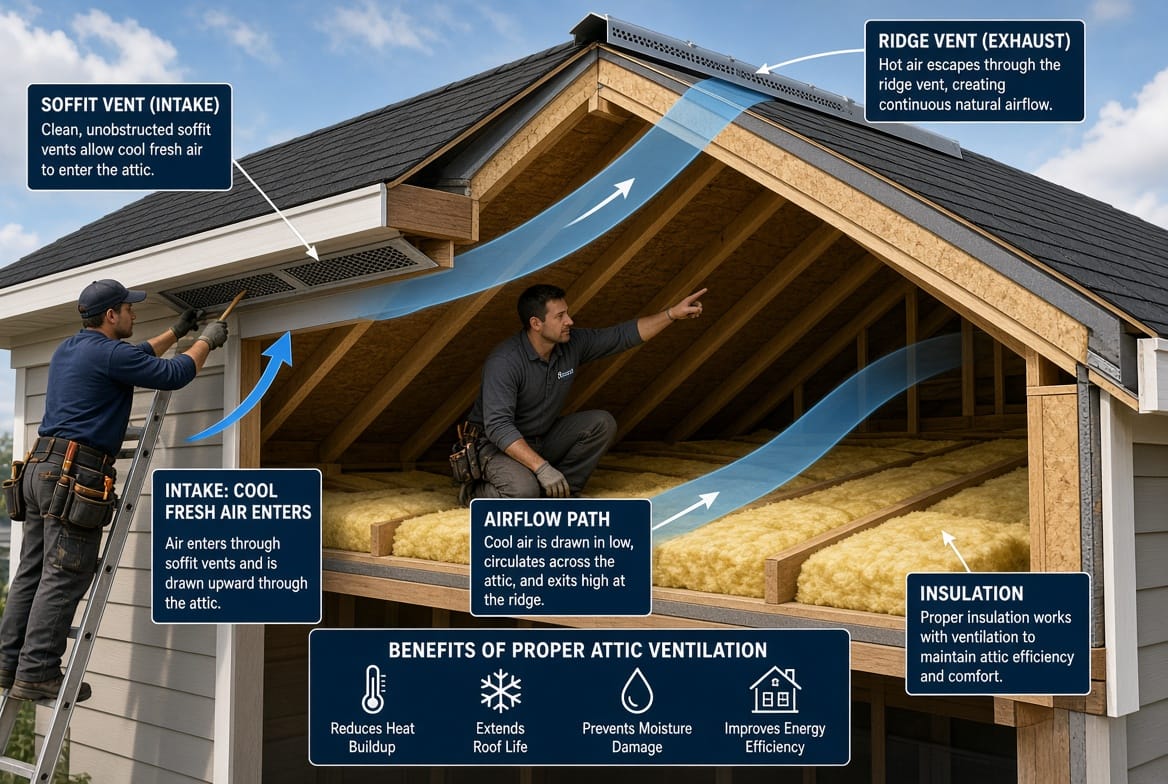
Roof soffit vents are openings installed along the underside of the roof overhang, commonly called the soffit. Their primary purpose is to serve as the intake ventilation points that draw cool, fresh air from outside into the attic. This incoming air then rises naturally and exits through higher exhaust vents such as ridge vents or gable vents, creating continuous circulation.
Without adequate intake through the soffits, the entire ventilation system fails to operate efficiently. Fresh air cannot enter in sufficient volume, which means hot, moist air becomes trapped. Over time this imbalance produces a host of problems ranging from accelerated shingle deterioration to elevated indoor energy costs. The continuous movement of air facilitated by clear soffit vents helps equalize attic temperatures with outdoor conditions, reduces the risk of condensation, and prevents the buildup of excess heat during warmer months.
In colder climates the same airflow is equally vital. Proper intake ventilation keeps the attic closer to outdoor temperatures, which minimizes the chance of snow melting unevenly on the roof surface. When the system works as designed, the roof deck stays cooler and drier, protecting both the structural components and the living spaces below.
The Critical Role of Balanced Intake Ventilation
A healthy roof relies on balanced ventilation—equal amounts of air entering through the soffits and exiting through the upper vents. Soffit vents supply the essential intake half of this equation. When they remain open and free of obstruction, the attic experiences steady air exchange that controls humidity and temperature extremes.
Blocked or insufficient soffit vents disrupt this balance. Air stagnates, moisture accumulates, and temperatures soar or drop unpredictably. The consequences appear gradually but can become severe. Mold growth on the underside of the roof sheathing, warping of wooden rafters, and premature aging of asphalt shingles are common outcomes. In extreme cases the trapped moisture can even migrate into wall cavities, leading to interior damage that is far more expensive to repair than simple vent maintenance.
Homeowners who prioritize clear soffit vents often notice secondary benefits as well. Cooling systems work less hard during summer because the attic does not transfer as much heat downward. Heating systems perform more efficiently in winter because excessive heat loss through the roof is reduced. These efficiency gains translate into measurable savings on utility bills while simultaneously protecting the roof investment.
Common Signs of Clogged Soffit Vents
Recognizing the early indicators of restricted airflow allows timely intervention before damage escalates. Several clear warning signs point directly to clogged or blocked soffit vents.
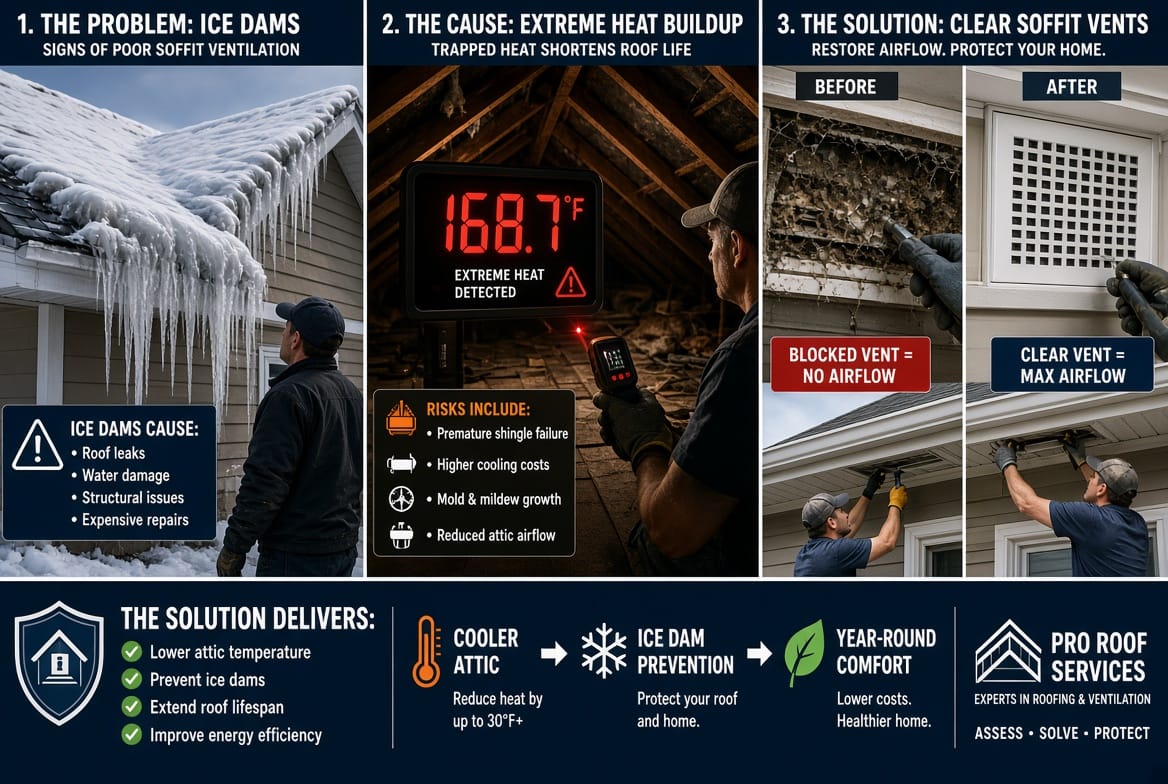
- Ice dams form along the eaves during winter. Warm air trapped in the attic melts snow on the upper roof. The water then refreezes at the colder overhang, creating ridges of ice that force moisture under the shingles.
- An unusually hot attic during summer months signals that hot air cannot escape because intake is limited. Temperatures can climb well above outdoor levels, stressing roofing materials and increasing indoor cooling loads.
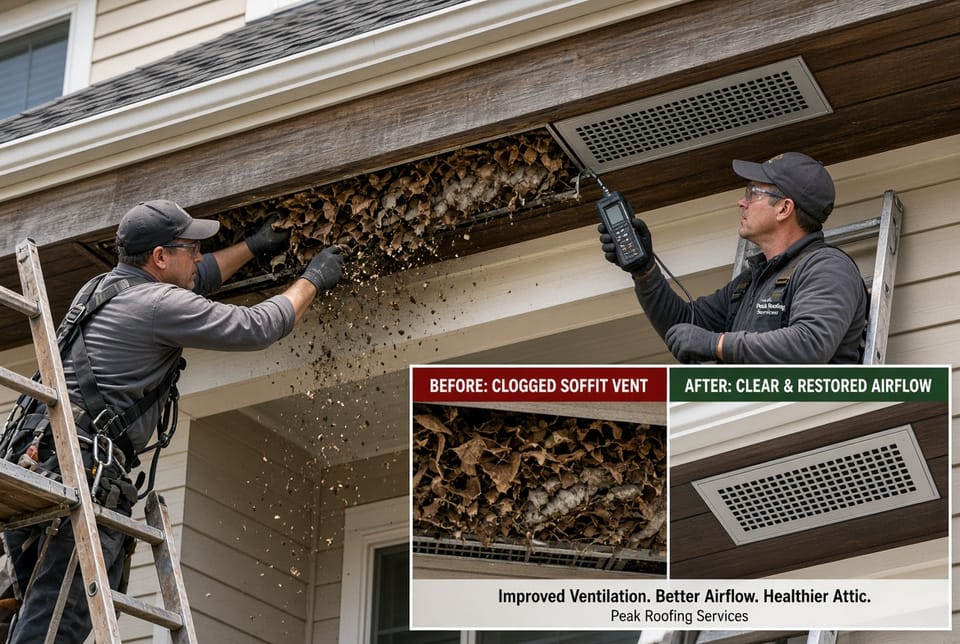
- Visible debris, leaves, or insulation pressing against the vent screens from the attic side indicates physical blockage.
- Condensation or frost on the underside of the roof deck in cold weather shows moisture is not being carried away.
- Musty odors or early signs of mold in the attic further confirm inadequate air movement.
- Higher-than-expected energy bills often accompany poor attic ventilation because the home’s HVAC system compensates for extreme attic conditions.
Any one of these symptoms warrants immediate inspection of the soffit vents. Addressing the problem early prevents the cascade of related roof issues that can develop when ventilation remains compromised.
Why Soffit Vents Become Blocked
Several everyday factors contribute to the gradual clogging of soffit vents. Wind-blown leaves, pine needles, and seed pods easily accumulate against the exterior screens. Birds and small animals sometimes nest in or near the openings, packing materials that restrict airflow. Inside the attic, insulation that has been improperly installed or has shifted over time can cover the vent channels from above, effectively sealing them shut.
Construction dust, pollen, and general outdoor debris further compound the problem in many regions. Over years of service the screens themselves can corrode or become painted over during exterior maintenance, reducing open area. Understanding these common causes helps homeowners schedule preventive checks rather than waiting for visible damage to appear.
Essential Maintenance Steps for Clear Soffit Vents
Keeping soffit vents free of obstruction is straightforward when approached systematically. Begin with a visual inspection of the exterior soffit area. Look for any accumulation of leaves, dirt, or nesting material pressed against the screens. Use a soft brush, vacuum with a brush attachment, or compressed air to remove exterior debris carefully. Avoid high-pressure washing that could force water into the attic or damage the vent components.
Next, examine the vents from inside the attic. Ensure that insulation has not been pushed or blown against the underside of the soffit. Many modern installations include baffles or rafter vents that create a clear channel from the soffit opening into the attic space. Confirm these baffles remain in place and are not crushed or displaced. If insulation has migrated, gently pull it back and secure it so the pathway stays open.
For continuous perforated soffit panels, check that the tiny openings have not become filled with paint or dirt. A soft brush or specialized vent cleaning tool restores the openings without tearing the material. In cases where the vents are individual circular or rectangular units, verify that the louvers or screens remain intact and unobstructed.
After cleaning, test airflow if possible. On a breezy day, feel for air movement at the vent openings or use a simple tissue test to confirm intake. Document the condition of the vents photographically so future inspections can track changes over time.
Professional maintenance becomes especially valuable when the roof is steep, the home is multi-story, or access is limited. Trained technicians possess the proper equipment and safety gear to clean thoroughly and inspect related components such as ridge vents and insulation coverage at the same time.
The Connection Between Soffit Vents and Ice Dams
One of the most dramatic consequences of blocked soffit vents is the formation of ice dams. When attic temperatures rise significantly above outdoor levels because of restricted intake, snow melts on the warmer upper roof. Meltwater runs downward until it reaches the colder eaves, where it freezes again. Successive melting and freezing cycles build thick ice ridges that back water under the shingles.
Clear soffit vents help keep the attic cold in winter by continuously introducing outdoor air. This temperature equalization dramatically reduces the likelihood of uneven melting. Combined with adequate attic insulation and proper exhaust ventilation, open soffits form a reliable defense against ice-dam damage. Homeowners in snowy regions who maintain their vents consistently report far fewer winter roof problems and lower repair costs over time.
Benefits of Consistent Soffit Vent Care
Regular attention to roof soffit vents delivers multiple long-term advantages. The roof structure experiences less thermal stress, which slows the aging of shingles, underlayment, and decking. Moisture-related decay is minimized, preserving the integrity of wooden framing members. Energy efficiency improves because the attic no longer acts as a heat reservoir in summer or a heat-loss pathway in winter.
Indoor comfort also rises. Rooms on the top floor stay cooler in hot weather and experience fewer drafts or cold spots during winter. The reduced humidity levels inside the attic further protect stored items and discourage pest activity. From a property-value perspective, a well-maintained ventilation system demonstrates responsible ownership and can support higher resale appraisals.
Perhaps most importantly, proactive care of the intake ventilation system prevents the need for major interventions later. Cleaning debris and ensuring insulation does not block the vents costs far less than replacing damaged sheathing, repairing ice-dam leaks, or addressing mold remediation.
When to Schedule a Professional Attic Inspection
While many homeowners can perform basic exterior cleaning, a thorough professional attic inspection provides deeper insight. Experts evaluate the entire ventilation balance, measure airflow, check for hidden insulation problems, and identify any early signs of moisture intrusion. They can also recommend upgrades such as additional continuous soffit venting or improved baffles if the existing system proves inadequate for the home’s size and climate.
An annual or biennial inspection is advisable in most regions, with more frequent checks after severe storms or heavy leaf-fall seasons. Early detection of restricted soffit vents allows simple cleaning rather than extensive repairs. Professional service also ensures safety, particularly when working at heights or in confined attic spaces.
Long-Term Strategies for Optimal Ventilation Performance
Beyond routine cleaning, several practices support lasting soffit vent effectiveness. When re-insulating the attic, always install proper baffles to maintain open channels from the soffits. Avoid over-filling the eaves with insulation. During exterior painting or siding projects, protect the vent openings so they are not sealed by coatings or new materials.
Landscaping choices also matter. Keep trees and shrubs trimmed away from the soffit line to reduce the volume of falling debris. In areas prone to heavy pollen or dust, more frequent exterior brushing helps. Finally, pair well-maintained intake vents with clean, unobstructed exhaust vents so the entire system continues to function as a balanced unit.
Homeowners who adopt these habits find that their roofs remain more resilient across changing seasons. The modest investment of time and attention yields substantial returns in reduced repair frequency, lower energy consumption, and greater overall home comfort.
Conclusion: Protect Your Roof by Keeping Soffit Vents Clear
Roof soffit vents form the foundation of effective attic ventilation. By allowing fresh air to enter, they enable the continuous circulation that regulates temperature, controls moisture, and safeguards the roof structure. Recognizing signs such as ice dams, an excessively hot attic, or visible blockages empowers homeowners to act before minor restrictions become major problems. Regular cleaning of debris and careful management of insulation keep the intake pathways open and functional.
Consistent maintenance of these critical components delivers lasting protection, improved efficiency, and peace of mind. Do not wait for visible damage to appear. Keep soffit vents clear for roof health. Expert evaluation ensures your ventilation system operates at peak performance, preserving the integrity and value of your home for years to come.
Stop Ice Dams & Hot Attics – Call for Soffit Vent Service