The Roof Soffit and Fascia: Repairing Water Damage
Your roof does far more than keep rain off your head. The soffit and fascia form the critical edge of that system. When water finds its way into these boards, rot begins quietly and then spreads. Left untreated, the damage can reach rafters, attic insulation, and even interior walls. This article explains a common, proven repair—removing rotted wood, installing new material, then painting and sealing—and why acting promptly protects both your home and your wallet.
Stop Water Damage at the Eaves – Call for Service
What Soffit and Fascia Actually Do
The fascia is the long, vertical board that runs along the lower edge of the roof. It covers the ends of the rafters and usually supports the gutters. The soffit is the finished underside of the overhang, the horizontal surface you see when you look up from the ground. Together they close the roof edge, keep weather out, and allow proper attic ventilation when the soffit includes vents.
Because these boards sit at the lowest point of the roof plane, they collect runoff, splash-back from gutters, and melting ice. Over time, even small leaks or clogged gutters let moisture soak into the wood. Once the wood stays wet, rot starts. The first signs often look minor—peeling paint or a slightly soft spot—yet the underlying structure can already be compromised.
Why Water Damage to Soffit and Fascia Matters
Water-damaged eaves are not merely an appearance problem. They create a chain of risks that grow more expensive the longer they are ignored.
- Structural weakening: Rotted fascia can no longer hold gutters securely. Heavy rain or ice then pulls the entire assembly away from the house.
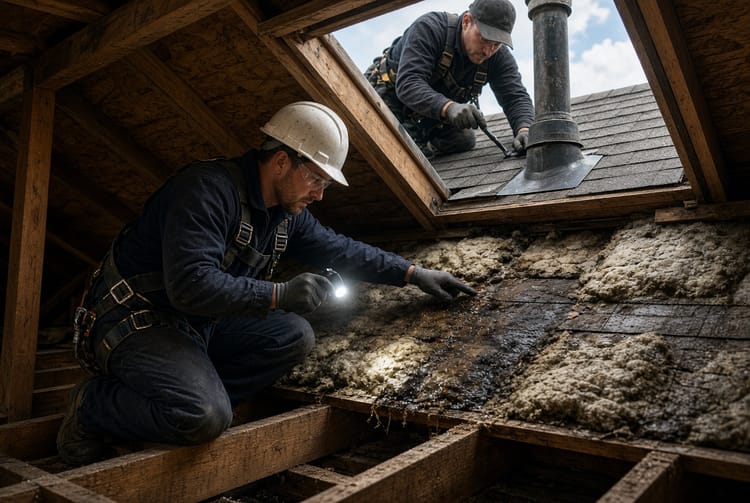
- Water infiltration into the attic: Gaps allow rain to reach insulation and roof decking, raising the chance of mold and wood decay higher in the roof system.
- Pest entry: Soft, wet wood attracts carpenter ants, termites, and rodents looking for easy nesting sites.
- Energy loss: Blocked or damaged soffit vents reduce attic airflow, causing ice dams in winter and higher cooling bills in summer.
- Reduced home value and curb appeal: Visible stains, sagging boards, and peeling paint signal neglected maintenance to buyers and neighbors.
A timely repair stops this progression. Replacing only the damaged sections, then properly painting and sealing the new wood, restores both function and appearance at a fraction of the cost of a full roof replacement or interior water-damage restoration.
Recognizing the Warning Signs Early
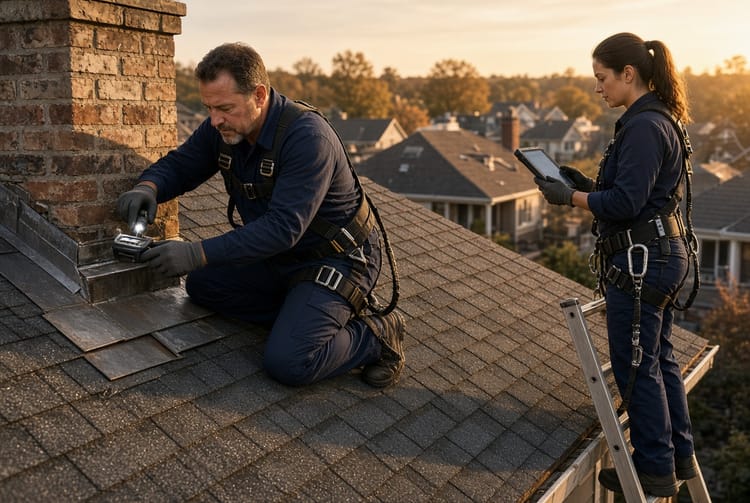
Catching problems while they are still localized makes the repair simpler and less costly. Walk around your home after a rainstorm and look closely at the eaves.
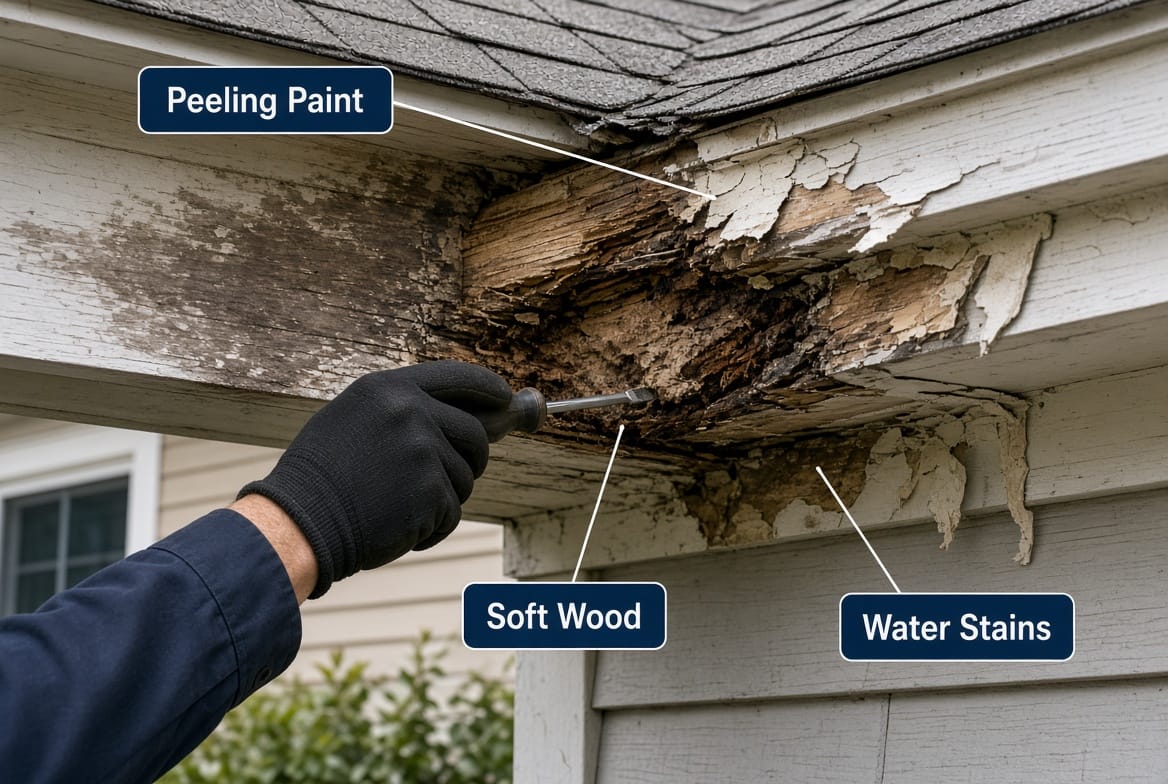
Common indicators include:
- Peeling or blistering paint that returns quickly after a previous coat
- Wood that feels spongy or yields when pressed with a screwdriver
- Dark streaks or water stains on the soffit or the siding immediately below the fascia
- Sagging or separated boards
- Gutters that pull away from the house or overflow even when they appear clear
- Small piles of sawdust or insect wings near the eaves (possible pest activity)
Any one of these signs warrants a closer inspection. If you find more than one, schedule a professional assessment before the damage spreads farther under the roof.
How to Repair Rotted Fascia and Soffit: The Standard Process
The most frequent repair involves cutting out the compromised wood and installing new material that matches the existing profile. The work is straightforward when performed by experienced roofers who understand both carpentry and weatherproofing.
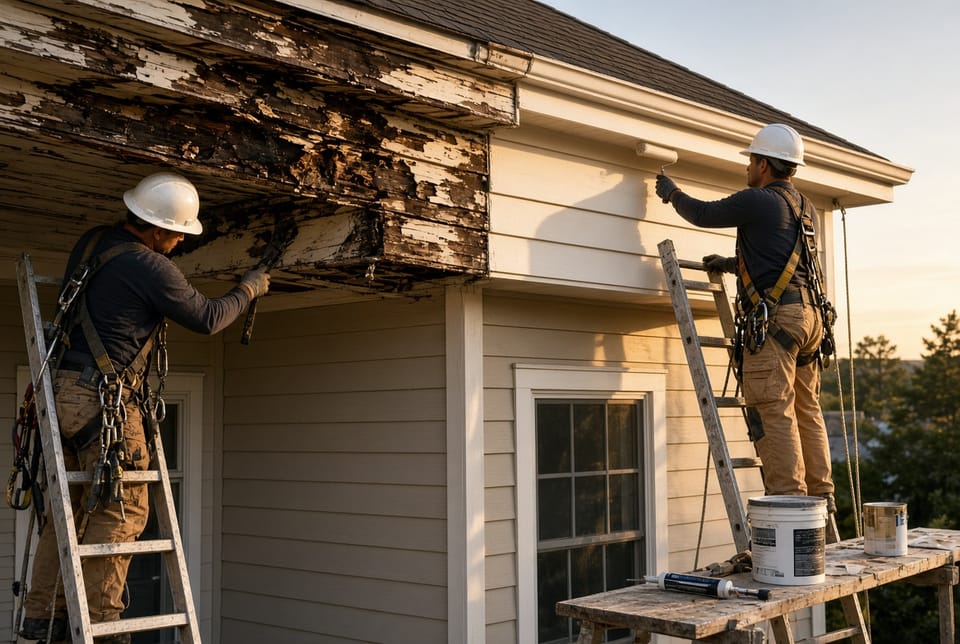
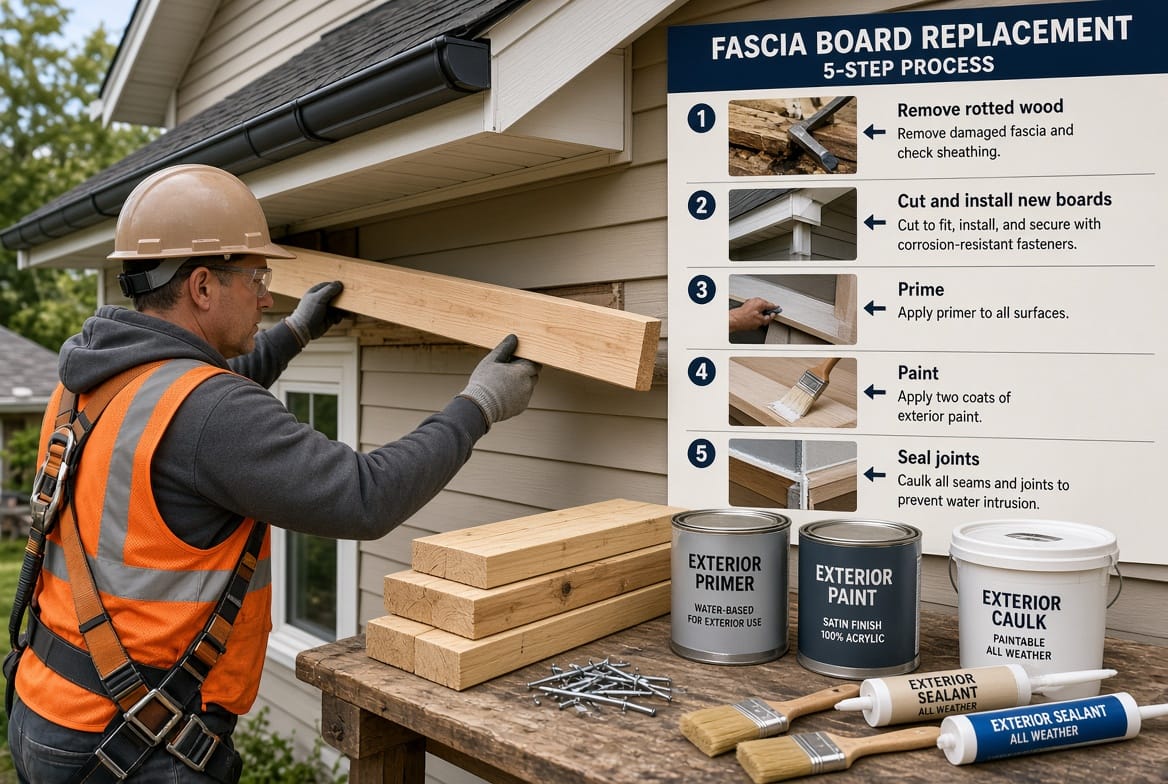
Step 1: Inspect and Remove Rotted Wood
Begin with a thorough examination from a stable ladder or scaffolding. Probe every board with a screwdriver; any section that feels soft or crumbles must come out. Cut back to solid wood, usually several inches beyond the visible damage, so the new piece can be fastened into healthy material. Remove old nails, screws, and any deteriorated drip edge or gutter hangers at the same time. Dispose of the wet, decayed wood promptly to avoid attracting insects.
Step 2: Prepare and Install New Material
Measure the openings carefully. Most fascia and soffit repairs use primed pine, cedar, or a rot-resistant composite or PVC board. Cut the new pieces to length on the ground, then test-fit them. Fasten the fascia first so it sits flush with the rafter tails and provides a solid nailing surface for the soffit. Use corrosion-resistant nails or screws. Reinstall or replace the drip edge so water is directed into the gutters rather than behind the new boards. If the soffit is vented, make sure the replacement panels include matching ventilation slots or continuous soffit vents.
Step 3: Paint and Seal for Long-Term Protection
Once the new wood is securely in place, prime every cut edge and the face of the boards. Apply two coats of high-quality exterior paint formulated for trim. Pay special attention to the joints. After the paint dries, run a bead of paintable exterior caulk along every seam where the fascia meets the soffit, the siding, and the drip edge. This seal prevents water from wicking into the end grain—the most common path for future rot.
When these three stages—removal, replacement, and finishing—are completed correctly, the repaired eaves should last as long as the original installation, provided gutters stay clean and the roof itself remains sound.
Materials That Stand Up to Moisture
Choosing the right product affects both durability and appearance.
- Primed pine remains the most common choice because it accepts paint well and is readily available.
- Cedar offers natural resistance to decay and insects.
- PVC or composite boards never rot and require almost no maintenance, though they must be painted if you want them to match existing wood trim.
- Stainless-steel or hot-dipped galvanized fasteners prevent rust stains.
- Elastomeric or high-quality acrylic exterior paint plus a flexible, paintable sealant complete the weather barrier.
A professional crew will match the existing profile so the repair is virtually invisible once painted.
Professional Repair Versus Do-It-Yourself
Homeowners with carpentry experience can tackle a small, ground-level section. However, most soffit and fascia work occurs at height and requires knowledge of how the boards interact with gutters, flashing, and attic ventilation. Incorrect cuts or missed seals often lead to leaks that appear months later. Licensed roofers carry the proper insurance, use commercial-grade lifts or scaffolding, and understand local building codes. They can also inspect the roof deck and rafters while they are already on site, catching related problems before they become emergencies.
Preventing Repeat Damage
After the repair, a few simple habits keep the new work dry:
- Clean gutters at least twice a year and after major storms.
- Keep trees trimmed so branches do not scrape the eaves or drop debris into the gutters.
- Check the drip edge and flashing whenever the roof is inspected.
- Maintain a consistent paint film; touch up any chips within a season.
- Ensure soffit vents remain unobstructed so the attic can breathe.
These steps cost little yet dramatically extend the life of both the repair and the entire roof edge.
The Value of Acting Now
Every month that rotted wood stays in place allows moisture to travel farther. What begins as a two-foot section of fascia can become an entire run of boards plus damaged rafter tails if ignored. The repair described here—removing the bad wood, installing new material, then painting and sealing—is the most cost-effective way to stop that progression. It restores structural integrity, improves energy performance, and returns the clean, finished look your home deserves.
Do not wait for the next heavy rain to reveal how far the damage has spread. Repair fascia and soffit damage while the problem is still localized. A professional roofing team can complete the work efficiently, match existing materials, and give you peace of mind that the eaves will protect your home for years to come.
Schedule an inspection, receive a clear explanation of the needed repairs, and protect one of the most important edges of your house before water causes more extensive harm.
Get Expert Fascia & Soffit Repair – Call Now