The Roof Shingle Staining: Removing Mold, Algae, and Lichen
Dark streaks, green patches, and crusty growths on asphalt shingles are more than an eyesore. They signal the presence of mold, algae, and lichen that thrive in the moist, shaded conditions many roofs experience. Left untreated, these organisms can shorten shingle life, trap moisture, and make a home look neglected. The good news is that stains can be removed safely when the right methods are used. This guide explains proven cleaning approaches, the techniques that must be avoided, and simple prevention steps that keep roofs looking clean for years.
Remove Roof Stains Safely – Call Now
Homeowners often assume a powerful spray will solve the problem quickly. That assumption leads to costly damage. A professional, low-pressure process combined with the correct chemistry restores appearance while protecting the roof system. Understanding the difference between safe and unsafe methods is the first step toward a lasting result.
What Causes Roof Shingle Stains
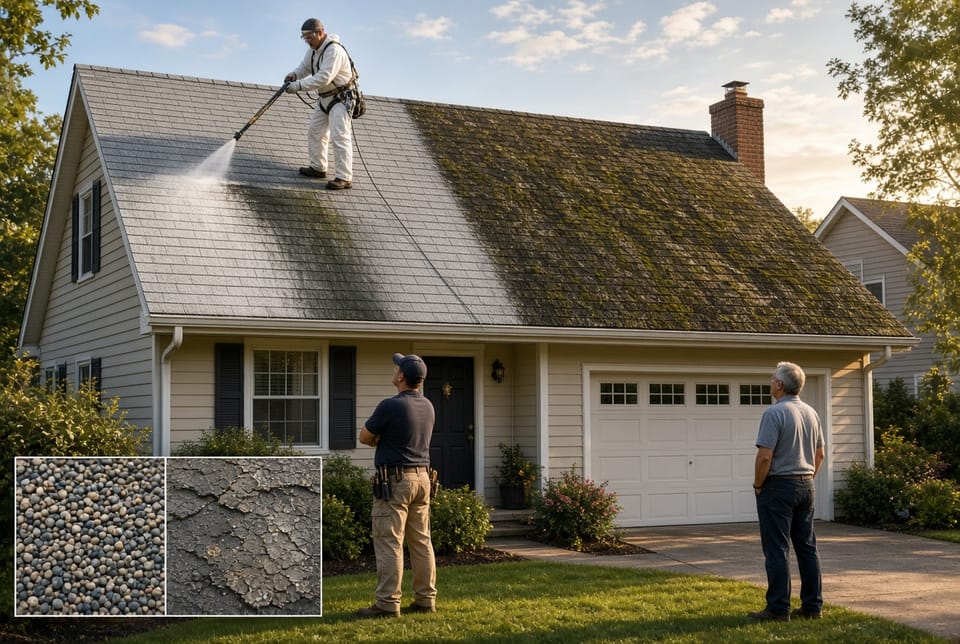
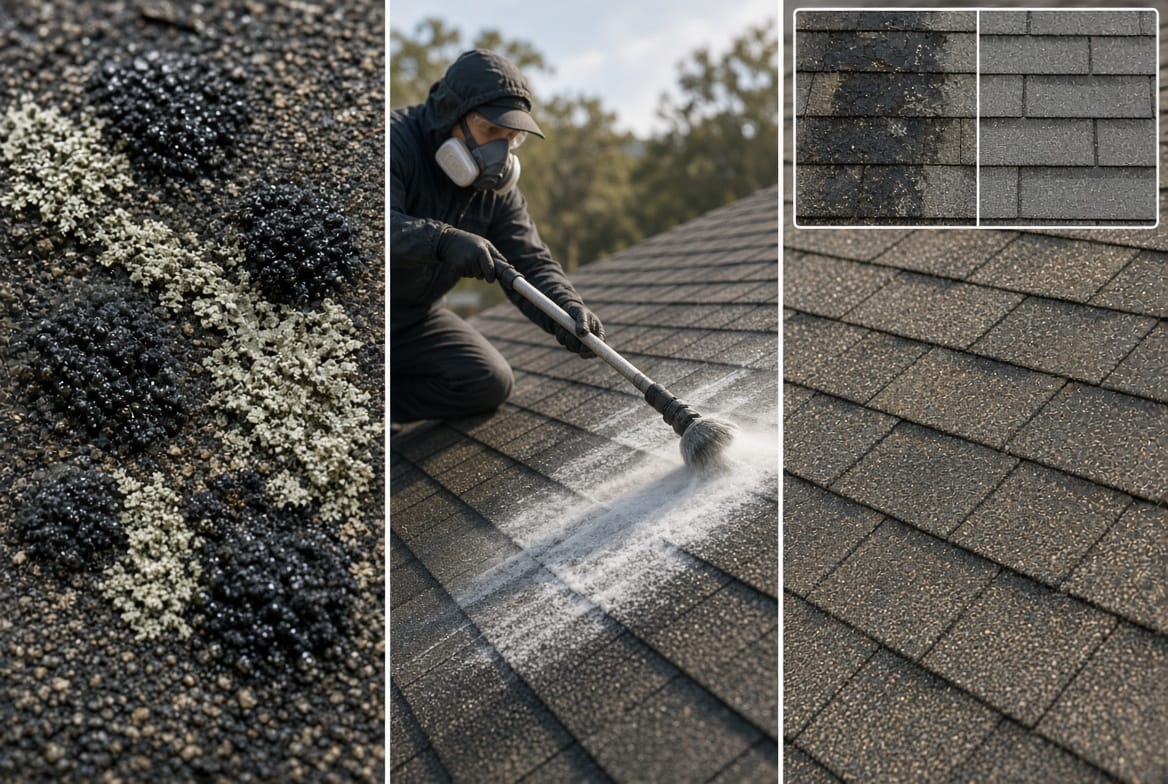
Asphalt shingles contain limestone filler that certain organisms find attractive. The most common culprit is Gloeocapsa magma, a blue-green algae that produces the familiar black streaks running down the roof slope. Mold appears as darker, irregular patches in persistently damp areas. Lichen forms a crusty, often gray-green or yellowish growth that actually bonds to the granule surface.
These organisms flourish where moisture lingers: the north-facing slope, areas shaded by trees, valleys that stay wet after rain, and roofs with poor attic ventilation. Once established, they feed on the minerals in the shingles and spread with each rainfall. The resulting stains are not merely cosmetic. Lichen in particular can lift granules and create small openings that allow water to sit against the underlying mat.
Recognizing the type of growth helps determine the safest removal strategy. Algae stains usually respond well to chemical treatment. Thicker lichen and moss may require a longer dwell time and gentle agitation after the solution has done its work.
Why Immediate Attention Matters
Stains do not remain static. As colonies expand they hold more moisture against the shingles, accelerating granule loss and reducing the reflective quality of the roof surface. In extreme cases the added weight and root-like structures of lichen can curl shingle edges. Insurance and manufacturer warranties frequently exclude damage caused by neglected biological growth or by improper cleaning attempts.
A clean roof also improves curb appeal and can support better energy performance by reflecting more sunlight. Addressing stains promptly with the correct method protects both the physical roof and the home’s overall value.
Safe Removal Methods That Protect Shingles
Three established approaches remove mold, algae, and lichen without destroying the protective granule layer. Each relies on chemistry rather than force.
Soft Wash Technique
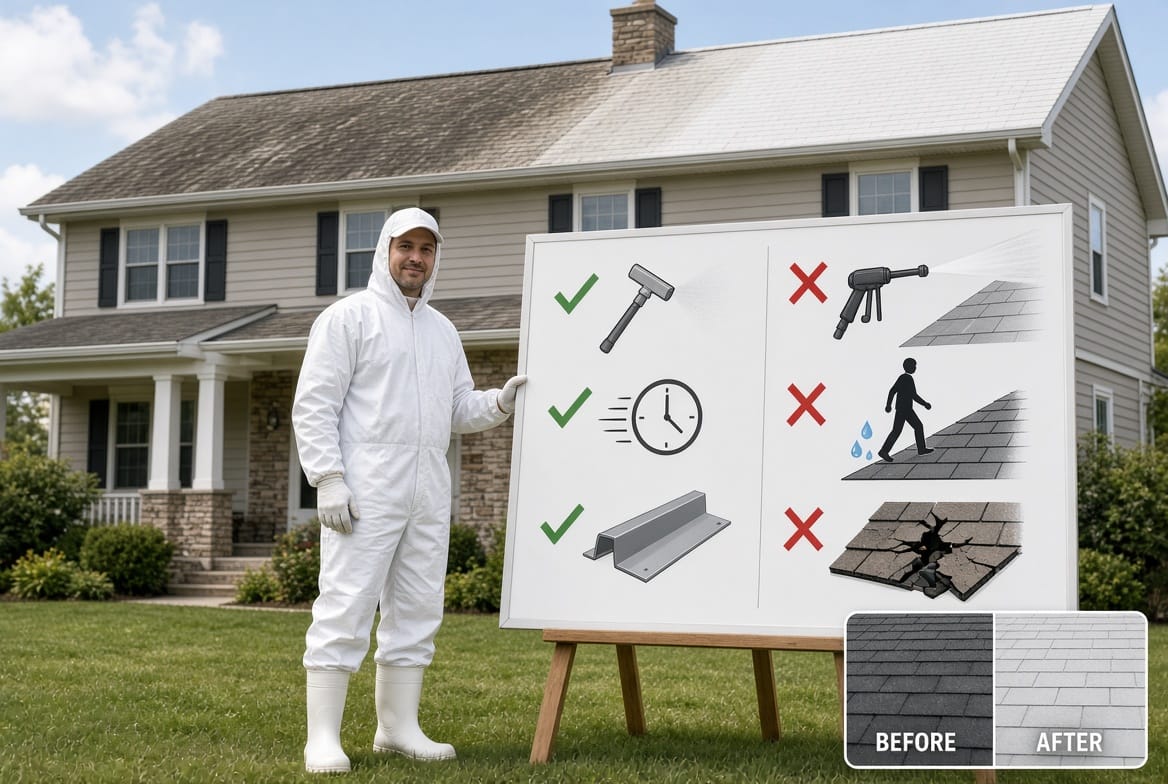
Soft washing uses a specialized pump and nozzle system that delivers cleaning solution at very low pressure—typically under 500 PSI and often much lower. The solution is applied evenly across the stained area and allowed to dwell for 10–20 minutes so the active ingredients can break down the organisms. A gentle rinse then flushes the residue away.
The process is performed from the ground or from a securely positioned ladder with proper fall protection. Technicians wear appropriate personal protective equipment because the solutions can irritate skin and eyes. Soft washing reaches every contour of the shingle without the blasting action that strips granules. Results appear quickly: black streaks lighten and often disappear after a single treatment, while remaining discoloration continues to fade over the following weeks as residual product works.
Bleach-Based Solution
A properly diluted sodium hypochlorite (household bleach) mixture remains one of the most effective treatments for algae and mold. Typical professional formulations combine bleach with a surfactant that helps the liquid cling to the sloped surface and a small amount of sodium hydroxide or similar buffer to stabilize the mix. The solution is applied with the same low-pressure equipment used in soft washing.
The chemistry oxidizes the organic material, killing the organisms and loosening their hold on the granules. After dwell time the roof is rinsed thoroughly so no residue remains that could affect plants or metal flashing. Homeowners should never mix bleach with other household cleaners; the reaction can produce dangerous fumes. Because concentration and application technique matter, many property owners prefer to leave this step to trained technicians who calibrate the mix for the specific stain severity and weather conditions.
Copper Sulfate Application
Copper sulfate has a long history as a moss and lichen control agent. When applied as a dilute solution it disrupts the cellular processes of the growths. It is sometimes used as a follow-up treatment after the primary bleach or proprietary cleaner has removed the bulk of the algae. Application again relies on low-pressure spraying so the crystals or liquid reach the target without damaging the shingles.
Copper-based products must be used according to label directions because excess runoff can affect nearby vegetation and aquatic life. Professionals calculate coverage rates carefully and contain runoff where required by local regulations. Once the organisms die they can be left to weather off naturally or given a light rinse after several days.
All three methods share a common principle: give the chemistry time to work and keep physical force to an absolute minimum.
What Must Be Avoided: Pressure Washing
Pressure washing is the single most common mistake homeowners and untrained cleaners make. High-pressure wands—often 2,000 PSI or higher—blast away the algae but also strip the ceramic granules that protect the asphalt mat from ultraviolet light. Once those granules are gone the shingle ages rapidly, becomes brittle, and can crack or curl.
The force can also drive water under the shingle tabs, saturating the underlayment and creating leaks that appear months later. Many shingle manufacturers explicitly void warranties when high-pressure cleaning is used. The short-term visual improvement is therefore purchased at the cost of a shortened roof life and potential interior water damage.
Even “wide-fan” or “low-pressure” settings on consumer machines frequently exceed safe limits for asphalt shingles. The only reliable way to stay within safe parameters is to use equipment specifically designed for soft washing and to follow manufacturer guidelines for both the roofing product and the cleaning chemistry.
Prevention That Stops Stains from Returning
Cleaning solves the current problem; prevention keeps it from recurring. The most effective long-term strategy is the installation of zinc strips (or copper strips) along the ridge cap. Rainwater flowing over the metal dissolves tiny amounts of zinc or copper ions. Those ions wash down the roof slope and create an environment that inhibits new algae and moss growth.
Strips are nailed or adhered in a continuous line just below the ridge. They are inexpensive, unobtrusive, and last for many years. Combined with regular gutter cleaning and tree trimming that increases sunlight and air movement, zinc strips can keep a roof virtually stain-free for a decade or more after a professional cleaning.
Additional preventive habits include:
- Keeping attic ventilation unobstructed so the roof deck stays drier.
- Removing debris that holds moisture against the shingles.
- Scheduling a light maintenance wash every few years rather than waiting until stains become severe.
- Choosing algae-resistant shingles when the roof is eventually replaced; many modern products contain copper-infused granules.
These steps cost far less than premature roof replacement and preserve the clean appearance achieved by proper washing.
Professional Service Versus Do-It-Yourself Attempts
A determined homeowner can purchase bleach, a pump sprayer, and safety gear and attempt a small-scale cleaning. The risks, however, are significant: incorrect dilution, inadequate dwell time, runoff that kills landscaping, slip hazards on a wet roof, and the possibility of incomplete coverage that leaves patchy results. Liability for damage to the roof or neighboring property also rests with the person performing the work.
Licensed roof-cleaning specialists arrive with calibrated equipment, commercial-grade solutions mixed for the exact conditions, containment measures for runoff, and insurance that protects the homeowner. They can treat an entire roof in a few hours and often include a follow-up inspection to confirm results. The investment typically pays for itself by avoiding the far higher cost of shingle repair or early replacement.
Maintaining Results After Cleaning
Once the stains are gone, a simple annual walk-around inspection is enough to catch new growth while it is still small. Look especially at valleys, north slopes, and areas under tree cover. A light re-application of a maintenance solution every three to five years, performed with the same soft-wash method, keeps the surface bright.
Gutter guards and regular debris removal further reduce the moisture that organisms need. When the time comes for a new roof, specify shingles with built-in algae resistance and have zinc or copper strips installed at the same time. These modest upgrades deliver decades of cleaner appearance with almost no extra effort.
Restore Your Roof the Right Way
Roof shingle staining from mold, algae, and lichen is a solvable problem when the correct tools and chemistry are used. Soft washing, a properly mixed bleach solution, and targeted copper sulfate treatments lift the growth without sacrificing the granules that give the roof its durability. Pressure washing must be avoided because the damage it causes is permanent and often invisible until leaks appear. Prevention through zinc strips and basic maintenance keeps the clean look year after year.
A professionally cleaned roof looks better, lasts longer, and supports the overall health of the home. Remove roof stains safely. Schedule a no-obligation assessment. Trained technicians will evaluate the specific growth on your shingles, recommend the gentlest effective treatment, and leave the surface bright and protected.
Protect Your Shingles – Call for Soft Wash