The Roof Scupper: Drainage for Flat Roofs
Flat roofs deliver clean lines, usable space, and modern appeal to commercial buildings, warehouses, and many contemporary homes. Yet that same low-slope design creates one critical demand: reliable water drainage. Without a clear path for rainwater and melting snow to leave the surface, water gathers, creates ponding, and slowly threatens the entire roofing system. The roof scupper solves this challenge with quiet efficiency. It is a simple opening built into the parapet wall that lets water exit the roof perimeter and drop safely away from the structure.
Protect Your Flat Roof Drainage – Call Now!
This article explains exactly what a scupper is, why every flat roof needs one, how to recognize when it is failing, and the straightforward maintenance that keeps it working for decades. Proper attention to this single detail protects the membrane, the structure beneath, and the investment you have made in the building.
What Exactly Is a Roof Scupper?
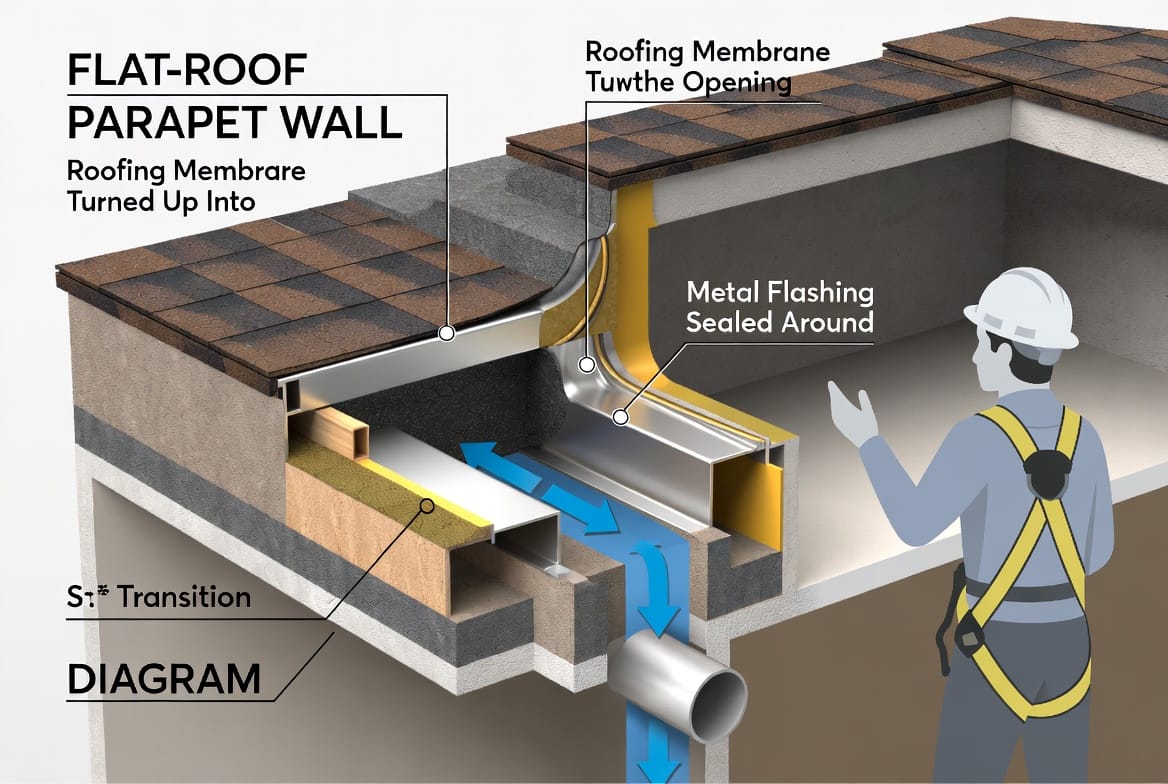
A roof scupper is a purpose-built opening cut through the parapet wall at the edge of a flat or low-slope roof. Water that reaches the perimeter flows through this opening and either cascades freely over the exterior or enters a connected downspout, conductor head, or leader pipe that carries it to the ground or storm system.
Unlike interior roof drains that rely on slope toward the center of the roof, scuppers use the natural edge of the building. They are commonly formed from metal—copper, galvanized steel, aluminum, or stainless steel—and often include a box or collector that guides the water. Some designs incorporate a decorative face plate or a simple rectangular cut sealed tightly against the roofing membrane.
The scupper sits slightly above the finished roof surface so that the membrane can turn up into the opening and create a continuous waterproof seal. When installed correctly, the scupper becomes an almost invisible yet essential part of the roof’s drainage strategy.
Why Flat Roofs Depend on Effective Drainage
Flat roofs are never perfectly level. Building codes and good practice require a slight slope—usually ¼ inch per foot—toward drainage points. Even with that slope, water can still collect if the only exit is blocked or missing. Standing water, known as ponding, places constant pressure on the roofing membrane. Over time the membrane softens, seams weaken, and small punctures turn into leaks.
The risks escalate quickly:
- Ponding water adds significant weight. One inch of water across 1,000 square feet weighs more than 5,000 pounds.
- Prolonged moisture accelerates membrane degradation and invites algae or vegetation growth.
- Water that freezes expands and can pry open seams or crack flashings.
- Leaks that begin at the surface can migrate into insulation, decking, and interior finishes, producing costly secondary damage.
A properly sized and placed scupper removes water before these problems start. It acts as a safety valve at the roof edge, ensuring that even during heavy storms the surface stays relatively dry. When multiple scuppers are installed at strategic low points, they provide redundancy—if one becomes temporarily restricted, others continue to perform.
How a Scupper Works in Practice
Water travels across the roof membrane toward the lowest edge. Upon reaching the parapet, it enters the scupper opening. Gravity then pulls the water through the wall and either:
- Directly outward in a free-fall design, or
- Into a scupper box or conductor head that channels it into a downspout.
The roofing membrane is carefully extended into the scupper so that no raw edge is exposed. Sealant and metal flashing complete the watertight transition. In colder climates, heat cables or carefully designed freeze-thaw detailing may be added to keep the opening clear during winter.
Because the scupper is located at the perimeter, it also protects the exterior wall. Water that leaves the roof through a controlled opening does not cascade randomly down the façade, reducing staining and masonry deterioration.
Recognizing Signs That a Scupper Needs Attention
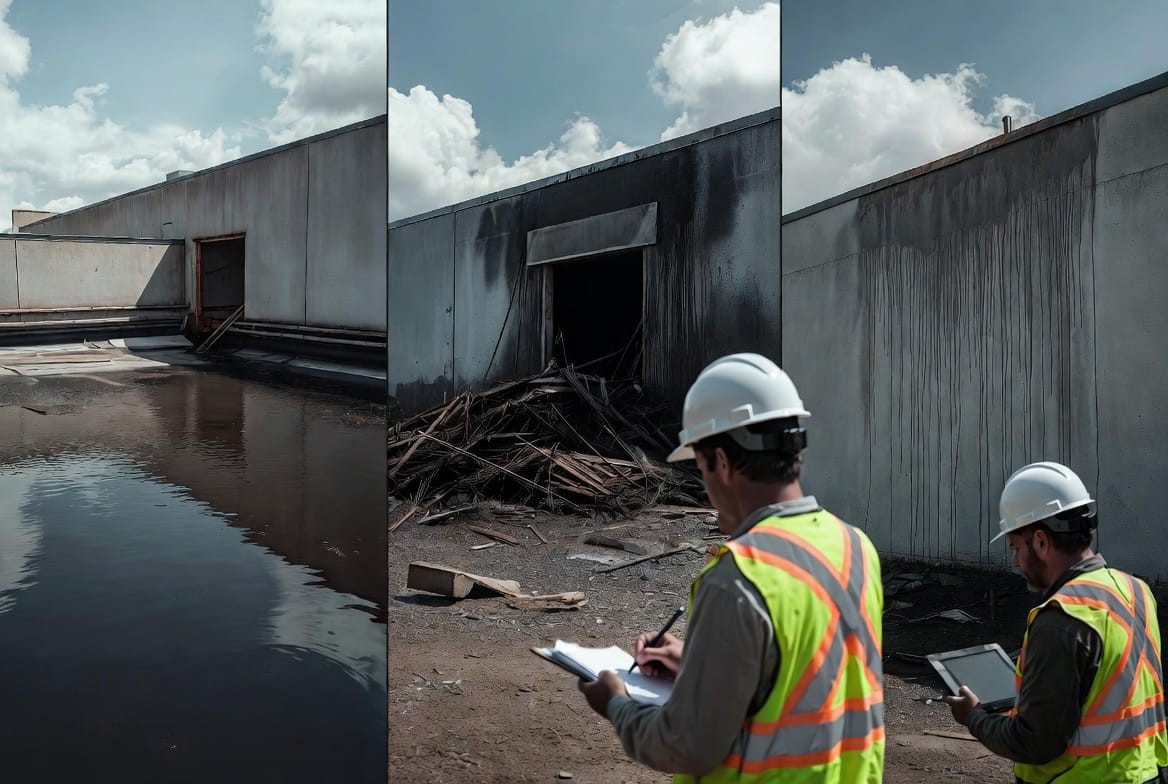
Even the best-designed scupper can become restricted. Leaves, dirt, bird nests, and wind-blown debris accumulate over months and years. When the opening is partially or fully blocked, water has nowhere to go. The earliest warnings appear on the roof surface itself.
Watch for these clear indicators:
- Ponding water that remains more than 48 hours after rainfall ends
- Visible debris buildup inside or around the scupper opening
- Dark water stains on the exterior wall below the scupper
- Soft or blistered membrane near the parapet edge
- Overflow occurring at other low points or through emergency overflows
Any one of these signs signals that the drainage path is compromised. Ignoring them invites progressive damage that is far more expensive to correct later.
Simple, Effective Maintenance Keeps Scuppers Working
Routine care prevents most scupper failures. Building owners and facility managers can follow a practical schedule that requires only modest time and effort.
Quarterly visual checks
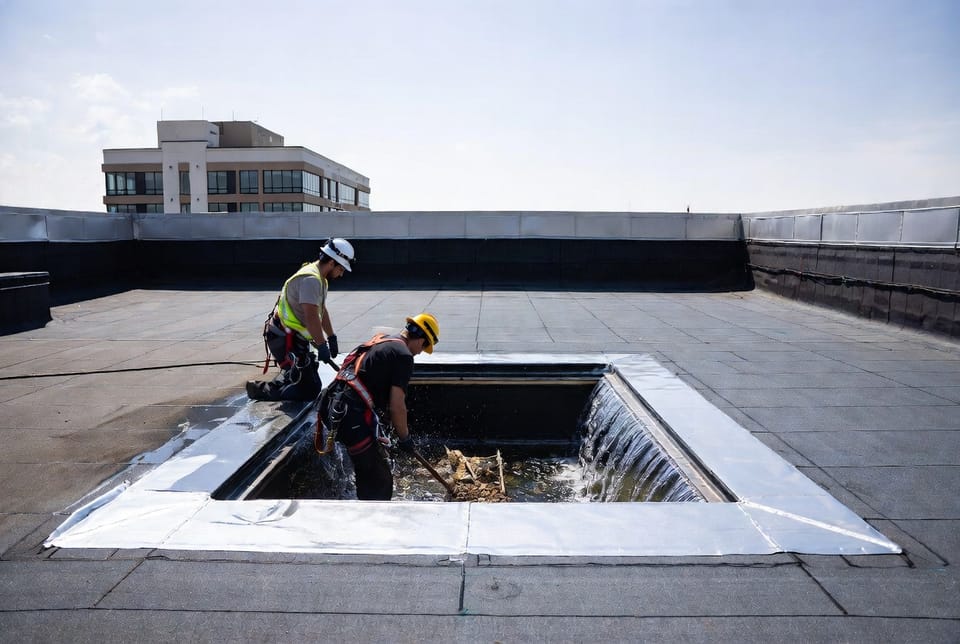
Walk the roof perimeter after major storms or seasonal leaf drop. Look into each scupper opening with a flashlight. Remove any visible leaves, twigs, or sediment by hand or with a soft brush. Never force objects that could damage the membrane or metal.
Bi-annual professional inspection
Twice a year—ideally in spring and fall—have a qualified roofing contractor examine every scupper. Professionals bring the right ladders, safety equipment, and knowledge to test water flow, verify membrane seals, and check connected downspouts for blockages farther down the system.
After severe weather
High winds and heavy rain can push unusual amounts of debris into openings. A quick post-storm walk-around often catches problems before they become chronic.
Keep the surrounding roof clean
Regular sweeping or vacuuming of the flat surface reduces the volume of material that eventually reaches the scupper. Pay special attention to areas near HVAC equipment, trees, or construction activity.
When a scupper does become clogged, the repair is usually straightforward: clear the obstruction, flush the opening, and reseal any disturbed flashing. In rare cases where the metal has corroded or the opening was undersized for current rainfall intensity, a replacement scupper can be installed without replacing the entire roof.
The Long-Term Value of Reliable Edge Drainage
A functioning scupper does more than move water. It preserves the warranty on the roofing membrane, reduces the frequency of emergency calls, and protects interior spaces from unexpected leaks. Buildings with well-maintained scuppers experience fewer freeze-thaw cycles at the perimeter, slower membrane aging, and cleaner exterior walls.
Owners who treat drainage as a priority rather than an afterthought routinely report longer roof life and lower overall ownership costs. The difference between a roof that lasts twenty years and one that needs major work at year twelve often traces back to consistent water management at the edge.
Professional Insight and Peace of Mind
While basic cleaning can be handled in-house, the most reliable results come from trained eyes. Experienced roofers understand local rainfall patterns, membrane compatibility, and the subtle signs of impending failure that an untrained observer might miss. They also carry the insurance and safety protocols required for working at height.
When a scupper system is correctly sized, properly sealed, and regularly maintained, it operates almost silently for the life of the roof. Water arrives, finds the opening, and leaves—exactly as designed.
Proper drainage protects flat roofs.
If your building has not had a thorough scupper and drainage inspection recently, schedule one today. A short visit by qualified professionals can identify restrictions before they become expensive problems and confirm that every opening is ready for the next storm.
Prevent Roof Leaks with Proper Drainage – Call Today