The Roof Moss Treatment: Killing Moss Without Damaging Shingles
Roof moss is more than an unsightly green carpet. Left unchecked, it traps moisture, lifts shingles, and shortens the life of your entire roofing system. The good news is that safe, effective moss treatment exists. You do not need aggressive tools or harsh chemicals that can void warranties or create new leaks. This guide walks you through proven, shingle-friendly methods—soft wash, zinc strips, and gentle scraping—while clearly identifying what to avoid and how to keep moss from returning. Follow these professional practices and you will restore a clean, healthy roof without compromising its integrity.
Call Now for Damage-Free Roof Moss Removal
Why Roof Moss Appears and Why Timing Matters
Moss thrives in shaded, damp environments. North-facing slopes, overhanging tree branches, and regions with frequent rainfall create ideal conditions. Once established, moss holds water against the shingle surface. That constant moisture softens the asphalt binder, encourages granule loss, and can eventually force shingles upward. Early intervention prevents expensive structural repairs later.
Homeowners often wait until moss is thick and widespread. That delay makes removal more labor-intensive, yet the safe treatment principles remain the same regardless of severity. Acting promptly with the right techniques protects both the appearance and the long-term performance of your roof.
Understanding the Real Risks of Improper Removal
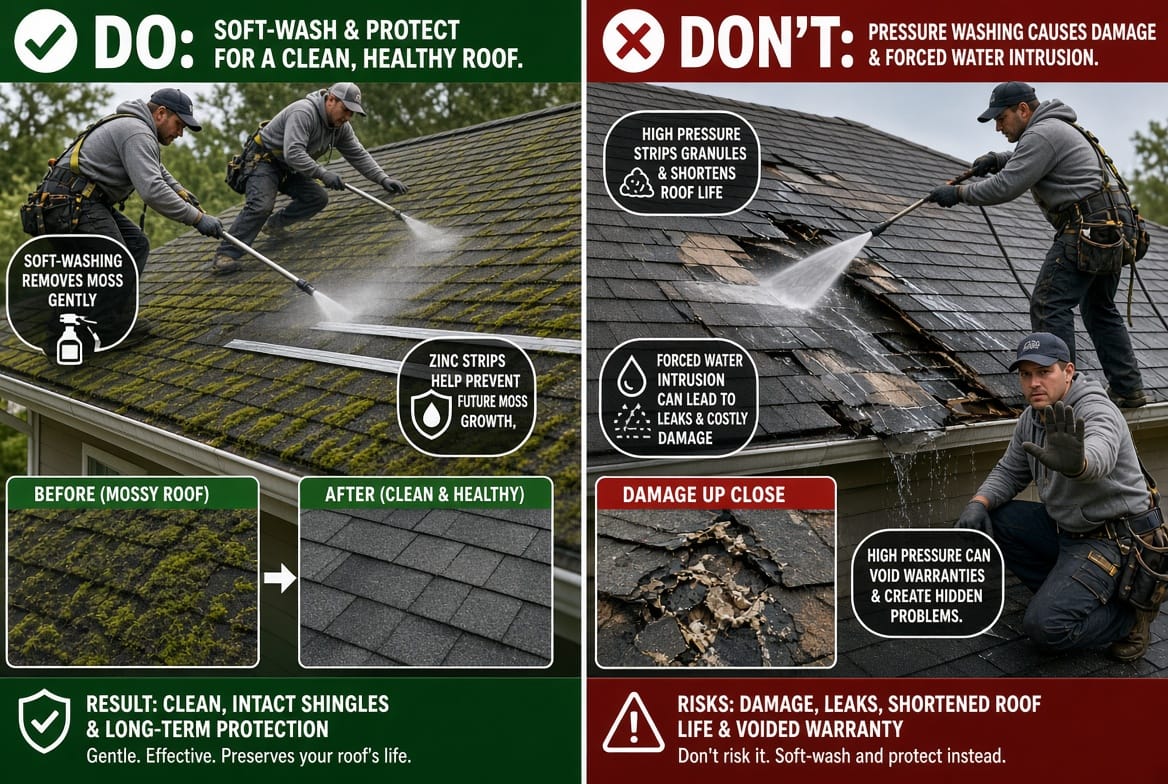
Not every cleaning method is equal. Some popular approaches cause more harm than the moss itself. Pressure washing drives water under shingles, dislodges protective granules, and can create pathways for future leaks. Harsh chemical cleaners containing high concentrations of bleach or acidic compounds strip the asphalt coating and accelerate aging. Even aggressive scraping with metal tools risks gouging the shingle surface.
These risks are avoidable. Professional-grade soft-wash systems, properly installed zinc strips, and careful hand work deliver thorough moss control while preserving the roof’s protective layers. Choosing the correct process is the difference between a temporary cosmetic fix and lasting roof health.
Safe Moss Removal Methods That Protect Shingles
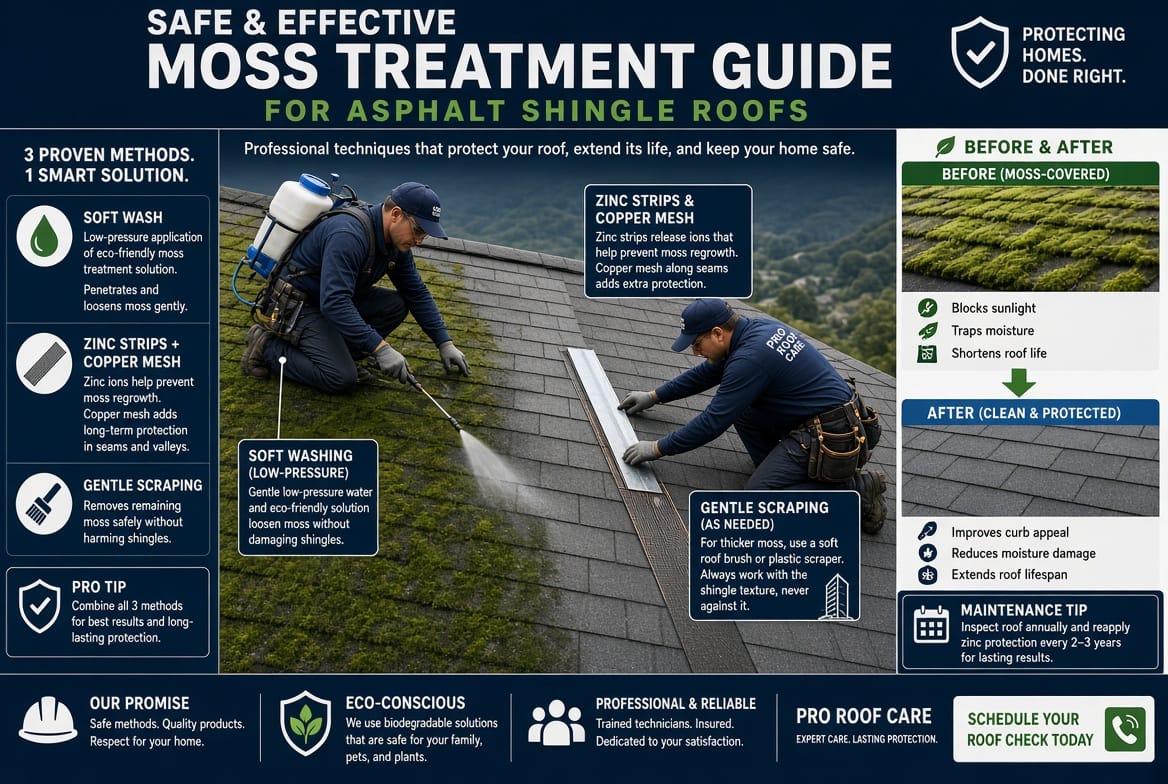
Three core techniques form the foundation of responsible roof moss treatment. Each can be used alone or in combination depending on moss density and roof type.
Soft Wash: The Preferred Primary Method
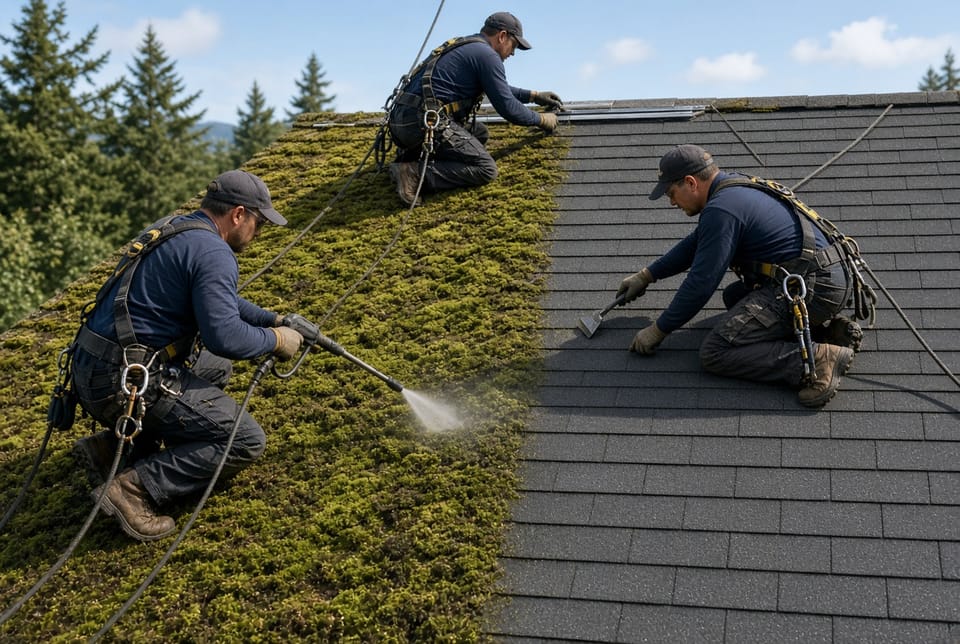
Soft wash uses a specialized low-pressure application of a biodegradable cleaning solution formulated specifically for roofs. The solution is applied gently so it saturates the moss without forcing liquid beneath the shingles. Over the following hours to days the moss dies, turns brown, and either washes away with the next rain or is lightly rinsed.
Because the pressure remains well below the threshold that can damage asphalt or lift edges, soft wash is ideal for most residential roofs. The process is quiet, controlled, and far less invasive than high-pressure alternatives. When performed by trained technicians, soft wash reaches moss growing in valleys, around vents, and under overlapping shingles without mechanical stress.
Gentle Scraping for Stubborn Patches
When moss has formed dense mats, gentle scraping provides a mechanical assist. Soft plastic or rubber tools—never metal scrapers—are used to lift and remove the bulk of the growth. The motion is slow and deliberate, always working with the grain of the shingles to avoid tearing the surface. After scraping, a soft-wash application finishes the job by killing any remaining root structures.
This combination ensures that large volumes of moss are cleared quickly while the chemical treatment prevents rapid regrowth. Homeowners attempting this step themselves should wear proper fall protection and never walk on steep or wet surfaces.
Zinc Strips: Continuous, Passive Protection
Zinc strips installed along the ridge or upper courses of the roof release minute amounts of zinc ions whenever rainwater flows over them. These ions create an environment hostile to moss and algae. Once in place, zinc strips require almost no maintenance and continue working for many years.
Proper installation is critical. Strips must be fastened securely under the ridge cap or near the top of each slope so that rainwater carries the zinc ions across the entire surface. When combined with an initial soft-wash treatment, zinc strips dramatically slow or stop new moss colonization.
What to Avoid: Methods That Damage Shingles
Understanding the dangers is as important as knowing the safe techniques.
- Pressure washing – High-pressure streams force water under shingles, strip granules, and can void manufacturer warranties. Even “soft” pressure settings are still too aggressive for asphalt roofs.
- Harsh chemical cleaners – Products with extreme pH levels or strong solvents dissolve the asphalt binder and leave the roof more vulnerable to UV damage.
- Metal scrapers or wire brushes – These tools gouge the shingle surface and create microscopic openings that invite water intrusion.
- Walking on dry, brittle, or steep roofs without proper safety equipment – Slippery moss and uneven footing increase the risk of falls and accidental damage.
Avoiding these practices protects both the roof and anyone performing the work.
Prevention Strategies That Keep Moss Away
Removing existing moss is only half the solution. Long-term prevention keeps the roof clean with minimal future intervention.
Zinc Strips as the First Line of Defense
As noted earlier, zinc strips provide continuous protection. Rainwater flowing over the strips distributes zinc ions that inhibit spore germination. For maximum coverage on larger or multi-slope roofs, additional strips can be placed at intermediate heights.
Copper Mesh in Critical Areas
Copper mesh serves a similar purpose in valleys, around chimneys, and near dormers where water tends to concentrate. The mesh is tucked under the shingles so that runoff contacts the copper and carries protective ions downstream. Copper is especially effective in high-moisture zones and complements zinc strips on complex roof designs.
Additional Preventive Habits
- Trim overhanging tree branches to increase sunlight and airflow.
- Keep gutters clear so water drains freely and does not back up onto the roof edge.
- Schedule a professional inspection every two to three years, especially in damp climates.
- Address any minor leaks or damaged shingles promptly; moisture-attracting spots encourage moss colonization.
When these measures are combined with an initial thorough soft-wash treatment, most roofs remain moss-free for many seasons.
A Practical Step-by-Step Safe Treatment Process
- Inspection and safety setup – Evaluate moss density, note shaded areas, and establish secure access with harnesses and roof anchors.
- Debris removal – Gently clear leaves and loose organic matter by hand or with a soft broom.
- Soft-wash application – Apply the specialized solution evenly, allowing proper dwell time for the moss to die.
- Gentle scraping of heavy mats – Use non-metallic tools only where necessary, working carefully with the shingle pattern.
- Rinse or natural wash-off – Depending on the product, a light rinse or simply waiting for rain completes the cleaning.
- Installation of zinc strips and copper mesh – Secure the preventive materials while the roof is accessible.
- Final walk-through – Confirm no residual moss remains in critical areas and that all fasteners and flashings are intact.
This sequence prioritizes safety for both the roof and the people performing the work.
Benefits of Choosing the Safe Approach
Homeowners who follow safe moss removal practices enjoy multiple advantages:
- Extended roof lifespan because granules and asphalt remain undisturbed.
- Preserved manufacturer warranties that often exclude damage from high-pressure or chemical abuse.
- Improved curb appeal without the risk of new leaks.
- Lower long-term maintenance costs through effective prevention.
- Peace of mind knowing the treatment itself will not create future problems.
These benefits compound over time. A single well-executed soft-wash treatment paired with zinc strips can delay the need for another major cleaning by several years.
When Professional Help Is the Smartest Choice
While determined homeowners can handle light moss on low-slope roofs, many situations call for experienced technicians. Steep pitches, multi-story homes, extensive moss coverage, or the presence of solar panels and complex flashing all increase risk. Professionals bring specialized soft-wash equipment, proper fall-protection systems, and the knowledge to select the correct solution strength for your specific shingle type.
They also ensure that zinc strips and copper mesh are installed correctly the first time, maximizing their preventive value. Attempting advanced work without the right tools or training often leads to incomplete results or accidental damage—exactly the outcomes this guide aims to prevent.
Maintaining Results Year After Year
After the initial treatment, simple seasonal checks keep moss at bay. Walk the property after heavy storms and look for any new green patches, especially in previously shaded zones. Clear gutters in spring and fall. Re-inspect zinc strips every few years to confirm they remain securely fastened and free of debris that could block water flow.
If a small amount of moss reappears, a targeted soft-wash touch-up is usually sufficient. Because the preventive metals are already in place, regrowth tends to be minimal and easy to manage.
Final Thoughts: Protect Your Investment with Confidence
Your roof is one of the most important protective systems on your home. Treating moss the right way—using soft wash, gentle scraping, and zinc strips while strictly avoiding pressure washing and harsh chemicals—preserves that protection for years to come. Prevention through zinc strips and copper mesh turns a one-time cleaning into lasting defense.
Safe moss treatment is not complicated when the correct methods are followed. The result is a clean, functional roof that continues to perform exactly as designed.
Treat roof moss safely.
For professional roof cleaning that prioritizes shingle integrity. Experienced technicians are ready to restore your roof the right way—efficiently, thoroughly, and without damage.
Get Professional Moss Removal Without Damage