The Roof Maintenance Plan: Extending Shingle Life

A roof rarely fails all at once. Most shingle roofs decline in stages—a loose tab here, a clogged downspout there, a lifted piece of flashing after a windstorm. Left alone, those small defects invite water under the shingles, wash away protective granules, and shorten the life of an otherwise sound system. A written roof maintenance plan reverses that pattern. Instead of waiting for a leak, you inspect, clean, and repair on a schedule. The result is simple and valuable: extended shingle life, fewer emergency calls, and a roof that protects the home for as many of its rated years as possible.
Extend Shingle Life—Schedule Your Inspection
This guide explains a proactive approach you can follow year after year. It covers the core annual tasks—inspect, clean gutters, check flashing, remove debris, and repair minor damage before it worsens—and shows how those tasks fit into a realistic calendar. The tone is practical, not alarming. Maintenance is not a luxury add-on. It is the most reliable way to get the performance you already paid for when the roof was installed.
Why Proactive Maintenance Beats Reactive Repair
Shingles are designed to shed water, not to sit under standing debris, overflowing gutters, or failed metal joints. When water lingers, it works into nail holes, seams, and the underlayment. Heat and UV then make aged shingles brittle. Freeze-thaw cycles widen every gap. A reactive homeowner notices the problem only after a stain appears on a ceiling. By then, sheathing may already be damp, insulation may be compromised, and a “simple” shingle issue can become a structural repair.
A proactive roof maintenance plan interrupts that chain early. Annual attention:
- Finds granule loss, cracked tabs, and lifted edges while they are still inexpensive to correct.
- Keeps water moving off the roof and into the drainage system instead of behind fascia boards.
- Protects vulnerable transitions—chimneys, skylights, vents, valleys, and wall-to-roof joints.
- Documents the roof’s condition so you can plan replacement on your timeline, not after a storm forces the decision.
The financial logic is straightforward. Replacing a few damaged shingles and resealing a flashing joint costs a fraction of a full tear-off. Even more important, consistent care can add years to an asphalt-shingle roof that would otherwise be written off early because of neglect rather than true material failure.
How Shingles Age—and How Maintenance Slows That Process
Most architectural and three-tab asphalt shingles are rated for a long service window, but the rating assumes reasonable care and proper drainage. Aging happens in visible and invisible ways:
- UV exposure dries the asphalt and makes tabs less flexible.
- Wind lifts edges and can tear weakened tabs.
- Debris holds moisture against the surface and blocks valleys.
- Clogged gutters push water under the drip edge and into the eaves.
- Failed flashing is one of the most common leak sources, even when the field shingles still look acceptable.
- Overhanging branches scrape the surface, drop organic matter, and increase impact risk in storms.
None of these forces can be eliminated. They can be managed. Cleaning and inspection reduce trapped moisture. Flashing checks close the gaps water prefers. Minor repairs restore the shingle’s ability to overlap and shed. That is the entire philosophy of extending shingle life: keep the system dry, intact, and free of avoidable stress.
Build the Plan Around Five Annual Tasks
A useful maintenance plan is short enough to complete and specific enough to repeat. Use the five tasks below as the backbone. Add notes for your climate, tree cover, roof pitch, and any known weak points from the last inspection.
1. Inspect the Entire Roof System
Inspection is the foundation of the plan. Do it at least once a year, and again after major wind, hail, or ice events. Safety comes first. If the pitch is steep, the surface is wet, or you are not comfortable on a ladder, schedule a professional inspection rather than risk a fall.
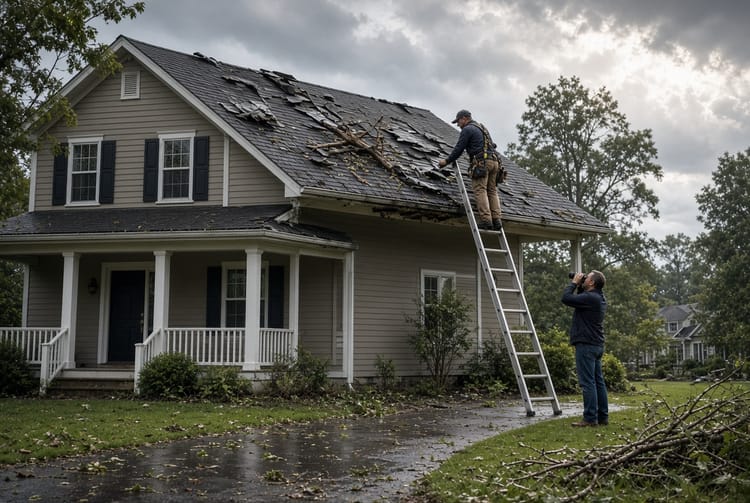
A thorough inspection is more than a glance from the driveway. From the ground, use binoculars to scan for missing tabs, uneven lines, sagging planes, or stained fascia. From a safe position on or near the roof (or via a documented professional survey), review:
- Field shingles for cracks, curling, blistering, and granule loss
- Ridge and hip caps
- Valleys, where water concentrates
- Pipe boots, vents, and other penetrations
- Chimney and skylight perimeters
- Drip edges and eaves
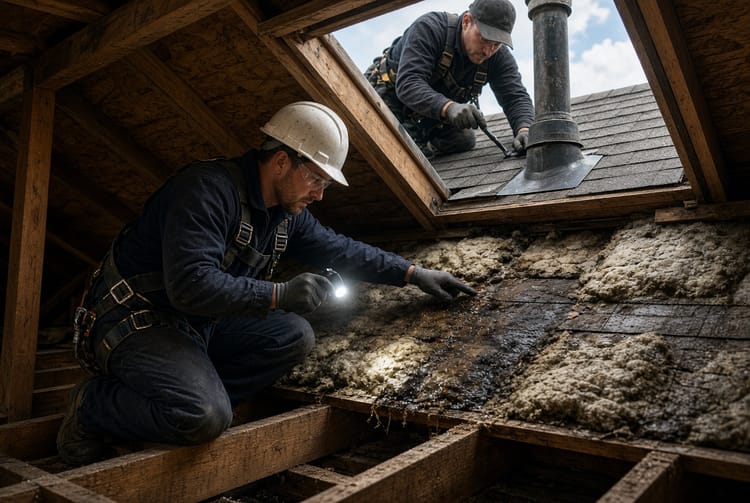
- Soft or discolored decking signs at the underside, if an attic check is possible
Record what you see with dated photos. A simple log—date, weather, findings, photos, repairs completed—turns one visit into a multi-year record. That record is useful for warranty conversations, insurance documentation, and deciding when maintenance is no longer enough.
Look especially for patterns. Isolated granule piles in a downspout may be normal aging. Widespread bald spots, algae streaks that hide damage, or repeated leaks in the same interior location mean the plan should include targeted repair, not only cleaning.
2. Clean Gutters and Downspouts
Gutters are not decorative trim. They are part of the roof’s water-management system. When they clog, water backs up at the eaves. In cold climates that backup becomes ice dams. In any climate it soaks fascia, soffits, and the lower course of shingles.
Clean gutters at least twice a year—typically late spring after seed drop and late fall after leaves fall. Homes under heavy tree cover may need additional mid-season checks.
During cleaning:
- Remove leaves, shingle granules, twigs, and shingle fragments.
- Flush downspouts until water runs freely.
- Confirm downspouts discharge well away from the foundation.
- Check hangers, seams, and end caps for separation.
- Look at the back side of the gutter line for peeling paint, rot, or staining—early clues that water has been overflowing.
Gutter guards can reduce labor, but they do not eliminate inspection. Guards still collect fines and granules. The maintenance plan should treat guards as a helper, not a substitute for looking at the eaves.
A clean drainage path does more for shingle life than many homeowners expect. It keeps the lower roof dry, reduces peel-back at the drip edge, and prevents the slow, hidden decay that starts at the perimeter and works inward.
3. Check Flashing at Every Transition
If there is one maintenance item that prevents a disproportionate number of leaks, it is flashing. Flashing is the metal (and sometimes membrane) that seals the places shingles cannot seal alone: chimneys, sidewalls, skylights, valleys, vents, and roof-to-wall intersections.
During the annual check:
- Confirm step flashing is layered correctly and not kicked out.
- Look for rust, open joints, or sealant that has dried and split.
- Inspect counter-flashing let into masonry.
- Examine valley metal for punctures, debris dams, and lifted edges.
- Check pipe boots for cracked rubber collars.
- Make sure fasteners are present and not backing out.
Do not treat cracked caulk as a permanent fix. Sealant is a temporary assistant. Lasting performance comes from intact metal, correct overlaps, and dry, sound substrate beneath. If flashing is loose or rusted through, schedule repair promptly. Water that enters at a flashing joint can travel far from the entry point before it shows indoors, which is why this task belongs on the calendar even when the ceiling still looks fine.
4. Remove Debris From the Roof Surface
Debris is more than unsightly. Moss, leaves, pine needles, and seed pods trap moisture against shingles. In valleys, debris becomes a dam. On low-slope sections, it can keep an area wet for days after rain.
Remove debris gently. Avoid stiff metal scrapers that tear granules. Soft brooms, plastic tools, and careful hand removal are usually enough for seasonal buildup. Pay attention to:
- Valleys
- Behind chimneys
- Along the upslope side of dormers
- Under heavy tree cover
- Areas where previous storms left broken branches
Trim branches that scrape the roof or drop a constant layer of organic matter. Cutting is often best done from the ground or by a tree professional; the goal is clearance and sunlight, not a risky lean from the roof edge. After trimming, clear the cuttings so they do not sit in gutters.
If moss or heavy algae is established, address it with methods appropriate to your shingle type. Aggressive pressure washing can strip granules and void coverage. The maintenance plan should favor controlled cleaning and improved drying (sunlight, airflow, debris removal) over harsh blasting.
5. Repair Minor Damage Before It Worsens
The last core task is the one that turns inspection into savings: repair minor damage immediately. A single missing tab is a small job. A single missing tab after six more rainstorms can wet the underlayment and start a leak path.
Typical minor items to handle promptly:
- Replacing isolated damaged or missing shingles
- Sealing or replacing a failed pipe boot
- Refastening a lifted tab where the shingle is otherwise sound
- Closing a small flashing gap
- Resetting a loose gutter hanger at the eaves
- Addressing a short section of exposed nails
Know the limit. If you find widespread curling, large areas of granule loss, a spongy deck, recurring leaks, or storm damage across multiple planes, the plan should shift from routine maintenance to a professional evaluation. Maintenance extends life; it does not make a failed roof new again. The authoritative approach is honest: fix the small things early, and do not pretend a roof at the end of its service life can be “maintained” into another decade.
Turn Tasks Into a Written Yearly Schedule
Lists fail when they stay in someone’s head. Write the plan down. One page is enough.
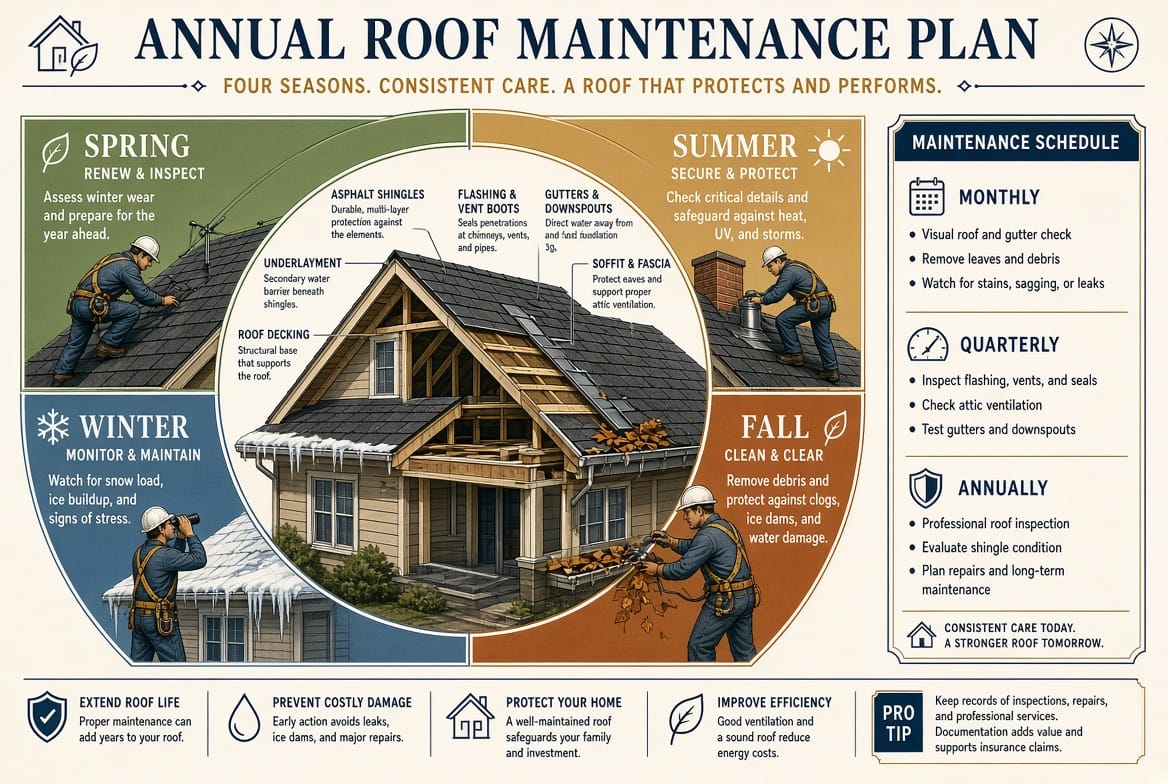
A practical annual rhythm looks like this:
- Early spring: Full inspection after winter. Look for lifted shingles, split flashing, and eaves damage from ice. Clean gutters of seed pods and leftover ice debris. Complete minor repairs before heavy spring rain.
- Mid-to-late summer: Quick visual check after peak heat and any hail. Confirm sealant and boots have not cracked. Note any new granule accumulation in gutters.
- Fall: The most important cleaning window. Remove leaves, clear valleys, clean gutters and downspouts, and trim branches before storms. Photograph the roof so you have a pre-winter baseline.
- Winter (as conditions allow): Do not walk a frozen or snow-loaded roof. From the ground, watch for ice dams, overflowing gutters, and interior warning signs. Schedule professional help if water is backing up.
Homes in wildfire-prone, coastal, or severe-hail regions should add local extras—ember-debris checks, fastener and edge reviews, or post-storm documentation—without abandoning the five core tasks.
Assign responsibility. Some owners will handle gutter cleaning and ground-level review. A licensed roofing professional should handle steep-slope inspection, flashing work, and shingle replacement. The plan is stronger when it states who does what and when, including the phone number you will call if a repair exceeds a safe DIY scope.
Safety, Access, and When to Call a Professional
A maintenance plan that injures someone is not a good plan. Roofs are high, often slick, and unforgiving. Use these rules:
- Never work on a wet, frosted, or high-wind roof.
- Use a stable ladder, proper angle, and a second person when possible.
- Wear soft-soled shoes with grip and avoid stepping on brittle, sun-baked tabs near the end of their life.
- Treat skylights and plastic panels as non-step areas.
- Stop and hire help if the pitch, height, or condition feels unsafe.
Professional maintenance visits are not an admission of failure. They are often the most efficient way to inspect flashings and upper slopes you cannot see well from the ground. Ask for a written report with photos. That report becomes the next page in your plan and helps you compare year to year.
If you already have a leak, attic moisture, sagging decking, or a cluster of missing shingles, skip the “wait until the annual date” instinct. The plan exists to prevent worsening. Move the repair forward.
What Regular Care Protects Besides Shingles
Extending shingle life is the headline benefit. The secondary benefits are just as real:
- Dry eaves and fascia, which protects paint and trim.
- Healthier attic conditions when leaks are prevented.
- Lower chance of interior staining, mold-friendly dampness, and ruined insulation.
- Better curb appeal and a cleaner inspection story if you sell the home.
- Stronger documentation for manufacturers or insurers when questions arise.
Maintenance also changes how you spend money. Instead of one large, unplanned invoice after a weekend storm, you budget smaller, scheduled items. That predictability is part of what makes the plan reassuring. You are not hoping the roof “makes it one more year.” You are actively managing it.
Common Mistakes That Shorten Shingle Life
Even well-intentioned owners sometimes accelerate wear. Avoid these errors:
- Waiting for an indoor leak before looking at the roof.
- Using high-pressure washing as routine cleaning.
- Ignoring gutters because “it rained last week and they seemed fine.”
- Sealing over rotten wood or failed flashing instead of repairing the assembly.
- Letting branches rub the surface all summer.
- Walking the roof unnecessarily and breaking sealed tabs.
- Skipping the attic or soffit view, where early moisture often shows first.
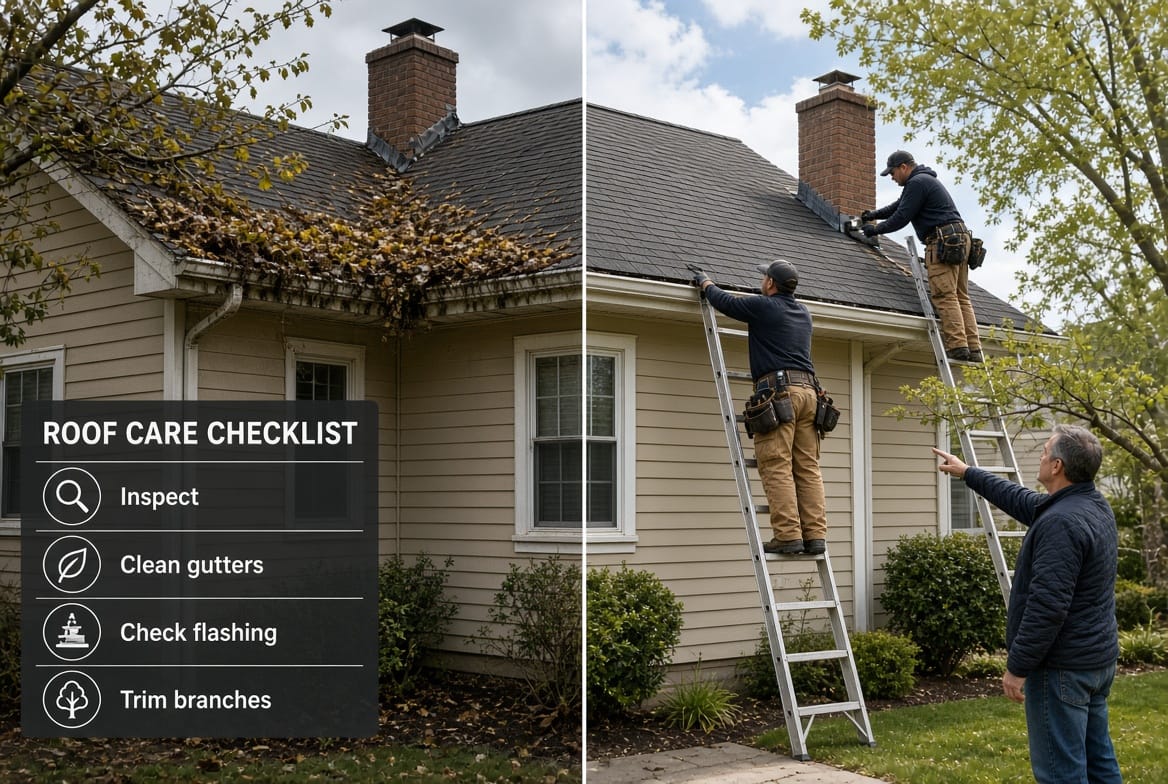
The corrective habit is modest and repeatable: inspect, clean, check the metal, clear the surface, fix the small defect. That loop is the plan.
Keep the Plan Alive Year After Year
The best roof maintenance plan is the one you reuse. After each visit, update three things: photos, a short condition note, and any repair receipts. Once every few years, review the whole file. Are the same flashing joints failing? Is granule loss accelerating? Are gutters clogging faster because a tree has grown? Adjust the schedule rather than discarding the system.
Pair the plan with realistic expectations. Maintenance can substantially delay replacement and prevent avoidable leaks. It cannot freeze time. When repairs start clustering, energy bills rise from attic moisture, or an inspection shows the shingles are at the end of their functional life, the plan has still done its job: it bought time, preserved the deck when possible, and gave you a clear record instead of a surprise.
Until that day, the work remains ordinary and high-value. Walk the process every year. Keep water moving. Keep metal tight. Keep debris off the surface. Repair what is small while it is still small. That is how homeowners extend shingle life without drama.
Protect your roof with regular maintenance. If you want a professional inspection schedule, documented findings, and a plan tailored to your shingles and climate. A short conversation now is far easier than a leak later—and it is the most direct way to put this plan to work on your home.
Protect Your Roof—Call for a Maintenance Plan