The Roof Ice Dam Prevention: Ventilation, Insulation, and Heating Cables
Winter brings beauty to many homes, but it also introduces hidden threats that can compromise your property’s integrity. Ice dams rank among the most destructive of these threats. When heavy snow accumulates on your roof and heat escapes from below, it creates a cycle of melting and refreezing that leads to water backing up under shingles and seeping into your attic, ceilings, and walls. The result? Costly water damage, mold growth, structural weakening, and even safety hazards for your family.
Get Your Roof Ice Dam Protection Today – Call Now!
Fortunately, effective roof ice dam prevention doesn’t rely on a single fix. It demands a comprehensive, three-pronged strategy centered on attic air sealing, proper insulation, strategic ventilation, and heating cables as a targeted safeguard. This proven approach keeps your roof cold where it needs to be, stops unnecessary heat loss, and provides emergency protection in problem areas. When implemented correctly, it delivers lasting winter protection you can trust.
At its core, ice dam prevention is about understanding how your home’s attic and roof interact with winter weather. By addressing the root causes—heat escaping upward and uneven roof temperatures—you eliminate the conditions that allow ice dams to form. Homeowners who invest in this integrated system report fewer emergency repairs, lower energy bills, and greater peace of mind throughout the coldest months.
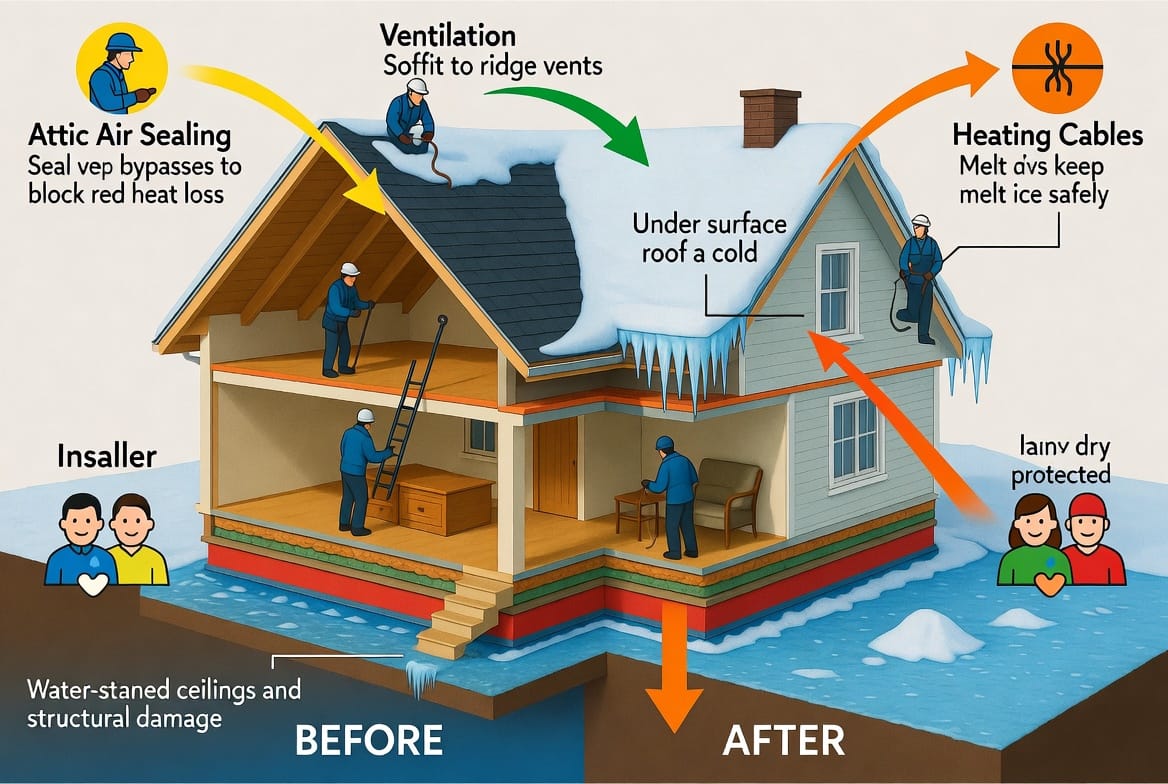
Understanding Ice Dams and Their Hidden Dangers
Ice dams form when snow on the warmer upper portion of your roof melts, runs down to the colder eaves, and refreezes into a solid barrier. This barrier traps additional meltwater, forcing it under shingles and into your home’s interior. The process repeats with every freeze-thaw cycle, escalating damage over time.
Common warning signs include long icicles hanging from eaves, water stains on ceilings or walls, and mysterious leaks during winter thaws. Left unchecked, ice dams can lead to rotten wood, compromised insulation, electrical hazards, and even roof collapse in extreme cases. The financial impact often exceeds thousands of dollars in repairs, not to mention the disruption to daily life.
The good news is that these risks are entirely preventable. A professional roof ice dam prevention plan focuses on controlling heat flow, maintaining uniform roof temperatures, and adding localized protection exactly where needed. This systematic method protects your investment while keeping your home safe and dry all winter long.
The Science Behind Ice Dams: Why Heat Loss Matters
Heat naturally rises, and in poorly prepared attics, it escapes through gaps, unsealed penetrations, and inadequate insulation. This warms the roof deck unevenly, melting snow above living spaces while the eaves remain frigid. The resulting meltwater refreezes at the edge, forming the dam.
Proper insulation and attic air sealing work hand in hand to keep heat where it belongs—inside your living areas. When combined with balanced ventilation, the roof deck stays consistently cold, matching outdoor temperatures and preventing the melt-refreeze cycle entirely. Heating cables serve as the final line of defense in areas where minor heat loss persists despite best efforts.
The Three-Pronged Approach Explained
The most reliable roof ice dam prevention strategy combines three complementary elements. Each addresses a specific part of the problem, creating a robust defense that works even in the harshest winters.
Prong 1: Attic Air Sealing and Insulation – Stopping Heat Loss at the Source
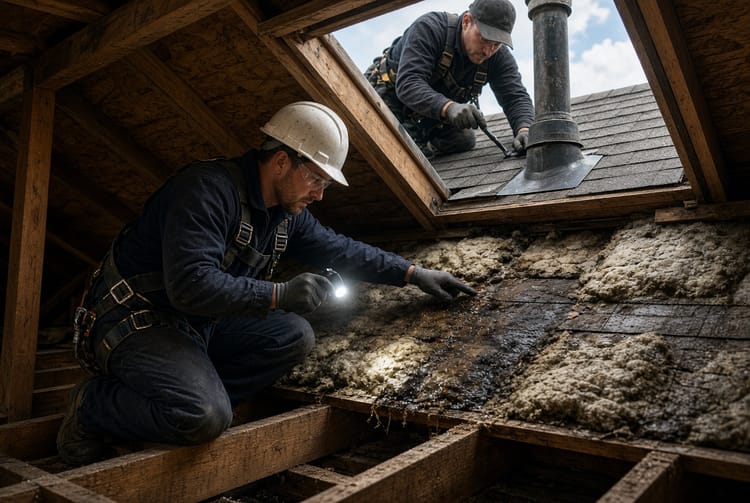
Attic air sealing forms the foundation of any successful prevention plan. Even small gaps around recessed lights, plumbing vents, chimneys, and electrical wires allow significant heat to escape. Sealing these bypasses with appropriate materials dramatically reduces heat transfer to the roof.
High-quality insulation complements sealing by creating a thermal barrier that keeps warmth inside. Upgrading to the recommended R-value for your climate ensures consistent performance. Together, these steps minimize the temperature difference between your attic and the outdoors.
Key benefits of attic air sealing and insulation include:
- Reduced energy consumption and lower heating bills
- Elimination of the primary heat source that melts roof snow
- Improved overall home comfort and air quality
- Extended lifespan of your roof and HVAC system
Professional technicians systematically inspect every penetration, seal with durable foams and tapes, and verify insulation depth and coverage. This meticulous process delivers measurable results you can count on season after season.
Prong 2: Proper Roof Ventilation – Keeping the Roof Cold
Once heat loss is controlled, ventilation ensures any remaining warm air exits efficiently while drawing in cold outside air. A well-designed system creates continuous airflow from soffit vents at the eaves to ridge or gable vents at the peak.
This balanced airflow maintains a cold roof deck, preventing snow from melting in the first place. Without proper ventilation, even a sealed attic can develop hot spots that trigger ice dams.
Essential ventilation components include:
- Adequate soffit intake vents for fresh air entry
- Ridge or box vents for efficient exhaust
- Proper baffles to maintain clear airflow channels above insulation
- Regular inspection to prevent blockages from debris or insulation
When correctly installed, ventilation works silently and effectively, extending your roof’s life while enhancing energy efficiency. Homeowners often notice improved attic conditions and reduced moisture buildup as welcome side benefits.
Prong 3: Heating Cables – Targeted Emergency Protection
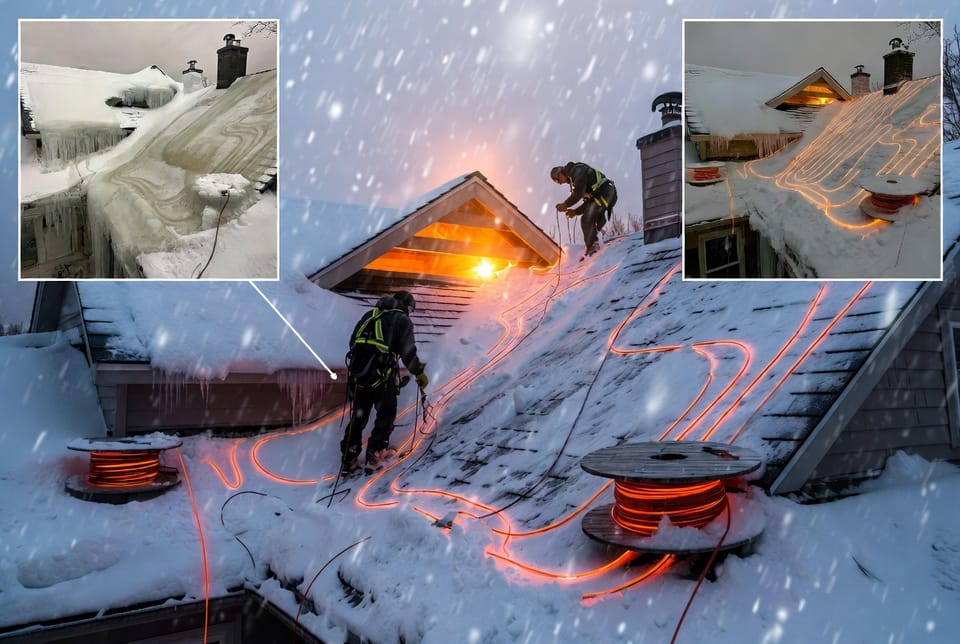
Heating cables provide reliable backup protection for vulnerable areas such as valleys, eaves, and around skylights or dormers. Installed in a zigzag pattern, these self-regulating cables gently warm specific zones to keep meltwater flowing safely off the roof instead of refreezing.
Modern heating cables activate only when needed, conserving energy while delivering precise results. They serve as an emergency measure rather than a primary solution, complementing sealing and ventilation perfectly.
Advantages of professional heating cable installation:
- Immediate protection for problem spots
- Safe, controlled melting that prevents backup
- Durable, weather-resistant design for long-term reliability
- Easy integration with existing roof systems
Trained installers ensure proper spacing, secure attachment, and connection to reliable power sources with appropriate controls.
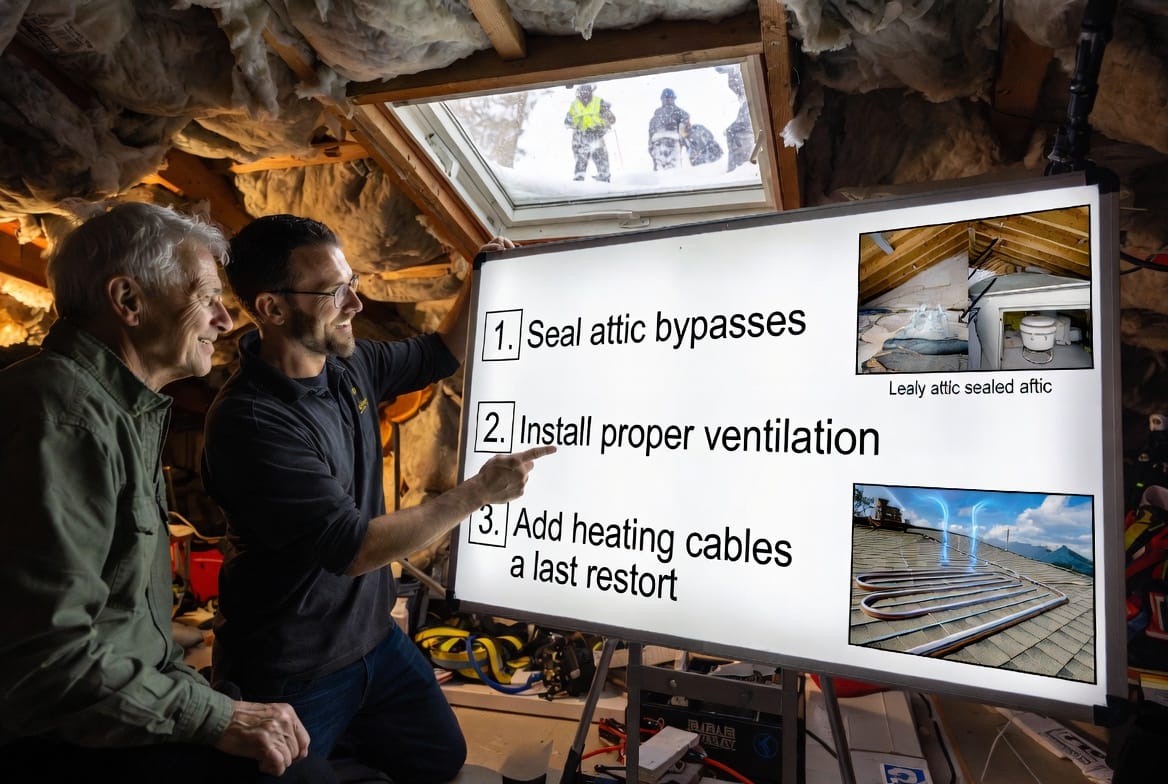
Establishing Your Prevention Priorities
Follow this proven order for maximum effectiveness and efficiency:
- Seal attic bypasses and upgrade insulation first to eliminate the heat source.
- Install or optimize roof ventilation next to maintain cold roof conditions.
- Add heating cables as the final targeted layer for any remaining vulnerable areas.
This sequence ensures you address root causes before applying supplemental solutions. Professionals assess your specific roof design, climate, and home construction to customize the plan accordingly.
Integrating All Three Elements for Complete Protection
When attic air sealing, insulation, ventilation, and heating cables work together, they create a resilient system greater than the sum of its parts. Heat stays contained, airflow keeps the roof cold, and cables handle any edge cases. The result is a roof that performs reliably through repeated freeze-thaw cycles.
Many homeowners discover additional benefits: lower utility costs, reduced noise from ice falling, and increased property value. This integrated approach represents the gold standard in modern roof ice dam prevention.
Common Mistakes Homeowners Make and How to Avoid Them
Relying solely on heating cables without sealing or ventilating often leads to disappointment and higher operating costs. Skipping professional inspection can miss hidden bypasses. Neglecting maintenance after installation allows new issues to develop over time.
Avoid these pitfalls by partnering with experienced roofing professionals who understand the complete system. A thorough attic assessment reveals exactly what your home needs for optimal winter protection.
Long-Term Benefits and Peace of Mind
Investing in comprehensive roof ice dam prevention protects more than your roof. It safeguards your family’s health, preserves your belongings, and maintains the structural integrity of your home. With proper implementation, you can face winter confidently, knowing potential problems have already been solved at the source.
Take Action Before the Next Storm Hits
Don’t wait for the first signs of trouble. Stop ice dams at the source with expert guidance tailored to your home. A professional attic assessment identifies opportunities for attic air sealing, insulation upgrades, ventilation improvements, and strategic heating cable placement.
Our experienced team will evaluate your roof and attic, recommend the ideal three-pronged solution, and deliver lasting winter protection you can rely on.
Protect what matters most. Secure your home against ice dams with the proven combination of ventilation, insulation, and heating cables. Your roof—and your peace of mind—will thank you.
Prevent Costly Ice Dam Damage – Free Attic Assessment Today