The Roof Granule Loss: When It's Normal and When It's a Problem
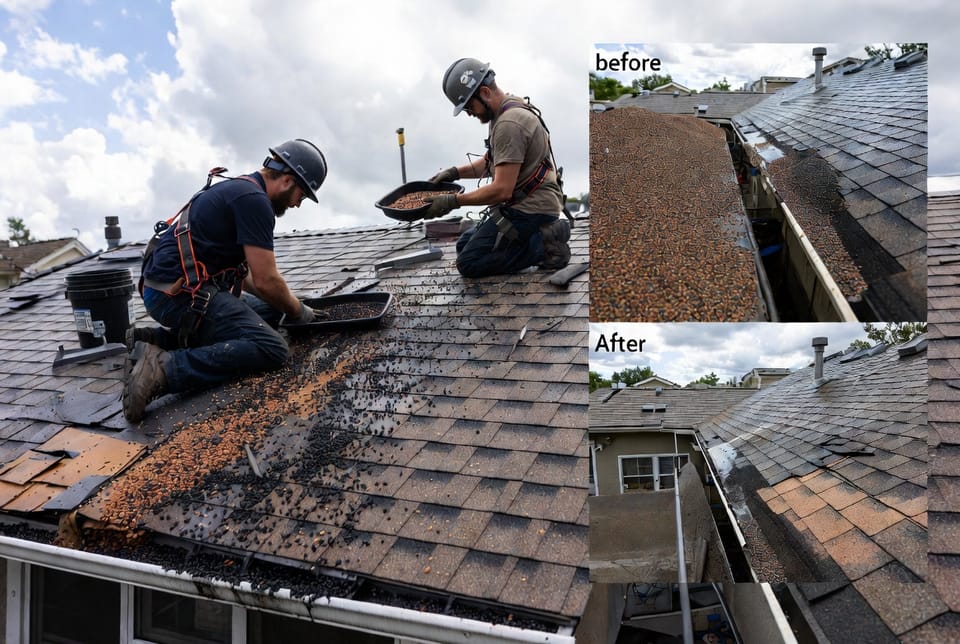
Homeowners often notice tiny, sand-like particles collecting in gutters, downspouts, or scattered across the lawn and driveway. These particles are the protective granules that coat asphalt shingles, and their appearance can spark immediate concern. Is the roof failing? Has a recent storm caused serious damage? Or is this simply part of the natural life cycle of a quality roofing system? Understanding the difference between normal granule loss and excessive granule loss brings peace of mind and helps protect one of the most important investments in any property.
Is Your Granule Loss Normal? Get Expert Help!
This comprehensive guide explains exactly what roof granules do, why some shedding is expected, when the loss signals a genuine problem, the clear signs to watch for, and the precise moment it becomes wise to contact a qualified professional. By the end, you will know how to respond calmly and effectively, ensuring your roof continues to deliver reliable protection for years to come.
Understanding Roof Granules and Their Essential Role
Asphalt shingles remain the most widely chosen residential roofing material because they balance durability, weather resistance, and cost-effectiveness. The outer surface of each shingle is embedded with ceramic-coated mineral granules. These granules perform several critical functions:
- They shield the underlying asphalt from damaging ultraviolet rays that would otherwise accelerate aging and cracking.
- They add a layer of impact resistance against rain, wind-driven debris, and light hail.
- They provide the color and aesthetic finish that contributes to curb appeal.
- They help regulate surface temperature, reducing heat absorption on hot days.
Over time, a modest amount of these granules naturally loosens and washes away. This process is built into the design of modern shingles. Manufacturers account for gradual surface wear when they calculate the expected service life of 20, 25, or 30 years. The key is recognizing the volume and pattern of loss so you can separate ordinary maintenance from conditions that require professional attention.
Normal Granule Loss: What Every Homeowner Should Expect
Normal granule loss occurs in two primary phases and remains within predictable limits.
Initial Shedding on New Roofs
Brand-new asphalt shingles frequently release a noticeable quantity of loose granules during the first several rainfalls. These are excess particles that did not fully embed during the manufacturing process. Roofing crews often refer to this as “shedding” or “dusting.” You may see a light coating of granules in the gutters or a fine dusting on the ground below the eaves for the first few months after installation. This is completely expected and does not indicate poor quality or improper installation. Once the excess material washes away, the remaining granules lock firmly into place and the rate of loss drops dramatically.
Gradual Age-Related Shedding
As shingles progress through their service life, the asphalt binder slowly hardens and loses flexibility. Surface granules begin to release at a steady, low rate. On a mature roof that is halfway through its expected lifespan, it is common to find a small accumulation of granules after heavy rain or high winds. The loss is even and distributed across the entire roof surface rather than concentrated in isolated patches. When the overall granule coverage remains dense and the shingles still feel firm to the touch, this gradual thinning is simply part of normal aging.
In both cases the quantity remains modest. A handful of granules after a storm or a thin layer along the bottom of a gutter is rarely cause for alarm. Homeowners who understand these patterns can avoid unnecessary worry and focus instead on routine roof maintenance.
Excessive Granule Loss: When the Situation Becomes a Concern
Excessive granule loss moves beyond the expected rate and can expose the asphalt layer beneath. Once the protective coating thins significantly, the shingles become vulnerable to accelerated deterioration. Several distinct causes produce this higher volume of loss.
Hail Impact Damage
Hailstones striking the roof surface can fracture the bond between granules and asphalt. After a hailstorm it is common to discover dense piles of granules in gutters, downspouts, and on the ground directly beneath the roof edges. Circular or oval bruises on the shingle surface often accompany the loss. Even relatively small hail can create widespread granule displacement that shortens the remaining life of the roof if left unaddressed.
Defective or Manufacturing-Related Issues
Occasionally a batch of shingles leaves the factory with insufficient granule adhesion. In these cases the surface begins shedding heavily within the first one or two years, far earlier than normal. The loss appears uniform across large sections rather than isolated to impact points. Reputable manufacturers stand behind their products with warranties that cover such defects, making timely documentation essential.
Advanced Aging and Environmental Stress
When a roof approaches or exceeds its design lifespan, the asphalt becomes brittle. Temperature swings, prolonged UV exposure, and repeated freeze-thaw cycles loosen granules at an accelerating pace. In hot climates the process speeds up; in areas with frequent severe weather the combination of age and impact multiplies the rate of loss.
Installation or Ventilation Problems
Improper nailing, inadequate attic ventilation, or moisture trapped beneath the shingles can cause premature granule release. Overheating of the roof deck softens the asphalt binder, allowing granules to detach more readily. These conditions often appear first on south- or west-facing slopes that receive the greatest sun exposure.
Recognizing the difference between normal and excessive loss protects both the structure and the homeowner’s budget. Early intervention frequently restores full performance without the need for complete replacement.
Clear Signs That Granule Loss May Be a Problem
Homeowners do not need specialized equipment to monitor their roofs. Several observable indicators help distinguish ordinary shedding from conditions that warrant professional assessment:
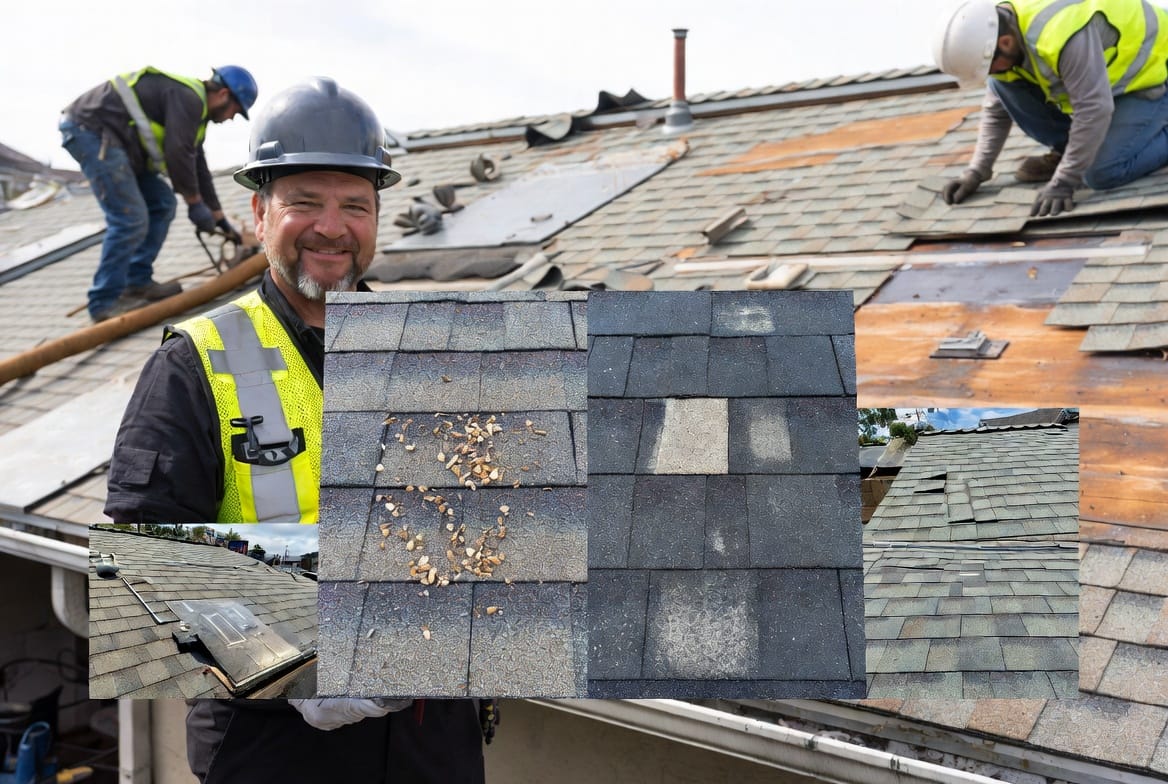
- Bald or shiny spots appearing on the shingle surface where the dark asphalt shows through
- Heavy granule accumulation forming thick layers in gutters, downspouts, or on the ground after every significant rain
- Uneven distribution of loss concentrated on one slope or section rather than spread evenly
- Visible bruising or soft spots that feel spongy when gently pressed
- Accelerated aging appearance on a relatively young roof that still should have many years of service remaining
- Granules mixed with asphalt particles or larger pieces of the shingle matrix, indicating deeper surface breakdown
When any of these signs appear together, the protective capacity of the roof is diminishing. Continued exposure of the asphalt layer leads to drying, cracking, and eventual leaks. Addressing the issue promptly preserves the integrity of the entire roofing system and the structure beneath it.
The Importance of Professional Assessment
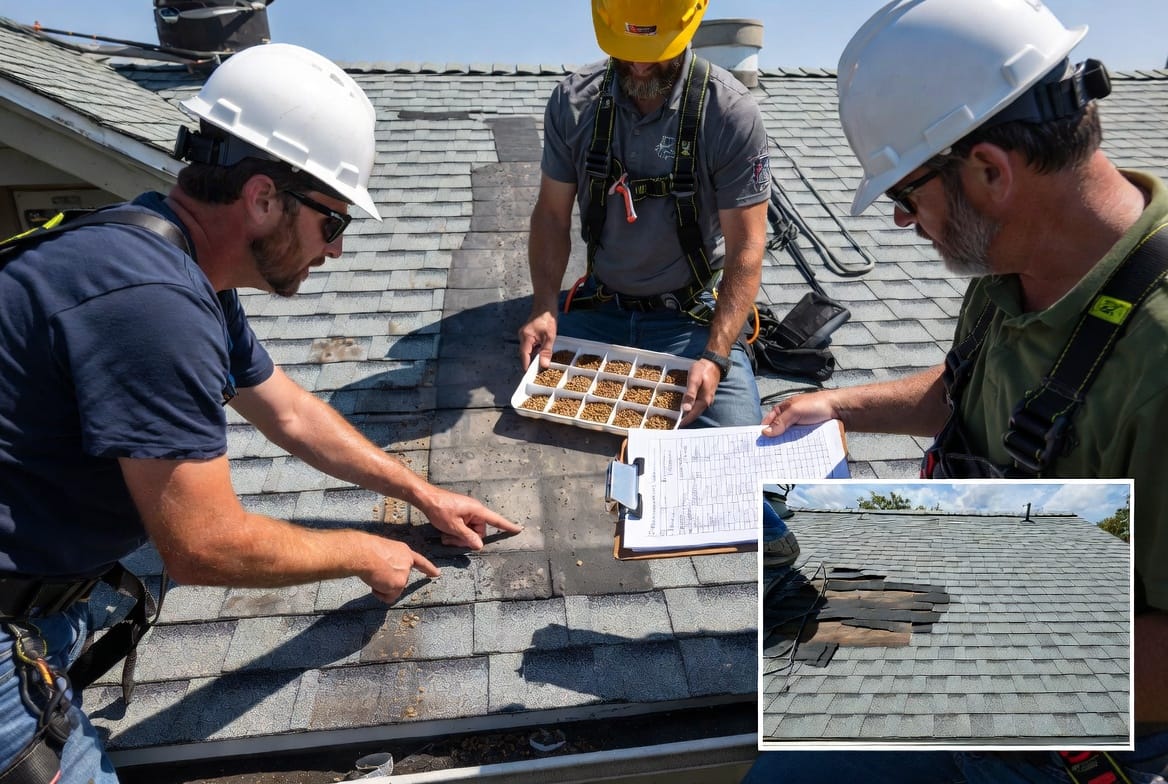
While visual clues provide valuable guidance, only a trained roofing specialist can accurately determine the full extent of granule loss and its underlying cause. A thorough inspection includes:
- Close examination of shingle surfaces from multiple angles and elevations
- Measurement of remaining granule density across different roof planes
- Evaluation of attic ventilation, insulation, and moisture levels
- Documentation of any impact marks, manufacturing irregularities, or installation concerns
- Comparison of current condition against the expected performance for the roof’s age and material type
Professionals use specialized knowledge of manufacturer specifications and local climate patterns to deliver an objective report. They can advise whether simple maintenance, targeted repairs, or a more comprehensive solution offers the best long-term value. Most importantly, they help homeowners avoid both under-reacting to genuine problems and over-reacting to normal aging.
Practical Steps Homeowners Can Take Right Now
Between professional visits, simple observations and maintenance practices keep the roof performing at its best:
- Clean gutters and downspouts regularly so accumulated granules do not obstruct water flow
- After major storms, walk the perimeter of the house and note any sudden increase in granule volume
- Keep trees trimmed away from the roof to reduce abrasion from branches
- Ensure attic ventilation remains unobstructed so heat and moisture do not accelerate surface degradation
- Schedule a routine roof inspection every few years, or immediately after severe weather events
These straightforward habits extend the useful life of the roof and provide early warning when conditions change.
Peace of Mind Through Knowledge and Timely Action
Granule loss on an asphalt-shingle roof is a common and often misunderstood occurrence. In many cases it represents nothing more than the expected behavior of a well-designed product. New roofs shed excess granules; mature roofs release them gradually as part of normal aging. When the volume increases dramatically, when bald spots appear, or when the loss follows a severe weather event, the situation deserves professional evaluation.
Understanding these distinctions removes uncertainty and empowers homeowners to act with confidence. Regular observation combined with expert assessment at the right moments ensures the roof continues to protect the home efficiently and cost-effectively.
Protect Your Roof from Excessive Granule Loss