The Roof Exhaust Fan: Ventilating Attics and Bathrooms Through the Roof
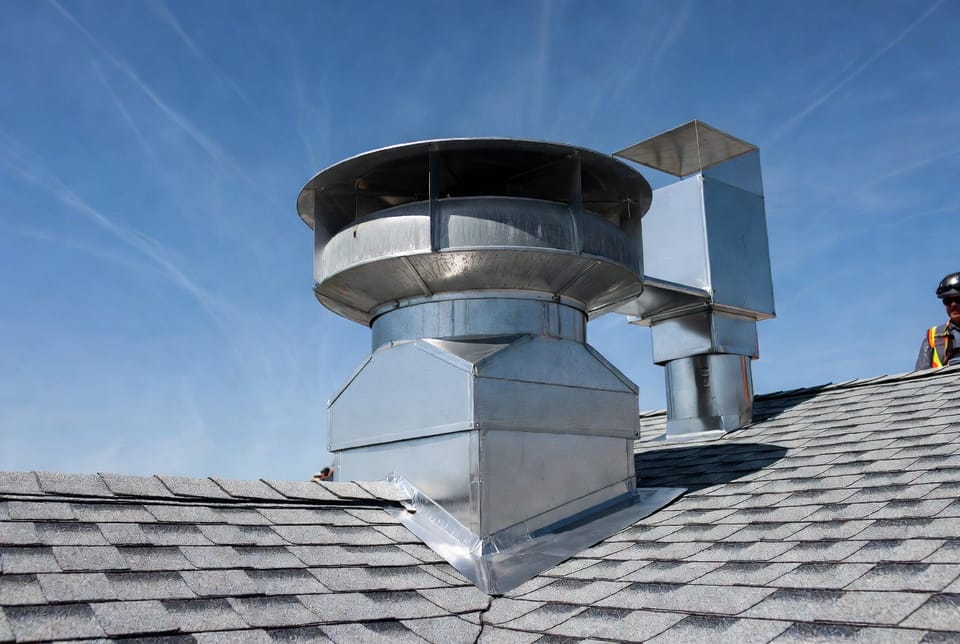
Proper roof ventilation plays a critical role in maintaining the structural integrity and energy efficiency of any home. Among the most effective solutions are roof exhaust fans, which provide targeted ventilation for attics, bathrooms, and even whole-house systems. When installed correctly with professional roof penetrations and flashing, these fans deliver powerful airflow while preventing one of the most common roofing issues: water intrusion.
Protect Your Roof with Expert Fan Installation – Call Now
At our roofing expertise center, we’ve helped thousands of homeowners achieve optimal ventilation without compromising their roof’s waterproofing. This comprehensive guide explains everything you need to know about roof-mounted exhaust fans and how to ensure leak-free performance for years to come.
Why Roof-Mounted Exhaust Fans Matter
Moisture control stands as one of the biggest challenges in home maintenance. Without adequate ventilation, humid air from bathrooms and hot air from attics become trapped, leading to mold growth, reduced insulation effectiveness, and premature roof deterioration.
Roof exhaust fans solve this by expelling stale, moist air directly through the roof. Unlike side-wall or gable vents, roof-mounted units offer superior performance in various climates and architectural styles. They create negative pressure that pulls fresh air in through soffit vents, establishing a complete ventilation cycle.
Key benefits include:
- Reduced energy costs through better temperature regulation
- Extended roof lifespan by minimizing heat and moisture damage
- Improved indoor air quality by removing pollutants and humidity
- Prevention of ice dams in colder regions
- Compliance with building codes for proper attic ventilation
Types of Roof Exhaust Fans
Understanding the different roof exhaust fan options helps homeowners choose the right solution for their specific needs.
Bathroom Exhaust Fans mounted on the roof efficiently remove steam and odors directly from the top of the house. These units typically feature quiet motors and are ideal for homes where attic space allows easy ducting.
Attic Exhaust Fans focus on temperature regulation. They activate automatically when attic temperatures rise above a set point, protecting roof sheathing and shingles from excessive heat.
Whole-House Fans provide powerful ventilation across multiple levels. These larger units move significant volumes of air, making them excellent for cooling homes during shoulder seasons without relying heavily on air conditioning.
Each type requires precise roof penetration planning to maintain the roof’s protective envelope.
Understanding Roof Penetrations for Ventilation
Every roof exhaust fan creates a penetration through the roof deck. While necessary for ventilation, these openings represent potential weak points if not properly sealed.
The key to success lies in professional flashing installation. Flashing creates a waterproof barrier around the penetration, directing water away from the opening and down the roof slope.
Two primary mounting methods dominate modern installations:
Curb Mount Installation
Curb mount systems feature a raised wooden or metal frame (curb) built around the fan opening. This method elevates the fan above the roof plane, providing excellent protection against standing water.
Advantages of curb mount:
- Superior water shedding capabilities
- Easier integration with thicker insulation
- Better accommodation for larger fan units
Deck Mount Installation
Deck mount fans sit directly on the roof sheathing with a lower profile. These units use specialized bases and extensive flashing systems to achieve weather tightness.
Deck mount benefits:
- Sleeker appearance that blends with roof lines
- Suitable for lower pitch roofs
- Often more cost-effective for smaller applications
Proper Flashing Installation Techniques
High-quality flashing forms the foundation of any successful roof fan installation. Professional roofers use a multi-layer approach to create redundant protection against leaks.
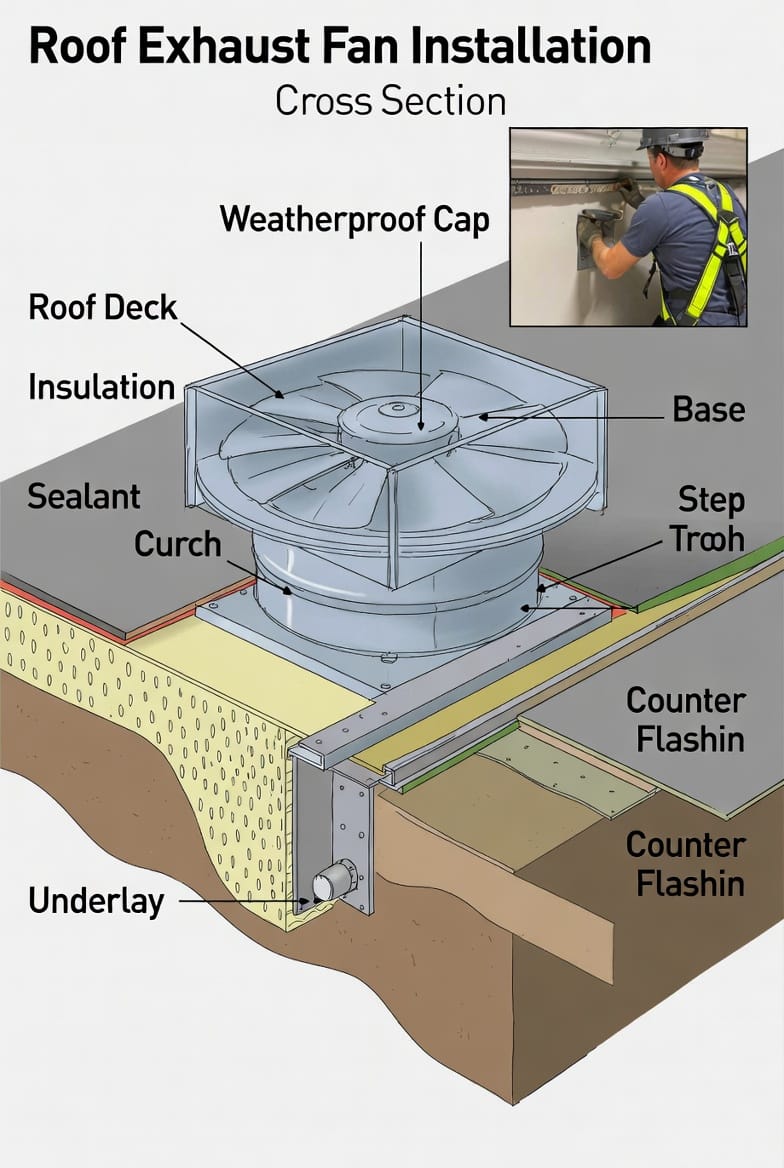
The process begins with careful cutting of the roof deck to exact specifications. Installers then apply underlayment that extends well beyond the opening. Metal flashing pieces interlock around the penetration, with each layer overlapping the one below it according to water flow direction.
Critical flashing components include:
- Base flashing that seals directly to the roof deck
- Step flashing along the sides (for shingle roofs)
- Counter flashing that covers the fan curb or base
- Weather cap or hood that protects the fan motor and opening
Bold emphasis on quality materials makes a tremendous difference. We recommend using 26-gauge or heavier galvanized steel or copper flashing, paired with high-grade sealants designed for roofing applications.
Preventing Leaks at Roof Penetrations
Water intrusion around roof fans ranks among the most preventable roofing problems. Proper installation eliminates this risk entirely.
Essential leak prevention practices:
- Accurate sizing of the roof opening to match the fan specifications
- Proper slope of the curb or base for water drainage
- Generous sealant application at all seams and penetrations
- Regular inspection of flashing condition
- Quality underlayment that extends at least 12-18 inches beyond the opening
Homeowners should remain vigilant about potential warning signs of flashing issues.
Common Signs of Fan Flashing Failure
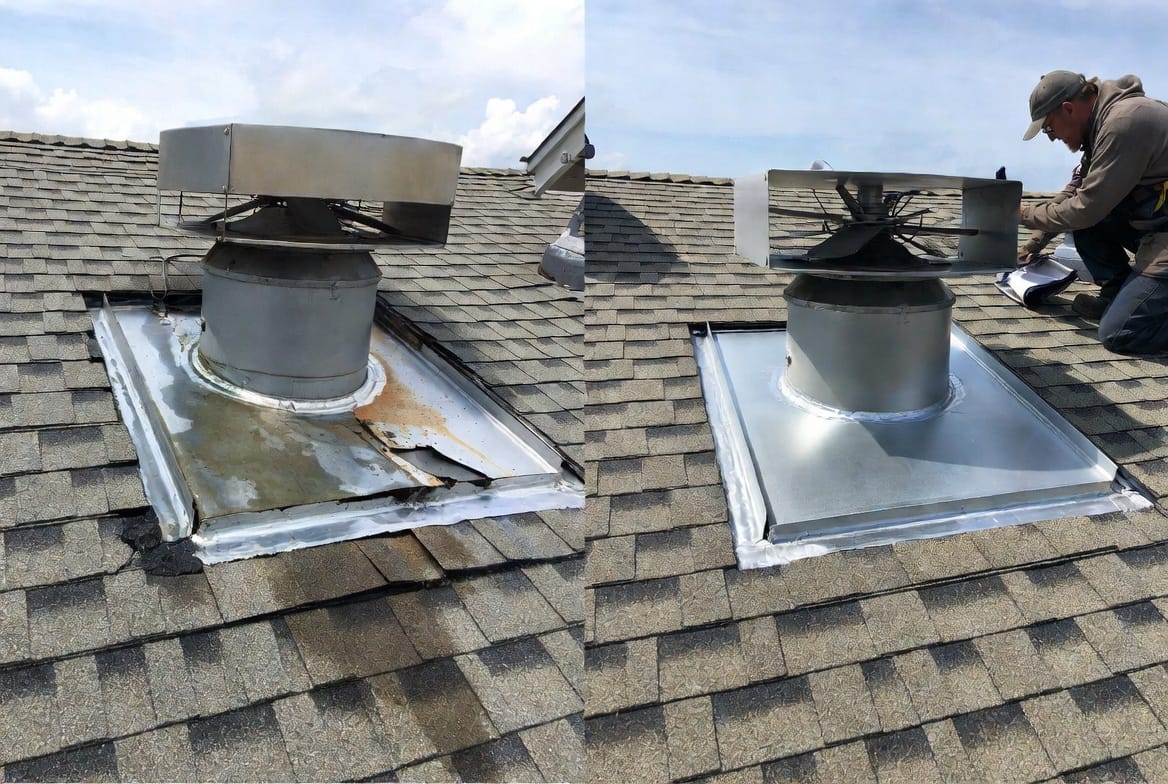
Early detection protects your investment. Watch for these warning indicators:
- Water stains on ceiling near fan location
- Rust development on fan housing or flashing
- Deteriorated or cracked sealant around the base
- Granules washing away from shingles below the fan
- Musty odors or increased humidity in the attic
When these signs appear, prompt professional attention prevents escalation into major structural damage.
Maintenance Tips for Long-Term Performance
Regular maintenance extends both fan life and roof integrity. Schedule annual inspections before heavy rain seasons to verify flashing condition and fan operation.
Clean fan blades and housing to maintain optimal airflow. Check electrical connections and lubricate motors according to manufacturer specifications. Replace worn gaskets and refresh sealant as needed.
Professional servicing ensures all components work together as designed. Our technicians use specialized tools to inspect hidden flashing layers without causing additional roof penetrations.
Choosing the Right Professional Installation
DIY roof fan installation carries significant risks. Improper flashing often leads to leaks that damage ceilings, insulation, and interior finishes. The cost of repairs frequently exceeds professional installation expenses.
Experienced roofing contractors understand local building codes, climate considerations, and best practices for different roofing materials. They possess the specialized equipment needed for safe work on steep slopes and complex roof designs.
Ventilate Without Leaking
A well-installed roof exhaust fan provides years of reliable ventilation while maintaining your roof’s protective capabilities. The combination of proper equipment selection, expert flashing techniques, and quality materials creates a system that performs beautifully without introducing vulnerabilities.
Don’t compromise your roof’s integrity for better airflow. Trust experienced professionals who specialize in both ventilation and waterproofing.
We ensure your home achieves optimal airflow with complete peace of mind against leaks.
Protect your investment with proper roof penetration solutions that deliver lasting performance and reliability. Your attic, bathrooms, and entire home will benefit from the improved air quality and temperature control that only a professionally installed roof exhaust fan system can provide.
Proper Roof Fan & Flashing Done Right – Call Today