The Robin Nesting: Managing Bird Nests in Unsafe Locations
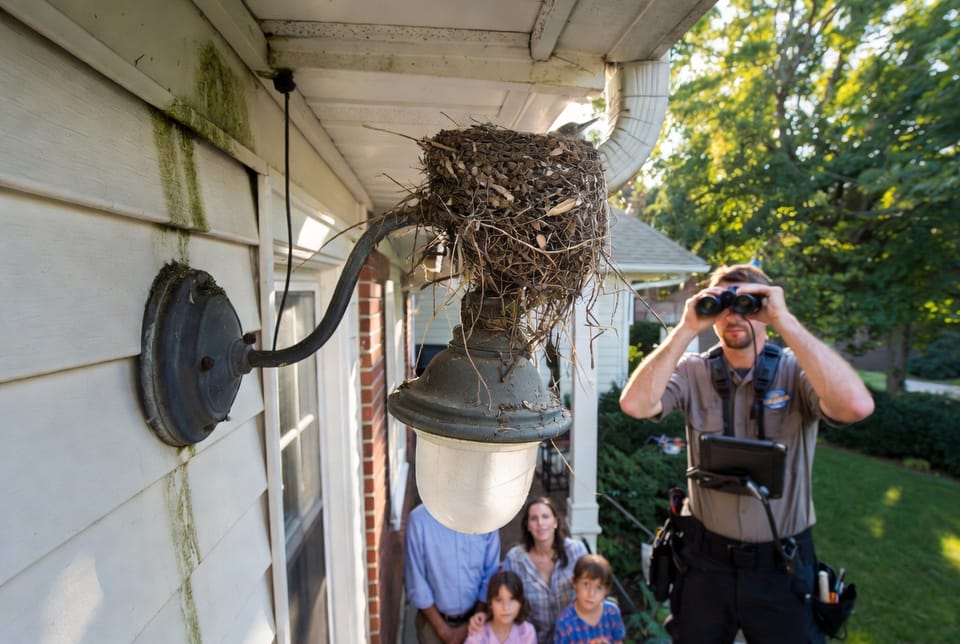
Discovering a robin’s nest tucked into your home’s exterior can feel like a charming connection to nature. Yet when that nest appears on a porch light, gutter, downspout, or ledge, the situation quickly shifts from delightful to concerning. American Robins are resourceful builders, but their choice of nesting sites often creates real risks for both the birds and your property.
Manage Robin Nests Legally & Humanely – Call Now!
Understanding how to manage these situations legally and humanely protects your home while respecting wildlife protections. This guide explains robin nesting habits, the problems unsafe locations create, the critical legal timing rules every homeowner must know, and the step-by-step process professionals follow for safe resolution.
Understanding American Robin Nesting Habits
Where Robins Choose to Build Nests on Homes
American Robins are highly adaptable and frequently select man-made structures for nesting. Common unsafe locations include:
- Porch lights and exterior light fixtures that provide shelter and warmth
- Gutters and downspouts where mud and grass are easily accessible for construction
- Window ledges, eaves, and decorative trim
- Security camera mounts, vents, and open architectural features
These spots offer protection from predators and weather, yet they place nests directly in conflict with daily home functions. Robins often reuse or build near previous sites, returning year after year if conditions remain favorable.
The Nesting Cycle and Critical Timing
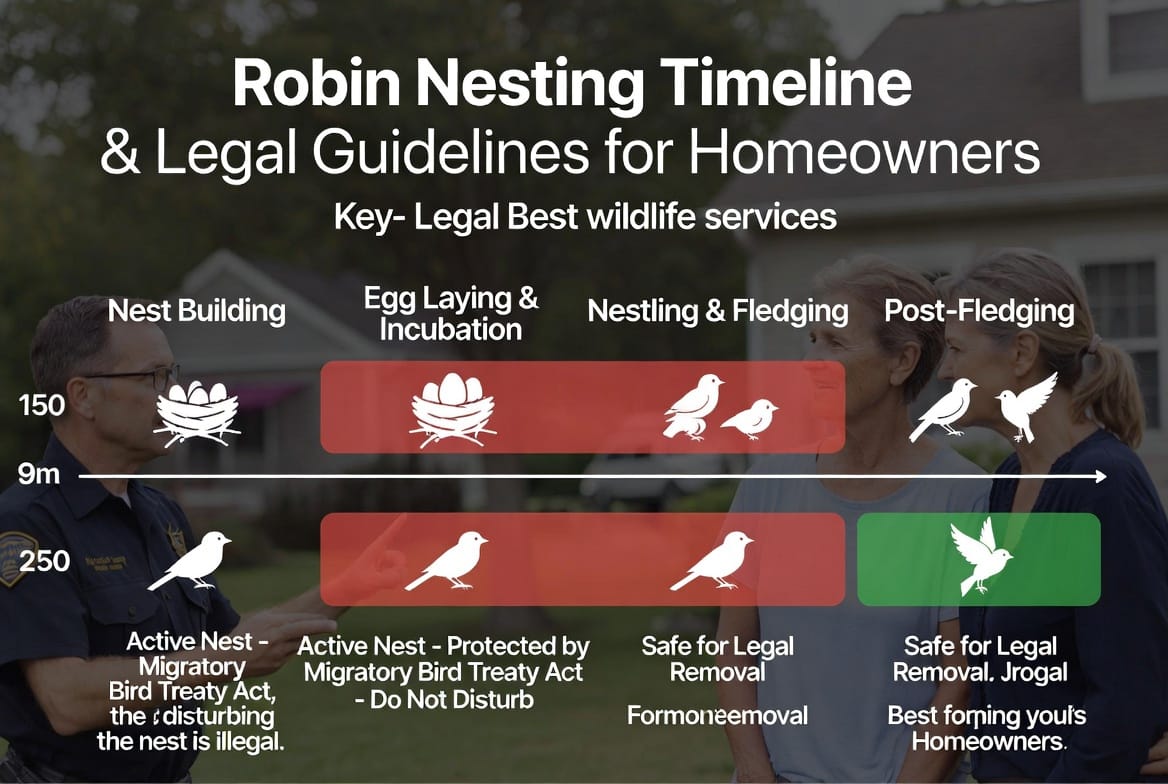
Robins typically raise two to three broods each season. The female builds the distinctive mud-lined cup nest over several days. She lays one egg daily until the clutch is complete, usually three to five eggs. Incubation lasts about twelve to fourteen days, followed by roughly thirteen days of nestling stage when both parents feed the young. After fledging, the young remain dependent on the parents for several more weeks while learning to forage.
This entire active period usually spans three to five weeks. During this time the nest is protected under federal law. Once the last fledgling leaves and activity ceases for several days, the nest becomes inactive and removal becomes legally permissible in most cases.
The Real Problems Created by Nests in Unsafe Locations
A robin’s nest in the wrong place is more than an inconvenience. It can lead to tangible property damage, safety hazards, and ongoing maintenance issues.
Blocked Drainage and Water Damage
When robins build in gutters or downspouts, the nest materials trap leaves and debris. During heavy rain, water overflows instead of flowing away from the foundation. This leads to fascia rot, siding damage, and soil erosion around the base of the home. In colder climates, trapped moisture can contribute to ice dam formation.
Fire and Electrical Hazards
Nests constructed near light fixtures, electrical boxes, or wiring introduce flammable materials into high-risk zones. Heat from bulbs or minor electrical arcing can ignite dry nesting material. Accumulated droppings may also corrode connections over time, increasing the chance of shorts or failures.
Health, Sanitation, and Pest Issues
Bird droppings are acidic and can stain masonry, wood, and painted surfaces permanently. Large accumulations create slippery conditions on walkways and attract flies and other insects. While robins carry lower disease risk than some other birds, any concentrated droppings near living spaces warrant professional cleaning.
Noise, Aggression, and Quality of Life
Begging chicks can create surprising noise levels near bedrooms or outdoor living areas. Parent robins defending an active nest may dive-bomb people or pets who come too close, creating stressful encounters for families.
Legal Requirements: When Nest Removal Is Allowed
The Migratory Bird Treaty Act (MBTA) protects American Robins and nearly all native North American birds. Under this federal law, it is illegal to disturb, remove, or destroy an active nest containing eggs or dependent young. Violations can result in significant fines and potential criminal penalties.
Clear Guidelines for Legal Action
Removal is generally legal in these situations:
- The nest is completely empty and no eggs have been laid yet
- All fledglings have left the nest and no adult birds are tending it
- The nest has been inactive for an extended period with no signs of rebuilding
Even when removal is legal, timing matters. Many homeowners prefer to wait until natural fledging occurs rather than risk stressing the birds or accidentally violating the law. Local ordinances or homeowners association rules may add further restrictions, making professional guidance valuable.
Safe, Humane Steps Professionals Follow
Experienced wildlife removal specialists follow a structured process that prioritizes both legal compliance and the welfare of the birds.
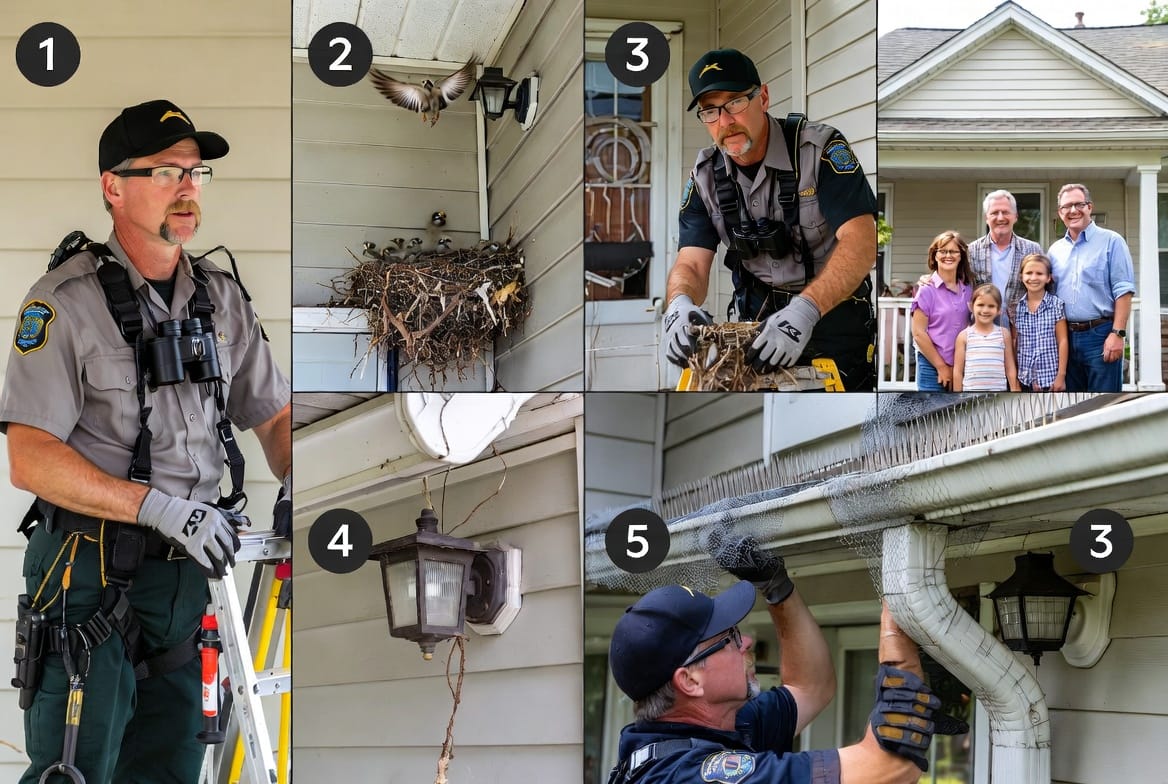
Step 1: Careful Identification and Monitoring
Technicians observe from a distance using binoculars to confirm species, nest stage, and activity level. They document whether eggs or young are present without causing stress to the birds. This assessment determines whether immediate action is possible or if waiting is required.
Step 2: Respecting the Fledging Period When Necessary
When an active nest is discovered, the recommended approach is almost always to wait. The fledging period is relatively short. Once young birds leave and activity stops, the nest can be removed without legal risk or harm to wildlife.
Step 3: Professional Removal of Inactive Nests
After confirming inactivity, specialists remove the nest materials using proper personal protective equipment. They clean droppings and staining with appropriate, bird-safe methods and dispose of waste responsibly. This step eliminates the mess and reduces the chance of rapid reuse.
Step 4: Installing Effective, Humane Deterrents
After removal, the focus shifts to prevention. Professionals install physical barriers such as gutter guards, bird spikes on ledges, and protective mesh around light fixtures and vents. These solutions are selected for long-term effectiveness while remaining safe for birds and compliant with regulations. Visual deterrents and habitat modifications may also be recommended based on the specific property.
Long-Term Prevention and Protecting Your Home
The most effective strategy combines timely removal with permanent exclusion. Annual spring inspections of gutters, lights, and eaves allow early detection before nests become established. Simple modifications such as installing gutter guards during routine maintenance or adding mesh screens to vulnerable fixtures dramatically reduce future conflicts.
Professional wildlife removal teams often offer maintenance programs that include seasonal checks and deterrent upgrades. These services provide ongoing peace of mind and protect your property investment without repeated DIY attempts that may prove ineffective or non-compliant.
Why Professional Expertise Matters
Attempting to manage bird nests yourself carries unnecessary risks. Incorrect timing can result in federal violations. Unsafe ladder work near electrical fixtures creates fall and shock hazards. Incomplete removal often leads to rapid rebuilding. Professional specialists bring current knowledge of regulations, proper equipment for safe access, and proven exclusion techniques that actually work long-term.
They also handle the thorough sanitation that prevents staining and odor issues from lingering after the birds are gone.
Protect Your Home While Respecting Wildlife
Robin nesting in unsafe locations does not have to result in property damage or legal complications. With accurate information about timing, a commitment to humane practices, and the support of trained professionals, homeowners can resolve these situations cleanly and responsibly.
If you have discovered a robin’s nest on your porch light, gutter, or another problematic area, avoid taking chances with timing or removal methods. Professional assessment ensures you stay fully compliant while protecting both your family and the birds.
Manage bird nesting legally and humanely.
Legal Robin Nest Removal – Call Our Wildlife Experts!