The Porcupine Quill Damage: Protecting Trees and Structures
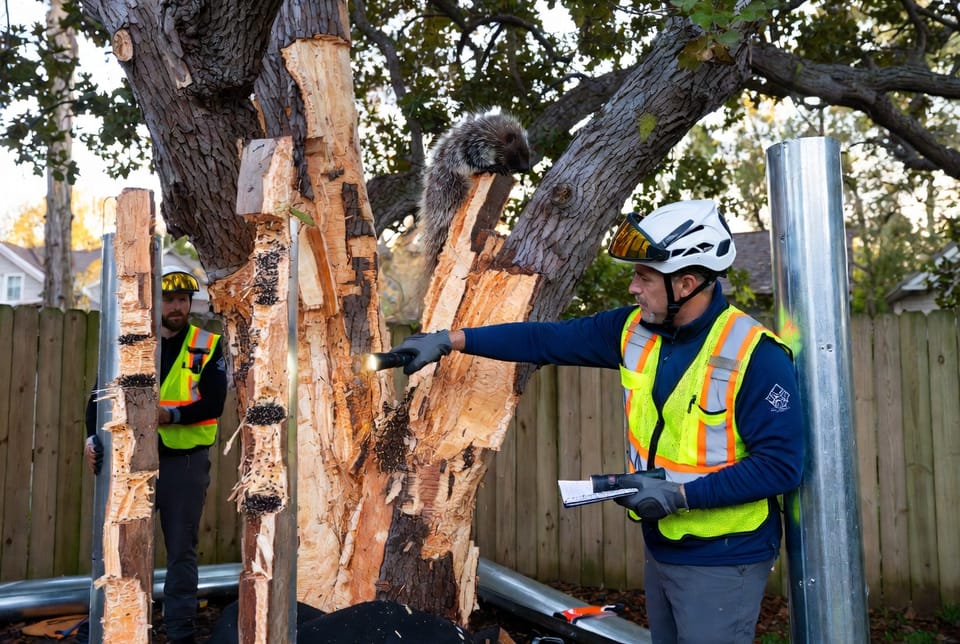
Porcupines may appear slow-moving and harmless at first glance, yet their feeding habits create some of the most persistent and costly forms of wildlife damage property owners encounter. When these large rodents focus on the trees and wooden elements around homes, the result is often porcupine quill damage that weakens living trees, compromises structural integrity, and leaves behind a trail of sharp quills that pose secondary risks. Understanding the behavior, recognizing early signs, and applying humane exclusion techniques allows homeowners and land managers to protect valuable landscaping and buildings without unnecessary conflict.
Protect Your Trees from Porcupines – Call Now!
This guide examines the unique challenges posed by porcupines, explains why they target bark and wood, details the visible evidence of their activity, and outlines practical, long-term solutions that keep both trees and structures secure.
Understanding Porcupine Behavior and Feeding Patterns
Porcupines are primarily nocturnal herbivores with a strong preference for the inner bark, or cambium layer, of certain trees. During colder months when other food sources become scarce, they climb trunks and limbs to strip bark in vertical or spiral patterns. This activity is not random; the animals seek nutrient-rich tissue and the salt compounds that sometimes accumulate on bark surfaces near roads or treated lumber.
Beyond living trees, porcupines are drawn to any wooden surface that offers a combination of texture and mineral content. They routinely chew on deck railings, porch posts, tool handles, and even vehicle tires or brake lines when residual road salt is present. The same attraction to salt explains why porcupines may linger near buildings where human activity leaves behind salty residues from sweat, food scraps, or de-icing products.
Their quills serve as a defensive mechanism rather than an offensive tool. When threatened, a porcupine raises and releases loosely attached quills that can embed in skin, paws, or soft tissue. While the animal itself rarely attacks, the presence of loose quills on the ground or lodged in chewed wood creates an ongoing hazard for pets, livestock, and people working outdoors.
Why Trees and Structures Become Targets
Several environmental and behavioral factors increase the likelihood of porcupine damage:
- Seasonal food scarcity drives heavier bark feeding in late fall through early spring.
- Trees with thinner bark or those already stressed by drought or previous injury are preferred.
- Wooden structures treated with certain preservatives or located near salted roads become attractive chewing sites.
- Proximity of dense cover or rocky dens provides safe daytime resting spots close to feeding areas.
Once a porcupine establishes a routine feeding path, the same trees or posts may be revisited night after night. Repeated girdling—complete removal of bark in a ring around the trunk—interrupts the flow of water and nutrients and can kill even mature specimens within a single season.
Recognizing the Signs of Porcupine Activity
Early detection remains the most effective way to limit long-term harm. Property owners who regularly inspect trees and wooden features can intervene before damage becomes irreversible. Common indicators include:
- Vertical or spiral strips of missing bark, often higher than ground-level deer browsing.
- Fresh, light-colored wood exposed where the cambium has been chewed away.
- Scattered quills on the ground, especially near the base of damaged trees or under wooden decks.
- Distinctive oval droppings that may contain wood fibers or bark fragments.
- Tooth marks on fence posts, porch steps, or outdoor furniture that appear as broad, parallel grooves.
- Climbing marks or broken lower branches where the animal has moved between feeding sites.
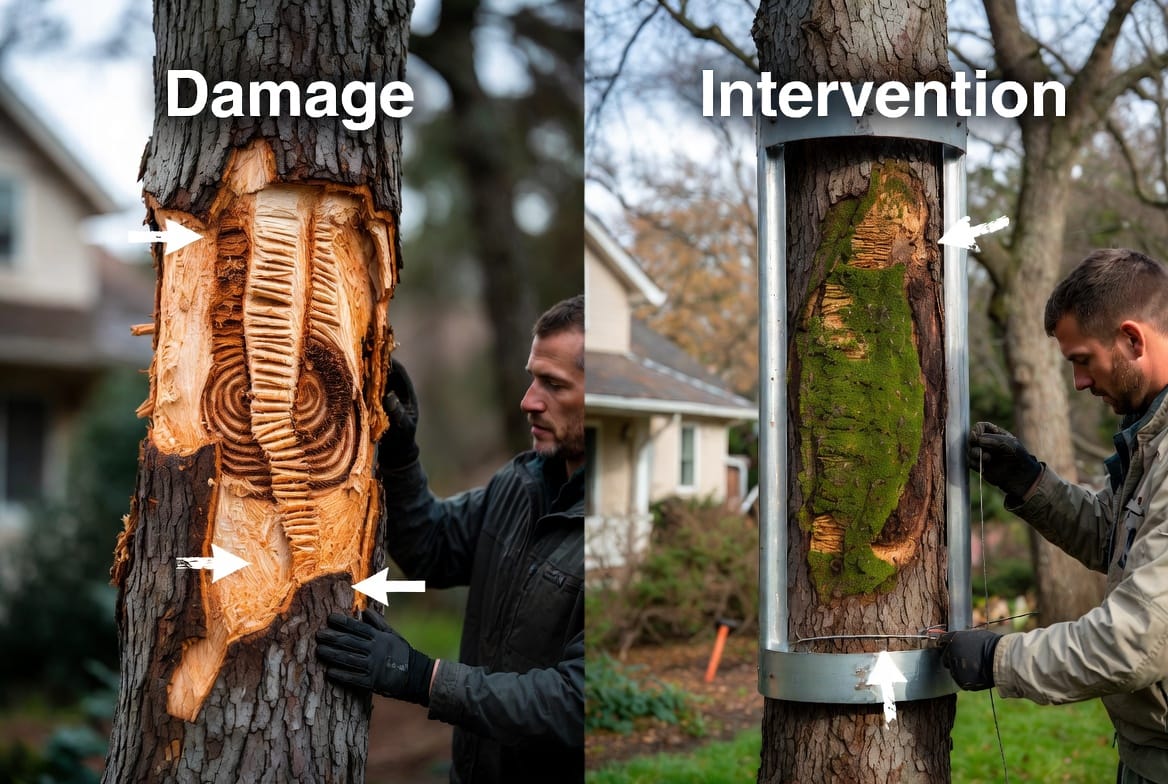
These signs often appear first on preferred species such as aspen, birch, pine, or fruit trees, yet almost any hardwood or softwood can become a target when food pressure is high. Structures closest to woodland edges or rocky outcrops tend to receive the heaviest attention.
The Real Risks of Unchecked Porcupine Damage
Beyond the obvious aesthetic impact, porcupine quill damage carries several practical consequences. Girdled trees lose structural strength and may fail during storms, creating safety hazards near homes, walkways, or power lines. Repeated chewing on load-bearing posts or railings can compromise decks and fences, leading to costly repairs. Loose quills present an additional medical concern; embedded quills can migrate under the skin of pets or livestock and require veterinary extraction.
In managed landscapes or orchards the cumulative loss of mature trees reduces property value and ecological function. Young plantings are especially vulnerable and may never recover if the main stem is completely girdled. Left unaddressed, a single persistent porcupine or small family group can affect dozens of trees across a property within one winter.
Humane Exclusion and Long-Term Protection Strategies
Effective solutions focus on removing the attraction and physically blocking access rather than attempting to eliminate every animal. Humane exclusion methods proven over time include:
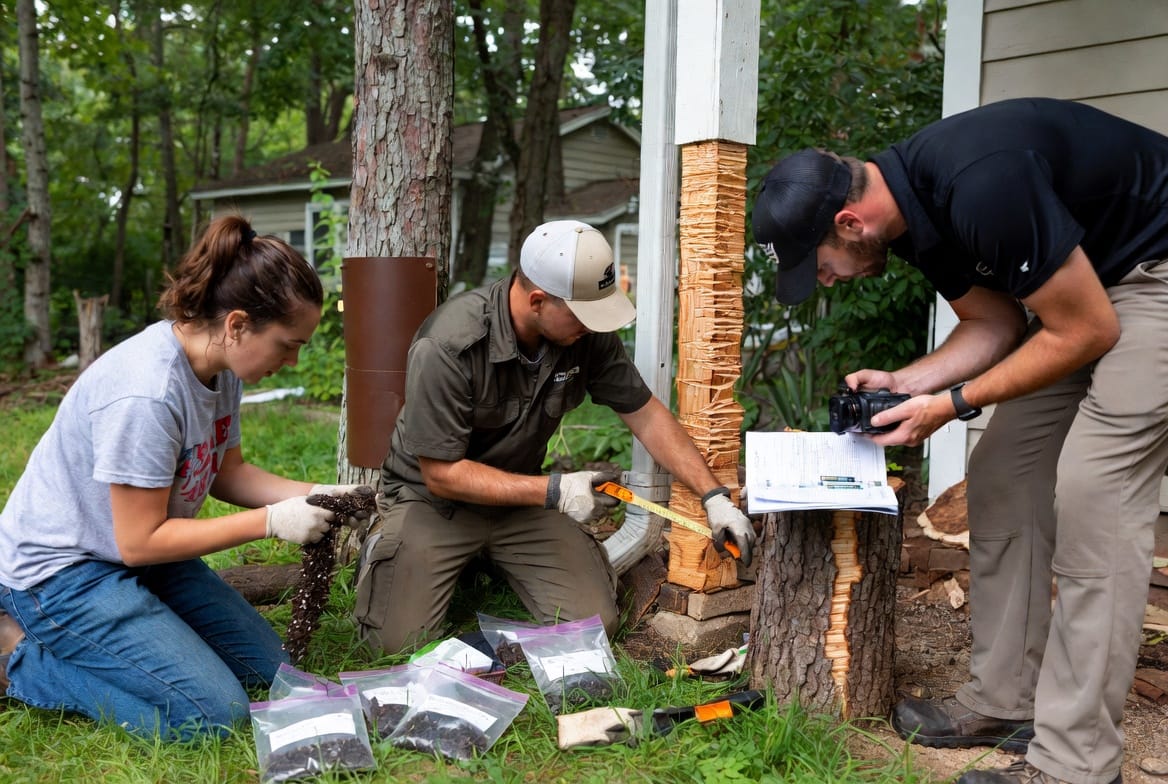
- Installing smooth metal or plastic trunk guards that extend at least four feet above ground and wrap the circumference tightly enough to prevent climbing.
- Removing or relocating salt sources such as road-salt piles, treated lumber, or residual de-icing products near buildings.
- Trimming lower branches that create easy access routes from the ground or neighboring trees.
- Securing potential den sites under porches or sheds with sturdy screening while ensuring no animals are trapped inside.
- Maintaining a buffer of less-preferred vegetation or open ground between dense cover and valuable trees.
Tree guards must be checked periodically because expanding trunks can be constricted if the barrier is fixed too tightly. In high-pressure areas, combining guards with habitat modification yields the most reliable results. Professional assessment helps determine the correct height, material, and placement for each tree species and site condition.
When damage is already advanced or when porcupines have established dens beneath structures, timed exclusion paired with one-way doors allows animals to leave safely and prevents re-entry. This approach respects both property needs and the ecological role porcupines play in forest regeneration through their selective feeding.
Integrating Professional Wildlife Services
While many prevention steps can be performed by determined property owners, complex or widespread problems benefit from trained specialists. Experienced teams bring knowledge of local porcupine movement patterns, proper guard installation techniques, and the ability to identify secondary attractants that casual inspection might miss. They also carry the equipment needed to work safely at height or around quill hazards.
A thorough site evaluation typically includes mapping damaged trees, locating likely travel corridors, and recommending a prioritized sequence of protective measures. Follow-up visits confirm that exclusion devices remain effective through seasonal changes. This systematic process reduces the chance of recurring damage and protects the long-term health of the landscape.
Building a Sustainable Defense Plan
Successful long-term protection combines physical barriers, attractant reduction, and ongoing monitoring. Property owners who schedule seasonal inspections—especially before and after winter—catch new activity early. Keeping detailed notes or photographs of previously damaged trees helps track recovery and identify any new targets. In mixed rural-suburban settings, coordinating with neighbors can further reduce the overall pressure on shared tree stands.
Education also plays a role. Understanding that porcupines are responding to natural nutritional needs rather than malice encourages solutions that coexist with local wildlife while safeguarding human investments. When exclusion is designed correctly, trees continue to grow, structures remain intact, and the animals simply move to less protected or less attractive resources.
Conclusion: Proactive Care Preserves Value and Safety
Porcupine quill damage is a specialized form of wildlife impact that rewards early recognition and consistent prevention. By learning the animals’ feeding preferences, watching for the distinctive signs of bark stripping and wood chewing, and applying humane exclusion methods such as tree guards and salt-source removal, property owners can protect both living trees and built structures for years to come.
The combination of informed observation and professional support turns a potentially expensive problem into a manageable maintenance task. Healthy trees continue to provide shade, privacy, and ecological benefits; wooden features retain their strength and appearance; and the risk of quill-related injuries declines dramatically.
Stop Porcupine Damage Today – Call Specialists!