The Otter Problem: Managing River Otters in Backyard Ponds
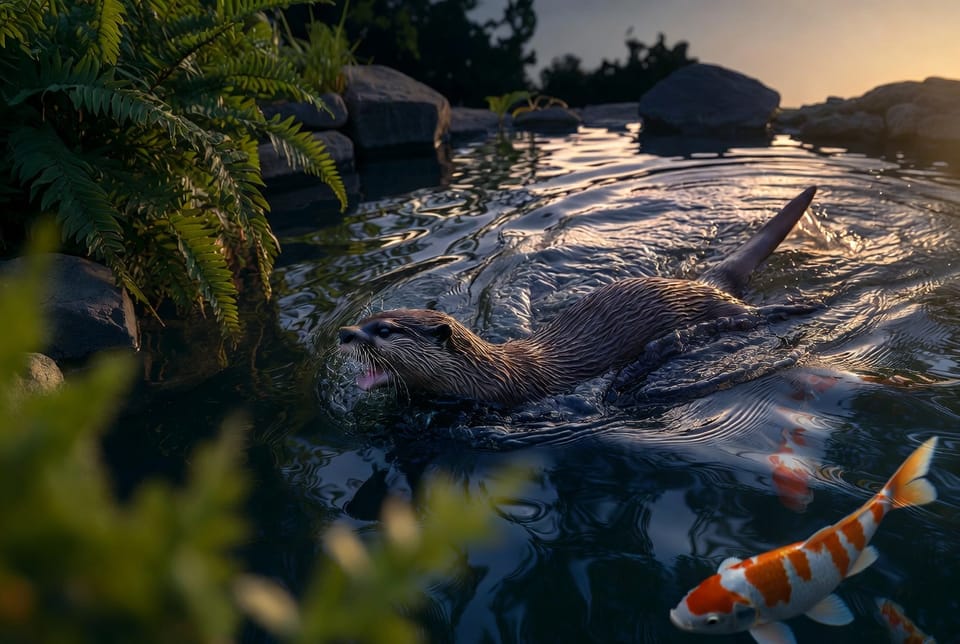
Backyard ponds are more than just water features—they are living investments that bring tranquility, beauty, and a touch of nature to your property. Yet an unusual wildlife issue can quickly disrupt that harmony. River otters, once thought to stay in wilder waterways, are increasingly venturing into suburban and rural backyards. Their curiosity and appetite make them formidable visitors to ornamental fish ponds.
Protect Your Pond from Otters – Call Now!
If you have noticed fewer koi, unexplained ripples at night, or mysterious tracks along the water’s edge, you may be dealing with the otter problem. These intelligent, semi-aquatic mammals are skilled fish predators and surprisingly destructive despite their playful reputation. Left unmanaged, they can decimate expensive fish stocks and compromise the structural integrity of your pond in weeks.
The good news? With the right knowledge and humane exclusion and relocation methods, you can protect your pond without harming the otters or the environment. This comprehensive guide explains otter behavior, the specific damage they cause, and proven, responsible strategies to reclaim your backyard oasis. Whether you are a seasoned pond enthusiast or a new homeowner, these insights will help you act confidently and effectively.
Understanding River Otter Behavior
River otters are highly adaptable members of the weasel family. They thrive in freshwater environments and possess remarkable swimming ability, thanks to webbed feet, streamlined bodies, and powerful tails. While they appear playful—sliding down banks, chasing one another, and wrestling in the water—their behavior shifts dramatically when food is abundant.
Fish predators by nature, otters consume up to 15 percent of their body weight daily. In a backyard setting stocked with slow-moving ornamental fish such as koi, goldfish, and shubunkins, they find an all-you-can-eat buffet. Unlike wild streams where fish can hide or escape, ponds offer easy access and limited escape routes. A single otter or family group can clear dozens of fish in a single night.
Their playful but destructive tendencies compound the issue. Otters use ponds not only for feeding but also for grooming, resting, and social interaction. They repeatedly slide down muddy or grassy banks, creating slide marks that erode soil and destabilize pond edges. This constant activity compacts surrounding landscaping and introduces sediment that clouds the water and stresses aquatic plants.
Otters are also nocturnal and crepuscular, meaning they are most active at dawn, dusk, and throughout the night. Homeowners often discover the problem only after significant losses have already occurred. Because otters are protected in many regions, any management must follow local wildlife regulations and prioritize humane solutions that respect the animals’ role in the ecosystem.
Understanding these traits is the first step toward effective control. By recognizing why otters target backyard ponds, you can implement targeted deterrents rather than reactive measures that prove ineffective or risky.
Recognizing the Signs of Otter Presence
Early detection prevents minor visits from becoming full-scale invasions. Look for these unmistakable indicators:
- Missing fish populations: Sudden, unexplained declines in your ornamental fish numbers, often with no remains except the occasional scale or fin fragment.
- Scat near water: Otter droppings are distinctive—dark, twisted, and containing fish bones and scales. They are frequently deposited on rocks, logs, or pond edges as territorial markers.
- Slide marks on pond banks: Smooth, worn paths where otters repeatedly enter and exit the water, often accompanied by muddy paw prints with visible claw marks.
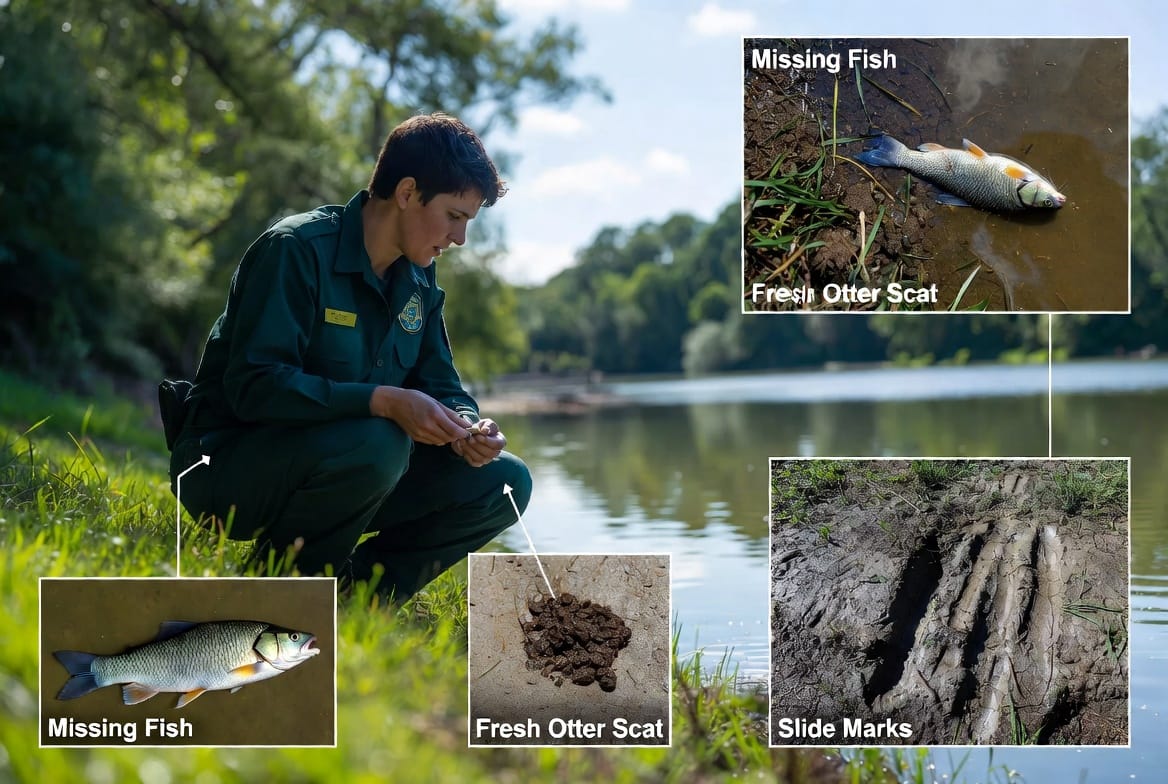
Other clues include disturbed aquatic plants, overturned decorative rocks, and a sudden increase in water turbidity. If you observe these signs of otter activity, document them with photos and contact a professional promptly. Delaying action allows the otters to establish routines, making removal far more challenging.
Assessing the Damage Caused by River Otters
The impact of river otters extends beyond lost fish. Ornamental fish populations suffer rapid depletion, often eliminating prized, high-value specimens that represent years of careful breeding and investment. Replacement costs can reach thousands of dollars, not to mention the emotional attachment many owners feel toward their aquatic pets.
Pond liners face equally serious threats. Otters’ sharp claws and repeated sliding erode liner material over time. Small tears allow water to seep beneath the liner, causing subsidence, leaks, and costly repairs. In severe cases, entire sections of the pond must be drained and relined—an expensive and time-consuming process that disrupts the entire ecosystem.
Additional damage includes:
- Erosion of pond banks, leading to unstable edges and potential collapse during heavy rain.
- Introduction of parasites and bacteria via otter scat, which can affect remaining fish and water quality.
- Disruption of the pond’s biological balance, stressing beneficial bacteria, plants, and filtration systems.
These combined effects turn a relaxing backyard feature into a source of ongoing frustration and financial burden. Homeowners often underestimate the speed and scale of destruction until the problem has escalated.
Implementing Humane Exclusion and Relocation Methods
Effective management focuses on humane exclusion first, followed by relocation only when necessary. The goal is to make your pond unattractive or inaccessible to otters while preserving their welfare and complying with all legal requirements.
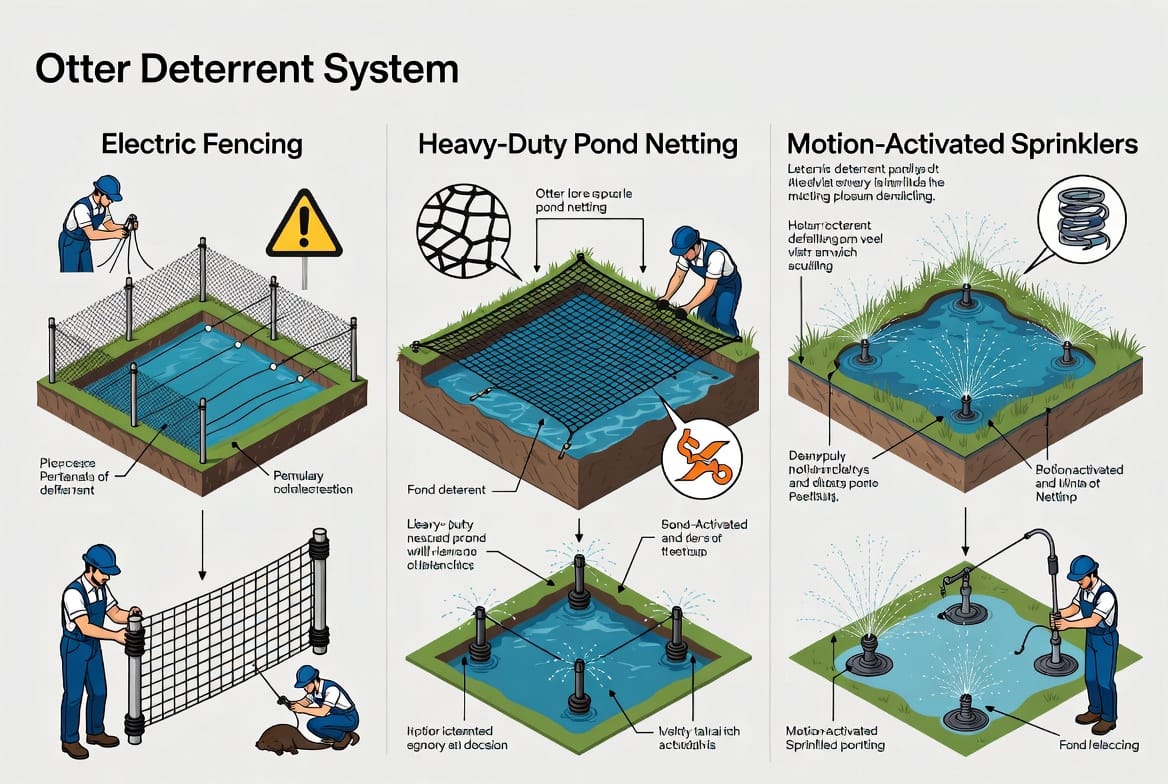
Proven techniques include:
- Heavy-duty pond netting: A strong, UV-resistant mesh anchored securely around the entire water surface prevents otters from accessing fish. Properly installed netting remains nearly invisible while allowing sunlight and aeration.
- Electric fencing: Low-voltage, humane fencing placed at pond edges delivers a mild shock that trains otters to avoid the area. Systems are safe for pets and wildlife when installed correctly.
- Motion-activated devices: Sprinklers, lights, or ultrasonic repellers activate upon detection, startling otters without causing injury. Combining multiple devices creates an unpredictable environment that discourages repeat visits.
- Habitat modification: Removing nearby cover, trimming overhanging vegetation, and installing rock borders reduces hiding spots and makes the pond less appealing for resting or denning.
When exclusion alone is insufficient, professional relocation by licensed specialists ensures otters are safely trapped, evaluated for health, and released in suitable natural habitats far from residential areas. This step requires permits and expertise to avoid stressing the animals or violating wildlife laws.
Why Professional Aquatic Wildlife Specialists Deliver Superior Results
DIY attempts frequently fail because otters are intelligent and quickly adapt to incomplete solutions. Professional teams bring specialized equipment, local regulatory knowledge, and years of experience in aquatic wildlife management. They conduct thorough site assessments, install customized exclusion systems, and monitor effectiveness over time.
Working with experts also protects you from unintended legal or safety issues. Improper trapping or relocation can result in fines or harm to protected species. Licensed specialists follow humane protocols that align with state and federal guidelines, giving you peace of mind.
Long-Term Pond Protection Strategies
Prevention is always more effective than cure. Maintain clear sightlines around the pond, schedule regular water-quality testing, and consider integrated pest-management approaches that combine physical barriers with natural repellents. Annual inspections by aquatic wildlife specialists catch emerging problems before they escalate.
Protect Your Pond Investment from Otters
River otters may be fascinating creatures, but they have no place turning your backyard pond into their feeding ground. By understanding their behavior, recognizing the signs early, and applying proven humane exclusion and relocation methods, you can safeguard your ornamental fish, preserve your pond liners, and restore the peaceful ambiance you worked hard to create.
Protect your pond investment from otters. Our experienced team is ready to provide a free assessment, implement effective solutions, and ensure long-term protection for your backyard oasis. Don’t let the otter problem diminish the beauty and value of your pond—take action now and enjoy your water feature with complete confidence.
Restore Your Koi Pond Peace – Call Our Specialists