The Opossum in the Attic: Signs and Safe Removal
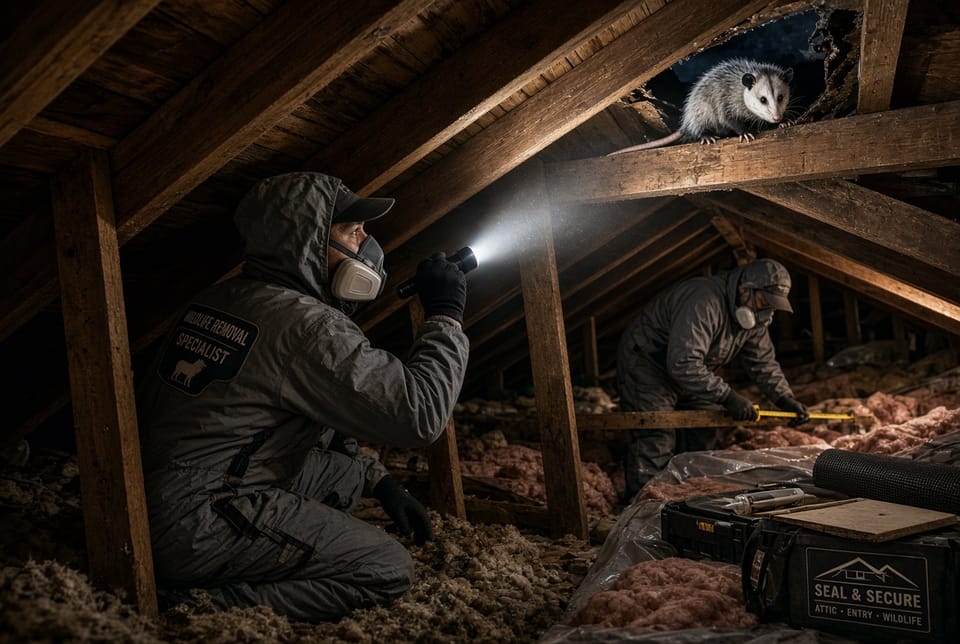
Discovering an opossum in the attic can feel unsettling, yet this situation is far more common than many homeowners realize. These adaptable marsupials often seek shelter in quiet, elevated spaces when outdoor conditions become challenging. The good news is that with the right knowledge and a calm, professional approach, the issue can be resolved humanely and permanently. This guide walks you through opossum behavior, the clearest signs of opossum activity, and the safest humane removal methods so you can restore peace to your home without unnecessary stress.
Stop Attic Noises Tonight – Call for Safe Removal
Understanding the problem starts with recognizing that opossums are not aggressive by nature. They are opportunistic survivors that prefer to avoid confrontation. When they enter an attic, they are simply looking for a secure den site. Acting promptly and correctly protects both your property and the animal.
Understanding Opossum Behavior in Residential Spaces
Opossums are nocturnal creatures. Their peak activity occurs after dusk and before dawn, which explains why many homeowners first notice disturbances during the quiet hours of the night. During daylight they remain hidden, conserving energy and staying safe from predators.
These animals frequently choose attics because the space offers several advantages: consistent temperature, protection from rain and wind, and relative isolation from ground-level threats. Once an opossum locates a suitable opening—often a gap under the eaves, a damaged vent, or a loose roof shingle—it can squeeze through surprisingly small spaces. Adult opossums are flexible and determined when seeking shelter.
Inside the attic, an opossum typically establishes a den among insulation, stored boxes, or structural cavities. The animal may remain for several days or longer if the location feels secure and food sources are accessible nearby. While denning, opossums can leave droppings that accumulate over time. These droppings are distinctive and serve as one of the stronger indicators of presence. Unlike rodents, opossums do not typically gnaw electrical wires or create extensive structural damage, yet their presence still warrants careful attention because prolonged occupancy can lead to odor issues and secondary pests.
Opossums are solitary outside of breeding season. A single animal is the most common attic occupant, though a mother with young may occasionally seek temporary refuge. Their natural diet consists of insects, small vertebrates, fruits, and carrion. When living near homes they may also explore outdoor pet food or fallen fruit, which can draw them closer to structures in the first place.
Recognizing these behavioral patterns helps homeowners respond with confidence rather than alarm. The animal is not “invading” out of malice; it is following instinct. A measured, humane strategy therefore aligns with both ethical standards and long-term effectiveness.
Clear Signs That an Opossum Has Moved Into the Attic
Early detection makes removal simpler and reduces the chance of repeated visits. Several reliable indicators point to an opossum in the attic.
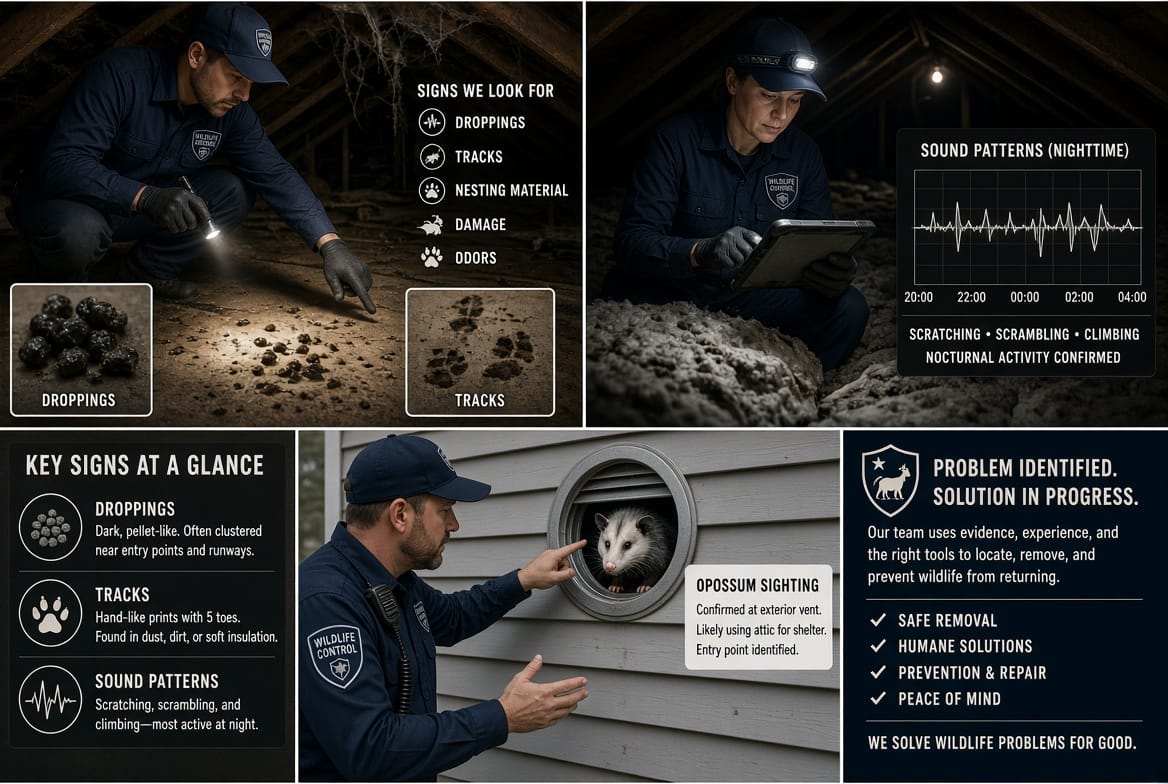
- Sounds at night: Soft thumping, shuffling, or slow walking noises overhead are classic. Because opossums are relatively heavy compared with squirrels or mice, the sounds tend to be deliberate rather than rapid scurrying. Occasional hissing or low growls may occur if the animal feels cornered, yet these vocalizations remain infrequent.
- Droppings: Opossum droppings are typically cylindrical, dark, and larger than those of rats. They often appear near entry points, along beams, or in concentrated areas where the animal rests. Fresh droppings indicate ongoing activity.
- Sightings: Direct visual confirmation remains the strongest evidence. Homeowners sometimes glimpse an opossum entering or exiting at dusk or dawn. Tracks in dusty insulation or near vents can also confirm presence.
- Odor: A musky or ammonia-like smell may develop if the animal remains for an extended period. This odor is usually localized rather than whole-house.
- Disturbed insulation or nesting material: Flattened or rearranged insulation, shredded paper, or gathered debris can signal a den site.
Any combination of these signs warrants further investigation. Ignoring them rarely solves the problem; opossums will continue using a successful den until the conditions change.
Safe and Humane Opossum Removal Methods
Once signs confirm an opossum in the attic, the priority shifts to humane removal. Modern wildlife practices emphasize methods that allow the animal to leave on its own while permanently closing access routes. These approaches protect both the homeowner and the opossum.
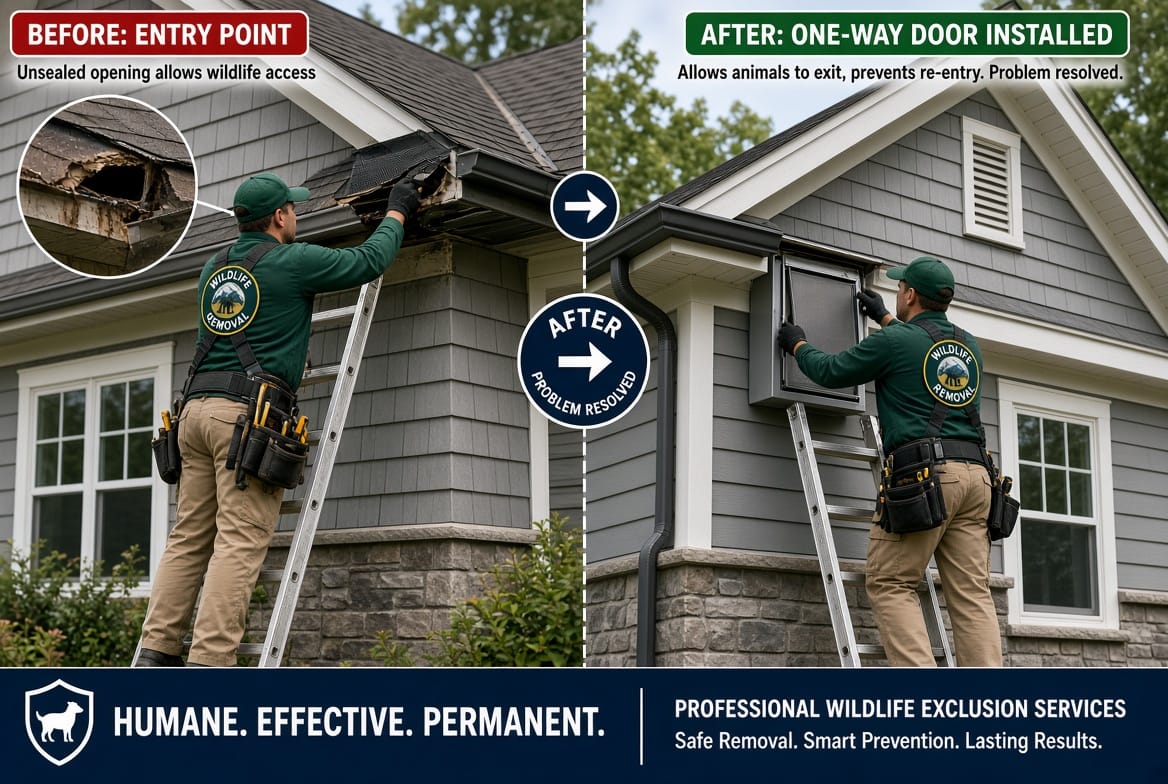
The most widely recommended technique involves one-way doors. A properly sized one-way door is installed over the primary entry point after confirming the animal is inside. The device permits exit but blocks return. Over the following nights the opossum departs to forage and cannot re-enter. Once activity ceases—usually within a few days—the door is removed and the opening is permanently sealed.
Sealing entry points forms the second critical step. Every potential access location must be inspected and closed using durable materials such as hardware cloth, metal flashing, or exterior-grade sealants. Common vulnerable areas include:
- Roof vents and ridge vents
- Gaps where the roof meets the siding
- Damaged fascia or soffit boards
- Chimney caps or uncapped flues
- Utility penetrations
Professional technicians systematically examine the entire exterior envelope. Incomplete sealing often leads to repeat problems, which is why thorough workmanship matters.
Trapping is generally reserved for situations where one-way doors are impractical or when young are present and cannot exit independently. Live traps, when used, must be checked frequently and the animal relocated according to local regulations. Many regions discourage relocation because it can stress the animal and simply transfer the problem elsewhere. Exclusion methods remain preferable whenever possible.
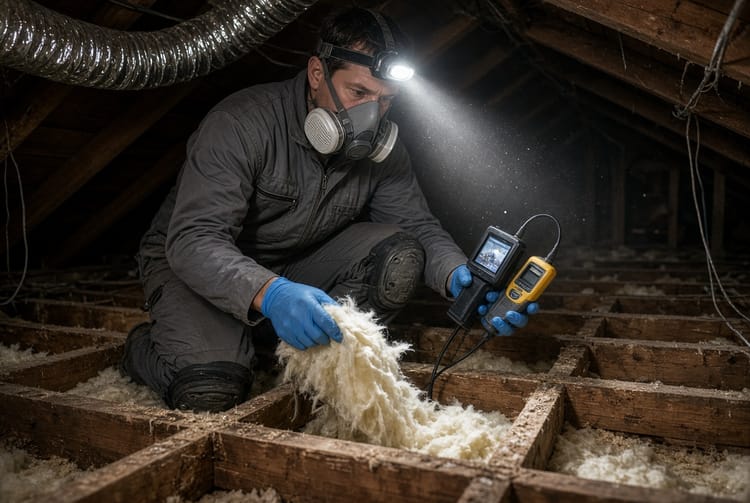
Throughout the process, safety protocols protect everyone involved. Protective clothing, gloves, and respiratory awareness minimize contact with droppings or nesting material. Attic cleanup after removal may include careful removal of contaminated insulation and disinfection of affected surfaces. These steps restore the space to a clean, usable condition and discourage future wildlife interest.
Homeowners should avoid attempting removal alone if the attic is difficult to access, if multiple entry points exist, or if young opossums may be present. Professional experience ensures the animal leaves safely and the structure is properly secured.
Preventing Future Opossum Problems
Long-term success depends on prevention. After humane removal and sealing, a few ongoing habits significantly reduce the likelihood of another opossum finding its way inside.
Maintain outdoor areas by securing trash cans with tight lids, removing fallen fruit promptly, and bringing pet food indoors at night. Trim tree branches that overhang the roof so they no longer provide easy access pathways. Schedule periodic exterior inspections, especially after storms that can create new gaps. These simple measures complement the structural work already completed.
Inside the attic, improving ventilation and reducing clutter can make the space less attractive. Good airflow discourages prolonged denning, while organized storage limits potential nesting sites.
Why Professional Assistance Delivers the Best Outcome
While the principles of opossum removal are straightforward, execution benefits from specialized knowledge and equipment. Trained wildlife specialists understand local opossum patterns, possess the correct exclusion devices, and know how to work safely in confined attic spaces. They also stay current with regulations governing wildlife handling, ensuring every step remains legal and ethical.
Attempting DIY solutions sometimes creates new problems—improperly installed one-way doors that trap the animal inside, incomplete sealing that allows re-entry, or accidental disturbance of a mother with young. Professional service avoids these pitfalls and provides peace of mind that the issue has been fully resolved.
The process is designed to be as low-stress as possible for the homeowner. Most removals require only a short series of visits: initial inspection and device installation, monitoring, permanent sealing, and optional cleanup. Communication remains clear at every stage so you always know what to expect.
Restoring Comfort and Confidence to Your Home
An opossum in the attic does not have to remain a lingering worry. By learning the animal’s nocturnal habits, recognizing the classic signs, and applying proven humane removal techniques centered on one-way doors and thorough sealing of entry points, homeowners can resolve the situation effectively. The process prioritizes safety for both people and wildlife, leaving the property secure and the attic peaceful once more.
Timely action prevents minor issues from becoming ongoing nuisances. With the right approach, the attic returns to its intended role as quiet storage or living space, free from unexpected nighttime visitors.
Remove opossums humanely and safely.
Safe One-Way Door Installation – Call Experts Today