The Muskrat Management: Controlling Burrowing Rodents Near Ponds and Water Features

Waterfront properties represent some of the most valuable and cherished real estate investments, offering peaceful views, recreational opportunities, and natural beauty. Yet beneath the serene surface, burrowing rodents like muskrats can silently undermine the very foundations of these prized assets. At our wildlife removal service, we understand the unique challenges faced by pond and lakefront owners. Muskrat management is not just about addressing an annoyance – it is a critical step in protecting your shoreline, maintaining structural integrity, and preserving the long-term value of your property.
Protect Your Pond Today – Call Our Muskrat Specialists Now!
Muskrats may appear harmless, but their natural behaviors create significant risks when they establish territories near human-made or natural water features. With the right knowledge and professional intervention, you can restore balance without compromising wildlife ethics or environmental standards. This comprehensive guide walks you through every aspect of effective, humane muskrat control tailored specifically for waterfront settings.
Understanding Muskrat Behavior in Waterfront Environments
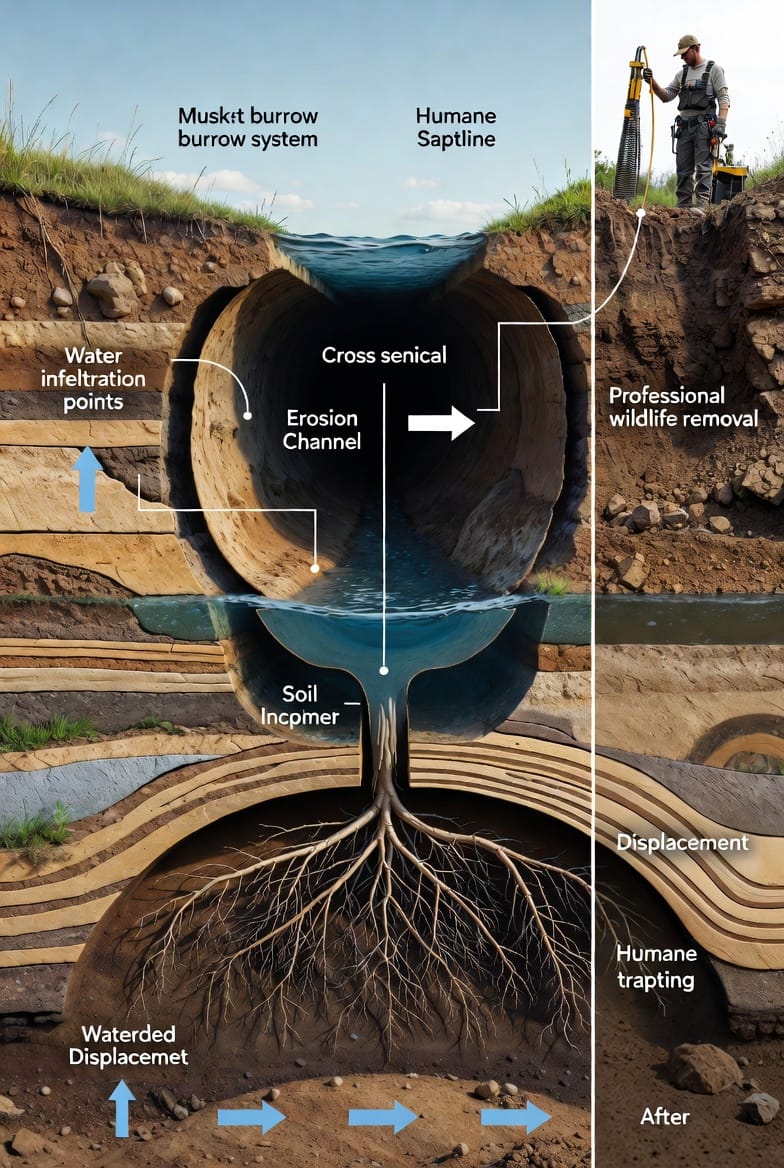
Muskrats are semi-aquatic rodents perfectly adapted to life around ponds, lakes, and slow-moving streams. They are primarily nocturnal and highly industrious, spending much of their time constructing elaborate tunnel systems directly into pond banks and shorelines. These burrows serve as nesting chambers, escape routes, and food storage areas, often extending several feet inland and underwater.
Their diet consists largely of aquatic plants, cattails, and shoreline vegetation, which they harvest in large quantities. While this feeding supports their survival, it accelerates the removal of stabilizing root systems that hold soil in place. In many cases, muskrat families expand rapidly, with multiple generations sharing a single burrow network. This leads to interconnected tunnels that weaken large sections of embankment over time.
Burrowing activity intensifies during spring and fall when muskrats prepare for breeding or winter survival. They prefer soft, moist soils typical of well-maintained ponds and water features, making residential waterfront properties especially attractive. Understanding these patterns allows property owners to anticipate problems before visible damage appears. Our specialists have observed that early detection dramatically reduces both repair costs and the scope of intervention required.
The Hidden Dangers: Damage to Ponds, Dams, and Shorelines
Left unchecked, muskrat burrowing creates a cascade of structural and environmental issues. Pond bank erosion is the most immediate and visible consequence. As tunnels collapse or expand, soil sloughs away into the water, creating steep drop-offs and unstable edges that pose safety hazards for people and pets.
Dams and retaining structures are particularly vulnerable. Water seeping into burrow entrances can enlarge voids, eventually compromising the entire barrier and leading to uncontrolled water loss or flooding during heavy rains. In extreme cases, this has resulted in costly emergency repairs exceeding tens of thousands of dollars for pond owners.
Beyond physical damage, muskrat activity disrupts the ecological balance of your water feature. Overgrazing of aquatic plants reduces oxygen levels, promotes algae blooms, and diminishes habitat for desirable fish and waterfowl. Property aesthetics suffer as well – muddy banks, collapsing shorelines, and sparse vegetation detract from the natural beauty that makes waterfront living so appealing.
Key risks include:
- Progressive shoreline retreat that shrinks usable land area
- Increased liability from unstable banks near walking paths or docks
- Potential contamination of pond water from exposed soil and waste
- Reduced property resale value due to visible wildlife damage
These issues compound over seasons if not addressed professionally. However, with timely humane wildlife control, you can reverse existing damage and prevent future problems while maintaining full compliance with local regulations.
Recognizing the Signs of Muskrat Infestation Early
Early identification is the cornerstone of successful muskrat management. Property owners should conduct regular shoreline inspections, especially after heavy rainfall or during seasonal transitions. Look for these telltale indicators:
- Fresh dirt mounds or “push-ups” at the water’s edge
- Visible burrow entrances (typically 4-6 inches in diameter) submerged or at the waterline
- Clipped or floating aquatic vegetation near shore
- Tracks showing webbed hind feet in mud
- Scent markings or musky odor around active sites
When these signs appear, prompt action prevents escalation. Many homeowners initially mistake muskrat activity for minor erosion or beaver damage, but our trained technicians can quickly differentiate and recommend targeted solutions.
Humane and Effective Control Methods for Waterfront Properties
Effective muskrat control prioritizes humane, non-lethal approaches whenever possible while delivering lasting results. Professional strategies focus on three integrated pillars: habitat modification, physical exclusion, and targeted removal.
Water level management involves temporary seasonal draw-downs that discourage burrowing by exposing and drying out tunnel entrances. When combined with native vegetation replanting, this technique restores natural bank stability.
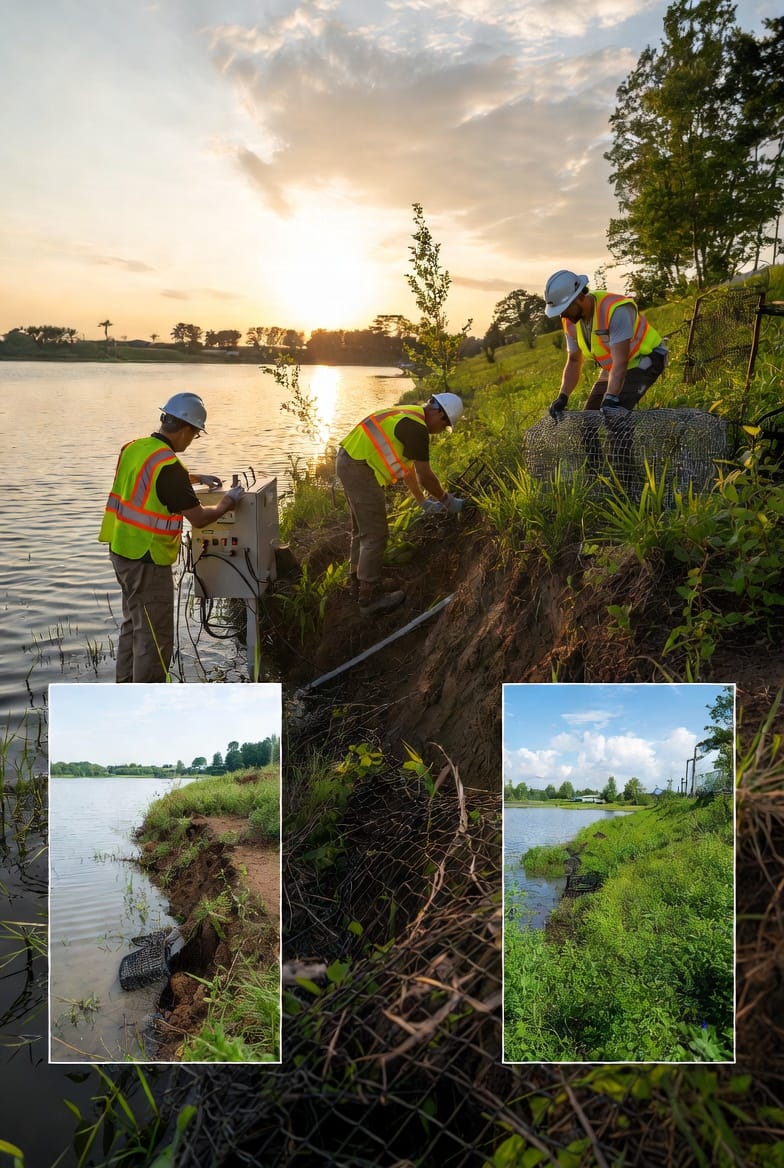
Bank reinforcement uses bio-engineered materials such as coir logs, riprap stone, and deep-rooted native plants to create erosion-resistant barriers. These methods not only stop current damage but also enhance the natural beauty of your shoreline.
Professional trapping employs live traps placed strategically along travel routes. Our specialists follow strict protocols ensuring captured animals are relocated safely according to state guidelines or managed humanely on-site when relocation is restricted. Every step emphasizes minimal stress to the wildlife and zero secondary risks to your pond ecosystem.
Integrated approaches yield the best outcomes. For example, reinforcing banks while simultaneously reducing attractive vegetation removes the incentives for muskrats to return. Property owners who implement these combined strategies report near-zero recurrence rates within the first year.
Why Professional Wildlife Removal Delivers Superior Results
DIY attempts often fall short because they address only surface symptoms rather than the complete burrow network. Our muskrat specialists bring years of experience, proper equipment, and regulatory knowledge that ensure complete, compliant solutions.
We begin with a thorough site assessment, mapping all active burrows and assessing structural risks. Customized management plans are then developed specifically for your pond’s size, soil type, and surrounding landscape. Follow-up monitoring confirms long-term success and allows for any necessary adjustments.
Clients consistently praise the peace of mind that comes from working with certified professionals who respect both property and wildlife. Our service eliminates guesswork, reduces overall costs compared to repeated failed attempts, and protects your investment for years to come.
Long-Term Prevention Strategies to Protect Your Waterfront
Sustainable muskrat management extends beyond immediate control. Implementing ongoing preventive measures ensures your pond remains secure:
- Maintain consistent water levels during vulnerable seasons
- Install protective mesh or fencing along high-risk banks
- Promote dense native plant buffers that deter burrowing
- Schedule annual professional inspections
- Remove debris and excess vegetation that provides cover
These proactive steps preserve the natural appeal of your waterfront while minimizing future interventions. Many properties we service achieve complete rodent-free status through diligent prevention combined with initial professional treatment.
Restoring and Enhancing Your Waterfront Investment
The benefits of proper muskrat management extend far beyond damage control. Stabilized banks improve water quality, support healthier aquatic life, and enhance recreational enjoyment. Property values rebound as curb appeal returns, and homeowners regain confidence in their shoreline safety.
Our approach balances effective rodent control with environmental stewardship, ensuring your pond remains a vibrant ecosystem rather than a source of ongoing worry.
Protect your waterfront property today. Our team is ready to restore safety, beauty, and value to your water feature with humane, effective solutions you can trust.
Secure Your Waterfront Shoreline – Get Professional Help Today