The Muskrat Management: Controlling Burrowing Rodents Near Ponds and Water Features
Waterfront property owners understand the unique peace that comes from owning a pond or water feature. Yet muskrat burrowing can silently threaten that tranquility. These semi-aquatic rodents are skilled engineers that create extensive tunnel systems, leading to costly structural damage if left unchecked.
Stop Muskrat Burrowing Now – Call Our Specialists Today!
At our wildlife removal service, we specialize in professional muskrat management that is both effective and humane. This in-depth guide equips you with authoritative insights into muskrat behavior, the specific risks to ponds and dams, proven control methods, and long-term prevention strategies. Rest assured, with the right approach your waterfront oasis can be restored and protected for years to come.
Understanding Muskrat Behavior and Habits
Muskrats (Ondatra zibethicus) are medium-sized rodents perfectly adapted to aquatic environments. Adults typically measure 16 to 24 inches in length, including their distinctive flattened tail that acts as a rudder. They thrive near ponds, lakes, rivers, and man-made water features where food and shelter are abundant.
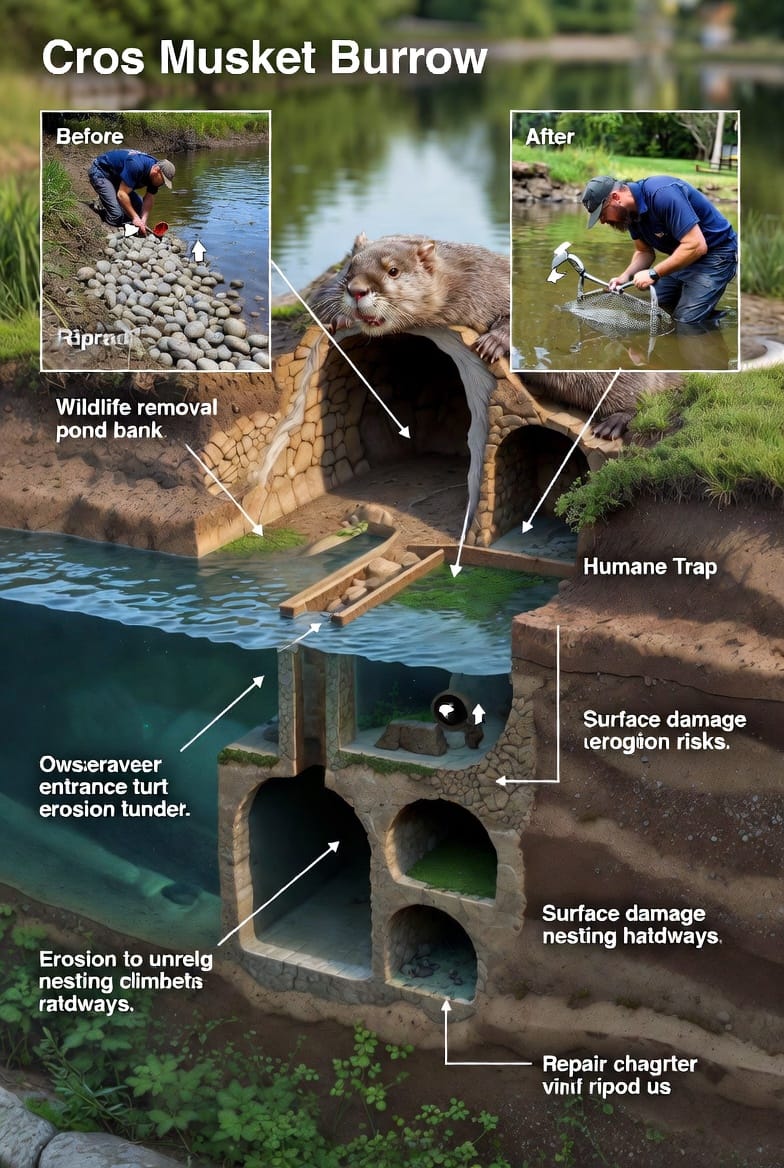
Muskrats are prolific burrowers. They excavate complex tunnel networks directly into pond banks and dams, often placing entrances just below or at the waterline to remain hidden from predators. These burrows serve as dens for raising young, resting areas, and food storage. A single family group can create multiple entrances and chambers, sometimes extending 10 to 30 feet into the embankment.
Their diet consists primarily of aquatic vegetation such as cattails, bulrushes, water lilies, and pondweeds. By consuming roots and stems, they weaken vegetation that naturally stabilizes soil. Muskrats are most active at dawn and dusk, and their populations can surge rapidly under ideal conditions, with females producing two to three litters per year.
This combination of burrowing instincts and rapid reproduction makes them a persistent challenge for waterfront properties. Early recognition is key to preventing escalation.
The Hidden Dangers: Damage Caused by Muskrats to Ponds and Dams
Left unmanaged, muskrat burrowing creates serious structural and environmental risks. Tunnels act as conduits for water, a process known as piping, which gradually washes away soil from inside the bank. Over time this leads to slumping, collapse, and even partial dam failure.
Property owners frequently report:
- Eroded pond banks that reduce usable shoreline and create unsafe drop-offs
- Vegetation loss that diminishes the natural beauty and filtration capacity of the water feature
- Increased flood risk during heavy rains as weakened dams allow uncontrolled water release
- Secondary pest attraction when abandoned burrows provide shelter for other rodents or snakes
- Costly repair bills that can reach thousands of dollars for professional bank stabilization
Beyond financial impact, unchecked damage can lower property values and create liability concerns for homeowners associations or commercial properties. The good news is that these issues are entirely preventable with timely muskrat management.
Recognizing the Signs of Muskrat Infestation on Your Property
Early detection allows for simpler, less invasive solutions. Look for these telltale indicators around your pond or water feature:
- Burrow entrances at or just below the waterline, often 4 to 8 inches in diameter with smooth, muddy edges
- Floating plant debris and clipped vegetation along the shoreline
- Muddy slides or trails leading from water to feeding platforms
- Distinctive droppings that resemble small brown pellets near water’s edge
- Visible bank collapse or sudden appearance of sinkholes during dry periods
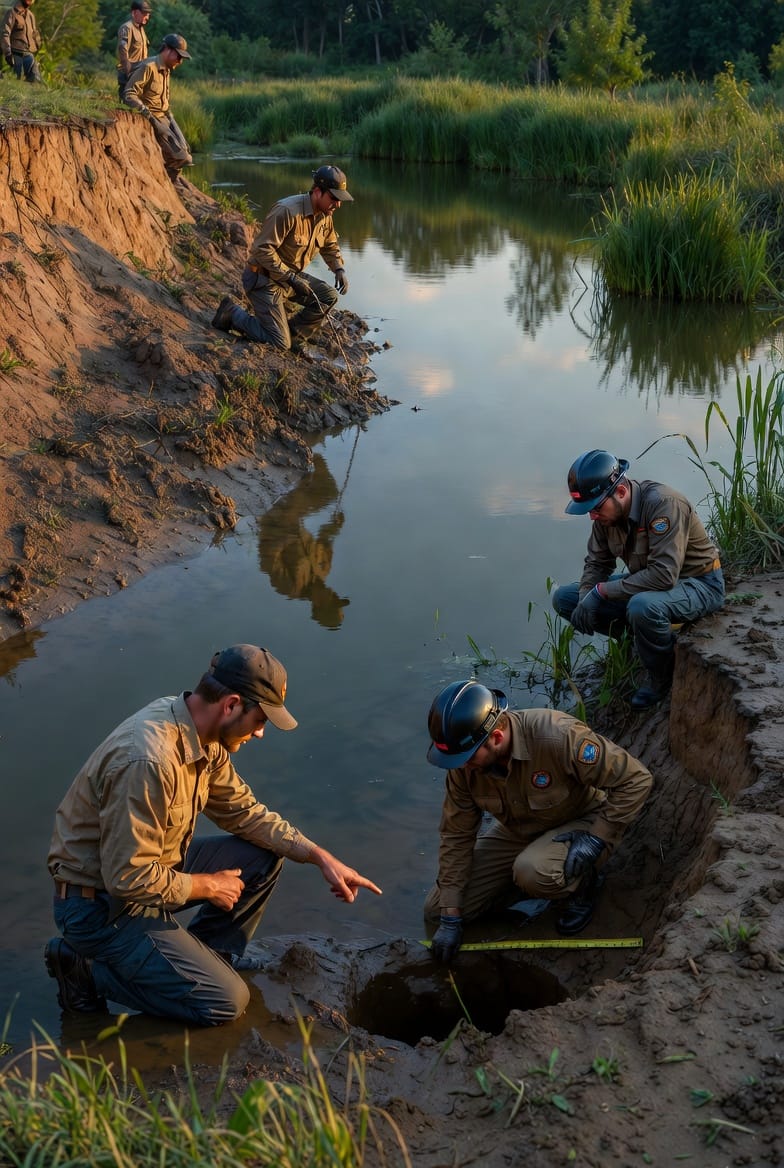
If you notice any of these signs, we recommend scheduling a professional inspection promptly. Our specialists use non-invasive methods to confirm activity without disturbing the ecosystem unnecessarily.
Why Humane and Targeted Control Methods Are Essential
Effective muskrat management balances wildlife welfare with property protection. In many regions, muskrats are protected under wildlife regulations, making indiscriminate methods illegal and unethical. Humane approaches also preserve the overall health of your aquatic ecosystem.
Our service follows best practices that prioritize live trapping and relocation where permitted, combined with habitat modification that discourages return. These methods minimize stress to the animals while delivering lasting results for property owners.
Proven Strategies for Muskrat Management
Successful control requires a multi-layered approach tailored to your specific site. Here are the most effective techniques used by our wildlife removal experts:
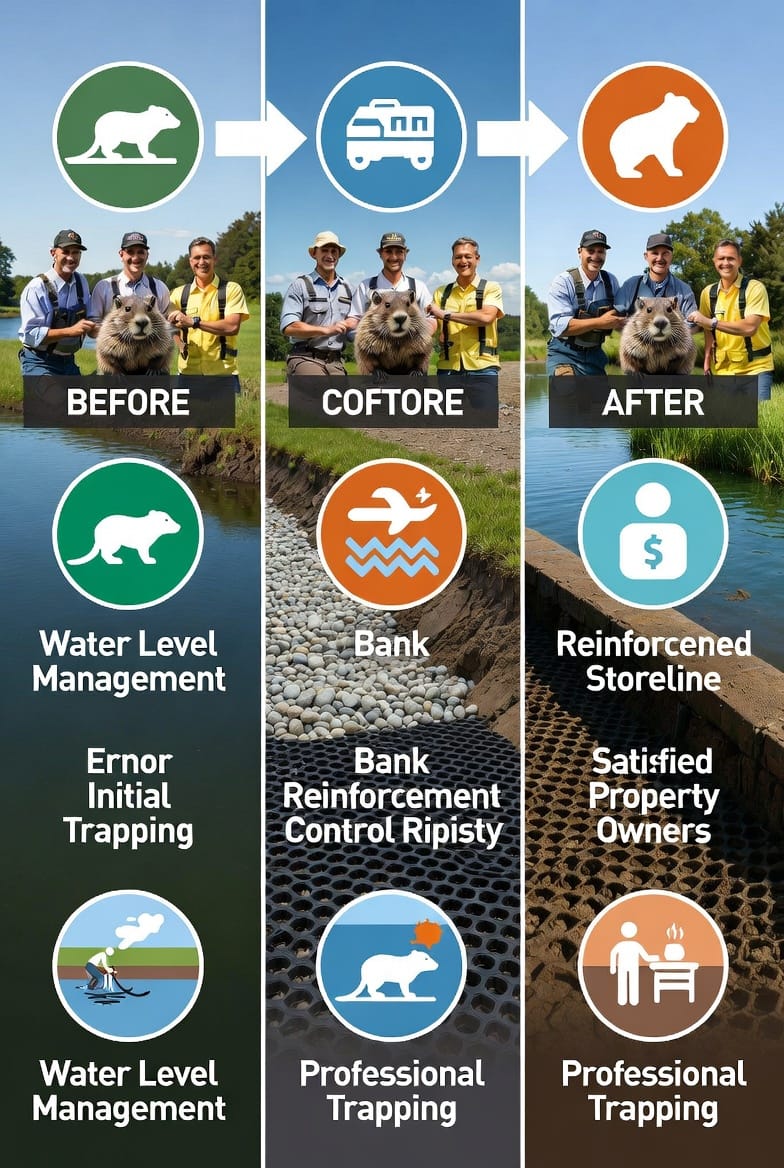
- Water level management – Temporarily lowering water levels exposes burrows, making them less attractive and allowing safe inspection and repair.
- Bank reinforcement – Installing riprap, coir logs, or native vegetation mats stabilizes soil and prevents future burrowing.
- Professional trapping and removal – Strategic placement of humane live traps by licensed specialists ensures quick, safe removal of the entire family group.
- Exclusion barriers – Installing underground fencing or mesh along high-risk banks creates a physical deterrent.
- Habitat modification – Reducing preferred food sources through selective planting and regular shoreline maintenance.
Each strategy is selected based on site assessment, local regulations, and long-term property goals.
The Professional Advantage: Why DIY Approaches Fall Short
While some property owners attempt DIY solutions, professional muskrat management consistently outperforms amateur efforts. Our technicians hold required state permits, understand local wildlife laws, and employ specialized equipment that ensures both safety and efficacy.
We begin with a thorough site assessment, followed by customized action plans and follow-up monitoring. This comprehensive service eliminates guesswork and prevents recurrence—something temporary fixes cannot guarantee.
Long-Term Prevention: Keeping Muskrats Away for Good
Prevention is the cornerstone of sustainable pond and water feature protection. After initial control, implement these ongoing measures:
- Maintain consistent vegetation buffers that discourage burrowing
- Schedule annual shoreline inspections before breeding season
- Install motion-activated lighting or sound deterrents in problem areas
- Partner with our service for seasonal maintenance contracts
These steps provide peace of mind and preserve the natural beauty you worked hard to create.
Real Results: A Waterfront Success Story
Consider a recent client with a 2-acre estate pond experiencing severe bank erosion from an established muskrat colony. Within three weeks our team completed humane trapping, bank reinforcement using natural materials, and water-level stabilization. Six months later the shoreline remains stable, native plants have re-established, and the property owner reports zero new activity. Stories like this demonstrate why expert muskrat management is the smartest investment for waterfront properties.
Protecting Your Waterfront Property Starts Today
Muskrat burrowing does not have to compromise the value, safety, or enjoyment of your pond or water feature. With proactive, humane, and professionally executed muskrat management, you can restore and safeguard your investment while maintaining harmony with local wildlife.
Our experienced team stands ready to deliver tailored solutions that protect what matters most to you.
Secure Your Water Feature from Burrowing Rodents – Call Now!