The Muskrat Burrow: Bank Erosion and Pond Damage
Muskrats may appear small and harmless at first glance, yet their persistent digging habits create serious long-term threats to ponds, lakes, and water features. These semi-aquatic rodents construct elaborate tunnel systems directly into the soft soil of pond banks. Over time, the constant excavation weakens the entire shoreline, leading to progressive bank erosion and costly pond damage. Understanding their behavior, recognizing early warning signs, and applying proven management techniques are essential steps for any property owner who values a stable, healthy water body.
Protect Your Pond from Muskrat Damage – Call Now!
This comprehensive guide explores every critical aspect of the problem. You will learn exactly how muskrats operate, the visible indicators that demand immediate attention, and the most effective strategies—ranging from simple water-level adjustments to professional removal—to restore and protect your pond for years to come.
Understanding Muskrat Behavior Around Water Features
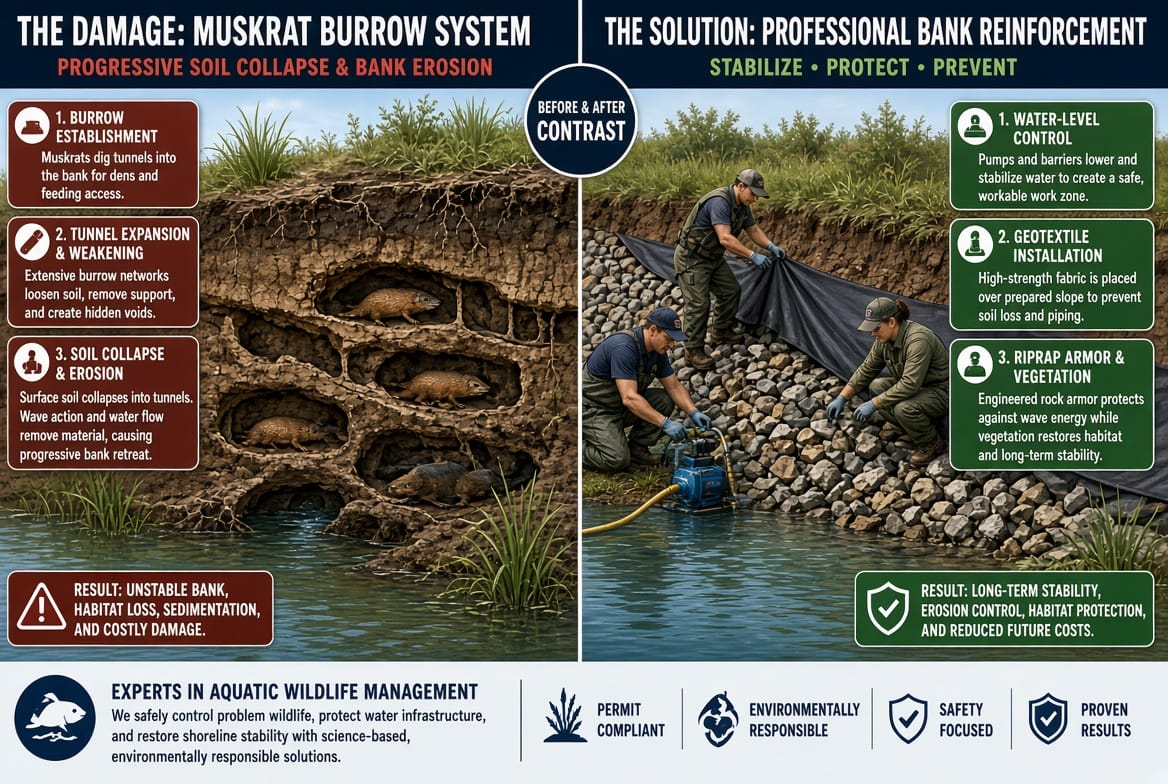
Muskrats are highly adapted to aquatic environments. They prefer still or slow-moving water bordered by dense vegetation and soft earthen banks. Their primary motivation for burrowing is shelter. Each animal excavates a main chamber above the water line connected to one or more underwater entrances. These tunnels can extend several feet into the bank and often branch into secondary chambers used for resting, raising young, or storing food.
Feeding habits intensify the problem. Muskrats consume large quantities of aquatic plants, including cattails, water lilies, and pond weeds. When vegetation becomes scarce, they turn to the roots and stems growing along the shoreline. The combination of continuous digging and heavy grazing removes the natural plant network that once held soil in place. As a result, wave action and seasonal water fluctuations rapidly accelerate bank erosion.
A single breeding pair can produce multiple litters each year. Population growth occurs quickly in favorable habitats, and the density of burrows multiplies accordingly. What begins as one or two small openings can evolve within a single season into an interconnected network that undermines the entire perimeter of a pond. The risk is not limited to private recreational ponds; agricultural reservoirs, golf-course water hazards, and storm-water retention basins face identical threats.
Recognizing the Clear Signs of Muskrat Activity
Early detection is the most powerful tool available. Property owners who know what to look for can intervene before structural failure occurs. The most reliable indicators appear directly on the bank and in the water itself.
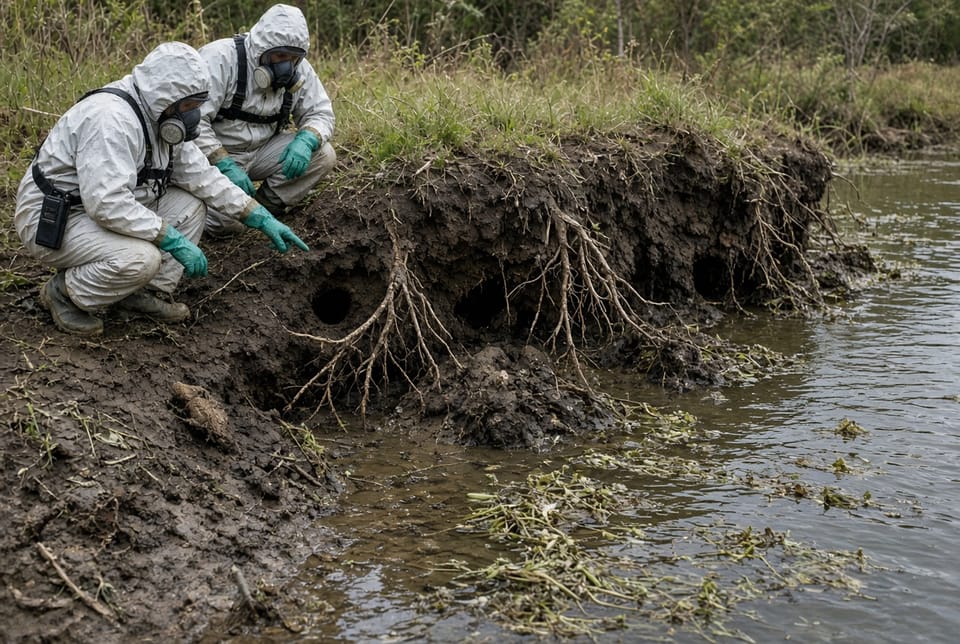
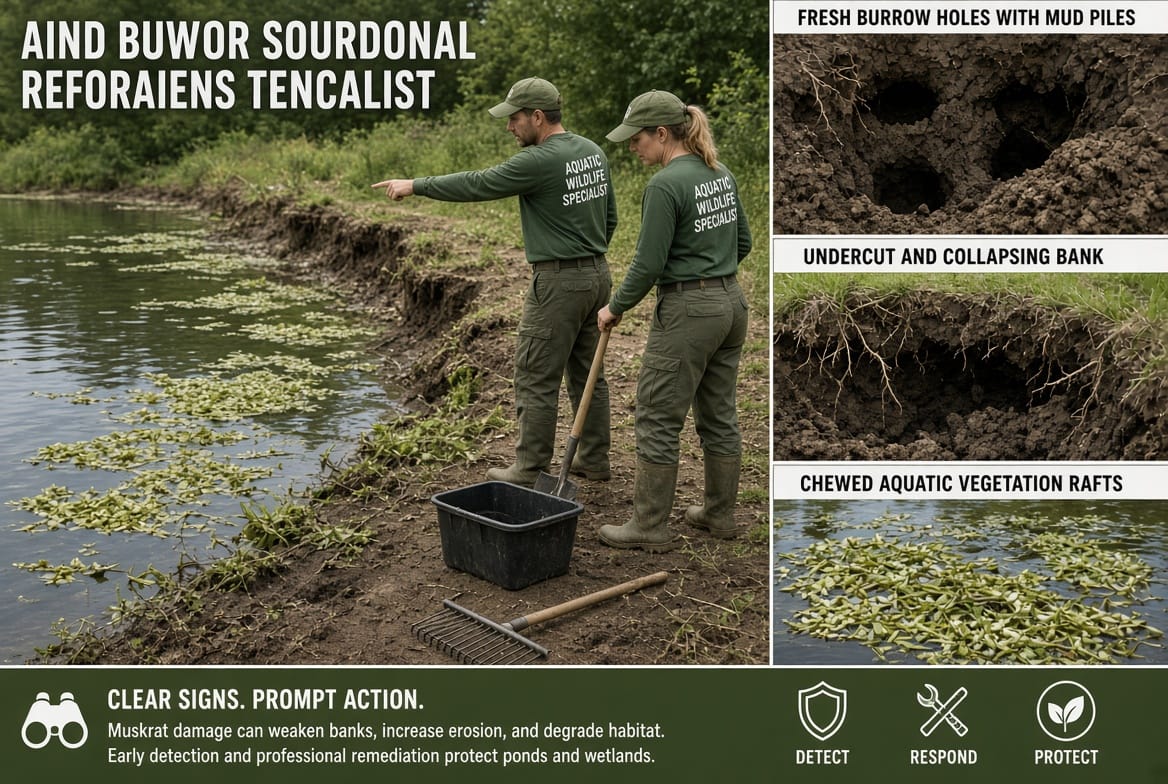
- Burrow holes: Circular or oval openings typically located just above or below the water surface. Fresh diggings leave piles of soft mud nearby.
- Damaged banks: Collapsed sections, undercut edges, or sudden drops in shoreline height signal internal tunnel failure.
- Floating vegetation: Cut stems, chewed roots, and rafts of plant material drifting on the surface indicate active feeding.
- Muddy water near the shoreline after periods of calm weather often results from recent excavation.
- Narrow trails of flattened grass leading from the water to nearby cover mark regular travel routes.
When several of these signs appear together, the likelihood of an established colony is high. Ignoring them allows the problem to escalate rapidly. A bank that looks intact from a distance may already contain hidden chambers ready to collapse under the weight of equipment, livestock, or even foot traffic.
The Serious Risks of Unchecked Bank Erosion and Pond Damage
Once burrows compromise the structural integrity of a bank, the consequences cascade. Soil loss reduces the storage capacity of the pond. Sediment washed into the water increases turbidity, lowers oxygen levels, and harms fish populations. In severe cases, a complete breach can drain the entire water body, destroying aquatic habitat and requiring expensive reconstruction.
Infrastructure located near the shoreline faces additional danger. Docks, retaining walls, irrigation intakes, and even nearby roads can settle or crack when supporting soil disappears. Insurance claims related to wildlife-induced erosion are often denied because the damage is considered preventable. The financial impact therefore falls entirely on the property owner.
Beyond the physical and monetary costs, there is an ecological dimension. Excessive vegetation removal by muskrats can trigger algal blooms and shift the plant community toward less desirable species. The resulting imbalance affects water quality for years after the animals are gone. Addressing the issue promptly protects both the engineered value of the pond and the natural ecosystem it supports.
Practical Management Strategies That Deliver Lasting Results
Effective control combines habitat modification with direct population management. No single method works in isolation; success depends on a coordinated approach tailored to the specific site.
Bank Reinforcement Techniques
Hardening the shoreline is one of the most reliable long-term solutions. Geotextile fabrics, rock riprap, and vegetative plantings of deep-rooted native species create a barrier that muskrats find difficult to penetrate. When properly installed, these materials also dissipate wave energy and reduce natural erosion. The work is best performed during periods of lower water so that the full height of the bank can be treated.
Water Level Management
Muskrats prefer stable water depths that keep their entrances submerged yet allow easy access to dry chambers. Temporarily raising or lowering the water level by even a few inches can flood existing burrows or expose them to predators and weather. This technique is especially useful in managed ponds equipped with controllable outlets. Changes must be gradual to avoid stressing fish and other aquatic life.
Vegetation Control
Reducing preferred food sources near the bank discourages colonization. Selective removal of dense cattail stands and replacement with less palatable plants can make a site less attractive. However, complete clearing is rarely advisable because some shoreline vegetation is necessary for bank stability and wildlife diversity.
Professional Removal as the Critical Final Step
Habitat modifications alone cannot eliminate an established colony. Trapping and live removal by trained specialists remain the only reliable way to reduce numbers quickly and humanely. Licensed aquatic wildlife teams understand local regulations, select the correct trap types, and place them in precise locations that maximize success while minimizing non-target captures. After removal, the same team can seal remaining entrances and apply reinforcing materials so that new animals cannot reoccupy the site.
Attempting do-it-yourself removal often leads to incomplete results. Improperly set traps may catch unintended species, and incomplete sealing of tunnels allows survivors to reopen the network within days. Professional intervention removes the guesswork and delivers measurable, lasting protection.
Why Professional Aquatic Wildlife Specialists Provide Superior Outcomes
Property owners who partner with experienced teams gain several decisive advantages. Specialists conduct thorough site assessments that identify every active burrow, estimate colony size, and evaluate secondary risks such as nearby infrastructure. They then design a customized plan that integrates removal, reinforcement, and ongoing monitoring.
The process is efficient. Most ponds can be cleared and stabilized within a few days rather than weeks of trial-and-error efforts. Specialists also carry the proper insurance, permits, and equipment required for safe work in and around water. Their knowledge of seasonal muskrat behavior ensures that interventions occur at the most effective times of year, reducing the chance of rapid recolonization.
After the initial work is complete, scheduled follow-up visits confirm that the bank remains secure and that no new activity has appeared. This proactive approach transforms a reactive emergency into a managed, predictable maintenance program.
Protecting Your Investment for the Long Term
A well-maintained pond is both a functional asset and a source of enjoyment. Preventing muskrat damage preserves water quality, protects surrounding structures, and maintains property value. The combination of habitat modification, careful water-level management, and professional removal creates a robust defense that few other wildlife issues require.
Property owners who act at the first appearance of burrow holes or floating vegetation avoid the far greater expense of major reconstruction later. Regular shoreline inspections, especially after heavy rains or during spring thaw, allow problems to be caught while they are still minor. When signs do appear, contacting qualified aquatic wildlife specialists ensures that the response is both rapid and thorough.
The methods described here have proven effective across a wide range of pond sizes and settings. Whether the water feature is a small backyard ornamental pond or a multi-acre agricultural reservoir, the underlying principles remain the same: remove the animals, reinforce the banks, and manage the habitat so that the site becomes unattractive to future colonies.
By applying these strategies consistently, owners regain control of their water resources and eliminate the ongoing threat of progressive bank erosion and pond damage. The result is a stable shoreline, clearer water, and the peace of mind that comes from knowing the problem has been solved correctly the first time.
Protect your pond from muskrat damage.
Secure Your Shoreline – Call Aquatic Experts Today!