The Mowing Height Chart: Seasonal Adjustments for Grass Types
Maintaining a beautiful, healthy lawn requires more than regular mowing—it demands precision. Optimal mowing heights vary by grass type and season. Understanding the mowing height chart helps homeowners achieve thicker, greener turf while reducing stress on the grass.
Get Expert Mowing Height Advice – Call Now!
Proper mowing height encourages deeper roots, better drought resistance, and natural weed suppression. Cutting too short weakens grass, while leaving it too long can lead to thatch buildup. This comprehensive guide provides practical, season-by-season recommendations for both cool-season and warm-season grasses.
Why Mowing Height Matters More Than You Think
Grass blades are the solar panels of your lawn. They capture sunlight for photosynthesis, which fuels root development and overall plant health. When you mow at the right height:
- Deeper root systems develop, improving water and nutrient absorption
- Natural shade at the soil level prevents weed seeds from germinating
- Stronger density creates a resilient carpet that withstands foot traffic and pests
Seasonal adjustments become essential because grass growth patterns change with temperature and daylight hours. Summer heat, in particular, calls for taller mowing heights to protect the crown of the plant and retain soil moisture.
Understanding Cool-Season vs. Warm-Season Grasses
Grasses fall into two primary categories, each with distinct growing seasons and ideal mowing heights.
Cool-season grasses (fescue, Kentucky bluegrass, ryegrass) thrive in spring and fall when temperatures range between 60-75°F. They slow down or go dormant in extreme summer heat.
Warm-season grasses (Bermuda, Zoysia, St. Augustine) perform best in summer heat above 75°F and go dormant during winter.
Knowing your grass type is the first step toward mastering the mowing height chart.
Optimal Mowing Heights for Cool-Season Grasses
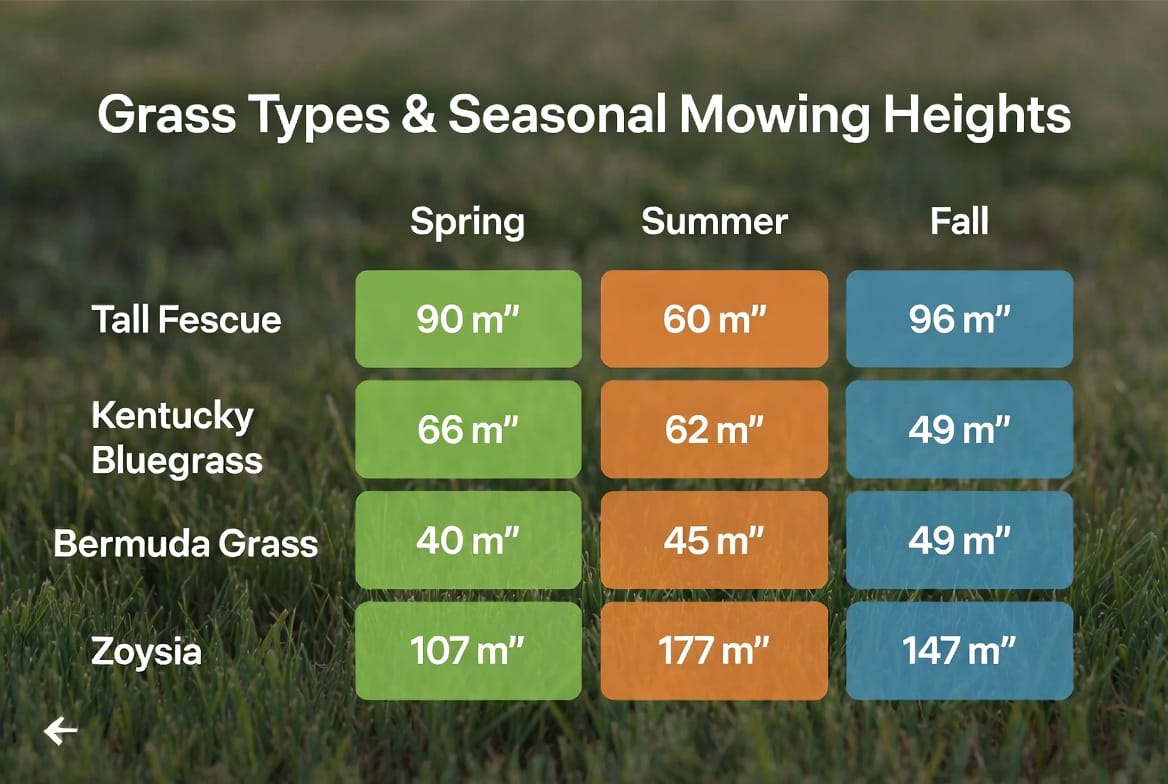
Tall Fescue
- Spring/Fall: 3–4 inches
- Summer: 4–4.5 inches (raise during heat stress)
Tall fescue develops a deep root system. Maintaining 3-4 inches allows it to shade the soil and conserve moisture naturally. During hot summer periods, raising the height protects the plant from scalping and reduces water needs.
Kentucky Bluegrass
- Spring/Fall: 2.5–3.5 inches
- Summer: 3.5–4 inches
Bluegrass prefers slightly shorter cuts but benefits significantly from taller heights during summer heat. This range promotes the thick, carpet-like appearance Kentucky bluegrass is known for while supporting recovery from stress.
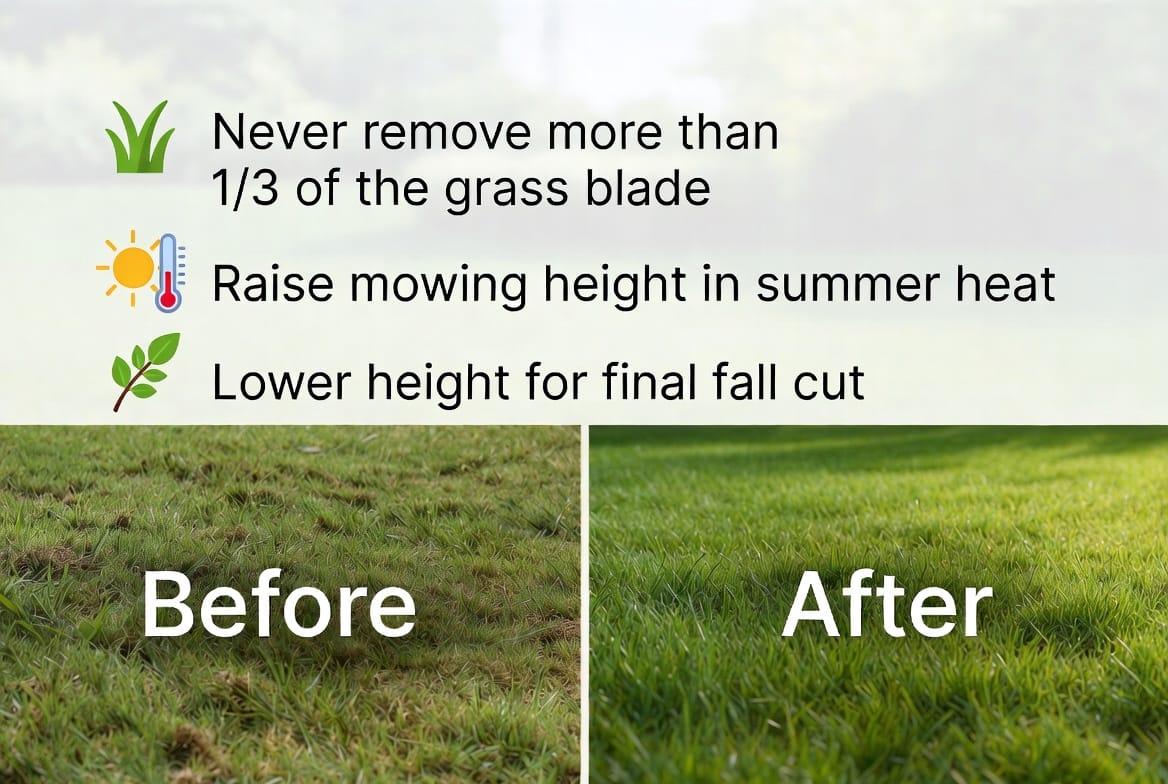
Pro Tip: Never remove more than one-third of the grass blade in a single mowing. This rule prevents shock and maintains consistent energy production.
Optimal Mowing Heights for Warm-Season Grasses
Bermuda Grass
- Spring/Fall: 1–1.5 inches
- Summer: 1.5–2 inches
Bermuda is aggressive and loves heat. Keeping it at 1-2 inches during peak growing season encourages lateral spread and dense coverage. In early spring and late fall, slightly lower heights help warm the soil faster.
Zoysia Grass
- Spring/Fall: 1.5–2 inches
- Summer: 2–2.5 inches
Zoysia’s slow vertical growth makes it ideal for lower maintenance. The 1.5-2.5 inch range produces a tight, luxurious lawn that naturally crowds out weeds. Raising the height in mid-summer helps it withstand drought and heat.
Seasonal Adjustments: The Smart Approach
Spring: Awakening the Lawn
Start with moderate heights as grass emerges from winter dormancy. Gradually lower as growth accelerates. This transition period builds strength without shocking the root system.
Summer: Defense Against Heat
Summer heat calls for taller heights across all grass types. Taller grass:
- Shades the soil to keep roots cooler
- Reduces evaporation
- Maintains photosynthesis during peak stress periods
For cool-season grasses especially, raising the mowing height by 0.5–1 inch can mean the difference between a struggling lawn and one that stays green through August.
Fall: Preparing for Winter
Lower heights slightly for the final cuts of the season. This helps prevent snow mold and prepares the lawn for spring by allowing better light penetration to the crown.
Essential Mowing Height Rules
- The One-Third Rule: Never cut more than one-third of the grass blade at once. This is the golden rule of lawn care.
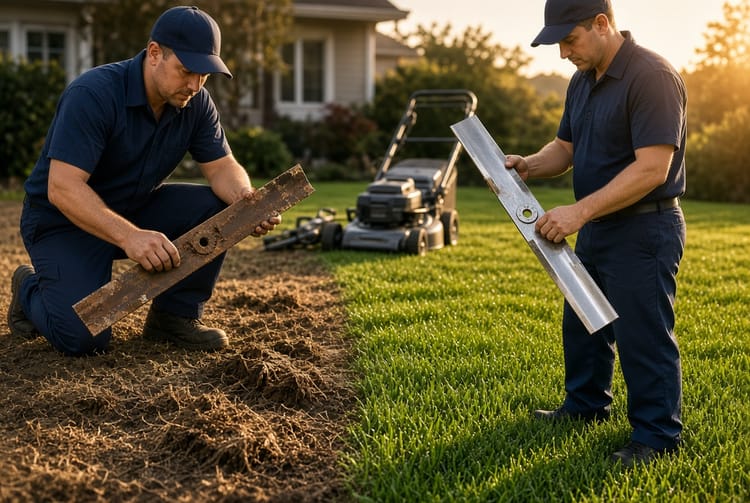
- Sharp Blades Matter: Dull blades tear grass, creating entry points for disease.
- Vary Your Pattern: Change mowing direction weekly to prevent soil compaction and ruts.
- Leave Clippings: Mulching clippings returns valuable nitrogen to the soil.
Common Mowing Mistakes to Avoid
Many homeowners unintentionally damage their lawns through incorrect height practices:
- Scalping – Cutting too short exposes soil and invites weeds
- Inconsistent heights – Alternating between too high and too low stresses grass
- Mowing wet grass – Leads to clumping and uneven cuts
- Ignoring grass type – Using the same height for all lawns
By following a proper mowing height chart, you eliminate these issues and set your lawn up for long-term success.
Tools and Techniques for Precision Mowing
Modern mowers offer easy height adjustment levers. Invest in a quality mower with reliable settings. For larger properties, consider a zero-turn mower with precise controls.
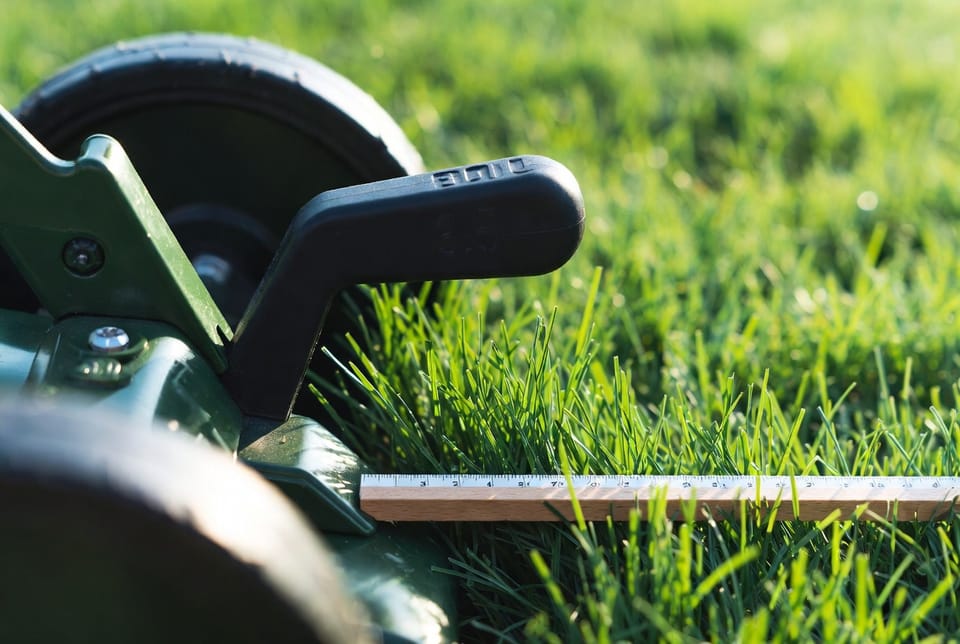
Measure periodically with a simple ruler to verify actual grass height—don’t rely solely on mower settings, as wheels can sink into soft soil.
Benefits of Following the Mowing Height Chart
Lawns maintained at optimal heights show remarkable improvements:
- Drought Resistance: Deeper roots access water better
- Fewer Weeds: Dense turf blocks weed establishment
- Reduced Fertilizer Needs: Healthier grass uses nutrients efficiently
- Better Disease Resistance: Stronger plants fight off fungal issues
- Enhanced Curb Appeal: Thick, vibrant color that stands out
Professional lawn care services often emphasize these height practices because they deliver consistent, impressive results with less chemical intervention.
Regional Considerations
Climate zones affect ideal mowing schedules. Northern regions with cool-season grasses may mow every 5–7 days in spring, while southern Bermuda lawns might require twice-weekly maintenance during peak summer growth.
Always observe your specific lawn. Grass growing faster in certain areas may need more frequent attention while maintaining proper heights.
Creating Your Personal Mowing Schedule
Week 1: Measure current height and grass type
Week 2: Set mower to recommended range
Week 3: Monitor growth rate and adjust frequency
Ongoing: Raise/lower based on weather patterns
Consistency beats perfection. Even following these guidelines 80% of the time produces outstanding results.
Final Thoughts: Invest in Your Lawn’s Foundation
Mastering seasonal mowing height adjustments transforms ordinary lawns into exceptional ones. The mowing height chart serves as your roadmap to success—protecting your investment while creating a landscape you can truly enjoy.
A healthier lawn means fewer problems, less water, and more pride in your outdoor space.
Mow at the right height for a healthier lawn.
For expert lawn care advice tailored to your property and grass type. Our professionals understand local conditions and can help you maintain the perfect mowing heights year-round.
Results may vary based on soil conditions, climate, and proper overall lawn maintenance practices.
Professional Lawn Mowing Guidance – Call Today