The Lawn Nitrogen Burn: Signs and Solutions
Over-fertilizing ranks among the most frequent mistakes homeowners make when trying to achieve a lush, healthy lawn. What begins as an eager attempt to boost growth often ends in visible damage known as nitrogen burn. This condition leaves grass looking scorched, stressed, and far from the vibrant carpet you envisioned. The good news is that nitrogen burn is almost always recoverable when addressed promptly and correctly. In this comprehensive guide, you will learn exactly what causes the problem, how to recognize every warning sign, and the precise recovery steps that restore your lawn without lasting harm.
Restore Your Lawn Fast – Call for Expert Care!
Understanding nitrogen burn empowers you to protect your investment and prevent future setbacks. Whether your lawn shows early yellowing or advanced browning, the solutions outlined here are practical, science-backed, and designed for lasting results. By the end, you will feel confident taking action—or knowing when professional lawn care support is the smartest next move.
What Exactly Is Nitrogen Burn?
Nitrogen burn occurs when grass roots and blades absorb more nitrogen than they can safely process. Nitrogen is an essential nutrient that fuels leafy growth, but excess amounts create a toxic salt concentration in the soil. These salts draw moisture out of the plant cells, effectively dehydrating the grass from the inside. The result appears as yellow or brown tips, leaf scorch, and in severe cases, dead patches that look as if the lawn has been burned by fire or chemicals.
This is not a disease or pest infestation. It is a direct chemical stress response triggered by over-application of fertilizer—especially quick-release nitrogen products applied during hot weather or on dry soil. The damage is usually most noticeable within days of fertilizing, though milder cases can develop more slowly. Because the injury is localized to the plant tissue rather than the soil structure itself, recovery is highly achievable once the excess salts are managed.
Homeowners often create nitrogen burn by following package instructions too aggressively, applying fertilizer more frequently than recommended, or spreading product unevenly. Granular fertilizers that clump or liquid applications that overlap heavily are common culprits. Understanding this mechanism removes the mystery and replaces worry with a clear path forward.
Why Over-Fertilization Happens So Easily
Modern lawn fertilizers are formulated for strong results, which is both a blessing and a risk. Many products contain high percentages of nitrogen designed to produce rapid greening. When combined with the natural desire for a perfect lawn, it becomes easy to exceed safe thresholds. Hot summer temperatures accelerate the problem because heat increases the rate at which salts concentrate and plants lose moisture. Applying fertilizer to drought-stressed grass or failing to water thoroughly afterward further intensifies the burn.
Another frequent error is ignoring soil testing. Without knowing existing nutrient levels, it is impossible to gauge how much additional nitrogen the lawn actually needs. Lawns that already receive organic matter, grass clippings, or previous applications may already hold sufficient reserves. Adding more simply pushes the balance into the danger zone. Recognizing these patterns helps you avoid repeating the same mistake and protects the long-term health of your turf.
Clear Signs of Nitrogen Burn to Watch For
Early detection makes recovery faster and more complete. The classic indicators of nitrogen burn are unmistakable once you know what to look for:
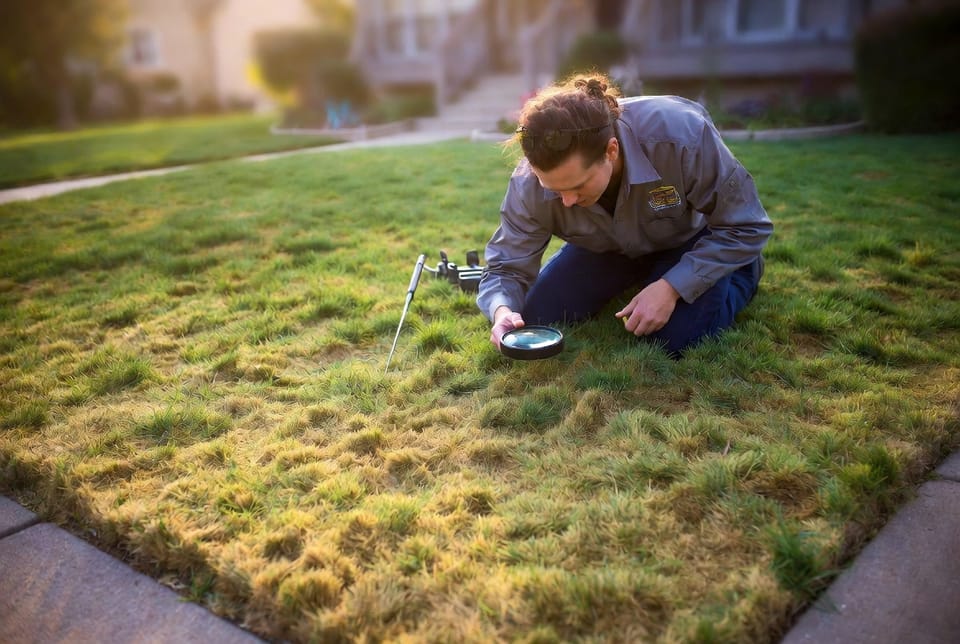
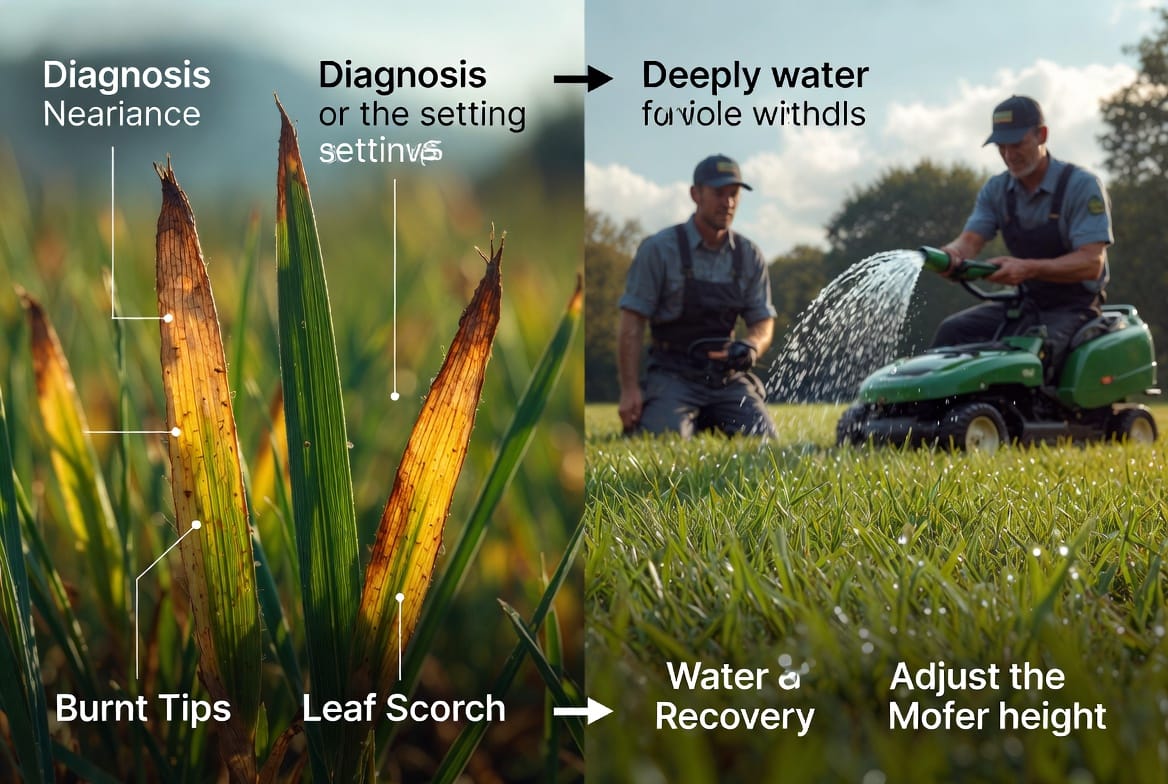
- Burnt tips on individual grass blades, starting at the ends and progressing downward. The tips turn bright yellow, then tan or brown, while the lower portion of the blade may remain green for a time.
- Leaf scorch that creates a striped or mottled appearance across larger areas. Blades may look dry and brittle even when soil moisture seems adequate.
- Distinct boundaries between damaged and healthy sections, often corresponding to where fertilizer was applied more heavily.
- An overall “fried” look that appears suddenly after a recent feeding, especially if weather has been warm and dry.
- In advanced cases, entire patches may collapse and turn straw-colored, resembling drought damage but occurring even in irrigated zones.
These symptoms differ from other lawn problems. Drought stress usually affects the entire plant more uniformly and improves quickly with water. Fungal diseases often show spots, rings, or unusual patterns and may spread regardless of fertilizer timing. Insect damage typically includes chewed edges or visible pests. When yellow or brown tips appear shortly after fertilizing and follow the application pattern, nitrogen burn is the most likely diagnosis.
Do not panic if you spot these signs. Grass is remarkably resilient. The crown of the plant—the growing point near the soil surface—often remains alive even when the upper blades are severely scorched. Protecting that crown is the key to successful recovery.
Proven Recovery Steps That Restore Your Lawn
Once you confirm nitrogen burn, immediate and consistent action reverses the damage. Follow these steps carefully for the best outcome:
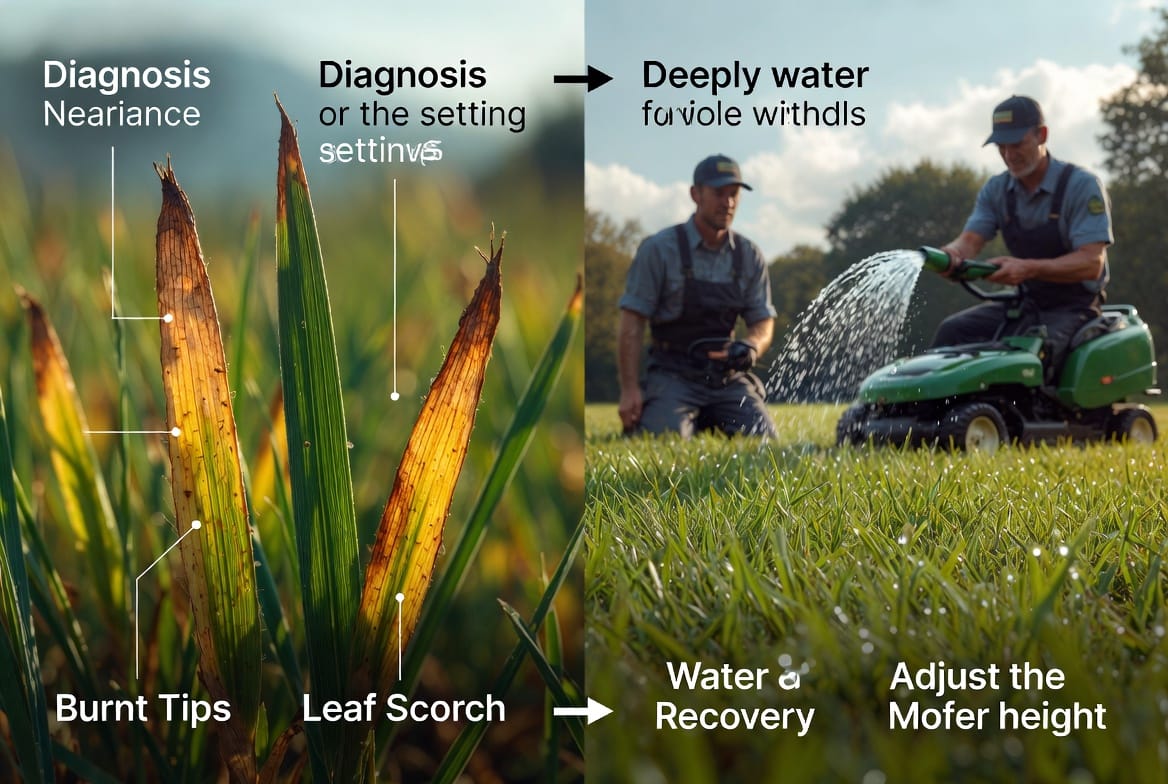
- Flush the soil thoroughly with water. This is the single most important recovery action. Apply a deep, slow watering that soaks the soil to a depth of at least six inches. The goal is to dissolve and leach excess nitrogen salts below the root zone. Continue daily deep watering for several days, adjusting for rainfall. Avoid light, frequent sprinkles that only keep salts near the surface.
- Stop all fertilizing immediately. Do not apply any additional nitrogen products—granular, liquid, or organic—until the lawn has fully recovered and new growth is vigorous. This pause can last four to eight weeks depending on severity and weather.
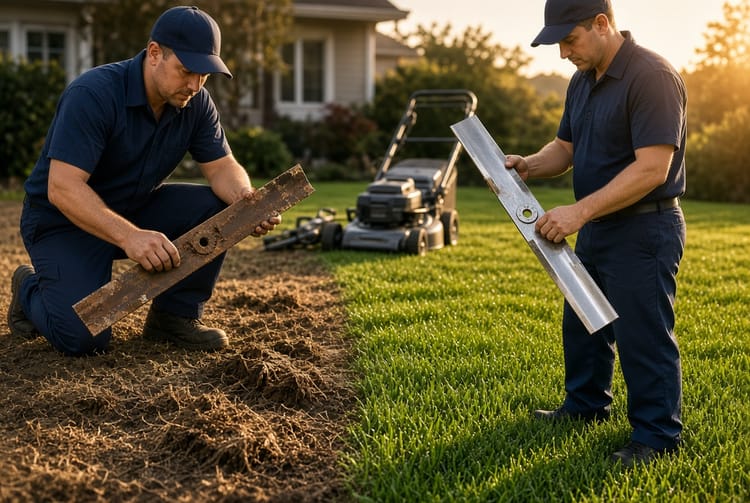
- Mow high and reduce stress. Raise your mower blade to the highest recommended setting for your grass type. Taller blades shade the soil, reduce water loss, and allow the plant to photosynthesize more efficiently while repairing itself. Never scalp the lawn during recovery. Remove only the damaged tips if necessary, and keep the mower sharp to avoid tearing already stressed tissue.
- Monitor soil moisture carefully. The roots need consistent hydration without becoming waterlogged. If drainage is poor, aerate gently after the initial flush to improve oxygen and water movement.
- Avoid additional stressors. Postpone any herbicide applications, heavy foot traffic, or other treatments until the grass shows clear signs of new green growth.
Most lawns begin showing improvement within one to two weeks of proper flushing and high mowing. New green shoots emerge from the crown, and the burnt tips are gradually replaced. Full visual recovery may take three to six weeks, but patience yields excellent results. In cooler weather the process can be slower; in mild conditions it accelerates.
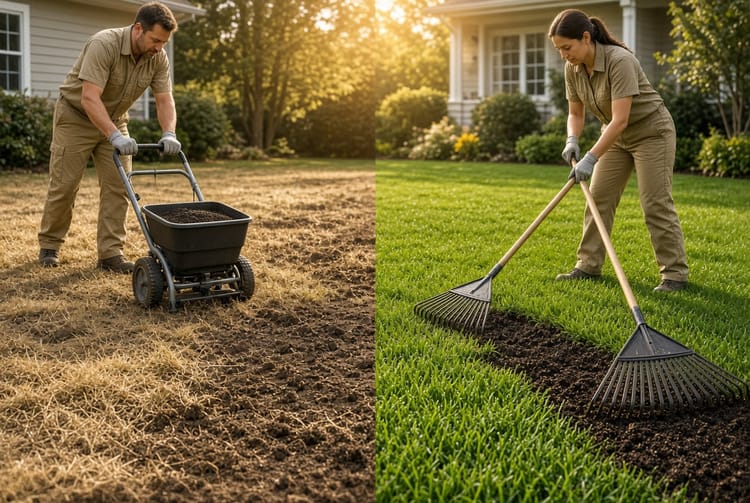
If the damage is severe and large areas appear completely dead, lightly rake away the dead thatch once the soil has been flushed. This allows light and air to reach the crown and encourages new tillering. Overseeding is rarely needed unless the crowns themselves have died—an uncommon outcome when recovery steps begin promptly.
Preventing Nitrogen Burn in the Future
Prevention is far easier than recovery and protects both the appearance and the long-term vitality of your lawn. Adopt these reliable practices:
- Always perform a soil test before major fertilizer applications. Knowing existing nitrogen levels prevents unnecessary additions.
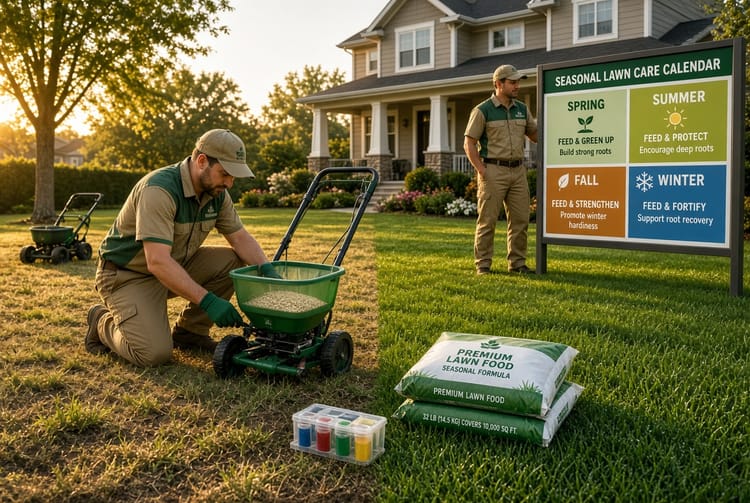
- Choose slow-release nitrogen fertilizers whenever possible. These products feed the lawn gradually and dramatically reduce the risk of salt buildup.
- Follow label rates exactly and never exceed the recommended amount. When in doubt, apply less rather than more.
- Apply fertilizer only when grass is actively growing and soil is moist. Water thoroughly immediately after application to move nutrients into the root zone without concentrating salts.
- Split larger applications into smaller, more frequent feedings rather than one heavy dose.
- Maintain consistent mowing height and watering practices year-round so the lawn stays resilient and less vulnerable to nutrient stress.
- Keep detailed records of every application—date, product, rate, and weather conditions. Patterns become clear over time and help refine your program.
A balanced fertility plan that includes phosphorus and potassium according to soil test results further strengthens the lawn against future stress. Healthy roots and proper soil biology naturally buffer against over-application mistakes.
Common Myths About Fertilizer Burn
Several misconceptions can delay effective action. One widespread belief is that more fertilizer always produces a greener lawn. In reality, excess nitrogen creates weak, lush growth that is more susceptible to disease and environmental stress. Another myth claims that once grass turns brown from nitrogen burn, it is permanently dead. As explained earlier, the crown frequently survives and regenerates when properly supported. Some homeowners believe that simply waiting for rain will solve the problem. While rain helps, deliberate deep flushing is more reliable and faster. Finally, the idea that organic fertilizers cannot cause burn is incorrect; any nitrogen source applied in excess can create the same salt effect, though the risk is generally lower with organics.
Clearing away these myths allows you to respond with confidence rather than hesitation.
When Professional Lawn Care Makes the Difference
While many cases of nitrogen burn respond well to the home recovery steps above, certain situations benefit greatly from expert intervention. Large damaged areas, repeated burn episodes, underlying soil compaction, or uncertainty about the exact cause all warrant professional assessment. A trained lawn care specialist can perform precise soil testing, calibrate applications, and implement a customized recovery program that accelerates healing while preventing recurrence.
Professional teams also bring specialized equipment for deep watering, aeration, and precise nutrient management that most homeowners do not have readily available. The result is a faster return to a uniform, healthy lawn and a fertilization schedule tailored specifically to your soil and grass type.
Restoring Confidence in Your Lawn Care Routine
Experiencing nitrogen burn can feel discouraging, yet it is one of the most correctable lawn problems. The combination of thorough flushing, a temporary halt to fertilizing, and high mowing consistently restores even heavily affected turf. By recognizing the early signs of burnt tips and leaf scorch, acting quickly, and adopting smarter fertilization habits, you transform a temporary setback into lasting knowledge that keeps your lawn thriving for years.
Your lawn is resilient. With the right approach it will bounce back stronger and more beautiful than before. Consistency, observation, and measured care are the foundations of success. When you combine these principles with professional support as needed, fertilizer burn becomes a rare and easily managed event rather than a recurring frustration.
Take Action Today to Fix Fertilizer Burn and Prevent Future Damage
Do not let nitrogen burn diminish the beauty of your outdoor space any longer. Begin the recovery process with deep watering and high mowing immediately, then protect your investment with a balanced, professional fertilization plan. For expert diagnosis, customized treatment, and ongoing lawn care that eliminates the risk of future burn, call the specialists who understand exactly how to restore and maintain healthy turf.
Skilled technicians are ready to assess your lawn, reverse the damage, and establish a program that delivers the lush, resilient results you deserve—season after season.
Get Professional Lawn Recovery – Call Now!