The Lawn Dead Spot Recovery: Reseeding After Disease or Damage
Dead spots in a once-beautiful lawn can feel discouraging, yet they are far from permanent. With the right approach, those bare patches caused by disease or physical damage can be restored to thick, resilient turf. This comprehensive guide walks you through proven repair techniques that homeowners and professionals rely on every season. By focusing on thorough preparation, proper timing, and consistent care, you can achieve reliable lawn dead spot recovery and enjoy a uniform green carpet again.
Restore Your Lawn Fast – Call for Expert Repair
Understanding why dead spots appear is the first step toward effective repair. Fungal diseases such as brown patch, dollar spot, or rust often attack stressed grass during periods of high humidity or temperature extremes. Physical damage from heavy foot traffic, pet urine, spilled chemicals, or even construction equipment can kill grass roots and leave unsightly voids. Insects like grubs may feed on roots, while compacted soil prevents water and nutrients from reaching the plant. Whatever the cause, the solution centers on reseeding after disease or damage using a methodical process that rebuilds the soil environment and reintroduces healthy grass.
Before any tools come out, assess the affected areas carefully. Walk the lawn and mark each dead spot with small flags or stakes. Measure the size of the patches and note whether the surrounding grass remains healthy. This evaluation helps determine how much seed and compost you will need and prevents overlooking smaller secondary spots that could expand later. Healthy surrounding turf often serves as a natural seed source, but deliberate reseeding accelerates recovery and ensures uniformity.
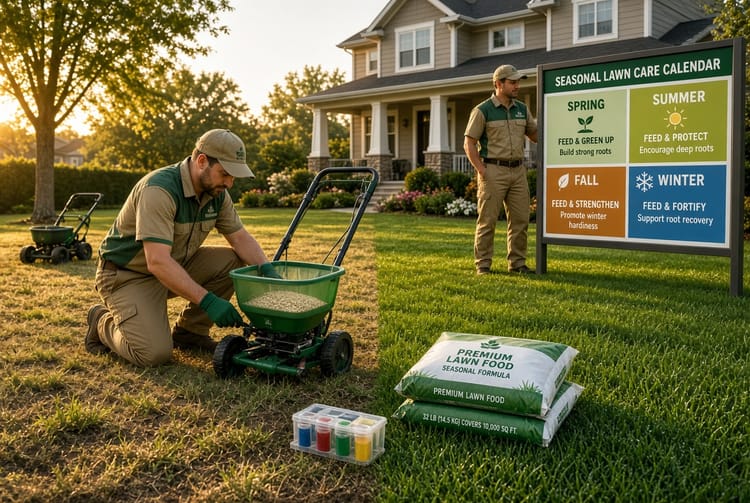
Timing plays a decisive role in successful lawn dead spot recovery. For cool-season grasses such as Kentucky bluegrass, perennial ryegrass, and tall fescue, the ideal window is early fall. Soil temperatures remain warm enough for rapid germination while cooler air reduces stress on new seedlings. Fall also brings more reliable rainfall and fewer weed pressures. Spring remains a secondary option for cool-season lawns if fall was missed, yet summer heat can threaten young plants. For warm-season grasses including Bermuda, zoysia, and St. Augustine, late spring through early summer offers the best conditions. These varieties thrive when soil and air temperatures climb, allowing vigorous root establishment before cooler weather arrives. Avoid reseeding during extreme heat or drought periods, as new seedlings require steady moisture without excessive stress.
Once timing is set, gather the necessary materials. High-quality grass seed matched to your existing lawn type is essential. Choose certified seed with high germination rates and consider blends that include disease-resistant varieties. Compost or a quality topsoil mix supplies organic matter and improves soil structure. A garden rake, sturdy shovel or sod cutter for larger spots, and a gentle watering can or hose with a fine-spray nozzle complete the basic toolkit. Optional items such as a soil test kit can reveal pH or nutrient imbalances that may have contributed to the original problem.
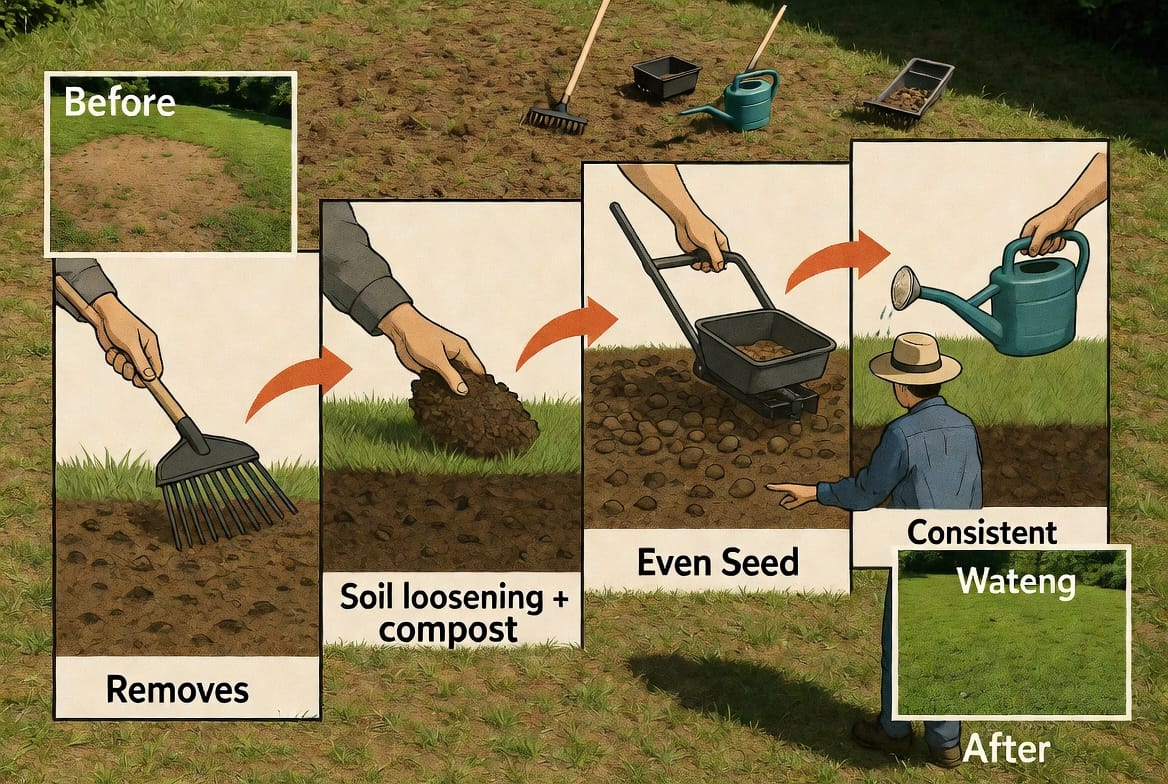
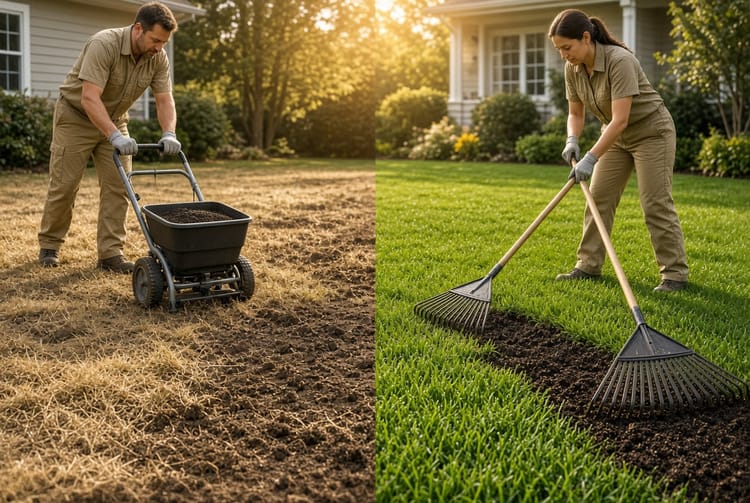
Begin the physical repair by removing all dead grass and debris. Use a sharp rake or sod cutter to lift the brown, lifeless material down to the soil surface. For spots larger than a dinner plate, cut out the entire dead section in a clean circle or square so healthy edges remain intact. Discard the removed material rather than leaving it in place; leftover thatch can harbor disease spores or block new growth. This clearing step creates a clean canvas and eliminates competition for the incoming seedlings.
Next, loosen the soil thoroughly. Compacted earth restricts root penetration and water infiltration, so break it up to a depth of at least two to three inches. A garden fork or hand cultivator works well for smaller patches, while a core aerator benefits larger areas. Work the soil until it feels crumbly and receptive. If the ground is particularly hard, lightly moisten it first to ease the process without creating mud. Proper soil loosening is one of the most overlooked yet critical repair techniques for long-term success.
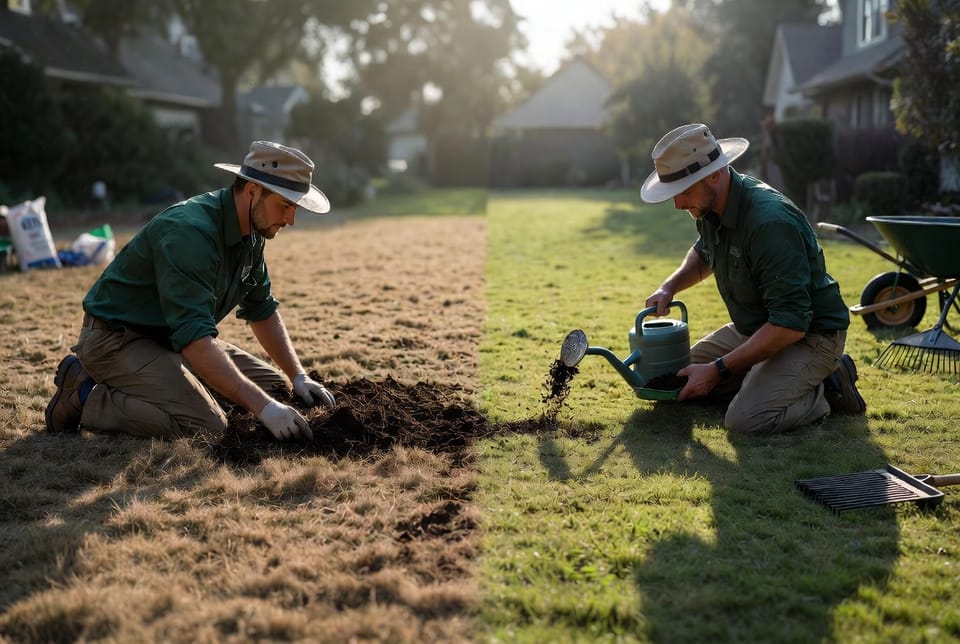
After the soil is loosened, incorporate a generous layer of compost. Spread one-half to one inch of screened compost across the prepared area and gently work it into the top few inches of soil. Compost improves drainage in heavy clay, increases water retention in sandy soils, and supplies slow-release nutrients that support seedling development. It also introduces beneficial microorganisms that help suppress future disease. Avoid using fresh manure or uncomposted materials that could burn tender roots or introduce weed seeds.
Seeding follows immediately after soil amendment. Broadcast the grass seed evenly at the rate recommended on the package, typically higher for bare spots than for overseeding an existing lawn. Lightly rake the seed into the top quarter-inch of soil so it maintains good seed-to-soil contact without being buried too deeply. For very small spots, you can simply press the seed in with the back of a rake or your foot. Some professionals apply a thin layer of straw or a specialized seed mulch to protect against birds and drying winds, yet many homeowners succeed without it when watering is consistent.
Watering is the final and ongoing key to lawn dead spot recovery. Immediately after seeding, apply a gentle mist that moistens the soil to a depth of one inch without washing seeds away. Keep the surface consistently damp—never soggy—until germination occurs, which may take seven to twenty-one days depending on grass type and temperature. Water lightly two to three times daily during the establishment phase, then gradually reduce frequency while increasing depth as roots develop. Once seedlings reach about two inches, transition to deeper, less frequent watering that encourages strong root systems. Monitor weather and adjust accordingly; a light rain may reduce the need for irrigation, while hot windy days demand extra attention.
Consistent aftercare ensures the new grass thrives. Avoid mowing until the seedlings are at least three inches tall, and then set the mower blade high to prevent stress. Refrain from applying fertilizers or herbicides for at least four to six weeks so young plants can establish without chemical interference. Foot traffic should be minimized over the repaired spots until the turf fills in completely. If disease was the original cause, improve overall cultural practices such as proper mowing height, balanced fertilization, and adequate airflow to reduce the chance of recurrence.
Common mistakes can undermine even careful work. Seeding at the wrong time of year often leads to failure because seedlings cannot compete with heat, cold, or weeds. Using the incorrect seed variety creates a mismatched appearance and may invite future problems. Overwatering encourages fungal issues, while underwatering causes seedlings to desiccate. Skipping soil preparation leaves a hostile environment that limits root growth. By following each step deliberately, these pitfalls become easy to avoid.
Prevention remains the best long-term strategy. Maintain a regular mowing schedule that never removes more than one-third of the blade length at once. Fertilize according to soil test recommendations rather than a generic calendar. Aerate compacted areas annually and overseed thin spots before they become fully dead. Address pet urine spots promptly by flushing them with water, and keep heavy equipment off the lawn during wet periods. Healthy, dense turf naturally resists disease and recovers faster from minor damage.
The benefits of prompt dead spot recovery extend beyond aesthetics. A uniform lawn increases curb appeal and property value. Thick grass crowds out weeds, reducing the need for chemical controls. Deep root systems improve drought tolerance and help manage stormwater runoff. Families and pets gain safer, more enjoyable outdoor space free of bare patches that collect mud or dust.
Homeowners who prefer professional assistance can save time and achieve more consistent results. Experienced teams bring specialized equipment, premium seed blends, and precise knowledge of local soil and climate conditions. They can also diagnose underlying issues that casual observation might miss. Whether you choose a do-it-yourself approach or expert help, acting quickly prevents small dead spots from expanding into larger problem areas.
Throughout the process, remain patient and observant. New grass does not appear overnight, yet steady progress becomes visible within weeks when conditions are favorable. Celebrate the first green shoots as confirmation that the repair techniques are working. Continue monitoring moisture and protecting the area until the turf blends seamlessly with the surrounding lawn.
In summary, successful lawn dead spot recovery rests on five core actions: remove all dead grass and debris, loosen the soil to create a receptive bed, add nutrient-rich compost, apply quality seed matched to your grass type, and water consistently through the establishment period. Align these steps with the correct seasonal window—fall for cool-season varieties and spring for warm-season grasses—and the results will speak for themselves. A lush, healthy lawn is fully within reach when damage is addressed systematically and with care.
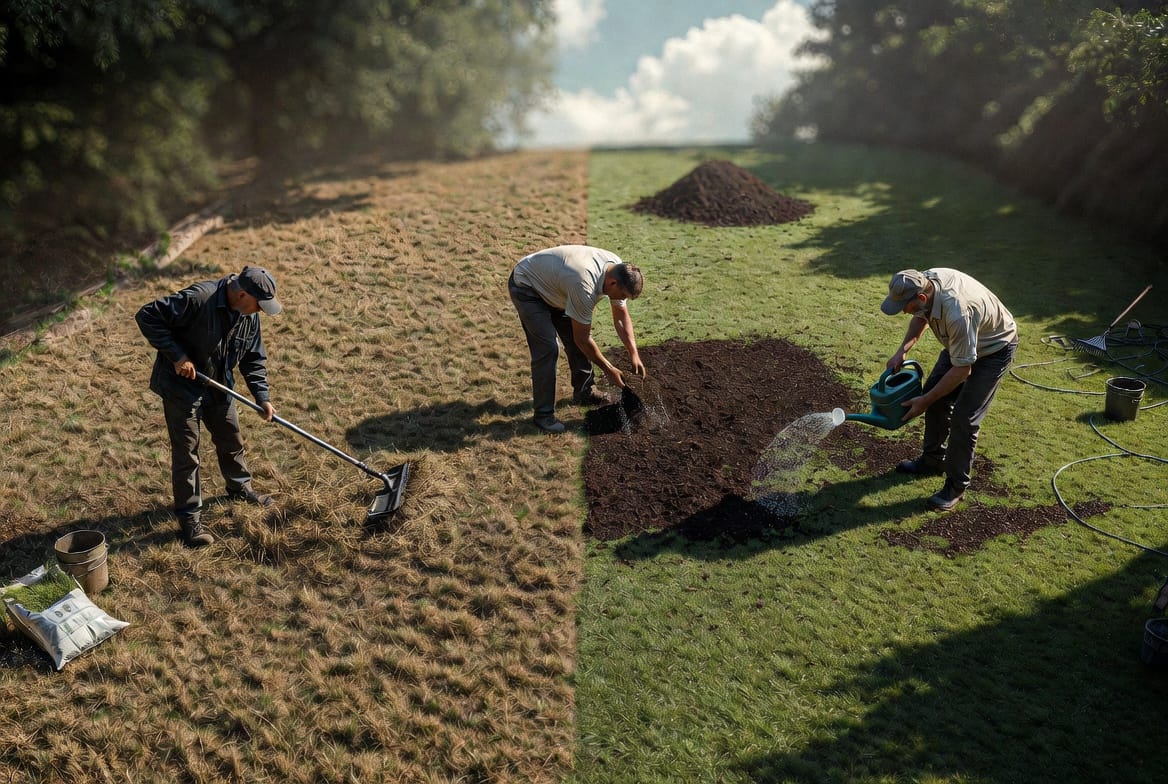
Repair dead spots quickly before they spread and compromise the entire lawn.
Call Today to Eliminate Bare Patches Fast