The Lawn Heat Stress: Signs and Recovery
Summer heat can turn a once-lush lawn into a stressed, tired surface almost overnight. When temperatures climb and rainfall becomes scarce, grass plants face a physiological challenge known as lawn heat stress. This is not permanent damage in most cases. With the right observation, timely adjustments, and a measured recovery plan, the majority of lawns rebound fully once cooler conditions return. Understanding the early signs and applying the correct support measures makes the difference between a temporary setback and lasting decline.
Help Your Lawn Survive Summer Heat – Call Now!
Heat stress occurs when the plant’s demand for water exceeds the soil’s ability to supply it while high temperatures accelerate evaporation and respiration. Cool-season grasses such as Kentucky bluegrass, tall fescue, and perennial ryegrass are especially vulnerable in regions that experience prolonged stretches above 85–90 °F. Warm-season varieties handle heat better yet still show stress when soil moisture drops too low. The goal is never to fight the weather; it is to reduce the plant’s workload and protect its energy reserves until conditions improve.
Recognizing the Visible Signs of Heat Stress
Early detection prevents minor stress from becoming widespread thinning. Three classic indicators appear consistently across most turf types.
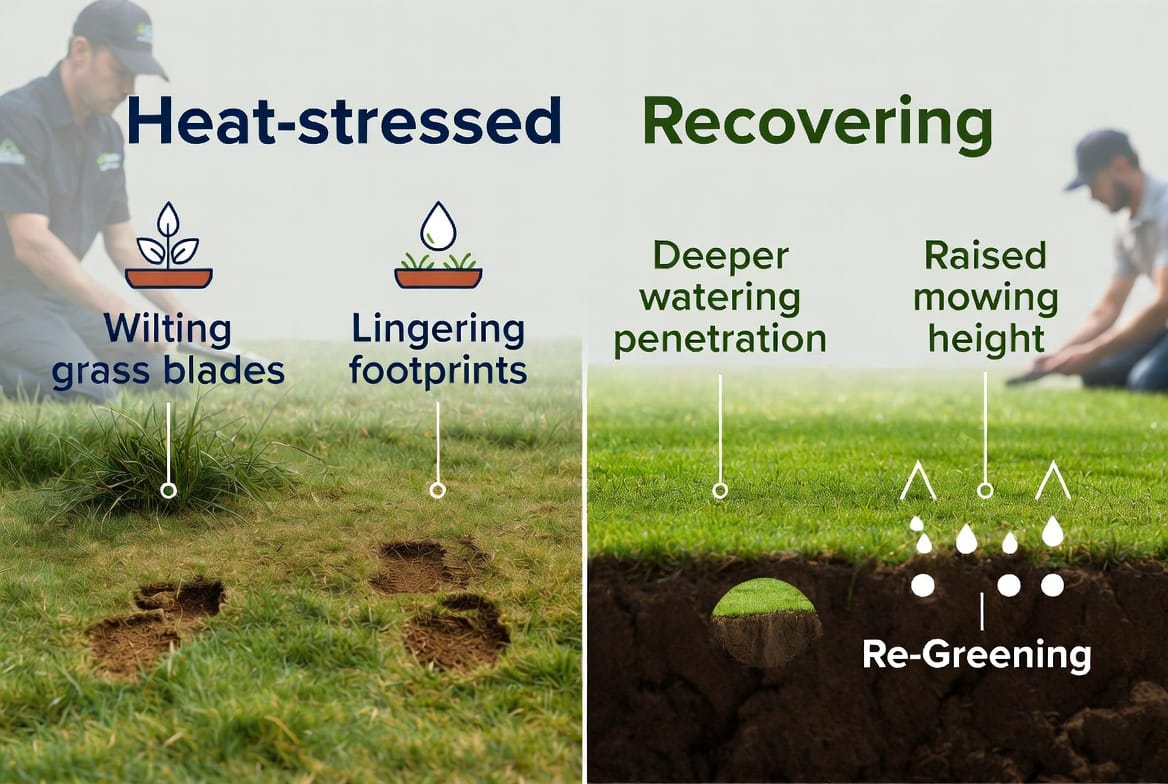
Wilting is often the first subtle change. Grass blades lose their rigid posture and begin to fold or roll inward, giving the lawn a dull, grayish-blue cast rather than its normal bright green. This response is the plant’s attempt to reduce surface area exposed to the sun and slow moisture loss. If you walk across the lawn in the late afternoon and notice that the blades no longer stand upright after your foot has passed, wilting is already underway.
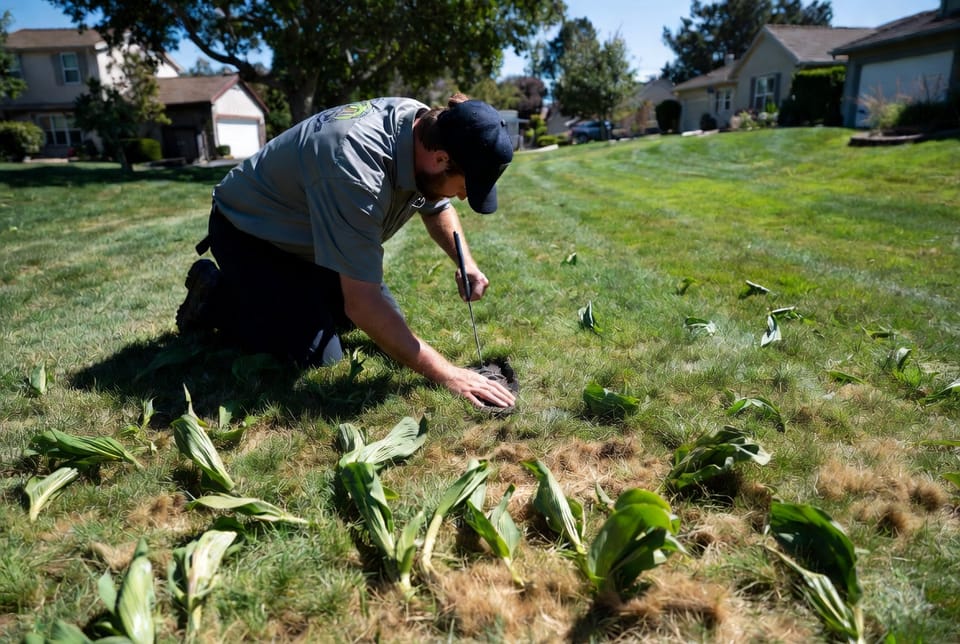
Brown patches develop next. These irregular areas may start as small spots a few inches across and expand into larger irregular zones. The color shift from green to tan or straw-like brown happens because chlorophyll production slows and leaf tissue begins to desiccate. Importantly, the crowns and roots often remain alive beneath the surface, so the brown appearance is not always a death sentence. Distinguishing true heat-induced browning from disease or insect damage is critical; heat-stressed patches usually feel dry and brittle rather than slimy or mushy.
Footprints that do not spring back provide one of the most reliable field tests. Healthy turf recovers its height within seconds after being compressed. Under heat stress the blades stay flattened, leaving clear dark impressions that linger for minutes or longer. This delayed recovery signals that the plant cells have lost turgor pressure—the internal water pressure that keeps them firm. When footprints remain visible across large sections of the lawn, the grass is operating in survival mode.
Additional secondary signs can appear as stress intensifies: leaf tips turning brown and crispy, a general thinning of density, and an increase in weed pressure because stressed turf leaves open spaces. Monitoring these changes daily during heat waves allows homeowners and professionals to intervene before the damage becomes irreversible.
Why Summer Conditions Trigger Stress So Quickly
High air temperature alone does not cause the problem. The combination of elevated soil temperature, rapid evaporation, and reduced root function creates the crisis. As soil warms above 70–75 °F, root growth slows dramatically. At the same time, the plant’s transpiration rate climbs, pulling water from the soil faster than it can be replaced by light rainfall or shallow irrigation. Shallow root systems—common in lawns that have been watered frequently but lightly—simply cannot reach deeper moisture reserves. The result is a cascade: less water uptake, reduced photosynthesis, depleted carbohydrate stores, and progressive decline in leaf quality.
Compacted soil and excessive thatch worsen the situation by restricting both water infiltration and gas exchange. Lawns that have been mowed too short during the preceding spring also enter summer with fewer energy reserves and less shading of the soil surface, accelerating the heating cycle. Understanding these underlying factors guides the recovery strategy: the focus must be on conserving existing moisture, reducing further stress, and protecting the living crowns until temperatures moderate.
Practical Steps That Actually Help a Heat-Stressed Lawn
Once signs appear, the most effective actions are simple, consistent, and deliberately restrained. Aggressive interventions often cause more harm than good during peak heat.
Water deeply and infrequently. The single most important recovery practice is to deliver water slowly enough that it soaks 6–8 inches into the soil profile. This encourages roots to grow downward rather than remaining near the surface. Early morning is the ideal window because temperatures are cooler, wind is usually lighter, and the grass has the entire day to dry before nightfall, reducing disease risk. Aim for roughly one inch of water per week total, including any rainfall, applied in one or two sessions rather than daily light sprinklings. A simple tuna-can test or soil probe confirms that moisture has reached the desired depth. Avoid evening watering; prolonged leaf wetness overnight invites fungal issues that compound heat stress.
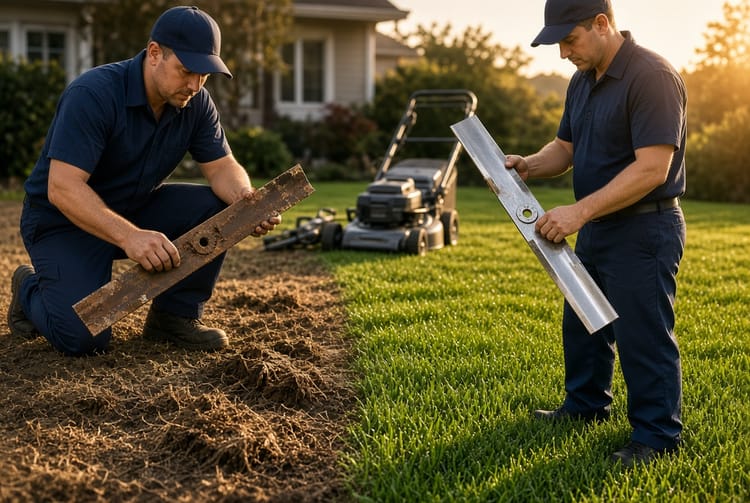
Raise the mowing height. Cutting the grass shorter than necessary removes leaf surface that the plant needs for photosynthesis and also exposes the soil to greater solar heating. During summer, set the mower to the highest recommended setting for the grass type—typically 3 to 4 inches for cool-season lawns. Taller blades shade the soil, slow evaporation, and allow the plant to maintain more of its energy-producing tissue. Never remove more than one-third of the blade length in a single mowing, and keep the blade sharp so cuts are clean rather than torn. Clean, high cuts reduce the recovery burden on an already stressed plant.
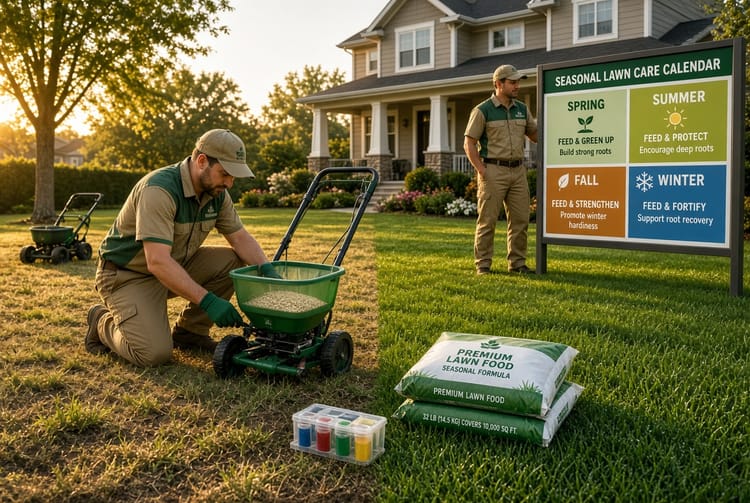
Avoid fertilizer applications. Nitrogen and other nutrients stimulate new top growth that the root system cannot support under heat and drought conditions. Applying fertilizer while the lawn is stressed forces the plant to allocate limited resources to leaf production instead of root survival and repair. Wait until temperatures moderate and the grass shows clear signs of renewed active growth before resuming a balanced fertility program. In the interim, any residual nutrients already present in the soil are sufficient.
Additional supportive practices reinforce these three core actions. Limit traffic on the lawn; every footprint adds mechanical stress to weakened tissue. If possible, provide temporary shade for the most exposed areas using portable screens or by adjusting outdoor furniture placement. Core aeration performed in the cooler months of fall or spring improves long-term resilience by relieving compaction, but it should not be done while the lawn is actively stressed. Likewise, overseeding is best reserved for the recovery window after heat has subsided.
What Recovery Actually Looks Like and How Long It Takes
Recovery is rarely instantaneous. Once consistent deep watering and higher mowing begin, the first positive signs usually appear within 7–14 days as cooler nights return or after a solid rainfall. Wilting lessens first; blades regain some turgor and the grayish cast fades. Brown patches begin to green from the edges inward as surviving crowns push new shoots. Full color and density restoration typically require three to six weeks of favorable conditions, depending on the severity of the initial stress, the grass species, and the consistency of care.
In severe cases where large sections have gone completely dormant, patience is essential. Many cool-season grasses enter a protective dormancy that allows the crown to survive extended dry periods. Green-up resumes when soil moisture and temperature align again. Warm-season grasses recover more quickly once irrigation is optimized because they are better adapted to heat. Tracking progress weekly with photographs taken from the same vantage point helps homeowners stay realistic and avoid the temptation to overwater or fertilize prematurely.
Professional assessment becomes valuable when recovery stalls or when the pattern of damage suggests additional problems such as grubs, fungal disease, or severe compaction. A trained eye can differentiate pure heat stress from secondary issues and recommend targeted soil amendments or cultural adjustments that accelerate rebound.
Building Long-Term Resilience Against Future Heat Events
While the immediate focus is recovery, the same practices that help a stressed lawn also prepare it for the next summer. Gradually transitioning to deeper, less frequent irrigation throughout the growing season trains roots to explore a larger soil volume. Maintaining proper mowing height year-round keeps the canopy dense enough to moderate soil temperature. Addressing compaction through annual aeration and keeping thatch within healthy limits improve both water infiltration and root health. Selecting improved cultivars with better heat and drought tolerance when renovating or overseeding further reduces vulnerability.
Soil testing every two to three years reveals nutrient imbalances or pH issues that quietly undermine stress tolerance. Organic matter additions through topdressing or compost applications increase the soil’s water-holding capacity, giving the lawn a larger buffer during dry spells. Together these cultural habits create a lawn that enters summer with deeper roots, better energy reserves, and greater ability to withstand temporary extremes without dramatic decline.
Moving Forward with Confidence
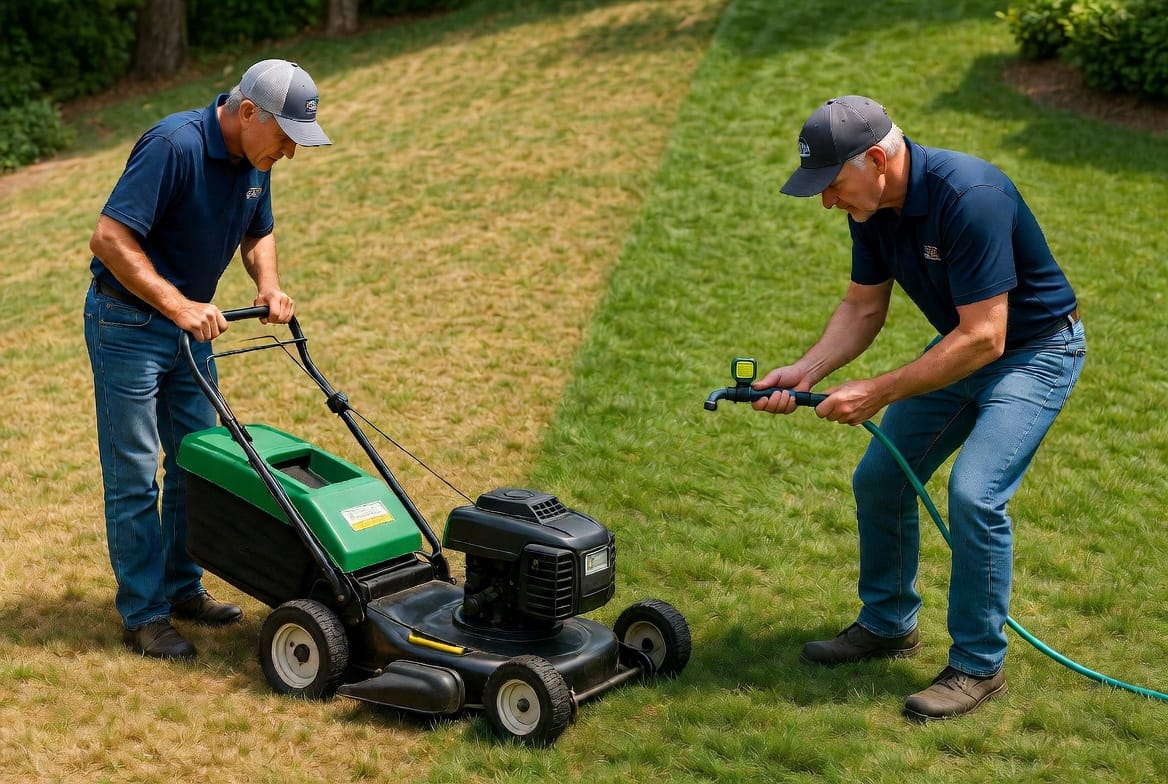
Lawn heat stress is a predictable seasonal challenge rather than an irreversible crisis. By learning to recognize the early signals of wilting, brown patches, and non-rebounding footprints, homeowners gain the power to intervene at the right moment. The recovery protocol itself remains straightforward: water deeply so roots can follow moisture downward, raise the mower deck to protect and shade the plant, and withhold fertilizer until the grass is actively growing again. Time and consistent care do the rest.
Most lawns that receive this measured support regain their density and color within a few weeks of milder weather. The process builds not only a greener surface but also a stronger root system better prepared for the next stretch of high temperatures. When questions arise or the damage appears more extensive than typical heat stress, professional guidance ensures the correct diagnosis and the most efficient path back to a resilient, attractive lawn.
Get Expert Lawn Heat Stress Recovery – Call Now!