The Lime Application: Adjusting Soil pH for Better Grass Growth
In the pursuit of a lush, resilient lawn, soil pH stands as one of the most critical yet often overlooked factors. Lime application serves as a proven soil amendment technique that corrects acidity and unlocks the full potential of your grass. When soil becomes too acidic, essential nutrients remain locked away, leaving even the best fertilizers ineffective. Professional lime application gently raises the pH, creating an ideal environment where grass roots can absorb what they need to flourish.
Call Now for Professional Lime Application & Soil Testing
At our lawn care service, we see the remarkable difference proper pH adjustment makes every season. Homeowners who invest in lime application report thicker turf, deeper green color, and fewer problems with weeds or disease. This comprehensive guide explains the science, timing, types, and benefits of lime application so you can confidently support healthier grass growth. Whether your lawn shows subtle stress or obvious decline, adjusting soil pH with lime offers a safe, effective path forward.
Understanding Soil Amendment Through Lime
Soil amendment involves improving the chemical balance of your ground to support plant health. Lime, derived from natural limestone, supplies calcium and sometimes magnesium while neutralizing excess acidity. Most cool-season and warm-season grasses perform best in a pH range of 6.0 to 7.0. Below 6.0, the soil turns acidic, triggering a chain reaction that limits nutrient availability and can even release toxic aluminum into the root zone.
Rainfall, repeated fertilizer use, and natural organic matter breakdown all contribute to dropping pH over time. Without intervention, your lawn gradually loses vigor. Lime application reverses this process safely and predictably. It does not provide instant results like a quick fertilizer boost; instead, it works steadily with soil microbes and moisture to restore balance. Homeowners who understand this process avoid frustration and achieve long-lasting improvements in grass density and color.
When Lime Is Needed: Recognizing Acidic Soil Below 6.0 pH
Lime becomes necessary precisely when soil tests confirm a pH below 6.0. Visual cues often appear first, but they should always be verified with professional testing. Common indicators include:
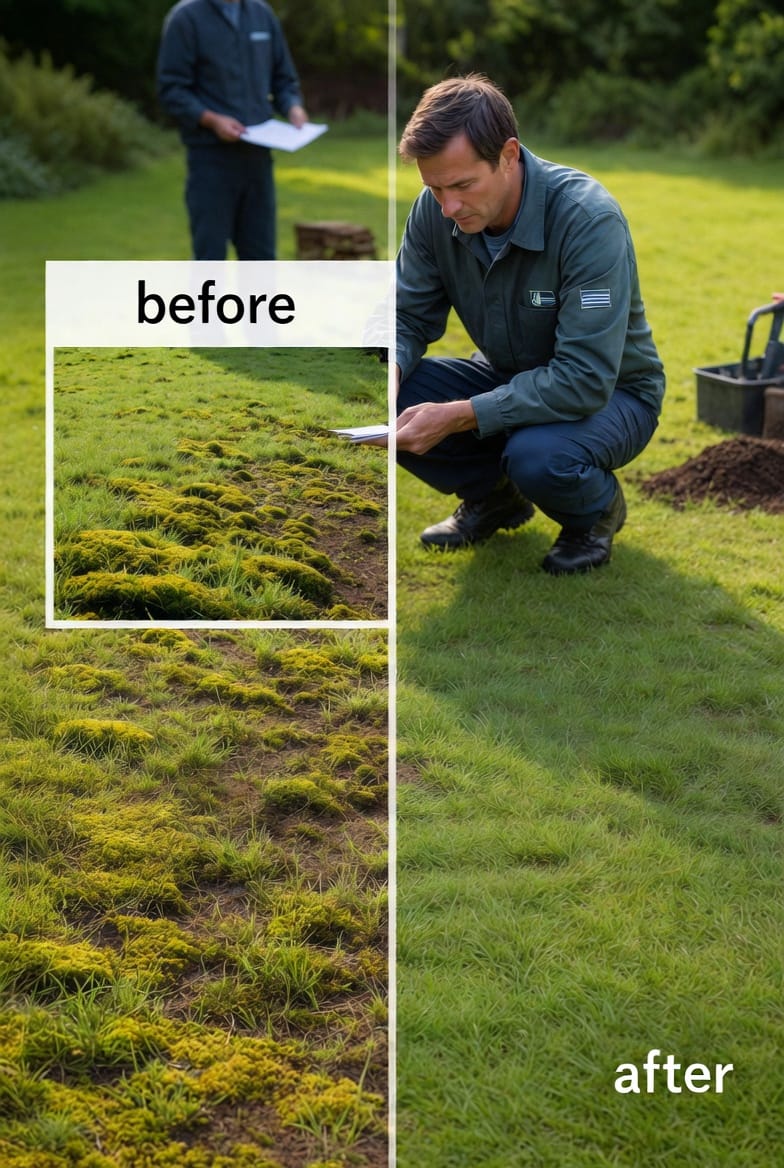
- Moss growth thriving in shaded or compacted areas where grass struggles
- Yellowing grass that persists despite adequate watering and feeding
- Poor fertilizer response where applied nutrients seem to disappear without effect
- Thin, patchy turf that fails to fill in even after overseeding
- Increased weed pressure from acid-tolerant species
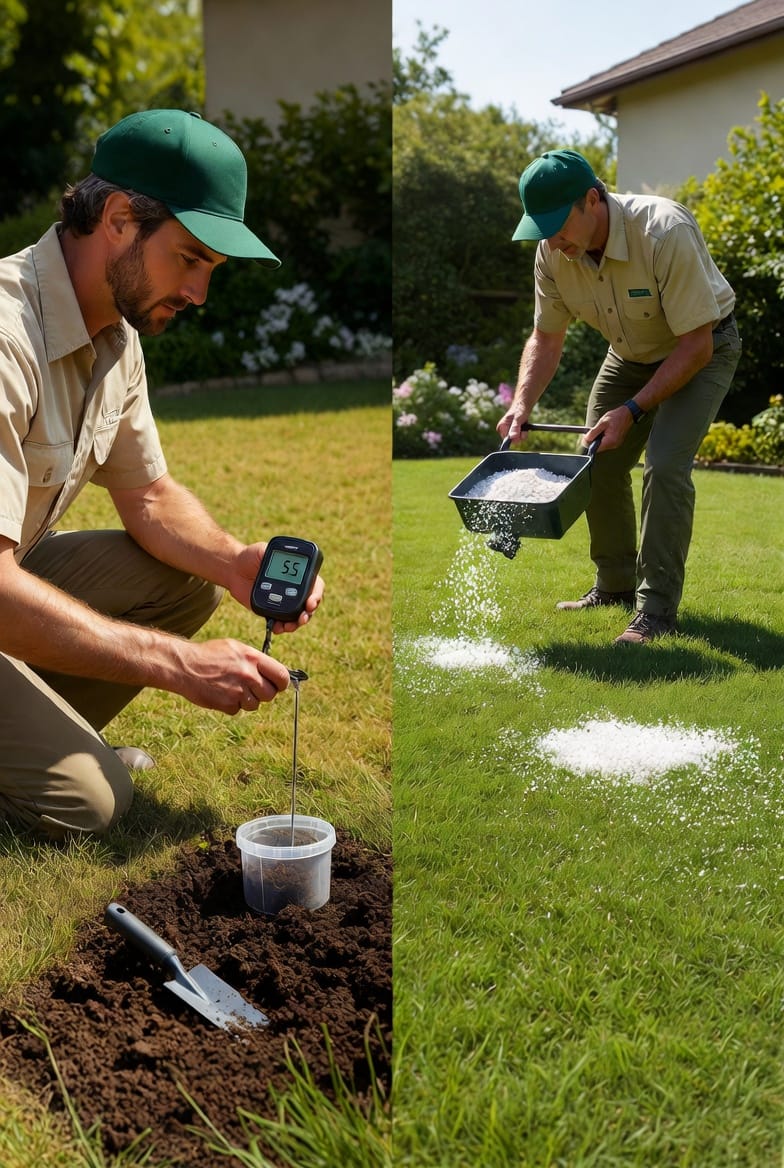
These symptoms signal that your soil chemistry is working against your grass rather than for it. A simple soil test reveals the exact pH and quantifies how much lime your lawn requires per thousand square feet. Skipping this step risks over- or under-application, so we always recommend precise testing first. Once confirmed, lime application addresses the root cause rather than masking symptoms.
Types of Lime: Dolomitic Versus Calcitic
Choosing the correct lime type ensures optimal results without creating new imbalances. Dolomitic lime contains both calcium carbonate and magnesium carbonate. It is the preferred choice when soil tests show magnesium deficiency alongside low pH. The magnesium component supports chlorophyll production, leading to richer green color in your grass.
Calcitic lime, made primarily of calcium carbonate, suits lawns where magnesium levels are already adequate. It delivers a faster pH adjustment focused solely on calcium. Both types come in powdered or pelletized forms; pelletized versions spread more evenly and reduce dust during application.
Particle size also matters. Finer particles react quicker with soil acids, while coarser ones provide longer residual effect. Your soil test report will specify the recommended type and rate, eliminating guesswork. Professional applicators select the precise formulation tailored to your lawn’s unique profile, delivering measurable improvements in grass health.
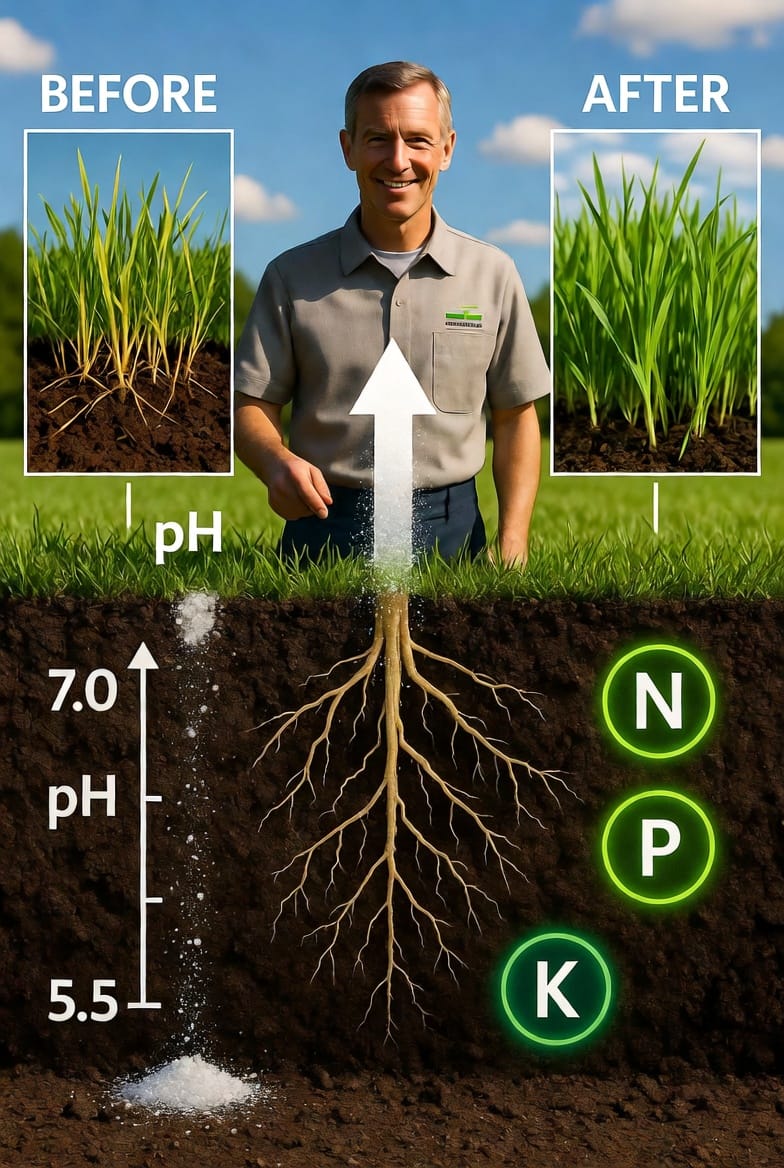
How Lime Raises Soil pH and Unlocks Nutrients
The chemistry behind lime application is straightforward yet powerful. Lime reacts with hydrogen ions in acidic soil, releasing carbon dioxide and water while supplying calcium or magnesium cations. As the pH climbs toward neutral, previously unavailable nutrients become soluble and accessible to grass roots.
This nutrient release triggers stronger root development, improved drought tolerance, and enhanced disease resistance. Grass blades green up noticeably within weeks, and the lawn thickens as tillers multiply. Microbial activity also surges in the corrected pH range, breaking down organic matter more efficiently and further enriching the soil.
The benefits extend beyond immediate growth. Balanced pH reduces the need for excessive fertilizers, lowering costs and environmental impact. Your lawn becomes more resilient to foot traffic, heat stress, and seasonal changes. Professional lime application ensures even distribution so every square foot receives consistent correction, avoiding patchy results that homeowners sometimes experience with DIY efforts.
Optimal Timing for Lime Application
Timing maximizes the effectiveness of lime application. The best windows are fall and early spring when soil moisture is consistent and temperatures remain moderate. Fall applications allow several months for the lime to react before the next growing season. Early spring treatments support rapid spring green-up.
Avoid applying lime during peak summer heat or when the lawn is drought-stressed. Dry conditions slow the chemical reaction, and hot weather can stress grass already coping with pH imbalance. Never apply immediately before or after seeding, as fresh seed prefers a stable environment. Scheduling through a professional service ensures the application aligns perfectly with your lawn’s growth cycle and local climate patterns.
Professional Application Methods for Best Results
Successful lime application requires careful execution. After soil testing determines the exact rate, trained technicians use calibrated broadcast spreaders for uniform coverage. They divide the lawn into sections, applying half the product in one direction and the remainder perpendicular to prevent missed spots or overlaps.
Light watering immediately after application helps the lime begin working without burning the grass. Avoid heavy irrigation that could wash product off the surface. For established lawns, core aeration performed shortly before liming improves penetration into compacted areas. Pelletized lime minimizes dust and is gentle on existing turf.
Safety remains paramount. Professionals wear appropriate protective gear and keep pets and children off the treated area until the product is watered in and dried. These careful practices deliver consistent pH adjustment across the entire lawn, setting the stage for uniform, healthy growth.
Measuring the Benefits of Proper Soil pH Adjustment
The rewards of timely lime application appear gradually but last for years. Within four to six weeks, homeowners typically notice deeper green color and faster recovery after mowing. Over one full season, turf density increases dramatically as roots expand and new shoots fill bare spots.
Long-term advantages include reduced weed competition, fewer disease outbreaks, and lower overall maintenance costs. Grass that receives adequate calcium develops stronger cell walls, making it more resistant to insects and environmental stress. Lawns treated regularly with lime maintain their vibrant appearance longer into the season and rebound quicker after winter dormancy.
Many clients report that their grass now responds better to fertilizer because nutrients stay available rather than becoming locked in acidic conditions. The investment in lime application pays dividends through a thicker, more beautiful lawn that enhances curb appeal and family enjoyment.
Common Mistakes to Avoid with Lime Application
Even well-intentioned homeowners sometimes misapply lime, leading to disappointing results. Applying without a current soil test is the most frequent error; guessing the amount can raise pH too high or leave acidity uncorrected. Using the wrong type—calcitic when magnesium is needed, or vice versa—creates secondary imbalances that require additional corrections.
Applying during the wrong season or failing to water after spreading also reduces effectiveness. Over-application risks nutrient lockup in the opposite direction, so precise rates matter. Relying on a professional lawn care team eliminates these risks through testing, correct product selection, and expert application techniques.
Balance Your Soil for a Healthier Lawn
Lime application represents one of the smartest investments you can make in your lawn’s future. By adjusting soil pH, you create the foundation for stronger roots, greener grass, and a more resilient turf that thrives season after season. The process is straightforward, safe when performed correctly, and delivers visible, lasting improvements.
Ready to give your lawn the balanced foundation it deserves? Balance your soil for a healthier lawn.
Our experienced team provides accurate soil analysis and professional lime application tailored to your specific lawn conditions. Schedule your service today and watch your grass transform into the vibrant, healthy landscape you’ve always wanted.
Transform Your Lawn with Expert Lime Treatment – Call Now