The Lawn Winter Preparation: Fertilizing and Mowing for Spring
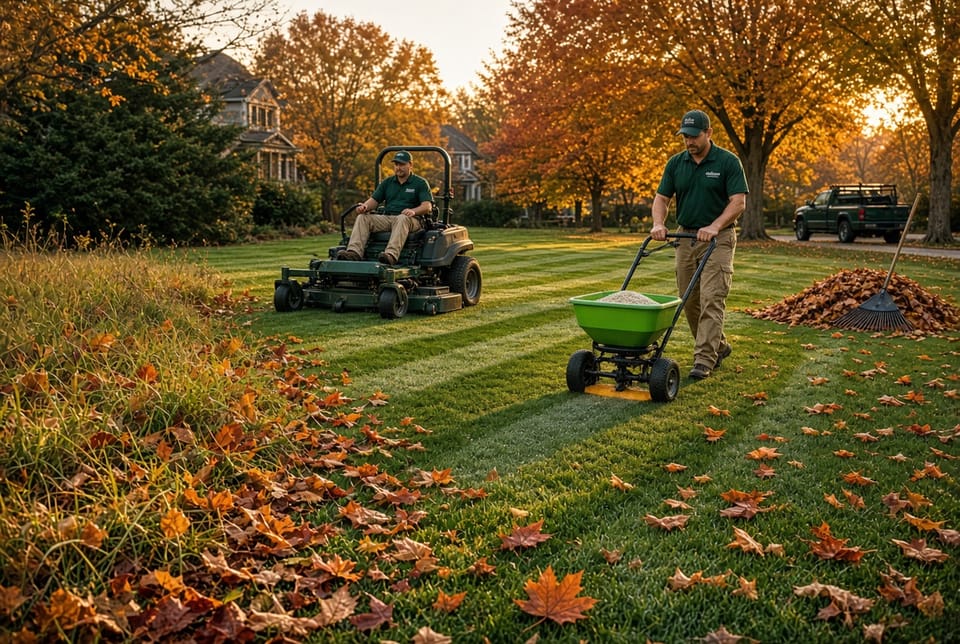
A healthy, lush lawn in spring does not begin in April. It begins in autumn, when most homeowners start thinking about putting tools away. The weeks before the ground freezes are the single most important window for lawn winter preparation. Done correctly, a shorter final mow, a properly formulated winter fertilizer, and thorough leaf removal set the stage for earlier green-up, denser turf, and fewer disease problems when temperatures rise. Done poorly—or skipped entirely—the same lawn can enter spring thin, patchy, and prone to snow mold.
Call Today for Fall Mowing & Winter Fertilizer Service
This guide walks through the three essential practices that professional lawn-care teams rely on every fall. Follow them and you give your grass the best possible chance to survive winter stress and explode with growth once the soil warms.
Why Fall Preparation Matters More Than Spring Feeding
Grass plants spend late summer and early fall storing carbohydrates in their roots and crowns. Those reserves fuel winter survival and the first flush of spring growth. When you mow too high, leave a thick layer of leaves, or skip potassium, you interrupt that storage process. The result is weaker roots, greater winterkill risk, and a lawn that looks tired even after the first spring fertilizer application.
Winter preparation is therefore not optional maintenance. It is insurance. A well-prepared lawn recovers faster from freeze-thaw cycles, resists fungal diseases that thrive under snow cover, and requires less corrective work once the growing season returns.
Timing Your Winter Lawn Work
Begin the process when daytime temperatures consistently stay below 70°F and night temperatures drop into the 40s. In most temperate regions this window opens in mid-to-late October and closes just before the first hard freeze. Work too early and the fertilizer nitrogen can push tender new growth that winter will kill. Work too late and the soil may already be too cold for nutrient uptake.
Watch the forecast. Aim to complete the final mow, fertilization, and leaf cleanup at least two weeks before the ground is expected to freeze solid. That buffer gives roots time to absorb potassium and the turf time to recover from the last cut.
The Final Mow: Cutting Shorter for Winter Survival
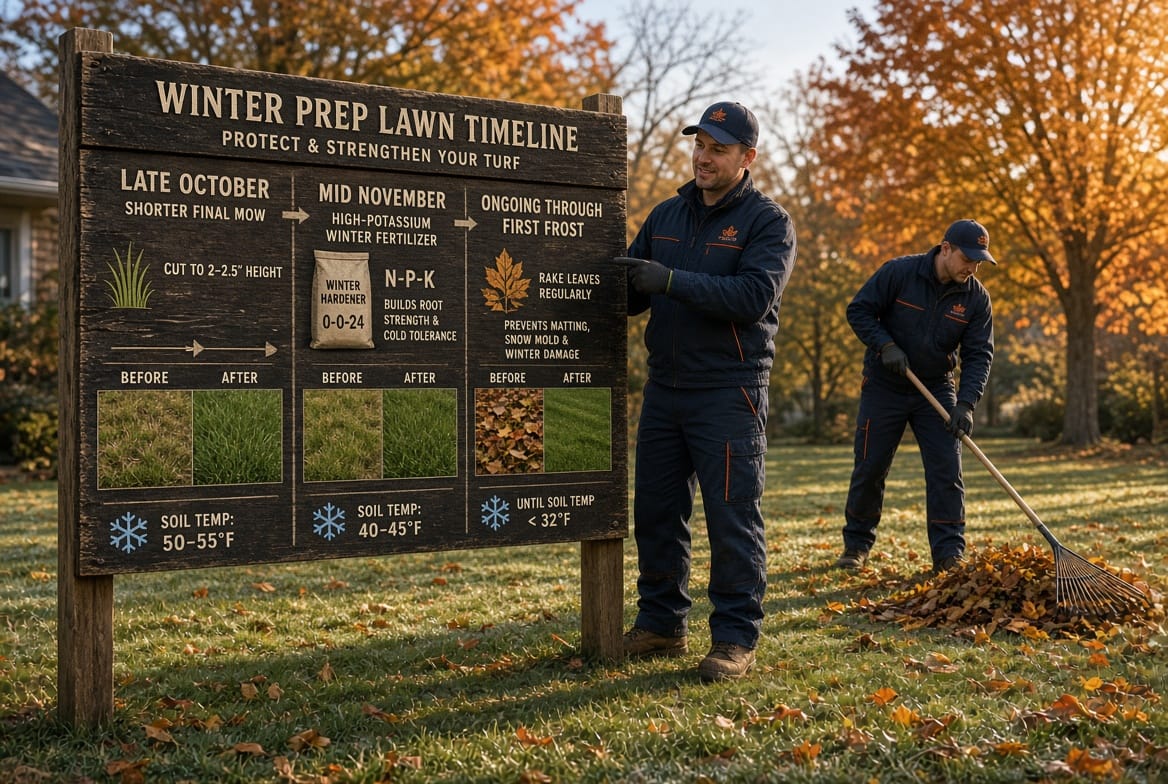
Throughout the growing season most cool-season lawns thrive at 3–3.5 inches. For the last cut of the year, lower the deck. The target height is 2–2.5 inches.
Why shorter? Tall grass blades flop over under the weight of snow or ice, creating a moist, low-oxygen environment that favors snow mold and other winter diseases. A shorter canopy stands more upright, allows better air circulation, and reduces the chance of matting. Shorter grass also means less surface area for ice to accumulate and less shading of the crown—the growing point that must survive until spring.
How to execute the final mow:
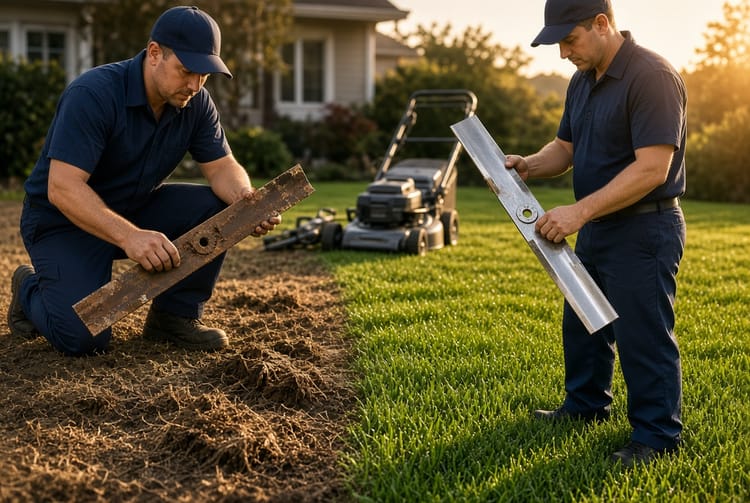
- Sharpen the mower blade first. A dull blade tears rather than cuts, leaving ragged edges that invite disease.
- Mow when the grass is dry. Wet clippings clump and smother the turf.
- Make two passes if the lawn is especially long: first at the regular height, then drop the deck for the final pass.
- Collect or finely mulch the clippings. Do not leave a heavy layer on the surface.
- Avoid scalping. Never remove more than one-third of the blade length in a single mowing.
After this last cut the lawn should look neat but not shaved. The slightly shorter height also makes leaf raking easier and more effective.
Risk of skipping the shorter mow: Prolonged leaf wetness, increased snow-mold incidence, and slower spring green-up as the plant expends energy lifting flattened blades instead of producing new growth.
Winter Fertilizer: High Potassium for Root Strength and Cold Hardiness
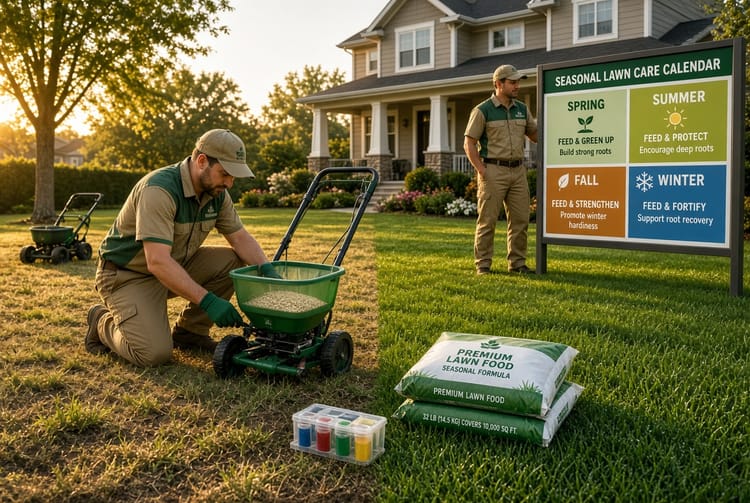
The second pillar of lawn winter preparation is a fertilizer formulated specifically for late-season use. Look for a product with a high third number on the N-P-K label—potassium (K). A typical winter fertilizer might read 10-0-20, 8-0-24, or similar. Potassium strengthens cell walls, improves drought and cold tolerance, and helps the plant regulate water movement during freeze-thaw cycles.
Nitrogen is still present but in a slow-release or lower-percentage form so it does not force a flush of top growth that winter will damage. Phosphorus is often low or zero unless a soil test shows a deficiency; most established lawns already have adequate phosphorus.
Application guidelines:
- Perform a soil test if you have not done so in the last two years. pH and nutrient levels dictate exact rates.
- Apply when the grass is dry and rain is not expected for 24 hours, or water in lightly after spreading.
- Use a calibrated broadcast or drop spreader. Overlap passes slightly to avoid stripes.
- Stay 6–8 inches away from sidewalks, driveways, and water features to prevent runoff.
- Typical rate is 1 pound of actual potassium per 1,000 square feet, but always follow the bag and soil-test recommendations.
Organic options such as potassium sulfate blended with composted materials work well for homeowners who prefer slower, biologically friendly feeding. Synthetic controlled-release products deliver more predictable results when weather windows are short.
Key benefit: Potassium does not produce the quick green color of high-nitrogen spring fertilizers. Instead it builds the underground engine that will power next year’s color and density. Lawns that receive a proper winter feeding routinely show earlier and more uniform spring green-up.
Risk of using the wrong fertilizer: A high-nitrogen “winterizer” that is actually a summer formula can push late growth, increase winterkill, and leave the lawn more susceptible to disease.
Raking Leaves: The Simple Step That Prevents Mold
A thick blanket of leaves left on the lawn through winter is one of the most common causes of spring disappointment. Leaves trap moisture, block light, and create the perfect environment for snow mold, leaf spot, and crown rot. Even a moderate layer can smother grass crowns and delay spring recovery by weeks.
Best practices for leaf removal:
- Rake or blow leaves as they fall rather than waiting for a single massive cleanup. Multiple light sessions are easier on both the turf and the homeowner.
- Use a spring-tine rake or a mulching mower set to a high setting if the leaf volume is modest. Fine leaf particles can actually add organic matter when they are small enough to sift into the canopy.
- For heavy accumulations, collect and compost or bag the leaves. Do not pile them against the foundation or in low spots where they will stay wet.
- Finish the job after the final mow so any remaining fragments are short and less likely to mat.
If your property produces an overwhelming volume of leaves, consider a professional fall cleanup service. They have the equipment to remove debris quickly without damaging the turf.
Risk of leaving leaves in place: Persistent snow mold patches that require extra fungicide or overseeding in spring, plus a lawn that greens up two to three weeks later than neighboring properties that were properly cleaned.
Additional Steps That Support the Core Three Practices
While the shorter mow, winter fertilizer, and leaf removal form the foundation, a few supporting actions amplify results.
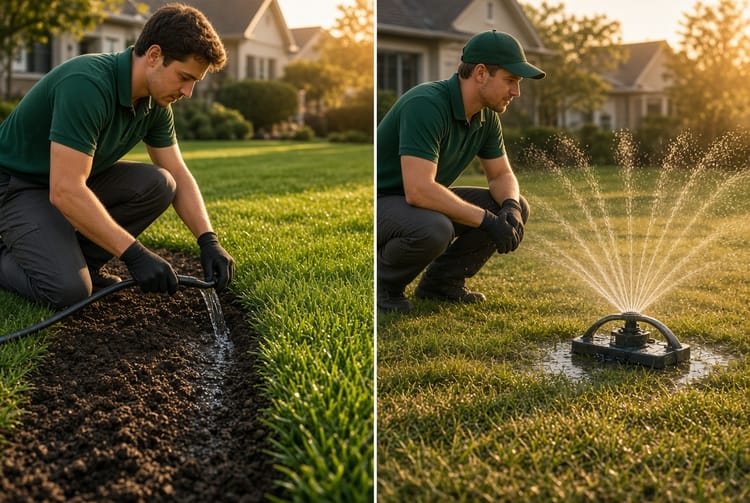
- Watering: Continue deep, infrequent watering until the ground freezes. A well-hydrated lawn withstands winter desiccation better than a drought-stressed one.
- Aeration: If the soil is compacted, core aeration in early fall (before fertilization) improves nutrient and water penetration.
- Overseeding thin areas: Perform this at least four to six weeks before the first expected freeze so seedlings have time to establish.
- Edge and clean hardscapes: Remove grass clippings and fertilizer granules from sidewalks to prevent staining and nutrient runoff.
These extras are not mandatory every year, but they turn a good winter preparation into an excellent one.
Common Mistakes That Undermine Winter Preparation
Even well-intentioned homeowners sometimes undo their own work. Avoid these frequent errors:
- Mowing the lawn too short too early in the season, which stresses the plant before it has stored enough carbohydrates.
- Applying a high-nitrogen fertilizer labeled “winterizer” that is actually formulated for summer use.
- Waiting until after the first snow to rake leaves, at which point they have already begun to decompose and mat.
- Ignoring soil pH. Potassium uptake drops sharply in very acidic or very alkaline soils.
- Using a dull mower blade on the final cut, leaving torn tissue that becomes an entry point for pathogens.
Correcting these habits costs nothing extra and dramatically improves spring results.
Regional Adjustments
Cool-season grasses (Kentucky bluegrass, tall fescue, perennial ryegrass) in the northern and transition zones follow the schedule outlined above. Warm-season lawns (Bermuda, zoysia, St. Augustine) in southern regions require a slightly different approach: they should be allowed to go dormant naturally and generally receive little or no late nitrogen. Potassium is still beneficial, but the final mow height stays closer to the regular growing-season height. Always match practices to your grass type and local first-frost date.
From Winter Rest to Spring Performance
When the three core practices—shorter final mow, high-potassium fertilizer, and complete leaf removal—are completed on time, the lawn enters winter with strong roots, balanced nutrition, and an unobstructed canopy. Snow and ice come and go. Underneath, the grass remains alive and ready. The first warm days of spring trigger rapid green-up rather than a slow, patchy recovery. You spend less time and money on corrective spring treatments and more time enjoying a thick, even lawn.
The work is modest. The payoff lasts an entire growing season.
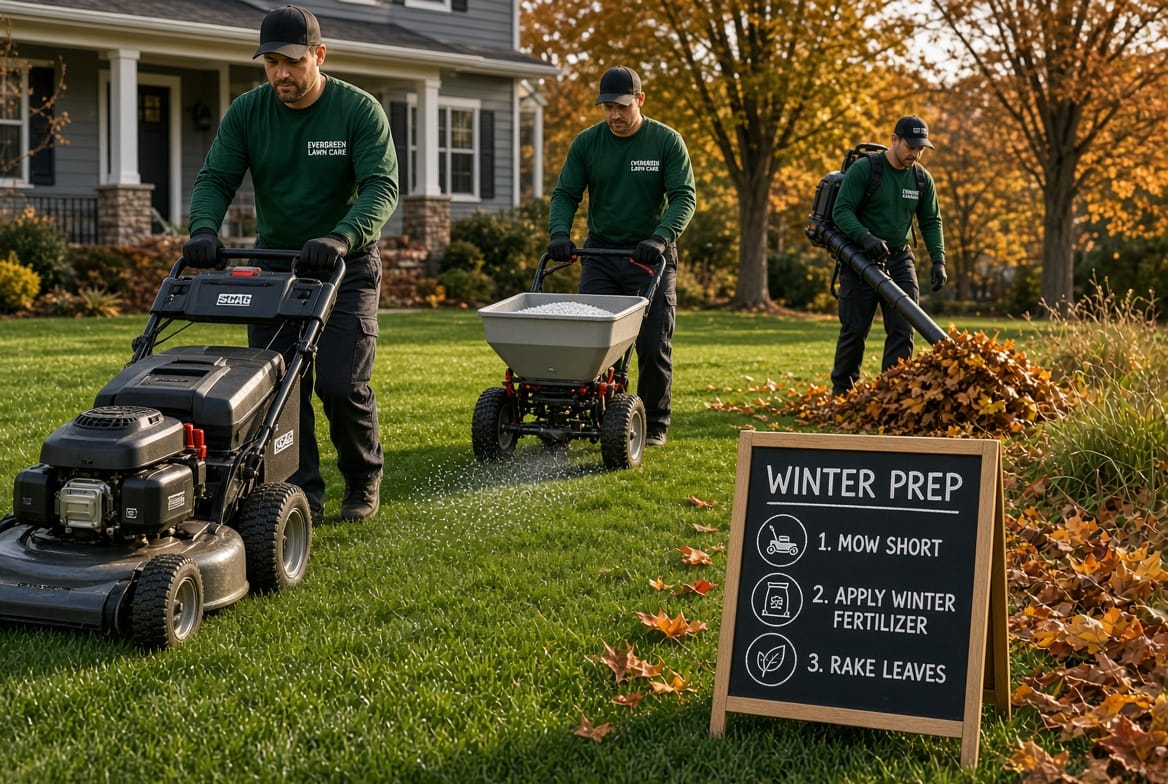
A prepared lawn is a resilient lawn. Give your turf the shorter cut, the potassium it needs, and a clean surface before winter arrives, and you will see the difference the moment spring temperatures climb.
Prepare your lawn for winter. Our technicians handle the final mow, winter fertilization, and complete leaf cleanup so you can start next season ahead.
Call Now for Professional Leaf Cleanup & Winter Feeding