The Lawn Thatch Removal: Dethatching vs. Aeration
A healthy lawn is the foundation of any beautiful outdoor space, yet many homeowners struggle with underlying problems that quietly sabotage grass growth. Two of the most common challenges are excessive thatch buildup and soil compaction. Understanding the precise differences between dethatching and aeration—and knowing exactly when each treatment is required—can transform a struggling yard into a thick, resilient carpet of green.
Get the Right Lawn Treatment Today – Call Now!
This comprehensive guide explains both methods in clear detail, compares their purposes, outlines the ideal conditions for each, and highlights the long-term benefits. By the end, you will feel confident choosing the right approach for your lawn and know exactly how to move forward with professional help.
Understanding Lawn Thatch and Soil Compaction
Before comparing the two treatments, it is essential to recognize the distinct problems they solve.
Thatch is a dense layer of dead grass stems, roots, and organic matter that accumulates between the soil surface and the living grass blades. A thin layer of thatch (less than half an inch) can actually protect the soil and retain moisture. However, when thatch becomes thicker than three-quarters of an inch, it acts as a barrier. Water, air, and nutrients struggle to reach the root zone. Grass becomes shallow-rooted, disease-prone, and vulnerable to drought.
Soil compaction, on the other hand, occurs when soil particles are pressed tightly together. Heavy foot traffic, lawn equipment, and clay-heavy soils are common causes. Compacted soil restricts root expansion, reduces oxygen levels, and prevents proper drainage. Even if thatch is minimal, compacted soil can leave a lawn looking thin, patchy, and stressed.
Recognizing which issue dominates your lawn is the first step toward effective treatment.
What Is Dethatching?
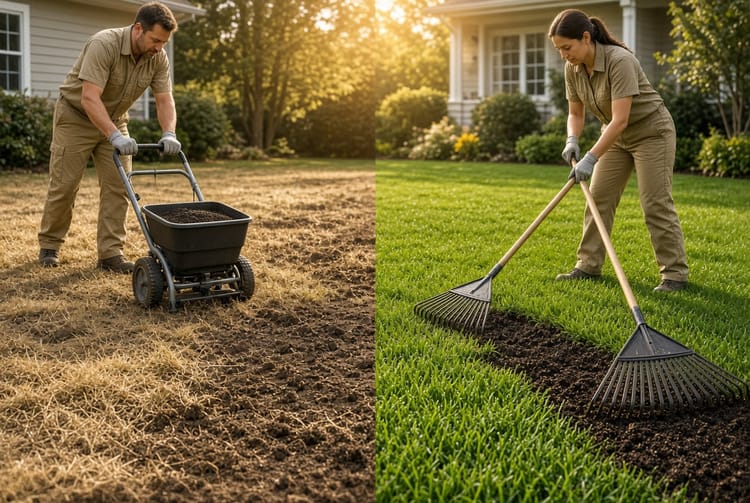
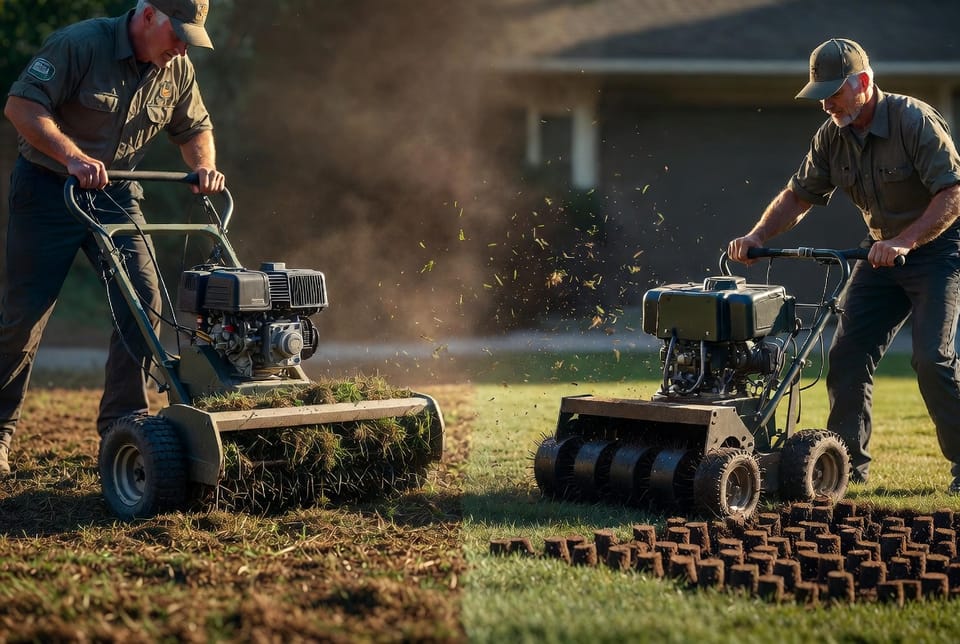
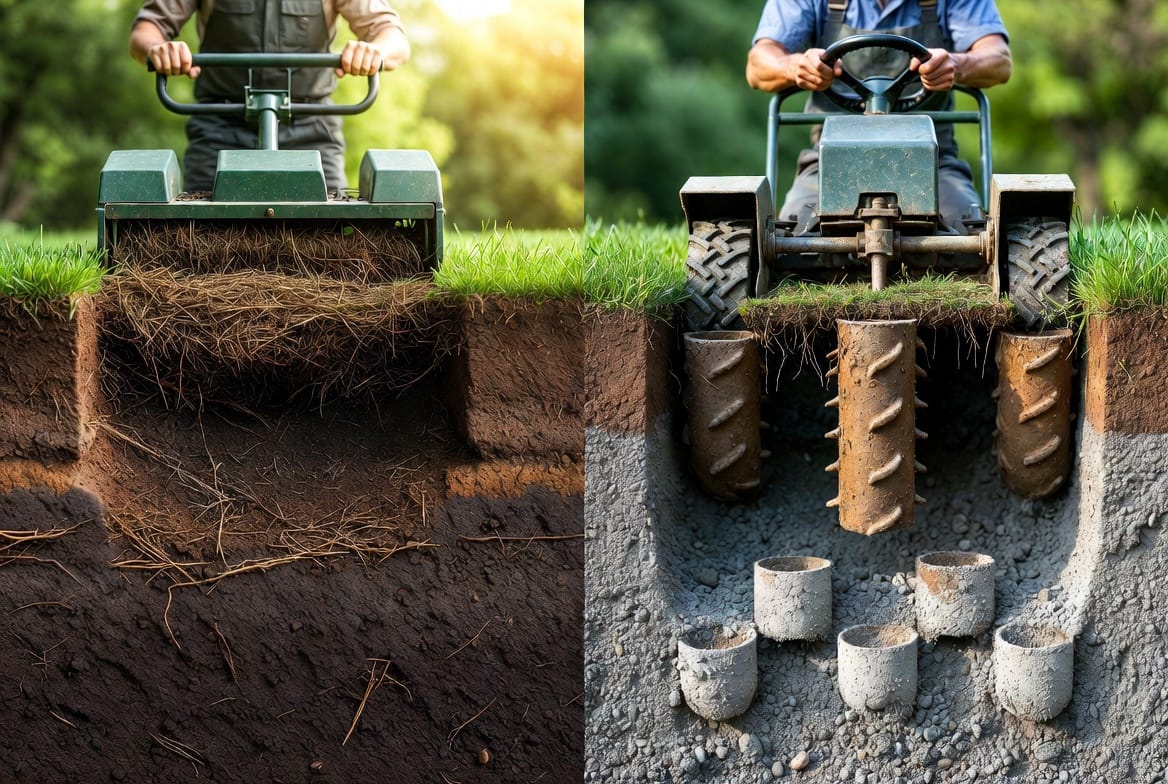
Dethatching is the mechanical process of removing the excess layer of dead organic material from the lawn surface. Specialized equipment called a dethatcher (or vertical mower / power rake) uses sharp vertical blades or spring tines to comb through the grass and lift the thatch layer free.
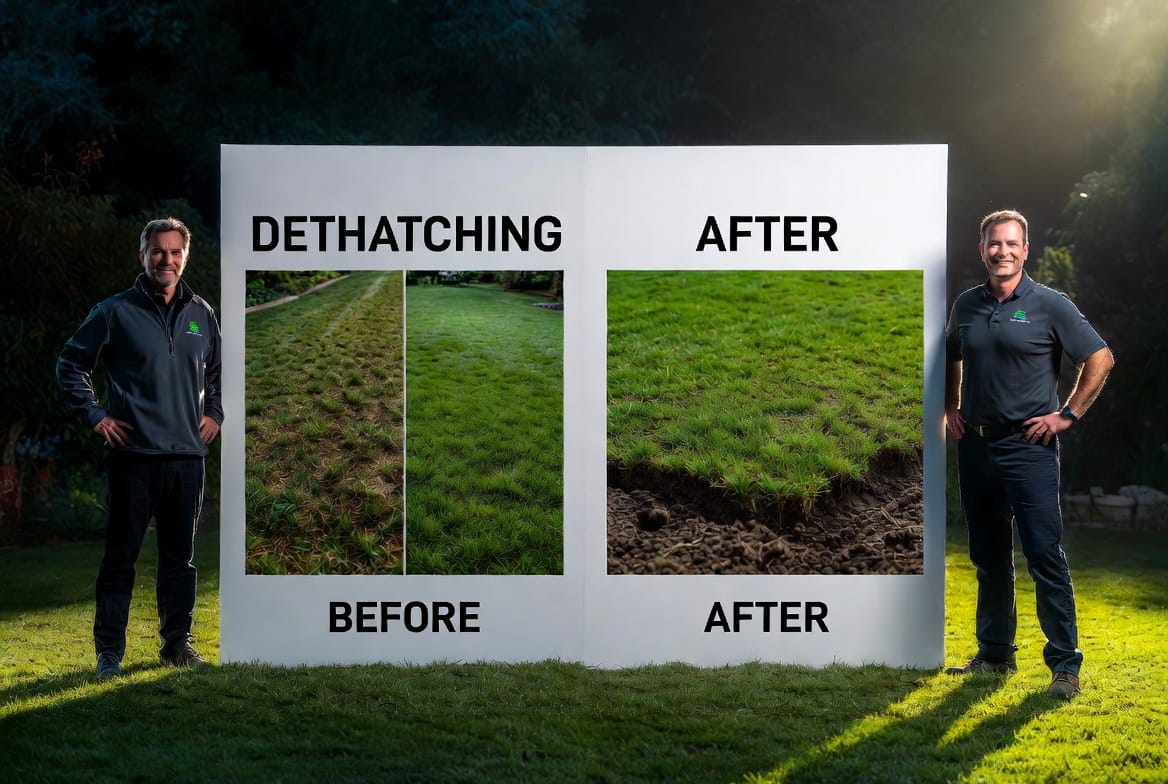
The process is thorough: the machine pulls up the dead material, leaving it in rows or piles that can then be raked and removed. Once the barrier is gone, the soil surface is exposed, allowing water, fertilizer, and air to penetrate freely. New grass growth can emerge more vigorously, and existing roots can expand deeper into the soil.
Dethatching is most effective in early spring or early fall when grass is actively growing and can recover quickly. Cool-season grasses such as Kentucky bluegrass, fescue, and ryegrass typically benefit most, though warm-season varieties can also respond well when performed at the proper time.
What Is Aeration?
Aeration addresses a completely different challenge. Instead of removing surface debris, aeration focuses on the soil itself. A core aerator (also called a plug aerator) pulls out small cylindrical plugs of soil, typically two to three inches long and half an inch in diameter. These cores are left on the surface to break down naturally.
The holes created by aeration immediately relieve pressure within the soil. Roots gain space to expand, oxygen levels increase, and water infiltration improves dramatically. Over time, the soil structure becomes looser and more hospitable to healthy grass growth.
Aeration is especially valuable for lawns that experience heavy use, have clay soils, or show signs of water pooling after rain. Like dethatching, the best timing is during periods of active growth—spring or fall for cool-season grasses, late spring through summer for warm-season varieties.
Key Differences Between Dethatching and Aeration
Although both practices improve lawn health, they target separate problems and use distinct techniques.
- Dethatching removes the organic layer sitting on top of the soil.
- Aeration extracts soil cores from beneath the surface.
- Dethatching solves the problem of a thick, impermeable thatch mat.
- Aeration solves the problem of dense, oxygen-starved soil.
- Equipment differs: dethatchers use vertical blades or tines; aerators use hollow tines that extract plugs.
- Visual results differ: dethatching leaves piles of dead grass; aeration leaves small soil cores scattered across the lawn.
Understanding these distinctions prevents the common mistake of applying the wrong treatment. Treating thatch with aeration alone will not remove the organic barrier, just as dethatching a compacted lawn will not loosen the soil below.
When Is Dethatching Needed?
Dethatching becomes necessary when the thatch layer exceeds three-quarters of an inch. Simple tests help confirm the need:
- Cut a small triangular section of turf and measure the spongy brown layer between green grass and soil.
- Observe water runoff during irrigation—if water sits on the surface or runs off quickly, thatch may be blocking absorption.
- Notice increased disease, insect activity, or thin grass that struggles despite regular watering and fertilizing.
Lawns with aggressive grass types, frequent high nitrogen fertilization, or infrequent mowing tend to develop thatch faster. Ignoring excessive thatch can lead to shallow roots, higher water bills, and eventual bare patches.
When Is Aeration Needed?
Aeration is the solution whenever soil feels hard underfoot or shows clear signs of compaction:
- Water puddles remain for hours after rain or irrigation.
- Grass roots are short and dense near the surface rather than deep.
- The lawn feels spongy yet resists a screwdriver pushed into the soil.
- High-traffic areas—pathways, play zones, or near driveways—look worn and thin.
Clay soils and areas with heavy equipment or foot traffic require aeration more frequently, often every one to three years. Even sandy soils can benefit if they experience intense use.
Benefits of Proper Dethatching
When performed correctly, dethatching delivers multiple long-term advantages:
- Restores water and nutrient penetration to the root zone
- Reduces the risk of fungal diseases that thrive in dense organic layers
- Encourages deeper, stronger root systems
- Improves the effectiveness of subsequent fertilizing and overseeding
- Creates a cleaner, more uniform appearance after debris removal
Homeowners often notice thicker grass density within weeks as the lawn responds to improved growing conditions.
Benefits of Proper Aeration
Aeration offers its own set of powerful benefits:
- Relieves soil pressure and allows roots to expand freely
- Increases oxygen levels critical for microbial activity and nutrient uptake
- Enhances drainage and reduces waterlogging
- Improves fertilizer efficiency by placing nutrients closer to roots
- Prepares the lawn for successful overseeding by creating ideal seed-to-soil contact
Many lawns that receive regular aeration develop a noticeably softer feel underfoot and maintain color longer during dry periods.
Choosing the Right Treatment for Your Lawn
Selecting between dethatching and aeration—or deciding to combine both—depends on accurate diagnosis. A professional lawn care evaluation can measure thatch thickness, test soil density, and recommend the precise sequence of services.
In many cases, lawns benefit from both treatments over time. Severe thatch may first require dethatching, followed by aeration to address any underlying compaction. Conversely, a compacted lawn with minimal thatch needs only aeration. Timing, grass type, and local climate further refine the plan.
Attempting either process with improper equipment or at the wrong season can stress the grass. Professional crews use calibrated machines, adjust depth settings for your specific conditions, and follow up with appropriate fertilization or overseeding when needed.
Long-Term Lawn Health Strategy
Neither dethatching nor aeration is a one-time fix. Sustainable lawn care combines these mechanical treatments with consistent cultural practices:
- Mow at the proper height for your grass type
- Water deeply and infrequently to encourage deep roots
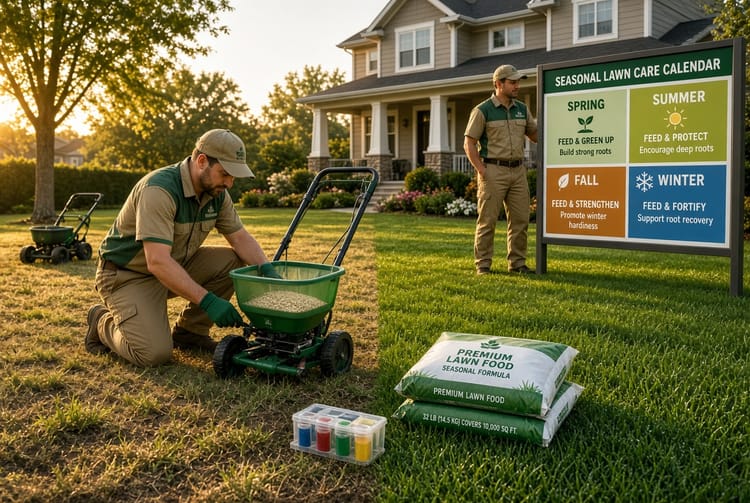
- Fertilize according to soil test results
- Reduce traffic in vulnerable areas when possible
- Schedule professional inspections annually
When thatch or compaction begins to reappear, early intervention keeps the lawn resilient and reduces the intensity of future treatments.
Why Professional Service Makes the Difference
While rental machines exist, professional lawn care teams bring experience, commercial-grade equipment, and the ability to assess your entire property. They understand how soil type, grass variety, and microclimates influence results. They also know how to minimize stress on the lawn and maximize recovery speed.
Choosing the correct treatment the first time saves money, protects your investment, and delivers visible improvement faster.
Conclusion: Restore Your Lawn with Confidence
Dethatching and aeration are powerful, complementary tools for lawn thatch removal and overall soil health. Dethatching clears the organic barrier that blocks essential resources, while aeration opens the soil structure so roots can thrive. Knowing the difference—and applying the right method at the right time—turns a struggling lawn into a dense, vibrant landscape you can enjoy for years.
If your lawn shows signs of thick thatch, hard soil, poor drainage, or thinning grass, the solution is within reach. Choose the right lawn treatment.
Get Professional Lawn Care Advice – Call Now!