The Lawn Soil pH: How to Test and Adjust for Greener Grass
Maintaining a beautiful, healthy lawn starts beneath the surface. Soil pH — the measure of how acidic or alkaline your soil is — directly determines whether your grass receives the nutrients it needs to grow thick and vibrant. Understanding and managing lawn soil pH is one of the smartest investments any homeowner can make in their yard.
Get Your Soil pH Tested Today – Call Now!
At proper pH levels, grass develops strong roots, resists weeds and disease, and displays that rich green color everyone envies. When pH drifts out of balance, even the best fertilizers and watering routines deliver disappointing results. This comprehensive guide explains the science, testing methods, and proven adjustment techniques so you can achieve — and maintain — the lawn of your dreams.
Understanding Soil pH and Its Critical Role
Soil pH is measured on a scale from 0 to 14, with 7 being neutral. Most turfgrasses thrive in slightly acidic to neutral conditions, ideally between 6.0 and 7.0.
- Below 6.0: Soil becomes too acidic.
- Above 7.0: Soil turns alkaline.
These shifts dramatically influence nutrient availability. Nutrients do not simply disappear; they become chemically locked up, making them inaccessible to grass roots even when present in the soil.
Key nutrients affected by pH include:
- Nitrogen (N) — essential for green growth
- Phosphorus (P) — critical for root development
- Potassium (K) — improves stress resistance
- Micronutrients like iron, manganese, and magnesium
When pH falls outside the ideal range, nutrient lockout occurs. Your grass may show signs of deficiency despite regular feeding, leading to thin patches, poor color, and increased vulnerability to pests.
Bold fact: A single point change in pH can reduce nutrient uptake by up to 50% or more. This explains why some lawns stay stubbornly pale or patchy despite dedicated care.
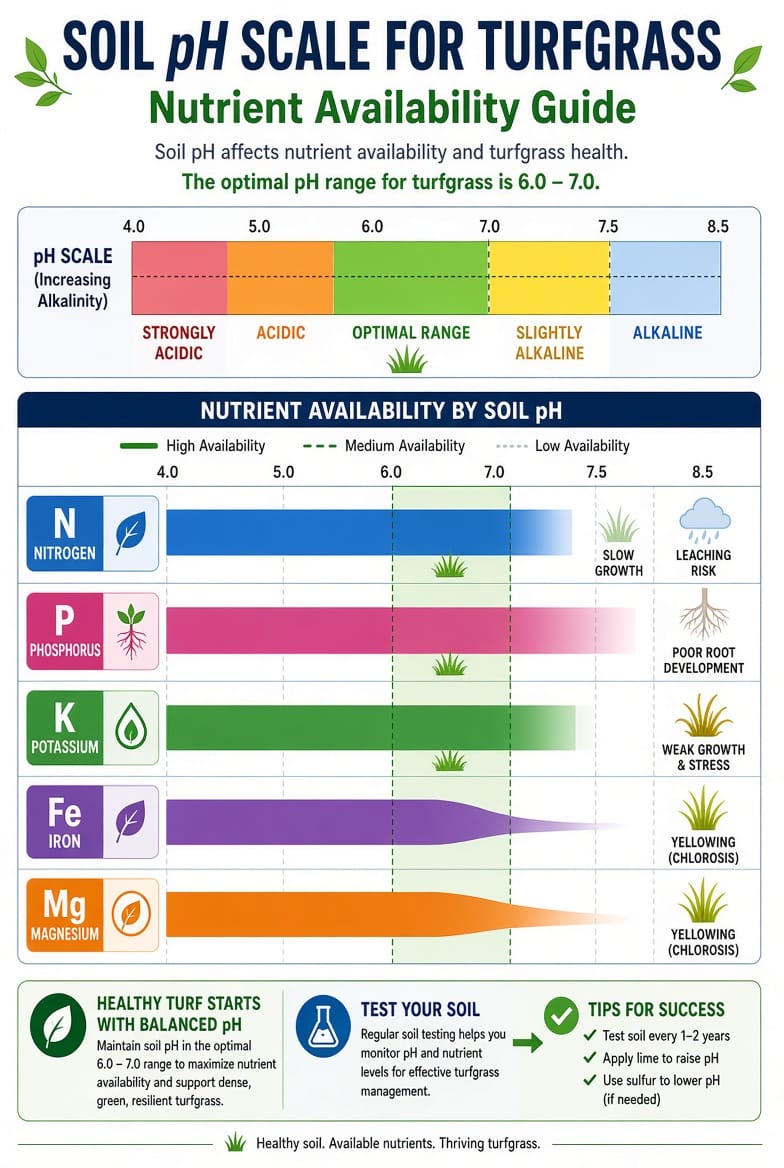
How Soil pH Affects Nutrient Availability
The relationship between pH and nutrients follows predictable chemistry. In acidic soils (low pH), aluminum and manganese become overly available and toxic to roots, while phosphorus and calcium availability drops sharply. In alkaline soils (high pH), iron, manganese, and zinc become insoluble, often causing yellowing (chlorosis) even when these elements are abundant.
This chemical reality underscores why balanced soil pH serves as the foundation for every successful lawn care program. Adjusting pH unlocks existing nutrients before you apply more fertilizer — making your efforts far more effective and cost-efficient.
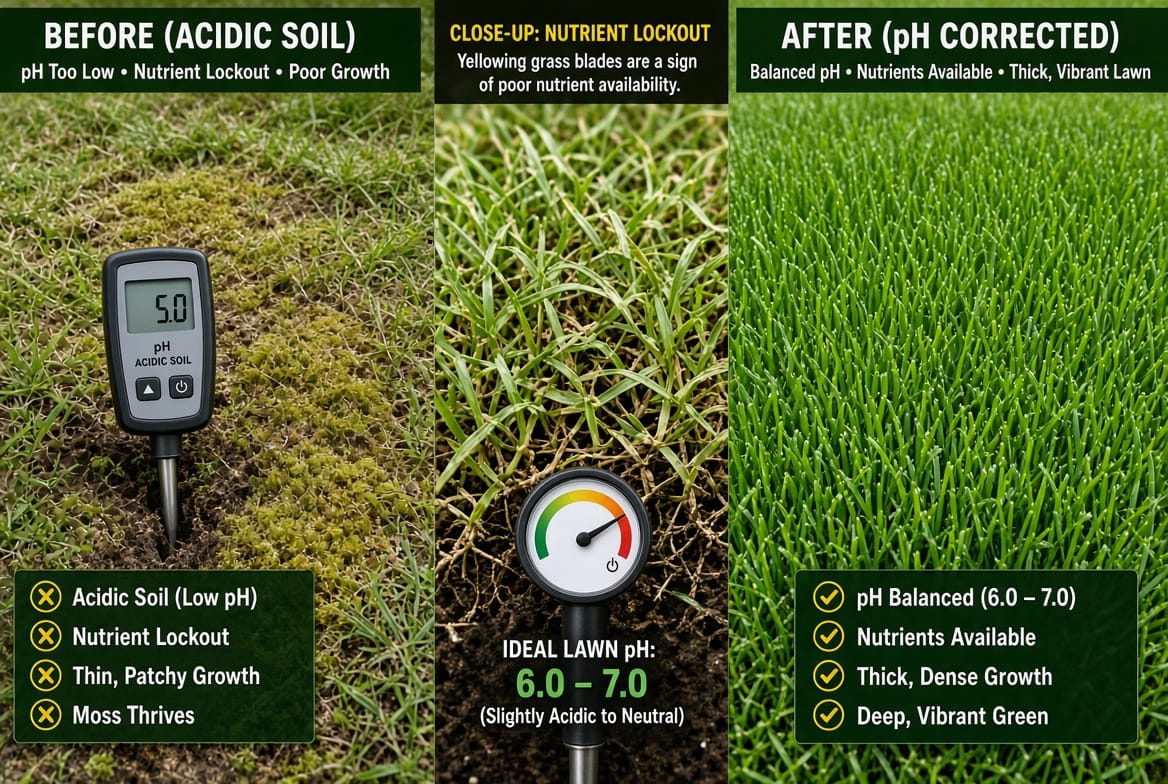
Recognizing Signs of Soil pH Problems
Look for these telltale indicators:
- Moss growth — often signals acidic soil conditions
- Yellow or pale grass despite fertilization (iron or nitrogen lockout)
- Stunted root development and poor drought tolerance
- Weed invasion (certain weeds thrive in imbalanced pH)
- Slow recovery after stress from heat, foot traffic, or disease
Catching these signs early prevents larger problems and saves both time and money.
Professional vs. DIY Soil pH Testing Methods
Accurate testing forms the cornerstone of effective lawn pH management. You have two reliable paths:
1. Home Test Kits
- pH test strips or liquid kits provide quick results
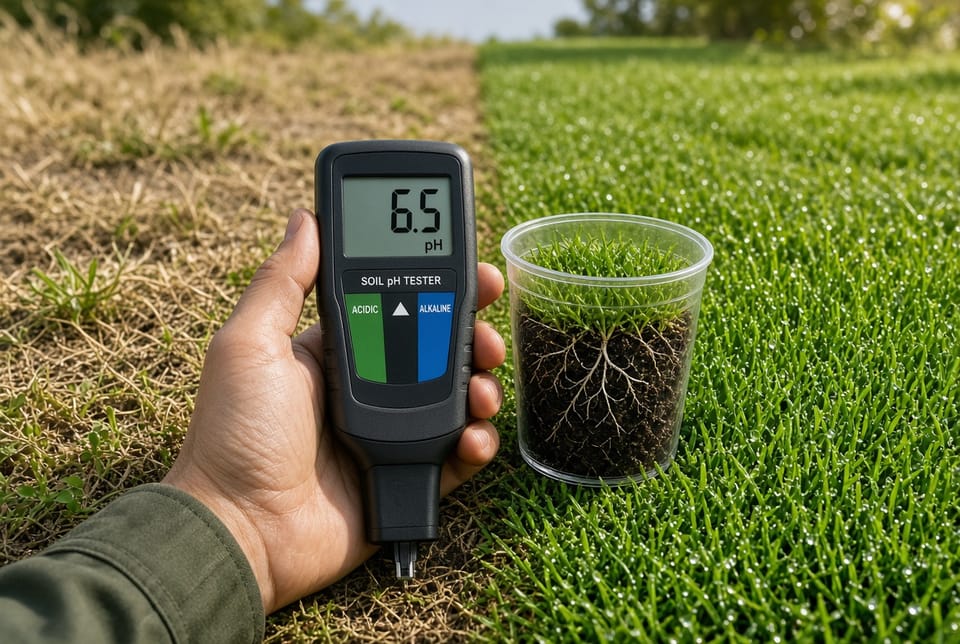
- Digital soil pH meters offer instant readings
- Soil sample collection from multiple lawn areas ensures representativeness
Pro tip: Collect samples from 10–15 random spots, mix them thoroughly, and test the composite sample for the most accurate average reading.
2. Professional Laboratory Testing
Local extension offices or certified labs deliver comprehensive reports including:
- Exact pH level
- Nutrient profile
- Organic matter content
- Customized recommendations
Professional testing typically costs little yet provides expert guidance tailored to your specific soil type and grass species.
Test at least twice per year — once in spring and once in fall — for best results. Consistent monitoring allows you to make small adjustments before major problems develop.
How to Raise Soil pH with Lime
When soil tests acidic, agricultural lime (calcium carbonate) is the standard, safe solution. Lime gradually neutralizes acidity and supplies calcium, an essential nutrient.
Application guidelines:
- Follow exact rates from your soil test report
- Use pelletized lime for easier spreading and faster results
- Apply in cool weather with light watering to activate
- Avoid over-application — it can take months for full effect
Reassuring note: Properly applied lime is completely safe for children, pets, and the environment. It works with nature rather than against it.
How to Lower Soil pH with Sulfur
For alkaline soils, elemental sulfur or aluminum sulfate effectively lowers pH. Soil bacteria convert sulfur into sulfuric acid, gradually reducing alkalinity.
Important considerations:
- Sulfur works more slowly than lime
- Apply in smaller amounts over time
- Combine with organic matter to improve results
- Retest soil after 3–6 months to monitor progress
Always base amendments on laboratory recommendations rather than guesswork.
Best Practices for Long-Term pH Management
Achieving balance is only the beginning. Maintain optimal lawn soil pH through these proven strategies:
- Aerate annually to improve air and water penetration
- Top-dress with compost to support beneficial microbes
- Choose pH-tolerant grass varieties suited to your region
- Use slow-release, pH-balanced fertilizers
- Monitor irrigation water — some sources are naturally alkaline
These practices create a self-sustaining soil ecosystem that keeps pH stable with minimal intervention.
Common Questions About Lawn Soil pH
How long does it take to see results?
Most homeowners notice greener, thicker grass within 4–8 weeks after correction, with full benefits appearing over one growing season.
Can I adjust pH without testing?
Testing is strongly recommended. Random adjustments often waste money and may worsen imbalances.
Is organic matter helpful?
Yes. Compost and peat moss gently buffer pH while improving soil structure and microbial activity.
What about raised beds or new sod?
Always test and amend soil before installing new sod or seed for faster establishment and long-term success.
The Transformative Power of Balanced Soil pH
When you balance lawn soil pH, you unlock your grass’s full genetic potential. Roots grow deeper, nutrient uptake improves dramatically, and your lawn becomes naturally more resistant to drought, disease, and weeds.
Homeowners who master soil pH consistently report:
- Richer, darker green color
- Thicker turf that crowds out weeds
- Reduced fertilizer needs
- Greater pride in their outdoor living space
Balance soil pH for a healthier lawn.
Ready to transform your yard? Professional soil testing and expert guidance ensure you apply the right amendments in the right amounts at the right time.
Call our lawn care specialists today for a complete soil analysis and personalized pH correction plan.
Your greener, healthier lawn awaits just beneath the surface.
Unlock a Lush Lawn – Test & Balance pH Now