The Lawn Recovery After Heavy Rain: Drainage and Aeration
Heavy rain does more than leave puddles. It changes the physical structure of the soil, starves grass roots of oxygen, and creates the perfect environment for disease. The good news is that a lawn that looks distressed today can be restored to thick, resilient turf when the right sequence of drainage improvement and core aeration is applied at the right time. This guide walks through exactly what happens beneath the surface, the recovery steps that work, and the long-term habits that keep the same problems from returning after the next storm.
Fix Standing Water & Compaction Today – Call Now
How Heavy Rain Changes Your Lawn
Water is essential, but too much of it arriving too fast overwhelms even a well-kept yard. Three primary problems appear within days of a major downpour: soil compaction, persistent pooling, and fungal pressure.
Soil Compaction After Saturation
When soil pores fill completely with water, the weight of the water itself plus any foot traffic or equipment compresses the particles together. Clay and silt soils suffer most, but even sandy loam can crust. Compacted soil restricts root growth, slows water infiltration for future rains, and reduces the exchange of oxygen and carbon dioxide that grass roots need. The result is shallow-rooted turf that yellows quickly and recovers slowly.
Pooling and Standing Water
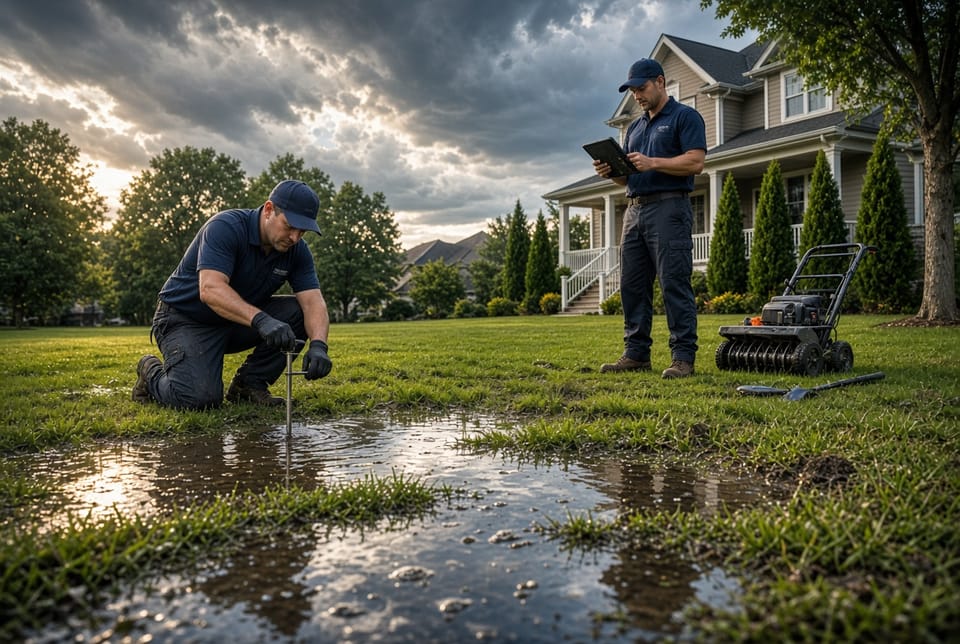
Low spots, poor grading, or compacted layers create standing water that can linger for 24–48 hours or longer. Grass crowns sitting in water begin to rot. Beneficial soil microbes die off, and anaerobic conditions produce the sour smell some homeowners notice after storms. Pooling also leaches nitrogen and other nutrients downward, leaving the upper root zone hungry just when the plant needs energy to recover.
Fungal Outbreaks and Disease Risk
Prolonged leaf wetness and high humidity favor pathogens such as brown patch, pythium blight, and dollar spot. These fungi move quickly across a stressed, waterlogged lawn. Early signs include circular yellow or brown patches, a greasy sheen on blades, or a cottony growth in the morning. Left untreated, the damage can spread far beyond the original wet areas.
Additional secondary effects include thatch becoming waterlogged and slimy, earthworm activity dropping, and surface erosion on slopes. None of these issues is permanent when addressed systematically.
First 48 Hours: What to Do and What to Avoid
Resist the urge to walk across or mow a saturated lawn. Footprints and wheel marks become permanent compaction scars. Instead:
- Observe where water collects and how long it remains.
- Note any new discoloration or thinning.
- Keep pets and children off the wettest zones.
- Delay fertilization until the soil has firmed; extra nitrogen on wet turf can feed fungi.
Once the surface is no longer squishy underfoot—usually two to four days after the rain stops—recovery work can begin.
Core Recovery Steps That Rebuild a Rain-Damaged Lawn
Successful restoration follows a clear order: relieve compaction, move water away, then encourage the grass to grow deeper and stronger.
1. Core Aeration
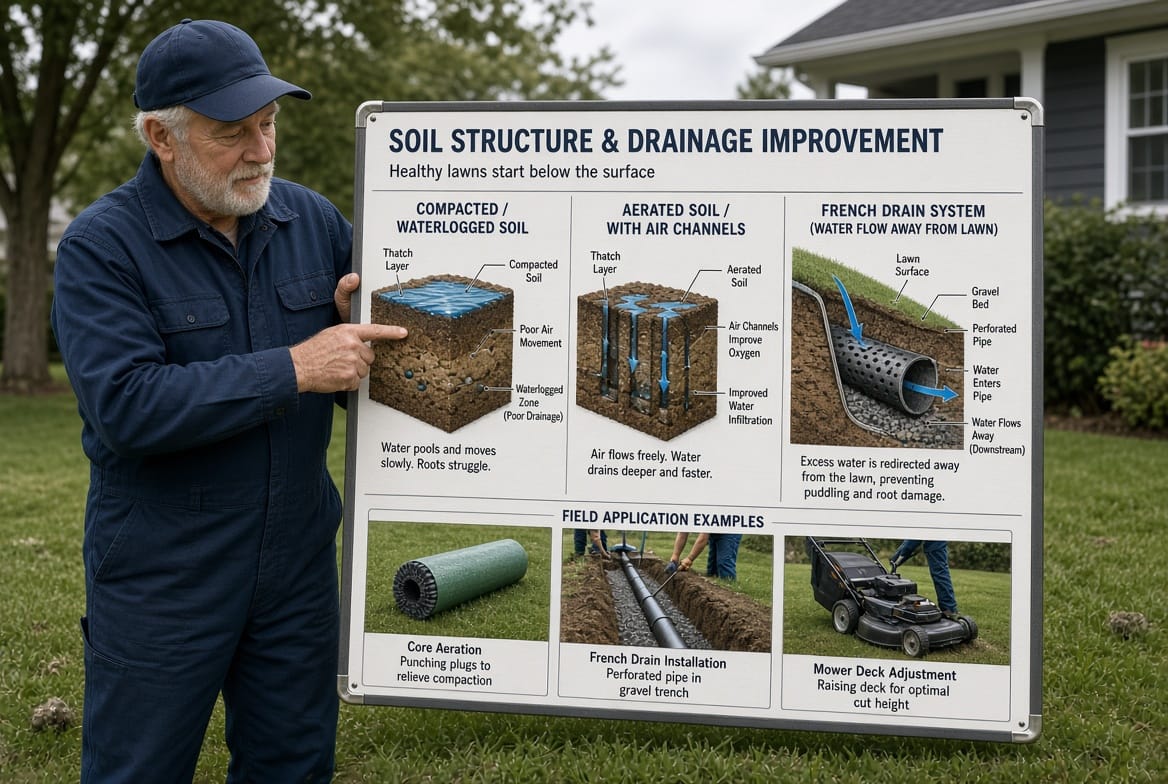
Core aeration is the single most effective mechanical step after heavy rain. A machine pulls small plugs of soil, instantly opening channels for air, water, and nutrients. On compacted, post-storm turf the benefits are immediate:
- Oxygen reaches roots that have been suffocating.
- Future rainfall infiltrates instead of running off or pooling.
- Microbial life rebounds because the soil is no longer anaerobic.
Aerate when the soil is moist but not muddy—typically three to seven days after the storm, depending on temperature and soil type. Make two or three passes in different directions on the worst areas. Leave the cores on the surface; they break down and return organic matter. For heavy clay, consider a second aeration six to eight weeks later.
2. Improve Drainage
Aeration helps, but it cannot fix a grading problem or a buried hardpan. Lasting drainage solutions include:
- Surface re-grading of obvious low spots so water sheets off rather than collects.
- Installation of a French drain or catch-basin system in chronic wet zones.
- Incorporation of coarse sand or compost into the top few inches after aeration to increase porosity.
- Checking downspouts and ensuring they discharge at least six to eight feet from the lawn or into an underground drain line.
These corrections are best performed by experienced crews who can read both the surface and the subsurface water movement. A properly sloped and drained lawn sheds a two-inch rain in hours instead of days.
3. Mow High and Adjust Cultural Practices
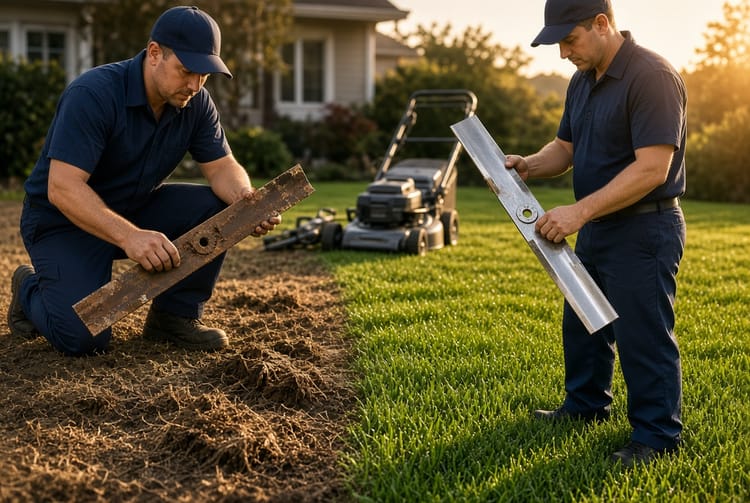
Once the lawn is firm enough to support equipment, raise the mower deck. Mowing high (3.5–4 inches for most cool-season grasses, 2.5–3 inches for many warm-season types) shades the soil, cools the crown, and encourages roots to grow downward in search of moisture that is no longer sitting on the surface. Never remove more than one-third of the blade length in a single cutting. Sharpen blades so cuts are clean; ragged wounds invite disease.
Additional supporting practices:
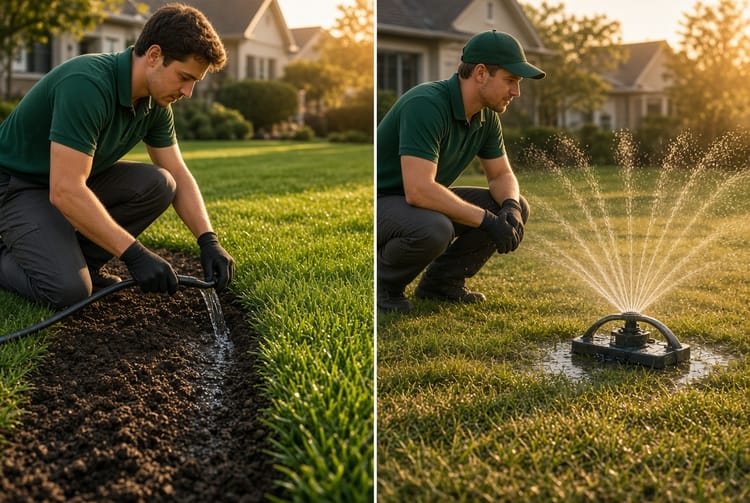
- Water only when the top inch of soil is dry, and water deeply rather than frequently.
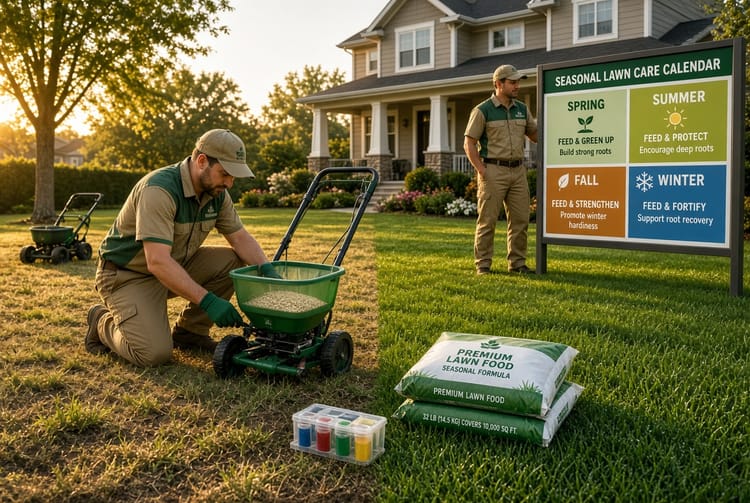
- Apply a light, balanced fertilizer only after new growth appears and soil tests confirm need.
- Overseed thin areas with a cultivar known for good drainage tolerance once temperatures are favorable.
Long-Term Prevention: Keeping the Next Storm from Repeating the Damage
Recovery is only half the job. Prevention keeps the cycle from starting again.
Annual or Biannual Aeration Schedule
Most lawns benefit from core aeration at least once a year, twice if the soil is heavy clay or the yard sees heavy use. Schedule one session in early fall for cool-season grasses and late spring for warm-season grasses. Consistent aeration maintains pore space so even intense rain can move downward instead of sideways.
Soil Testing and Amendment
A simple soil test every two to three years reveals compaction-related nutrient lock-up and pH drift. Adding gypsum on high-clay soils or organic matter on sandy soils improves structure over time. Avoid tilling or heavy equipment when the ground is wet.
Proper Grading and Hardscape Integration
When adding patios, walkways, or garden beds, insist that the finished grade still slopes away from the house and that any new low spots are filled. Direct roof runoff into buried drain lines rather than letting it sheet across the lawn.
Grass Selection and Overseeding
Choose cultivars with documented tolerance for wet conditions and good recovery after stress. Regular overseeding with these varieties gradually replaces weaker plants and thickens the stand so it can better resist both pooling and fungal invasion.
Cultural Calendar Adjustments
- Keep thatch under half an inch through timely dethatching if needed.
- Sharpen mower blades monthly during the growing season.
- Monitor irrigation so the lawn never stays soggy between natural rains.
- Apply preventative fungicide only when weather forecasts show a prolonged wet period and the lawn has a history of disease.
These habits turn a reactive recovery into a proactive system. A lawn that drains well and breathes after every storm stays greener, requires less emergency intervention, and looks better year-round.
When Professional Help Makes the Difference
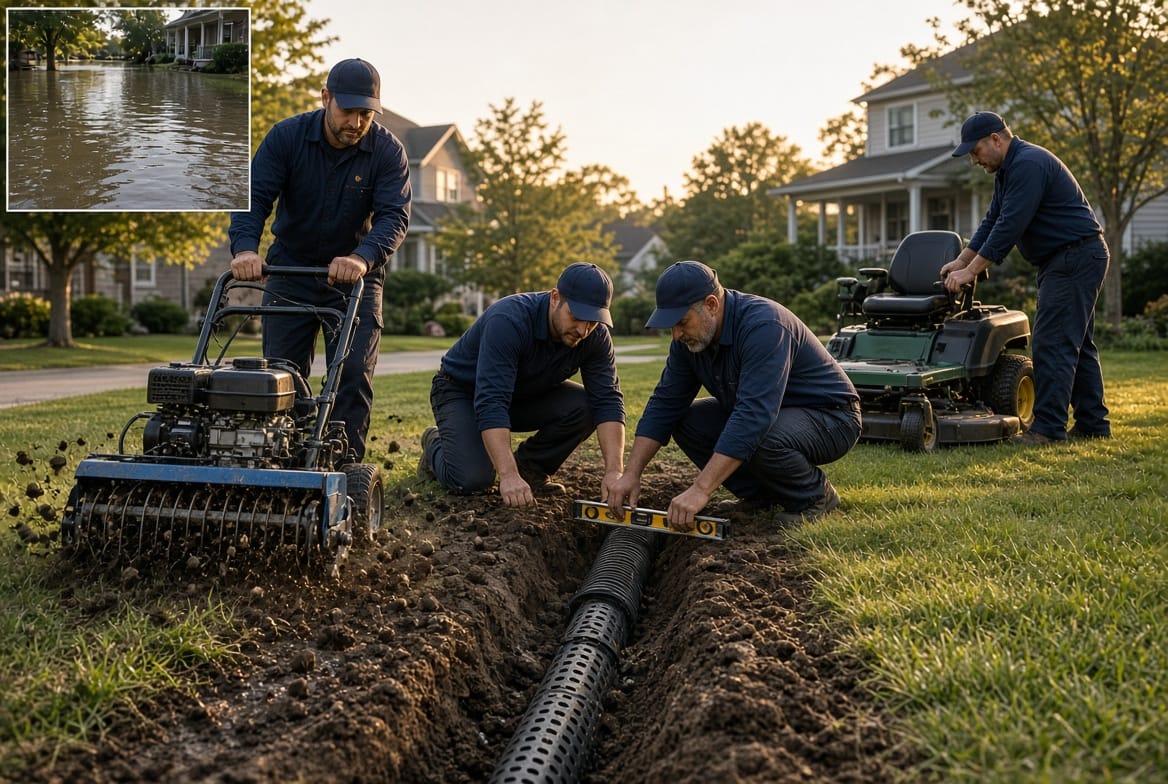
Homeowners can handle light aeration and mowing-height changes. Persistent pooling, large-scale compaction, or recurring fungus usually signal the need for equipment and experience that most households do not own. Certified crews bring commercial aerators that pull deeper, more consistent cores, laser-level grading tools, and the ability to install drainage without tearing up the entire yard. They also recognize early disease patterns that a casual observer might miss.
The window for effective post-storm work is short. Acting while the soil is still workable but no longer saturated produces the fastest visual and structural improvement.
A rain-damaged lawn is not a lost lawn. Compaction can be opened, water can be redirected, and grass can be encouraged to grow stronger roots than it had before the storm. Follow the sequence—assess, aerate, drain, mow high—and support it with yearly prevention, and the next heavy rain becomes just another weather event instead of a crisis.
Recover your lawn after heavy rain.
Restore Your Rain-Damaged Lawn – Call Today