The Lawn Pre-Emergent: Why Timing Is Everything
A dense, uniform lawn does not happen by accident. It is the result of a single, well-timed decision made weeks before most homeowners even think about weeds. That decision is the application of a pre-emergent herbicide. When the product is placed correctly, weed seeds never become visible plants. When it is placed even a few days late, those same seeds germinate, compete with desirable grass, and force a far more expensive and labor-intensive rescue effort.
Stop Weeds Before They Start – Call Today
This article explains why the 55°F soil-temperature threshold is the non-negotiable line, how to recognize that the window has already closed, and what happens when timing is ignored. The goal is not to create anxiety; it is to give you a clear, professional standard so your lawn stays ahead of the problem instead of chasing it.
What a Pre-Emergent Actually Does
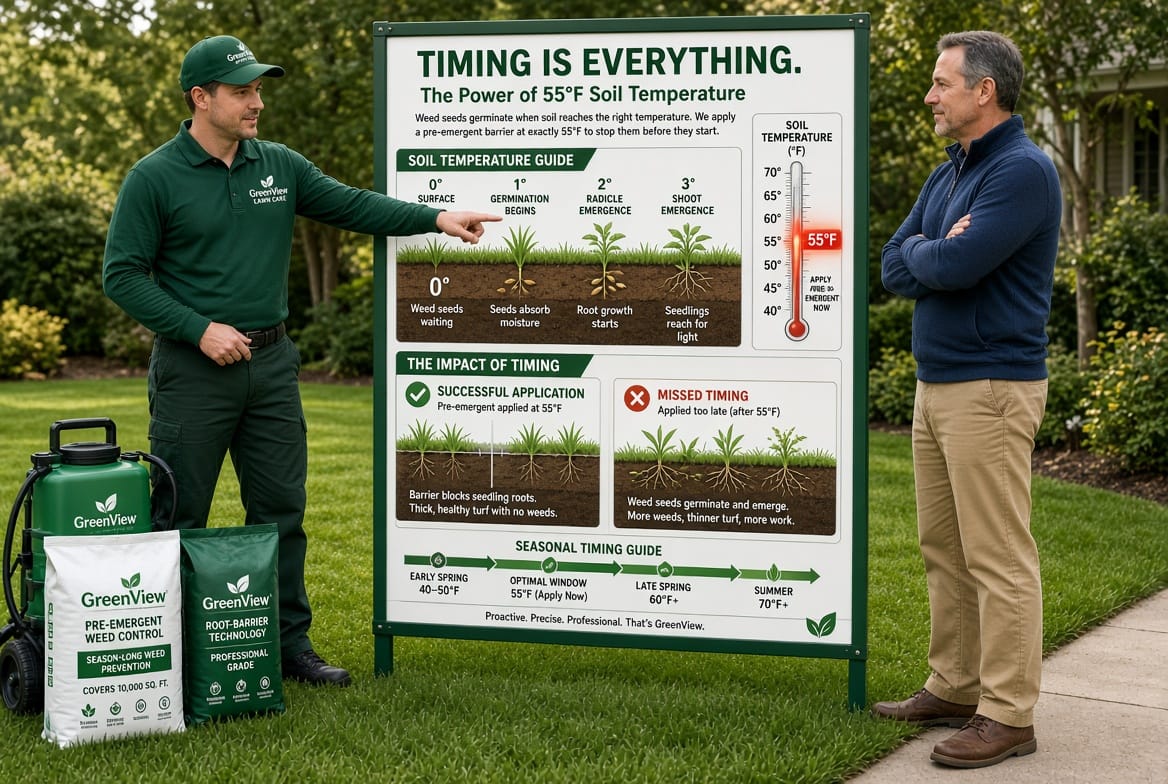
A pre-emergent herbicide does not kill existing weeds. It creates a thin chemical barrier in the upper layer of soil. As a weed seed absorbs water and begins to send out its first root, the active ingredient interrupts cell division. The seedling never develops a functional root system and dies before it breaks the surface.
The product therefore works only on seeds that have not yet germinated. Once a seedling has produced true leaves and an established root, the barrier is no longer effective against that plant. This is why timing is everything. Apply too early and the barrier may degrade before the main flush of germination. Apply too late and the seeds have already escaped the barrier.
Common target weeds include crabgrass, goosegrass, foxtail, and certain annual broadleaf species. These plants follow soil temperature more closely than calendar date. That is why a thermometer, not a date on the wall, is the professional standard.
Why Soil Must Be Below 55°F When You Apply
Research and decades of field observation have established a reliable trigger: many of the most aggressive annual grasses begin germinating when the soil temperature at a two-inch depth reaches 55°F and stays there for several consecutive days. At that point the seed’s dormancy mechanisms switch off and germination proceeds rapidly.
The pre-emergent must already be in place and activated (usually by a light watering or rainfall) before that temperature is reached. Once soil consistently hits 55°F, a portion of the seed bank has already started the process. The barrier then protects only the seeds that have not yet begun to grow, leaving the early germinators free to establish.
Professionals therefore treat 50–54°F as the ideal application window. At those temperatures the product can be watered in, settle into the soil profile, and wait for the first germination flush. Waiting until the thermometer reads 55°F or higher means you are already behind the biological clock.
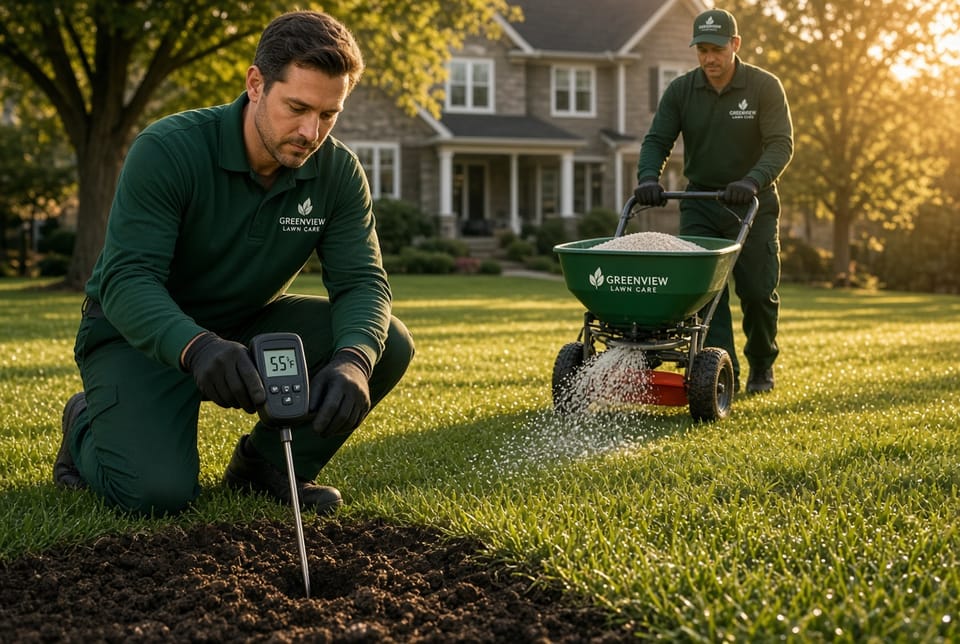
Soil temperature is not the same as air temperature. A sunny 70°F afternoon can warm the surface while the two-inch zone remains cooler, or a stretch of cloudy weather can keep soil warmer than expected. The only reliable method is a soil thermometer inserted at the correct depth in several representative spots—sunny areas, shaded areas, and near pavement that radiates heat. Readings taken in the morning, before the sun has heated the surface, give the most consistent data.
Signs It Is Already Too Late
The most obvious sign is visible seedlings. Crabgrass typically appears as a light-green, coarse-textured plant with a flattened growth habit. Once you can see those plants, the pre-emergent window for that flush has closed. Other indicators include:
- Soil temperatures that have already averaged 55°F or higher for three or more days.
- Neighboring lawns or neglected spots showing the first thin blades of annual grass.
- Bare or thin areas in your own lawn that previously hosted weeds the prior year.
- A sudden warm spell that pushed soil temperatures up faster than expected.
If any of these signs are present, a pre-emergent applied now will have limited effect on the plants that have already emerged. Those plants will continue to grow, produce seed, and add to next year’s problem.
Consequences of Missed Timing
Poor timing does not merely reduce effectiveness; it changes the entire maintenance strategy for the rest of the season.
Established weeds compete directly with turfgrass for water, nutrients, and light. A single crabgrass plant can produce thousands of seeds, guaranteeing a heavier infestation the following spring. The lawn thins in those areas, creating more open soil for additional weeds.
Correction then requires post-emergent herbicides. These products are applied to foliage rather than soil and often need multiple applications spaced weeks apart. They can temporarily discolor desirable grass, especially in heat or drought. The extra labor, product cost, and possible follow-up visits quickly exceed the cost of a correctly timed pre-emergent.
In addition, many pre-emergent products have a finite residual life—typically eight to sixteen weeks depending on the active ingredient, rainfall, and microbial activity. If the first application is late, there may not be enough residual left to cover a second germination flush later in the season. A second application then becomes necessary, further increasing cost and the chance of overlapping rates that can stress the turf.
The result is a lawn that looks acceptable only after repeated interventions instead of remaining clean from the start. Homeowners who miss the window often describe the season as “playing catch-up.” That phrase is accurate: once weeds are visible, the work is reactive rather than preventive.
How Professionals Time the Application
Experienced lawn-care teams do not guess. They monitor soil temperature at multiple properties, watch local weather patterns, and know the historical germination dates for the region. They also consider product selection. Some pre-emergents offer a wider application window or include a limited post-emergent component that can handle very early seedlings. Others are chosen specifically for their length of residual control.
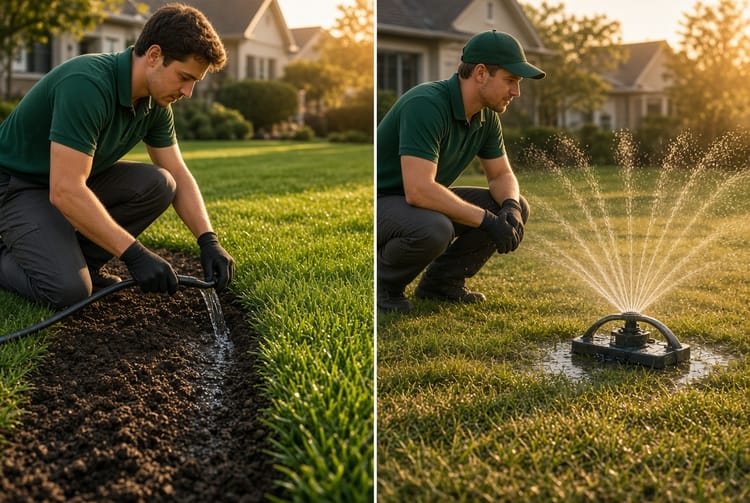
Application technique matters as much as calendar. The product must be applied uniformly; skips or overlaps create weak spots in the barrier. After spreading, a light irrigation (approximately ¼ inch) moves the granules into the soil and activates the chemistry. Heavy rain immediately after application can move product off-target; the team therefore watches the forecast and adjusts.
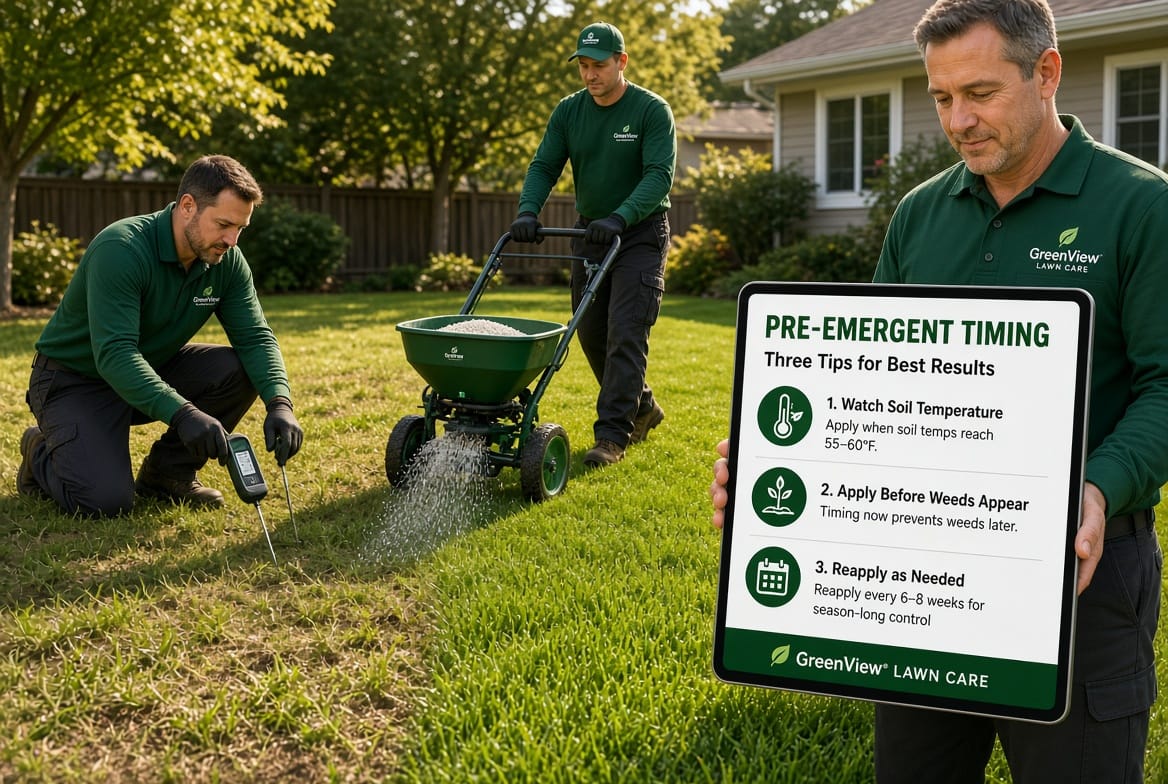
A second application is sometimes scheduled six to ten weeks later, especially in regions with a long growing season or heavy late-season weed pressure. That second pass is planned at the first application so the residual coverage remains continuous.
Practical Timing Tips You Can Use
- Insert a soil thermometer at a two-inch depth in several locations and record morning readings for several days.
- Apply when temperatures are approaching but have not yet held at 55°F.
- Water the product in within 24–48 hours unless rain is forecast.
- Avoid core aeration or heavy soil disturbance after application; those actions break the barrier.
- Plan a possible second application based on the product label and local growing season.
- Keep records of application dates and soil temperatures so the following year is even more precise.
These steps sound simple because they are. The difficulty lies only in executing them at the right moment rather than when it is convenient.
Why Professional Service Removes the Guesswork
A homeowner with a single thermometer and a busy schedule can easily miss a sudden warm stretch. A professional team monitors dozens of properties, carries calibrated equipment, and has already scheduled the work around the expected temperature window. They also carry the correct product for the specific weed pressure in the area and can adjust rates or add complementary treatments if an early flush has already begun.
The telephone number at the end of this article connects you to that service. The call itself is the simplest way to lock in the correct timing rather than hoping the weather cooperates with a weekend project.
A weed-free lawn is not the product of luck or of applying “something” in spring. It is the product of placing the right chemistry in the soil before the seeds receive their temperature cue. The 55°F mark is that cue. Respect it and the rest of the season becomes maintenance rather than repair. Miss it and the work multiplies.
Time your pre-emergent perfectly.
Get Professional Lawn Timing – Call Today