The Lawn Grub Control: Applying Nematodes for Natural Pest Management
Lawn grubs can silently destroy the beauty and health of any outdoor space. These underground pests feed on grass roots, leaving behind unsightly brown patches, spongy turf, and bare soil that invite weeds and secondary problems. Traditional chemical insecticides often bring unwanted risks to pets, children, pollinators, and the wider environment. A proven biological solution exists that delivers effective results without those drawbacks: beneficial nematodes.
Control Lawn Grubs Naturally – Call Now!
This comprehensive guide explores how these microscopic allies provide reliable lawn grub control, details the exact application process, and highlights the lasting advantages of choosing a natural approach. Whether you manage a small backyard or a larger property, understanding and applying beneficial nematodes empowers you to protect your lawn while keeping every member of your household—and the beneficial insects that support it—completely safe.
Understanding the Lawn Grub Problem
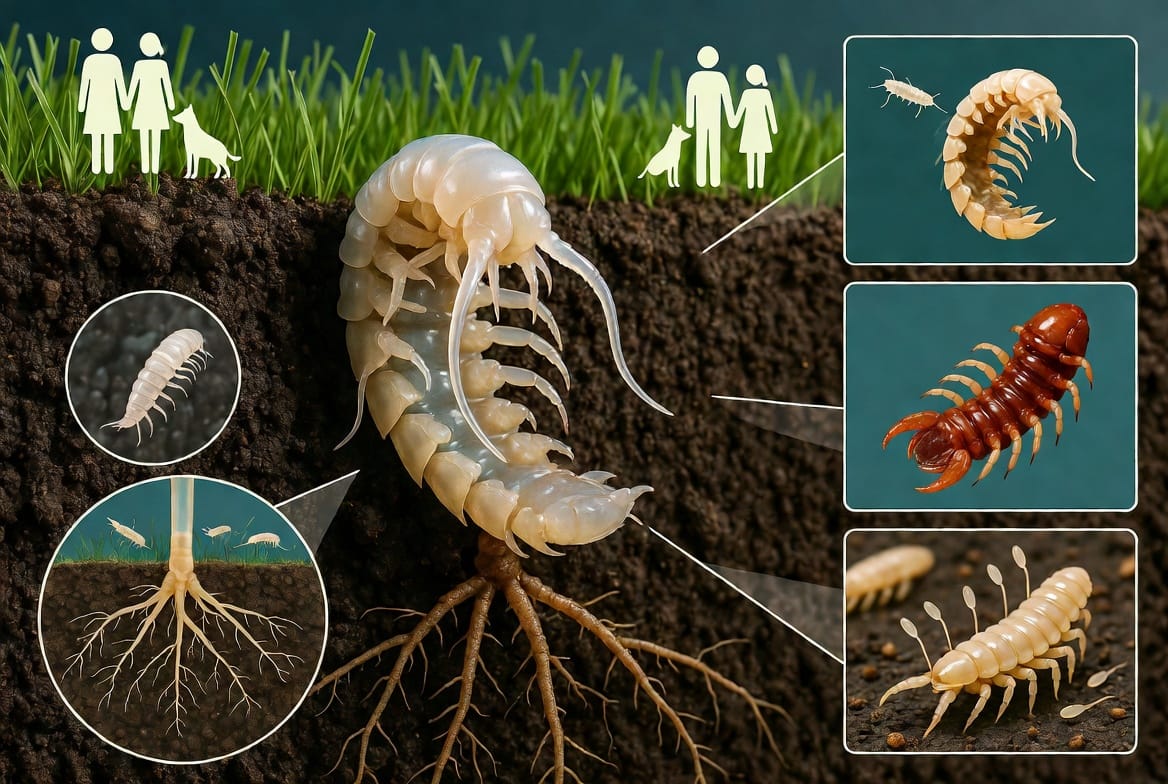
Grubs are the larval stage of several common beetles, including Japanese beetles, June beetles, and masked chafers. After adult beetles lay eggs in the soil during late spring or early summer, the eggs hatch into creamy-white, C-shaped larvae. These larvae immediately begin feeding on fine grass roots just below the surface. A single square foot of turf can harbor dozens of grubs, rapidly severing the root system that anchors and nourishes the grass.
Early signs include irregular brown patches that feel soft and roll back easily when tugged. Birds, raccoons, or skunks may dig into the lawn searching for the protein-rich larvae, creating additional holes and disruption. Left unchecked, heavy infestations can kill large sections of turf, forcing costly reseeding or sod replacement.
Chemical treatments have long been the default response, yet many homeowners now seek alternatives that avoid residual toxins. Beneficial nematodes offer precisely that alternative—a living biological control that targets grubs with precision while leaving the rest of the ecosystem unharmed.
What Are Beneficial Nematodes?
Beneficial nematodes are microscopic, soil-dwelling roundworms that occur naturally in healthy ecosystems. The species most effective against lawn grubs belong to the genera Heterorhabditis and Steinernema. Measuring less than one millimeter in length, these tiny organisms are invisible to the naked eye yet possess a remarkable ability to seek out and destroy specific insect pests.
Unlike plant-parasitic nematodes that damage crops, beneficial nematodes are insect-parasitic. They carry symbiotic bacteria inside their bodies. When a nematode locates a suitable host—such as a white grub—it enters the insect through natural body openings or by piercing the cuticle. Once inside, the nematode releases its bacterial partners. The bacteria multiply rapidly, producing toxins that kill the grub within 24 to 48 hours. The nematodes then feed on the resulting bacterial soup and reproduce inside the cadaver, releasing a new generation of infective juveniles that continue the hunt for remaining grubs.
This process is highly targeted. Beneficial nematodes show little interest in earthworms, beneficial insects, pets, or people. Their host-seeking behavior relies on carbon dioxide gradients, temperature, and chemical cues emitted by insect larvae, ensuring they focus energy on the pests that threaten your lawn.
Commercial preparations contain millions of these living organisms suspended in a carrier medium. When stored and handled correctly, the nematodes remain viable and ready to work the moment they contact moist soil.
How Beneficial Nematodes Deliver Natural Pest Management
The power of nematodes lies in their dual mode of action: direct invasion followed by bacterial infection. After application, the nematodes move through the film of moisture that coats soil particles. They actively search for grubs at depths of one to three inches—the exact zone where most root-feeding larvae live.
Once a grub is infected, death occurs quickly. The body of the dead larva turns characteristic reddish-brown or yellowish as the bacteria proliferate. New nematodes emerge from the cadaver within seven to fourteen days and disperse further, creating a cascading control effect that can persist for weeks under favorable conditions.
This biological cycle continues as long as soil moisture and moderate temperatures remain. In many cases a single well-timed application provides season-long suppression of the grub population, dramatically reducing the need for repeated treatments.
Because nematodes reproduce inside the pest, they amplify their own numbers when grub density is high. As the pest population declines, nematode numbers gradually decrease, returning the soil to a balanced state without leftover chemical residues.
Preparing Your Lawn for Nematode Application
Success begins with proper timing and site preparation. Beneficial nematodes perform best when soil temperatures range between 60 °F and 90 °F and when grubs are still small and actively feeding near the surface—typically late summer into early fall in most temperate regions. Spring applications can also work against overwintered larvae that resume feeding as soil warms.
Test soil moisture first. Nematodes require a continuous film of water to move. If the lawn is dry, irrigate lightly the evening before application so the top two to three inches of soil feel damp but not soggy. Avoid applying immediately before heavy rain that could wash nematodes away, or during extreme heat that dries the surface too quickly.
Mow the lawn to a moderate height and remove excessive thatch if it exceeds half an inch. Thatch can act as a barrier, preventing nematodes from reaching the root zone. Aeration is helpful on compacted soils because it creates pathways for both water and nematodes.
Purchase fresh nematode products from reputable suppliers and keep them refrigerated until the day of use. Check the package for the specific species recommended for white grubs; Heterorhabditis bacteriophora is particularly effective against many common lawn species because of its ability to actively hunt through soil.
Step-by-Step Application Process
Applying beneficial nematodes is straightforward when you follow a few essential steps.
- Mix the nematodes correctly. Empty the contents of the package into a clean bucket of cool, non-chlorinated water. Stir gently for several minutes to separate the nematodes from the carrier. Never use hot water or water treated with chlorine, as both can kill the organisms.
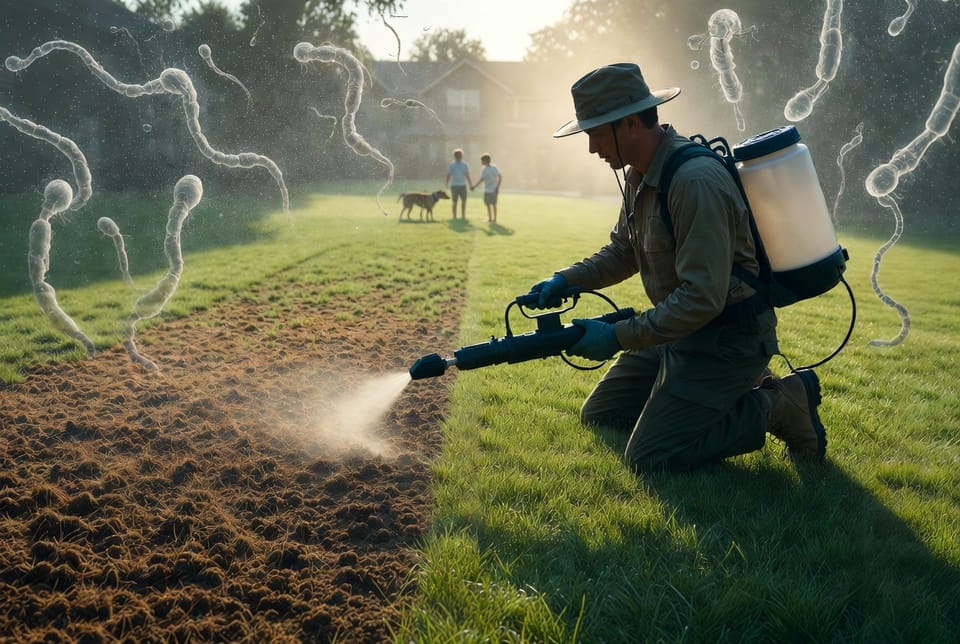
- Transfer to application equipment. Pour the nematode suspension into a watering can, hose-end sprayer, or backpack sprayer fitted with a nozzle that has openings large enough to allow the nematodes to pass without clogging—usually 50 mesh or coarser. Keep the mixture agitated during application so the nematodes stay evenly distributed.
- Apply evenly across the lawn. Walk in overlapping passes, applying the suspension at the rate recommended on the product label—typically enough to deliver 25 million or more nematodes per 1,000 to 3,000 square feet depending on infestation severity. Focus extra material on known problem areas where brown patches or animal digging have appeared.
- Water the nematodes into the soil immediately. Within 30 minutes of application, irrigate the treated area with at least one-quarter to one-half inch of water. This critical step moves the nematodes from the grass blades and thatch down into the root zone where grubs live. Continue light daily watering for the next seven to fourteen days to keep the topsoil moist, especially during dry weather.
- Avoid harsh conditions after treatment. Refrain from applying fertilizers or other pesticides for at least two weeks. Keep foot traffic and heavy equipment off the lawn while the nematodes establish.
When these steps are followed carefully, the majority of nematodes reach the target zone alive and ready to begin searching for grubs within hours.
Benefits That Make Nematodes the Preferred Choice
Choosing beneficial nematodes for lawn grub control delivers a suite of advantages that chemical options simply cannot match.
- Complete safety for pets and children. Once the nematodes have been watered into the soil, the lawn can be used immediately. There are no toxic residues, waiting periods, or restrictions on playtime.
- Protection of beneficial insects. Earthworms, predatory beetles, pollinators, and other helpful soil organisms remain unharmed. Nematodes specifically seek insect larvae that match their host range.
- Long-lasting residual activity. Because nematodes reproduce inside infected grubs, control continues for weeks after the initial application, often spanning an entire season under good moisture conditions.
- No development of resistance. Grubs cannot easily evolve resistance to the dual nematode-bacteria attack the way they sometimes do against single-mode chemical insecticides.
- Environmental compatibility. Nematodes leave no groundwater contamination, no runoff toxicity, and no impact on birds or aquatic life when used as directed.
- Compatibility with organic lawn care programs. They fit seamlessly into integrated pest management plans and meet the standards of most organic certification systems.
- Cost-effective over time. Although the initial product cost may appear similar to chemical treatments, the reduced need for repeat applications and the avoidance of turf replacement expenses make nematodes economical in the long run.
These benefits combine to create a healthier overall lawn ecosystem. Grass recovers more vigorously once root-feeding pressure is removed, and the soil food web remains intact to support future resilience.
Monitoring Results and Long-Term Lawn Health
Results typically become visible within two to four weeks. Infected grubs die underground, so you may not see large numbers of dead larvae on the surface. Instead, watch for the cessation of new brown patches and a gradual firming of previously spongy areas. Birds and digging animals usually reduce their activity once the food source disappears.
To confirm success, dig a few small soil samples in previously damaged zones two weeks after application. Healthy turf will show white, intact roots and few or no live grubs. If a heavy residual population remains, a second application may be considered, although this is rarely necessary when the first treatment was timed and watered correctly.
Ongoing cultural practices amplify the benefits of nematode treatment. Maintain proper mowing height—generally three inches or taller—to encourage deep root systems. Water deeply but infrequently to promote drought tolerance. Fertilize according to soil test results rather than a fixed calendar, and overseed thin areas in the appropriate season. These steps create turf that is inherently more resistant to future grub outbreaks.
Addressing Common Concerns
Many homeowners wonder whether nematodes will harm earthworms or other desirable soil life. Research and field experience consistently show that the species sold for grub control do not attack earthworms under normal lawn conditions. The same holds true for most predatory insects and pollinators.
Another frequent question concerns storage and shelf life. Live nematodes are perishable. Keep unopened packages refrigerated and use them by the expiration date. Once mixed with water, apply the suspension the same day for maximum viability.
Finally, some users ask about combining nematodes with other products. Avoid tank-mixing with chemical insecticides or fungicides, as many of these materials can kill the nematodes. Most organic fertilizers and compost teas are compatible when applied several days apart.
Why Natural Pest Management Matters Now More Than Ever
Modern lawns exist within broader ecological networks. Every chemical applied has the potential to move beyond the intended target, affecting pollinators, aquatic systems, and even household pets that roll on the grass. By choosing beneficial nematodes, you actively participate in a smarter form of pest management—one that works with natural processes rather than against them.
The microscopic size of nematodes belies their outsized impact. A single application can release billions of living search-and-destroy agents into the soil, each programmed by evolution to locate and eliminate the exact pests damaging your turf. The result is effective lawn grub control achieved through biology instead of synthetic chemistry.
Homeowners who switch to this method often report not only healthier grass but also greater peace of mind. Children can run barefoot, dogs can dig and roll, and the family can gather on the lawn without worrying about residual pesticides. That combination of performance and safety is difficult to match with any other single product.
Putting Knowledge into Action
Successful nematode use rests on three pillars: selecting the right species, applying at the correct time with adequate moisture, and supporting the lawn through sound cultural practices afterward. When these elements align, beneficial nematodes consistently deliver the clean, green results homeowners desire.
If your lawn is already showing signs of grub damage—or if you simply want to prevent problems before they start—now is the ideal moment to explore this natural solution. Professional application ensures the nematodes are mixed, distributed, and watered in under optimal conditions, maximizing their effectiveness from day one.
Protect Your Lawn with Nematodes – Call for Service!