The Lawn Fungus Prevention: Proper Watering and Mowing
Lawn fungus can quietly undermine the beauty and health of even the most carefully maintained yard. Yet the good news is that most fungal problems never need to become serious issues when cultural practices take center stage. By mastering two fundamental habits—proper watering and correct mowing—homeowners can create an environment where grass thrives and disease struggles to take hold. This guide explains exactly how these everyday actions form a powerful defense, what warning signs to watch for, and how consistent care delivers long-term results. Follow these proven methods and you will protect your investment while enjoying a thick, resilient lawn season after season.
Get Free Lawn Care & Stop Fungus Today – Call Now!
Understanding Cultural Practices as Your First Line of Defense
Cultural practices refer to the routine care techniques that strengthen turfgrass naturally rather than relying solely on chemical treatments. These methods improve soil conditions, encourage deep root systems, and reduce the moisture and stress factors that fungi love. When grass is vigorous, it resists invasion far more effectively than stressed or weakened plants. Focusing on watering and mowing forms the foundation of any successful prevention strategy. These two practices work together: smart irrigation keeps foliage dry at critical times, while precise cutting maintains the ideal canopy height and removes potential disease carriers. The result is a living barrier that makes your lawn less hospitable to pathogens.
Many homeowners overlook how small daily choices compound over weeks and months. A lawn watered too frequently stays damp and invites spores to germinate. Blades cut with dull equipment create ragged wounds that open the door to infection. By shifting to deliberate, science-based habits, you shift the balance strongly in favor of healthy growth. The approach is both practical and reassuring—most of the work happens during regular maintenance you already perform, simply refined for better outcomes.
The Critical Role of Proper Watering in Fungus Prevention
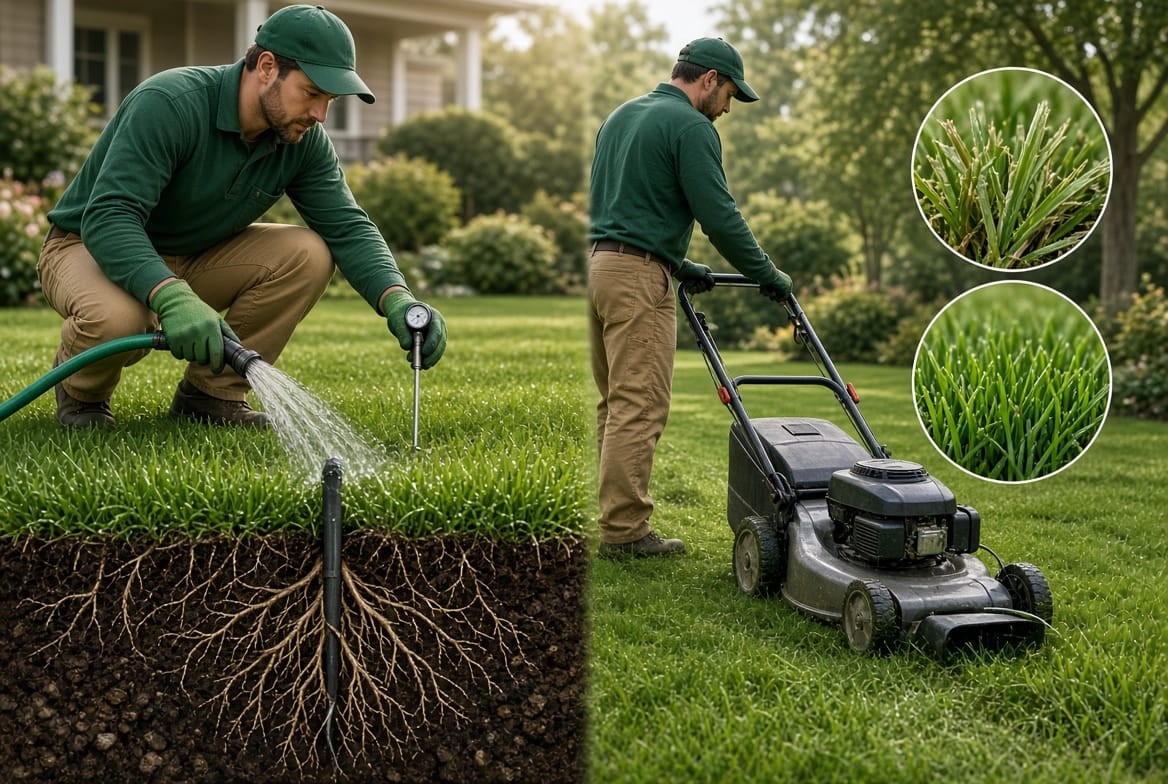
Water is essential for grass, yet the way you deliver it determines whether it becomes a friend or a foe. Deep and infrequent watering stands as one of the most effective cultural practices available. Instead of light daily sprinkles that wet only the surface, apply enough moisture to penetrate six to eight inches into the soil. This encourages roots to grow downward in search of water, producing a stronger, more drought-tolerant plant. Deep roots also help the lawn recover faster from heat or traffic stress, leaving fewer openings for fungal organisms.
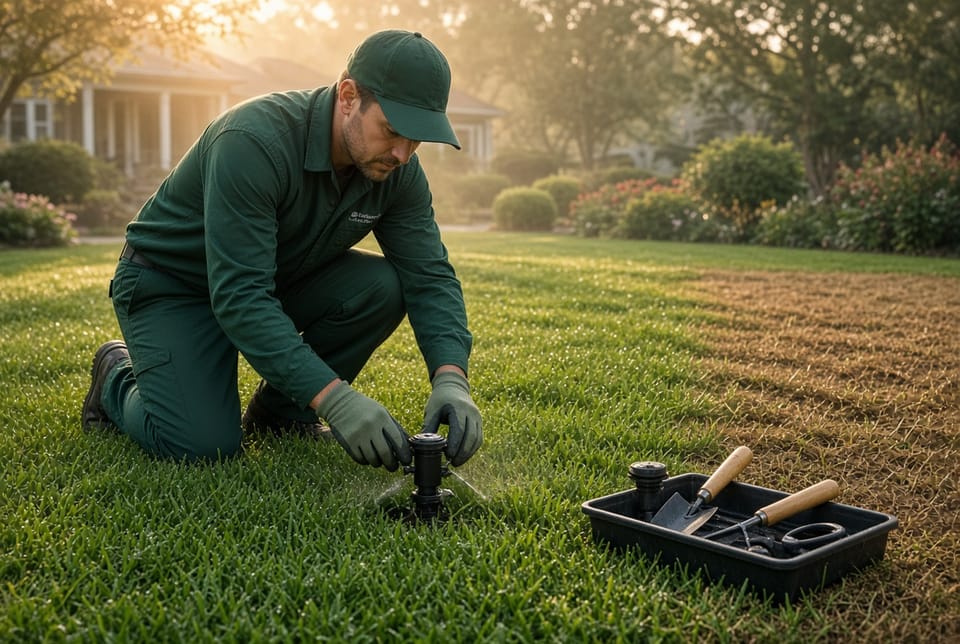
Timing matters just as much as quantity. Early morning watering, ideally between 4 a.m. and 9 a.m., allows grass blades to dry thoroughly during the day. Afternoon or evening irrigation leaves moisture sitting on foliage overnight—the exact conditions many fungi require to spread. When leaves remain wet for extended periods, spores find the perfect environment to germinate and infect tissue. By finishing irrigation before the sun rises high, you give the lawn the hydration it needs without creating prolonged dampness.
Aim for roughly one inch of water per week, including rainfall, delivered in one or two sessions rather than multiple short ones. Use a simple rain gauge or empty tuna cans placed around the yard to measure output accurately. Adjust for soil type: sandy soils drain faster and may need slightly more frequent deep applications, while clay holds moisture longer. Consistent deep watering also reduces thatch buildup and improves overall soil health, further discouraging disease.
Avoid common mistakes such as overwatering shaded areas or running sprinklers during windy conditions that cause uneven coverage. When these principles become routine, the lawn develops natural resistance. Healthy turf simply outcompetes opportunistic fungi, making chemical intervention far less necessary.
Mastering Mowing Techniques to Block Fungal Diseases
Mowing is more than simply shortening the grass—it is a critical cultural practice that directly influences disease pressure. Correct mowing height keeps the plant strong and the canopy dense enough to shade soil and suppress weeds, yet open enough for air circulation. Most cool-season grasses perform best when maintained between 2.5 and 3.5 inches, while warm-season varieties often prefer 1.5 to 2.5 inches depending on the species. Taller grass develops deeper roots, shades the soil surface to reduce evaporation, and creates a microclimate less favorable to many fungal pathogens.
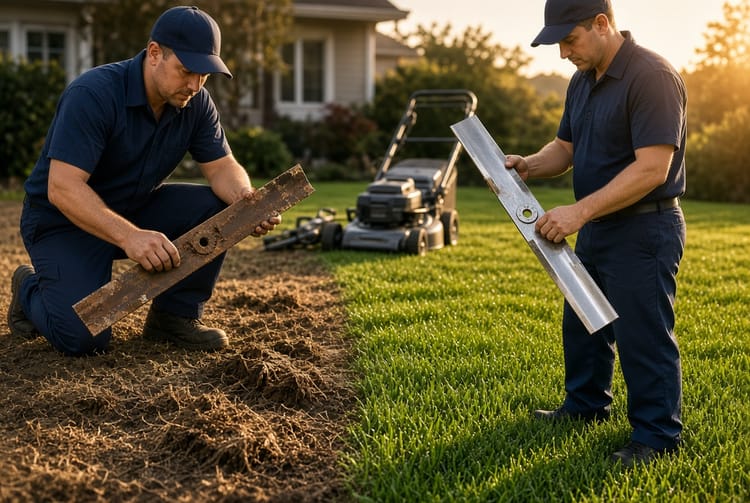
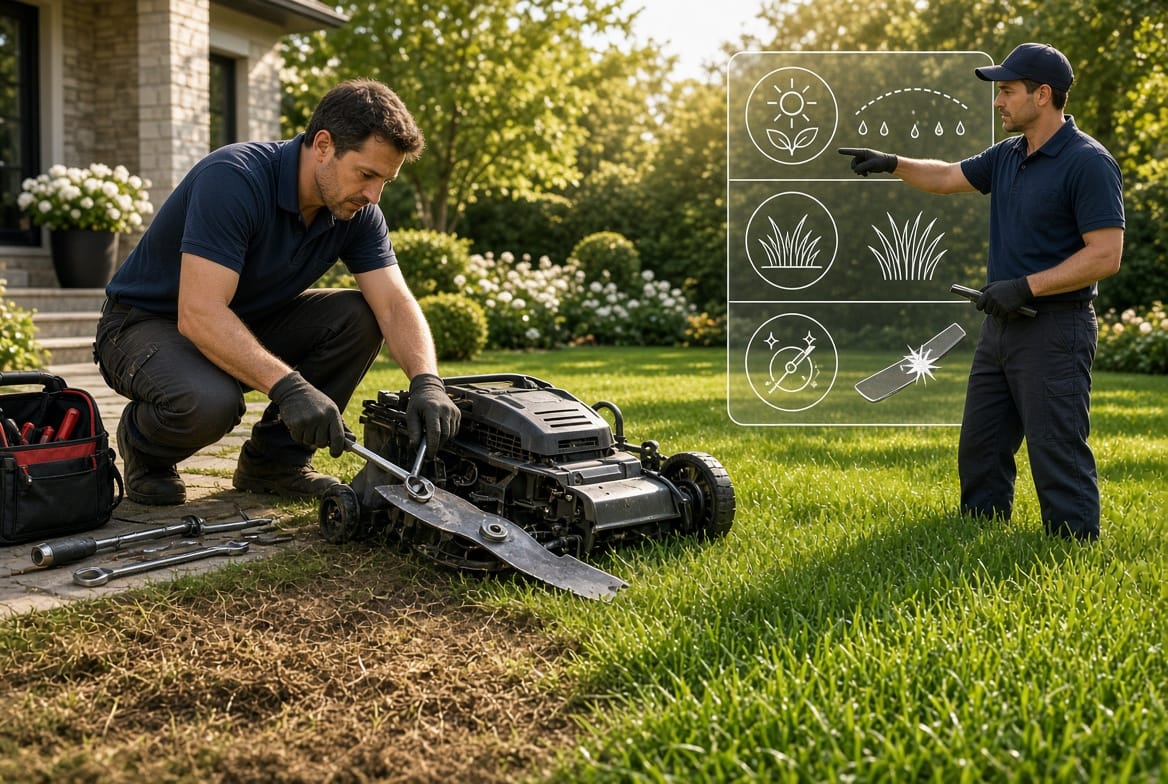
Equally important are sharp mower blades. Dull blades tear rather than cut, leaving shredded tissue that turns brown and becomes an easy entry point for infection. Clean, precise cuts heal quickly and maintain the plant’s ability to photosynthesize efficiently. Sharpen blades at least twice per season, or more often if you mow frequently or encounter sandy soil that accelerates dulling. A well-maintained mower also reduces the risk of spreading disease from one area of the lawn to another.
Follow the one-third rule: never remove more than one-third of the leaf blade in a single cutting. Removing excess height stresses the plant and can leave it vulnerable. Mow regularly so the grass stays within its ideal range rather than allowing it to grow tall and then cutting it short. Change mowing patterns occasionally to prevent soil compaction and grain in the turf. Finally, keep the underside of the mower deck clean; clippings and debris can harbor spores and transfer them across the yard.
When watering and mowing work in harmony, the lawn develops a robust structure that resists invasion. Deep roots supported by proper irrigation pair with a healthy leaf surface maintained by sharp, correctly set blades. The combination creates an environment where fungi find little opportunity to establish.
Recognizing Early Signs of Lawn Fungus
Even with excellent cultural practices, vigilance remains essential. Catching problems early allows you to adjust care before damage spreads. Watch for these common indicators:
- Circular patches of yellow, brown, or tan grass that expand outward over time
- Discolored or water-soaked spots on individual blades, sometimes with a darker border
- Powdery or thread-like growth visible in early morning dew, often white, gray, or pinkish
- Thinning turf or bare spots that appear suddenly in previously healthy areas
- Unusual patterns such as rings, arcs, or streaks that do not match irrigation coverage
These symptoms often intensify during periods of high humidity, moderate temperatures, and prolonged leaf wetness—the same conditions that improper watering and mowing can create. If you notice any of these signs, first review your recent irrigation schedule and mowing height. Correcting cultural practices frequently halts progression without additional treatment. Persistent or severe cases may benefit from professional assessment to identify the specific pathogen and recommend targeted solutions.
Early detection paired with consistent prevention keeps most issues minor. A lawn managed with deep, timed watering and precise cutting rarely develops the widespread problems that require intensive intervention.
Integrating Watering and Mowing into a Complete Prevention Routine
The true power of these cultural practices emerges when they become consistent habits rather than occasional efforts. Begin each growing season by calibrating your irrigation system and confirming mower settings. Track weekly rainfall and supplement only as needed to reach the one-inch target through deep applications. Schedule blade sharpening and height checks as regular maintenance tasks, just as you would change the oil in a vehicle.
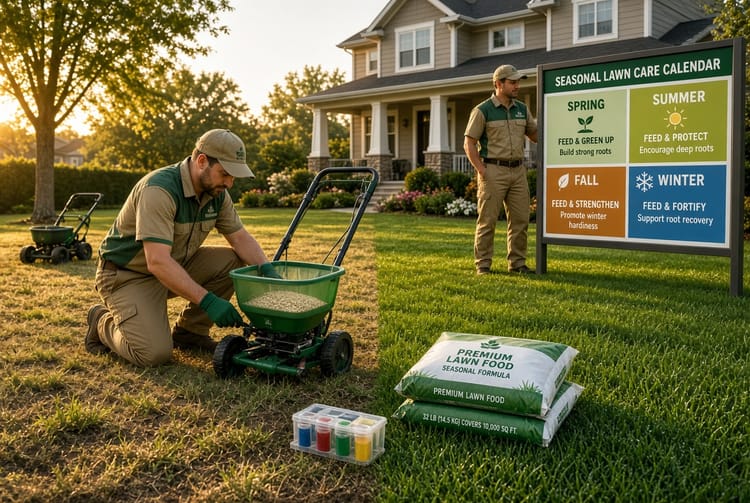
Seasonal adjustments keep the system effective. In spring, focus on establishing deep roots with measured watering while gradually raising mowing height. Summer demands careful attention to early-morning timing and avoiding midday stress. Fall is ideal for final height adjustments and ensuring the lawn enters dormancy strong. Throughout the year, resist the urge to water lightly or cut too short during busy periods—these shortcuts create the exact conditions fungi exploit.
Additional supporting habits reinforce the core practices. Improve air circulation by pruning overhanging branches, reduce thatch through occasional dethatching if it exceeds half an inch, and avoid heavy foot traffic on wet grass. Together these actions create a resilient ecosystem. Healthy soil, deep roots, and clean leaf surfaces form a natural shield that keeps most fungal threats at bay.
Homeowners who adopt this approach often notice improvements within a single season: denser turf, richer color, and far fewer problem patches. The method is sustainable, cost-effective, and empowering. You gain control over lawn health through knowledge and routine rather than reacting to crises.
Long-Term Benefits of Consistent Cultural Practices
Beyond immediate fungus prevention, proper watering and mowing deliver lasting advantages. Deeper root systems improve drought tolerance, reducing water use over time. A dense canopy crowds out weeds, limiting the need for herbicides. Stronger plants recover faster from environmental stress, maintaining appearance with less effort. Property value benefits as well—an attractive, healthy lawn enhances curb appeal and creates a more enjoyable outdoor space for family and guests.
These practices also support broader environmental goals. Efficient irrigation conserves water resources. Reduced reliance on fungicides lessens chemical inputs. By focusing on prevention through cultural excellence, you contribute to a healthier landscape ecosystem while protecting your own investment.
The process is straightforward once established. Start with one change—switch to early-morning deep watering or raise the mower deck—and build from there. Each improvement compounds, making subsequent seasons easier and more successful. Professional guidance can accelerate results when needed, ensuring techniques match your specific grass type, soil, and climate.
Putting Knowledge into Action Today
Lawn fungus prevention does not require complicated equipment or constant worry. It rests on the reliable foundation of deep and infrequent watering performed early in the morning combined with mowing at the correct height using sharp blades. These cultural practices create conditions where grass flourishes and disease finds little foothold. Monitor for early signs, adjust routines as seasons change, and maintain consistency. The reward is a resilient, beautiful lawn that stands strong year after year. Prevent lawn fungus with good practices.
Free Expert Lawn Care: Watering & Mowing Tips That Work