The Gopher Tortoise: Protecting a Threatened Species on Your Property
Property owners across the southeastern landscape often discover unexpected neighbors living beneath their feet. One of the most remarkable is the gopher tortoise, a long-lived reptile whose presence signals healthy sandy ecosystems yet also carries clear legal responsibilities. Understanding this animal’s habits, recognizing its signs, and choosing coexistence over disturbance protects both the species and your land investment. This guide explains the essential facts in straightforward terms so you can respond confidently and correctly.
Protect Gopher Tortoises on Your Land – Call for Expert Advice Now!
Gopher Tortoise Behavior and Habitat Preferences
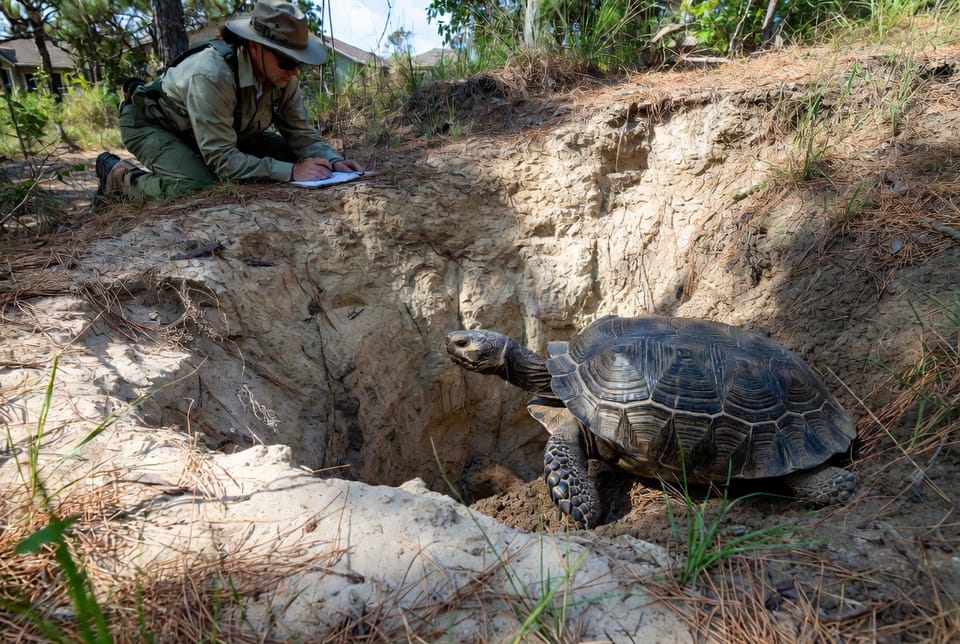
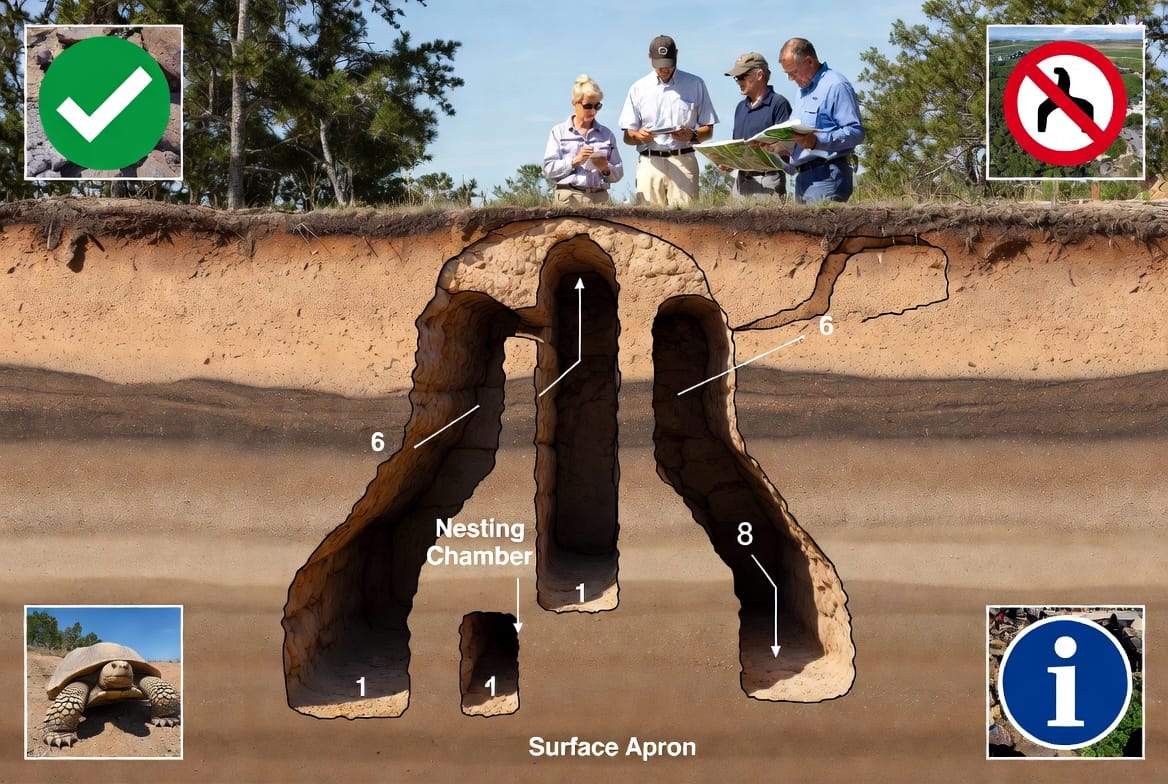
The gopher tortoise spends the majority of its life in and around extensive underground burrows excavated in well-drained sandy soils. These soils warm quickly under the sun and allow the tortoise to dig tunnels that remain stable year after year. An adult typically creates a gently sloping entrance roughly the width of its shell, then tunnels downward and sideways for distances that can exceed thirty feet. Inside the cool, humid chambers the tortoise finds refuge from extreme heat, cold, fire, and predators.
Because the animal is ectothermic, its daily rhythm follows temperature and season. On mild mornings it emerges to forage on low-growing vegetation—grasses, legumes, and wildflowers—then returns to the burrow during the hottest part of the day or when storms approach. In cooler months activity slows dramatically; the tortoise may remain underground for weeks, relying on stored energy and the stable microclimate of its tunnel. Juveniles dig smaller, shallower burrows, while older individuals maintain and enlarge existing ones, sometimes sharing the same entrance with successive generations.
The species functions as a keystone engineer. Dozens of other animals—insects, amphibians, small mammals, and even certain snakes—use abandoned or active burrows for shelter. When a tortoise excavates new soil, it creates open sandy patches that benefit native plants requiring bare ground for germination. This ecological service is one reason the animal receives strong legal protection across its range.
Recognizing Signs of Gopher Tortoise Presence on Your Land
Early detection prevents accidental harm. The most obvious indicator is the burrow entrance itself: a half-moon shaped opening in sandy soil, usually oriented southward or southeastward to capture morning sun. Fresh sandy mounds or aprons of excavated earth fan outward from the mouth; these piles can measure several feet across and appear freshly turned after rain or after the tortoise has enlarged the tunnel. Look for tracks in the soft sand—distinctive claw marks and a central drag line left by the shell—and for droppings that resemble small, fibrous pellets near the entrance.
Secondary clues include closely cropped vegetation in a rough circle around the burrow, evidence of regular foraging paths, and the absence of dense leaf litter directly in front of the opening. On larger properties you may find multiple burrows clustered in open sandy clearings, along fence lines, or at the edges of pine stands. Because the tortoise is highly site-faithful, the same locations remain active for decades if left undisturbed.
If you notice these features, pause any planned soil work, landscaping, or construction in the immediate vicinity. Document the location with photographs taken from a respectful distance, noting the date and approximate size of the entrance. This simple record helps wildlife professionals evaluate the site later if needed.
Legal Status and the Risks of Disturbance
The gopher tortoise is classified as a threatened species in significant portions of its range. State and federal frameworks prohibit the intentional disturbance, harm, capture, or destruction of individuals, their burrows, or the surrounding habitat that supports them. Even well-intentioned actions—filling a hole that appears abandoned, relocating a tortoise found near a driveway, or clearing vegetation directly above a tunnel—can constitute violations. Penalties may include substantial fines and mandatory restoration requirements.
The underlying principle is straightforward: because the animal digs its own shelter and returns to the same site for years, any alteration of the burrow system can leave the tortoise exposed to lethal temperatures or predators. Hatchlings and juveniles are especially vulnerable; their smaller burrows are easily collapsed by foot traffic or light equipment. Authorities therefore treat every active or potentially active burrow as protected until a qualified survey confirms otherwise.
Property owners sometimes worry that the presence of a protected species will freeze all future development. In reality, careful planning and early consultation usually allow compatible land uses. The key is to avoid unilateral action. Never attempt to relocate a tortoise yourself, never pour materials into a burrow, and never cover or grade over the entrance. These steps eliminate the most common pathways to legal risk.
Practical Steps for Legal Coexistence
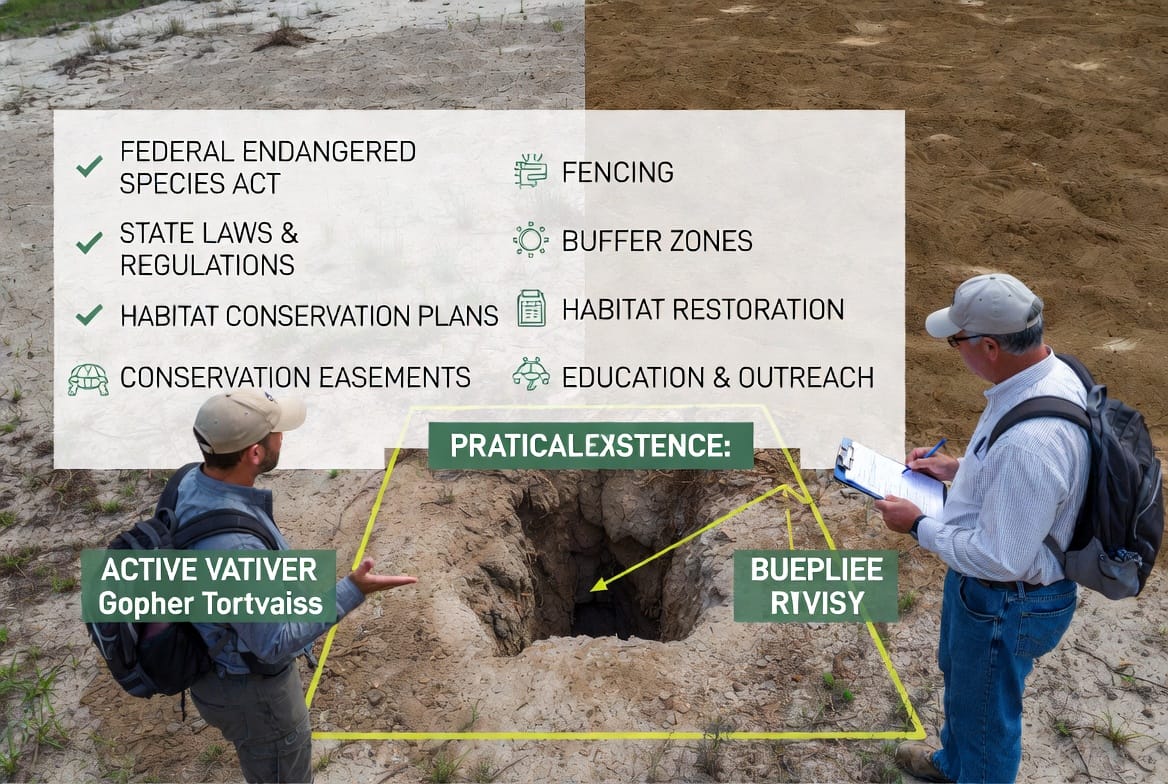
Coexistence begins with respect for the animal’s space. Establish a buffer zone of at least fifteen to twenty-five feet around every known burrow entrance and keep heavy machinery, tilling, and intensive landscaping outside that perimeter. Mowing can continue at higher blade settings if the equipment stays clear of the sandy apron. When installing fences, leave gaps or use wildlife-friendly designs that do not block natural movement corridors between burrows.
If development plans intersect occupied habitat, contact the appropriate state wildlife agency before any ground disturbance. Agency staff or authorized consultants can perform surveys, mark burrows, and advise on permitted options such as temporary avoidance, habitat enhancement elsewhere on the property, or, in limited cases, authorized relocation under strict protocols. These processes protect both the tortoise and the landowner from later complications.
Simple site management further supports the species. Maintain open, sunny sandy patches preferred for nesting; avoid introducing dense sod or heavy mulch over potential foraging areas; and control invasive plants that could shade out native groundcover. Educational signage placed near burrows—especially on larger or shared properties—alerts visitors and contractors without creating visual clutter.
When a tortoise wanders onto a driveway, patio, or construction staging area, the safest response is patience. Most individuals will continue on their own once the immediate path is clear. If the animal appears injured or is in imminent danger from traffic, call licensed wildlife responders rather than attempting handling. Direct contact can stress the tortoise and may be restricted under protected species rules.
Long-Term Benefits of Thoughtful Stewardship
Protecting gopher tortoise habitat delivers advantages beyond regulatory compliance. The open sandy conditions favored by the tortoise also support native wildflowers and pollinators that enhance landscape beauty and reduce the need for intensive irrigation or fertilization. Predator control and fire-resilient burrow networks contribute to overall ecosystem stability, which can lower the frequency of certain pest outbreaks. Many owners report increased satisfaction knowing their property shelters a species that has occupied the region for thousands of years.
From a practical standpoint, early documentation of burrows simplifies future real-estate transactions, insurance reviews, and permitting processes. Buyers and lenders increasingly request environmental disclosures; having clear records and evidence of responsible management demonstrates good stewardship and can streamline approvals. In some areas, voluntary conservation practices may open opportunities for technical assistance or recognition programs that further support land-management goals.
Seasonal awareness strengthens these outcomes. Spring and early summer coincide with nesting; females dig shallow nests in the sandy apron or nearby open soil. Extra caution during these months prevents accidental crushing of eggs. Autumn foraging activity increases as tortoises build reserves, making them more visible and therefore easier to monitor from a distance. Winter dormancy periods are ideal for planning any non-disturbance landscaping outside buffer zones.
Common Misconceptions and How to Avoid Them
One frequent misunderstanding is that an empty-looking burrow is abandoned and may be filled. In truth, tortoises often use multiple burrows and may remain underground for extended periods. Another misconception holds that relocating a tortoise a short distance solves a perceived conflict; without proper authorization and habitat assessment, such moves frequently result in the animal’s death or its return to the original site. A third belief is that small properties cannot support the species; even modest sandy clearings can sustain one or more individuals when managed appropriately.
Addressing these ideas with accurate information reduces anxiety and prevents costly mistakes. When uncertainty arises, the most reliable next step is a conversation with trained wildlife professionals who understand both the biology and the regulatory framework. They can walk the property with you, explain observed signs, and outline options tailored to your specific goals—whether those goals center on residential enjoyment, agricultural use, or future construction.
Integrating Protection into Everyday Property Care
Routine maintenance need not conflict with gopher tortoise needs. Schedule heavy equipment work for periods when activity is lowest and always maintain the recommended buffers. Choose native plantings that thrive in sandy soils and provide forage without requiring frequent soil disturbance. Educate family members, tenants, and contractors about the location of marked burrows and the simple rule: observe from a distance, never dig or fill.
If your land includes larger tracts of suitable habitat, consider leaving selected open sandy areas unmanaged. These zones serve as natural refuges and reduce the likelihood that tortoises will concentrate near high-traffic human areas. Over time, such deliberate decisions create a balanced landscape where both people and wildlife thrive.
The cumulative effect of these practices is a property that remains functional for its owners while fulfilling a broader conservation role. The gopher tortoise has survived climatic shifts and landscape changes for millennia; with informed human partnership it can continue to do so on private lands that form the majority of its remaining range.
Final Guidance for Responsible Ownership
Every property owner who encounters a gopher tortoise holds a quiet but meaningful responsibility. By learning the animal’s behavior, recognizing its burrows and sandy mounds, and choosing legal coexistence over disturbance, you safeguard a threatened species whose underground architecture supports an entire community of life. The process is neither complicated nor burdensome when approached with knowledge and respect.
Should questions arise about signs on your land, buffer recommendations, or next steps for planned improvements, professional guidance is readily available. Protect threatened species on your land.
Get Professional Wildlife Advice – Protect Threatened Species Today!