The Garbage Disposal Reset Button: Why It Trips and How to Fix
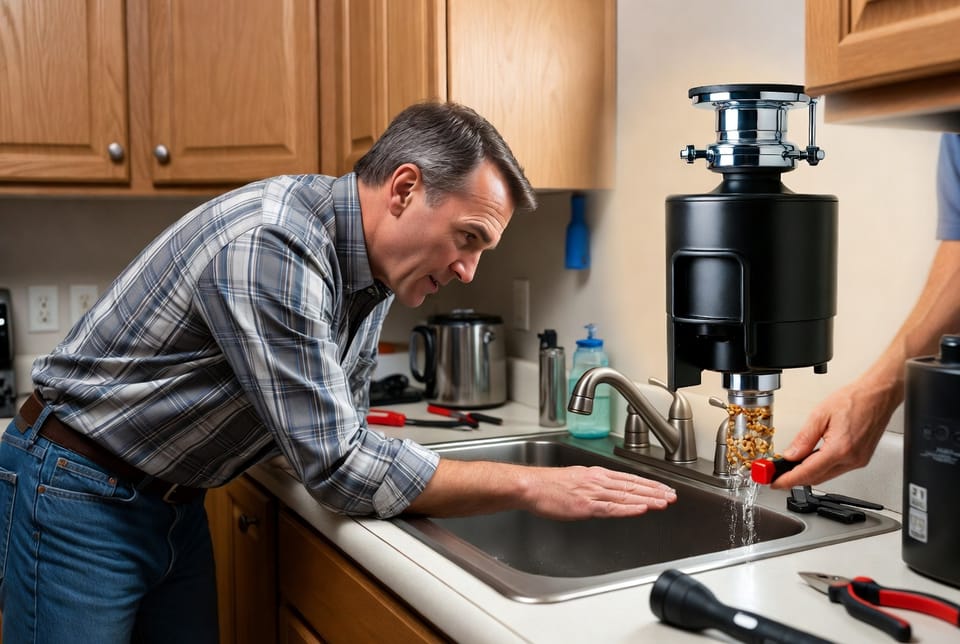
In every busy household kitchen, the garbage disposal stands as a reliable workhorse, grinding up food scraps and keeping drains clear. Yet, one small but critical feature often saves the day when things go wrong: the garbage disposal reset button. This unassuming red button on the bottom of the unit protects your appliance from damage and prevents costly repairs.
Fix Your Garbage Disposal Today – Call Now!
Understanding why this button trips and how to reset it empowers homeowners to handle a common kitchen hiccup with confidence. This comprehensive guide walks you through the mechanics, common triggers, safe reset procedures, and proactive maintenance tips. With the right knowledge, you can restore functionality quickly while ensuring long-term reliability for your kitchen plumbing system.
Understanding the Garbage Disposal Reset Button
The reset button serves as an essential safety mechanism built into most residential garbage disposal units. When the motor overheats or encounters a severe jam, the internal overload protector automatically trips this button to shut off power. This prevents permanent motor burnout and potential electrical hazards.
Why it trips is straightforward: the disposal’s motor works hard to pulverize waste, but excessive strain causes it to overheat. Tripping protects the appliance, much like a circuit breaker safeguards your home’s electrical system. Knowing this reassures you that a tripped button is usually a preventable safety feature, not a sign of total failure.
Homeowners often notice the disposal suddenly going silent mid-use. Water may still drain slowly, but the grinding sound disappears. Before reaching for the phone, check this button – it’s frequently the fastest fix.
Common Causes of Garbage Disposal Tripping
Several everyday habits overload the system and trigger the reset button. Recognizing these helps you avoid repeats and extend the life of your unit.
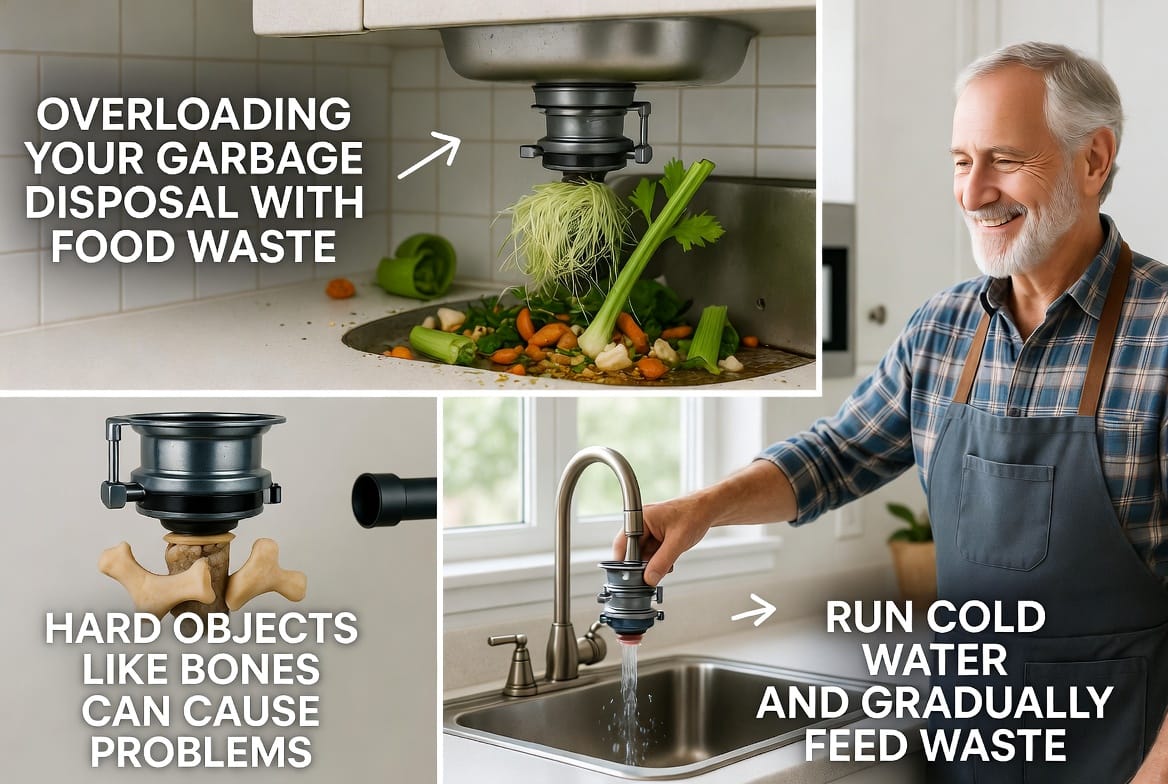
- Overloading the Disposal: Stuffing too much food waste at once strains the motor. The unit needs time and space to process material gradually.
- Grinding Hard or Non-Food Items: Bones, fruit pits, coffee grounds in large quantities, and even small utensils create jams that force the motor to work overtime.
- Fibrous and Starchy Foods: Celery, potato peels, onion skins, and pasta expand or tangle around the impellers, leading to clogs and overheating.
- Lack of Water During Operation: Running the disposal dry reduces lubrication and cooling, causing rapid heat buildup.
- Grease and Oil Buildup: These substances solidify inside the unit and pipes, restricting movement and forcing the motor to labor harder.
Pro Tip: Always run cold water before, during, and after use. Cold water solidifies grease for easier grinding, while hot water can melt it and cause buildup further down the line.
By addressing these common tripping causes, you reduce the frequency of resets and maintain smoother kitchen operations.
Step-by-Step Guide to Resetting Your Garbage Disposal
Resetting the button is a straightforward DIY repair that most homeowners can complete in minutes. Follow these steps carefully for safe results.
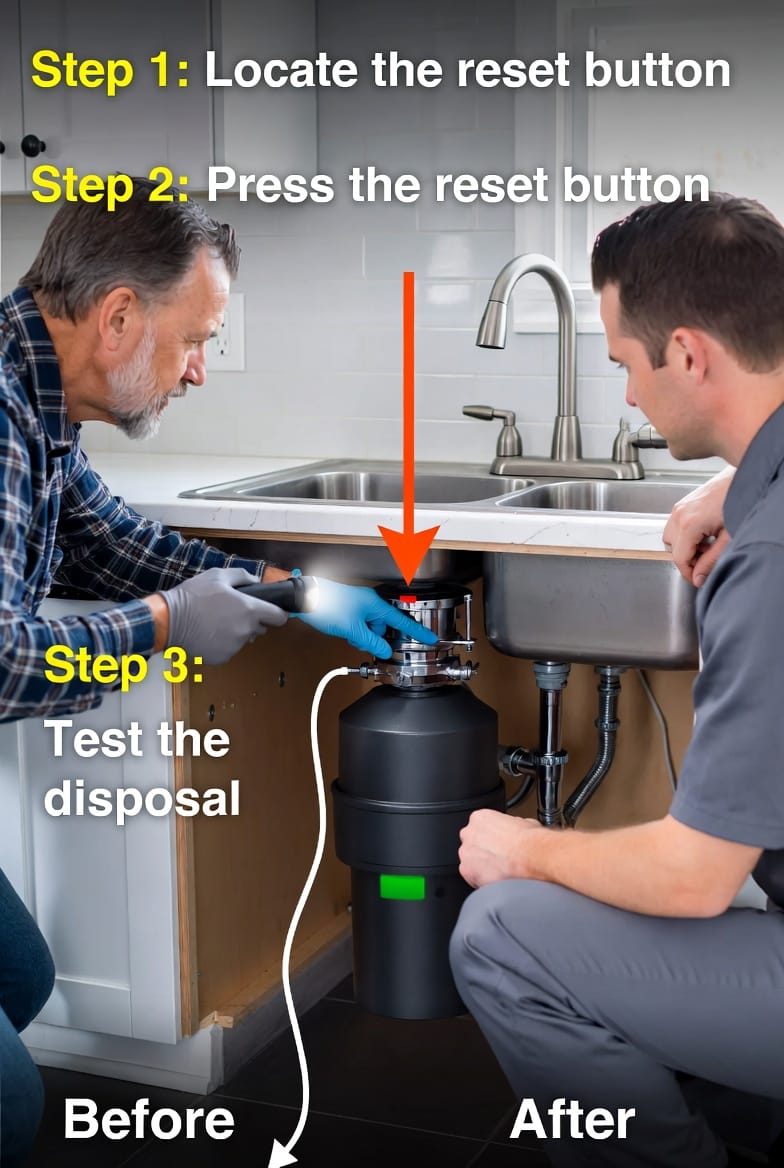
- Turn Off Power: Locate the switch under the sink or at the breaker box and ensure the disposal has no power. This critical safety step prevents accidental activation.
- Locate the Reset Button: Look at the bottom of the disposal unit for a small red button. It may be slightly recessed.
- Press the Button: Firmly push the button until you hear or feel a click. It should stay in once reset.
- Check for Jams: Use a flashlight to inspect the disposal chamber from the sink opening. Never put your hand inside. Use wooden tongs or pliers to remove any visible obstructions.
- Test the Unit: Run cold water and turn on the disposal briefly. Listen for smooth operation. If it hums but doesn’t spin, there may still be a jam.
- Repeat if Necessary: Some units require a second reset after clearing debris.
This procedure restores power safely in most cases. The reassuring news is that proper resets often resolve the issue without professional intervention.
Safety Precautions Every Homeowner Should Know
Your safety comes first when working with any electrical appliance.
- Always disconnect power before reaching under the sink.
- Avoid using chemical drain cleaners, which can damage the disposal’s internal components.
- Wear protective gloves when clearing jams manually.
- Keep children away from the work area.
Following these guidelines ensures a risk-free experience while troubleshooting.
When to Call a Professional Plumber
While the reset button handles many minor issues, certain situations require expert help:
- The button won’t stay reset or trips immediately.
- Persistent humming without grinding indicates a seized motor.
- Unusual burning smells or leaks around the unit.
- Repeated tripping despite careful use.
In these cases, attempting further DIY fixes may worsen the problem. Professional plumbers possess specialized tools and knowledge to diagnose deeper issues like worn impellers, faulty wiring, or pipe obstructions.
Call for reliable service today at (844) 578-2593 if your disposal won’t reset properly. Expert technicians can restore full functionality efficiently and provide maintenance advice tailored to your home.
Preventive Maintenance for Long-Lasting Performance
Prevention is the best strategy for avoiding frequent trips of the garbage disposal reset button.
- Run the disposal regularly, even if just with water, to prevent rust and seizing.
- Cut food scraps into smaller pieces before feeding.
- Avoid putting grease, oil, coffee grounds, or fibrous materials down the drain.
- Use a combination of baking soda and vinegar monthly for natural cleaning.
- Schedule annual professional inspections to catch small problems early.
These habits promote smooth, reliable operation and reduce the likelihood of unexpected breakdowns.
Expanding Your Kitchen Plumbing Knowledge
Beyond the reset button, understanding your entire plumbing system enhances home maintenance. Garbage disposals connect directly to your sink drain and P-trap, making proper installation and regular care vital. Issues like slow draining often link to disposal problems, so addressing the root cause quickly prevents broader plumbing headaches.
Many homeowners appreciate learning about complementary solutions, such as proper trap maintenance and choosing the right disposal size for household needs. Investing time in education pays off through fewer service calls and a more efficient kitchen.
Troubleshooting Additional Common Disposal Problems
Sometimes a tripped reset button accompanies other symptoms.
- No Power at All: Check the outlet, wall switch, or circuit breaker.
- Leaking Unit: Inspect seals and connections; tightening or replacing gaskets often solves this.
- Unpleasant Odors: Clean the disposal with ice cubes and citrus peels for natural deodorizing.
- Vibrations or Loud Noises: Indicates loose parts or foreign objects – shut off immediately and inspect.
Addressing these alongside reset procedures keeps your kitchen running optimally.
The Environmental and Cost Benefits of Proper Care
Maintaining your garbage disposal responsibly supports eco-friendly habits by reducing food waste in landfills. A well-functioning unit minimizes water waste from repeated flushing attempts and lowers the risk of expensive emergency plumber visits.
With simple resets and preventive steps, you save money while contributing to a more sustainable household routine. This authoritative approach to home care brings peace of mind and practical value.
Conclusion: Regain Control of Your Kitchen Convenience
The garbage disposal reset button is your first line of defense against minor disruptions. By understanding why it trips, recognizing common causes, and following safe reset procedures, you handle this common DIY repair confidently.
Remember the key practices: use cold water, avoid overloading, and maintain regularly. When challenges exceed basic troubleshooting, professional support ensures lasting solutions.
Reset your disposal safely today. Our experienced team stands ready to help restore your kitchen’s efficiency and keep your home running smoothly.
Get Professional Disposal Repair – Call Now!