The Flying Squirrel Eviction: Nocturnal Gliders in Attics
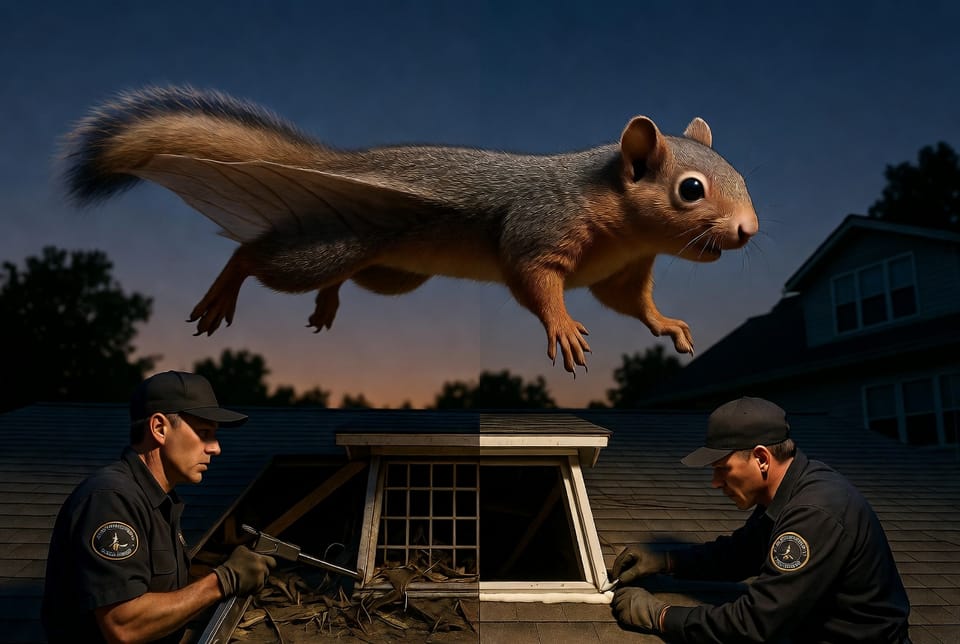
When quiet evenings turn into mysterious scratching marathons overhead, many homeowners discover they are sharing their roof space with flying squirrels. These agile nocturnal gliders may look charming in nature documentaries, but in an attic they quickly become a serious nuisance. At our wildlife removal service, we specialize in humane flying squirrel eviction that protects both your home and the animals. No poisons, no traps – just smart, effective solutions that deliver lasting results.
Evict Flying Squirrels Humanely – Call Now!
Flying squirrels are remarkable creatures, but they do not belong in your living space. With their ability to glide up to 150 feet between trees and their preference for cozy, elevated shelters, attics offer the perfect combination of safety and warmth. Understanding their behavior is the first step toward resolving the issue confidently and humanely.
Understanding the Nocturnal Glider: Behavior That Leads to Attic Invasions
Flying squirrels are strictly nocturnal, becoming active only after sunset. Unlike their daytime cousins, they do not scurry across your roof during daylight hours. Instead, they launch from nearby trees, extend the skin membrane between their front and rear legs called the patagium, and glide silently toward your home.
They are highly social and often colonize attics in small family groups. A single pair can quickly grow into a colony of eight to fifteen individuals seeking shelter, especially during colder months when they huddle together for warmth. Their lightweight bodies allow them to squeeze through remarkably small openings – often no larger than a quarter – making standard exclusion methods ineffective if every potential entry is not addressed.
These gliders do not hibernate. They remain active year-round, using your attic as a safe haven for nesting, storing food, and raising young. Their agility and group behavior mean that once one finds its way inside, others soon follow. This is why professional flying squirrel removal focuses on the entire colony rather than isolated individuals.
Why Attics Become Prime Real Estate for Flying Squirrels
Attics provide everything a flying squirrel needs: protection from predators, stable temperatures, and easy access to nearby trees for gliding. Older homes with unsealed soffits, vents, or gaps around chimneys and fascia boards are especially vulnerable. Even new construction can develop tiny openings over time due to settling or weather exposure.
Seasonal pressures increase the likelihood of invasion. In spring, females search for secure nesting sites to raise litters. In fall, entire families seek winter shelter. Without intervention, a small entry point can become a bustling colony within weeks, leading to structural wear, insulation damage, and persistent odors.
Identifying the Signs of a Flying Squirrel Infestation
Early detection prevents larger problems. Listen for scratching at night – distinct, rapid scurrying sounds that start shortly after dark and continue until dawn. These noises differ from the heavier thumps of raccoons or the daytime activity of gray squirrels.
Look for other telltale indicators:
- Droppings that resemble mouse pellets but are slightly larger, rice-shaped, and often found in concentrated piles near entry points or along beams.
- A pungent ammonia-like smell from accumulated urine, especially noticeable on warm days.
- Greasy rub marks along walls or near holes where the squirrels’ fur oils have been deposited during repeated gliding entries.
- Chewed insulation, wiring, or stored items as they create nesting areas.
If you notice any combination of these signs, it is time to act. Ignoring them allows the colony to expand and increases the risk of secondary issues.
The Risks of Sharing Your Attic with Nocturnal Gliders
While flying squirrels are not aggressive toward humans, their presence introduces several concerns. Chewed electrical wiring creates fire hazards. Compacted insulation loses its effectiveness, raising energy bills and reducing comfort. Accumulated droppings and urine can lead to mold growth and unpleasant odors that penetrate living areas.
Fleas, mites, and other parasites often hitchhike with the colony, potentially spreading to pets or family members. The constant nighttime activity disrupts sleep, and the psychological stress of knowing wildlife is overhead can affect overall peace of mind. Prompt, humane eviction eliminates these risks while respecting wildlife.
The Gentle Art of Humane Eviction: One-Way Doors and Expert Sealing
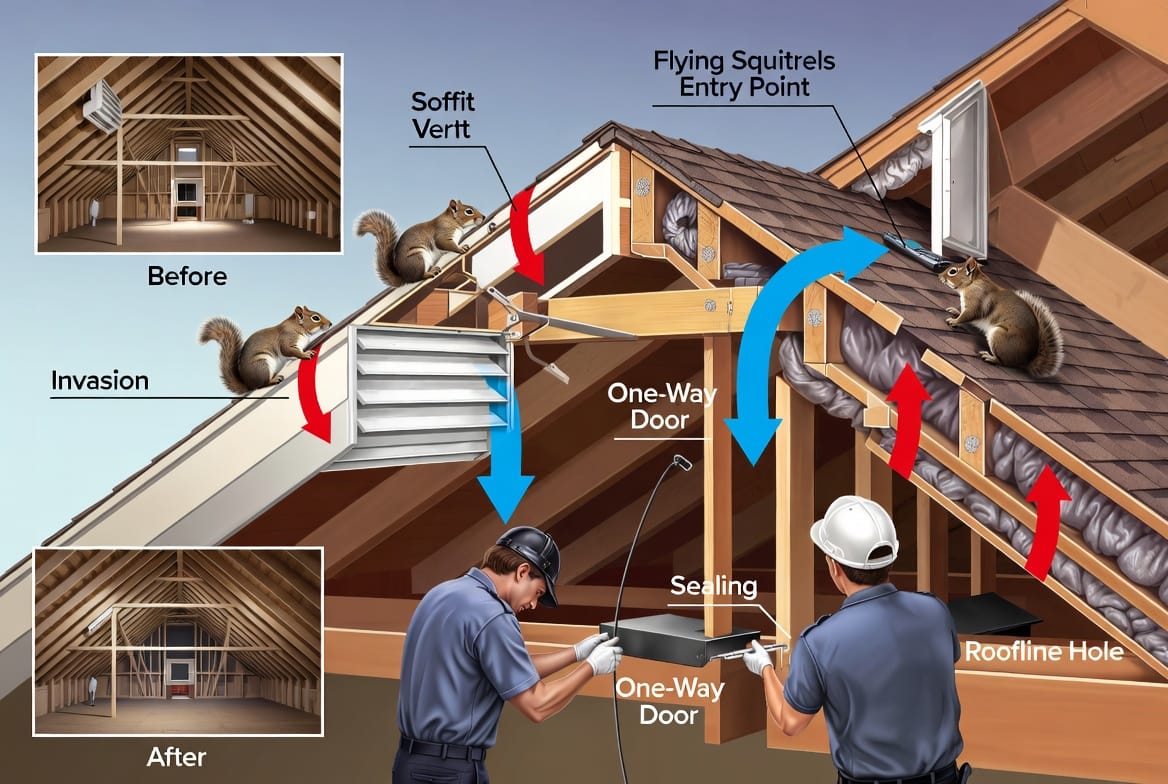
At our service, we never use lethal methods for flying squirrels. Instead, we employ proven one-way exclusion doors – devices that allow the animals to exit freely but prevent re-entry. This approach respects natural behavior and complies with all wildlife regulations.
The process is systematic and thorough:
- Comprehensive inspection to locate every entry and exit point, no matter how small.
- Installation of one-way doors at primary active entries while temporarily sealing secondary openings.
- Monitoring with motion-activated cameras and tracking powder to confirm the entire colony has vacated.
- Complete sealing of all potential re-entry points using heavy-duty materials designed to withstand chewing and weather.
- Final cleanup, sanitization, and insulation restoration to leave your attic cleaner than before.
This method typically resolves the issue within one to two weeks, depending on colony size and activity level. Homeowners appreciate the peace of knowing the eviction was handled ethically and permanently.
Step-by-Step Professional Flying Squirrel Removal Process
Our attic wildlife specialists follow a proven protocol that guarantees results:
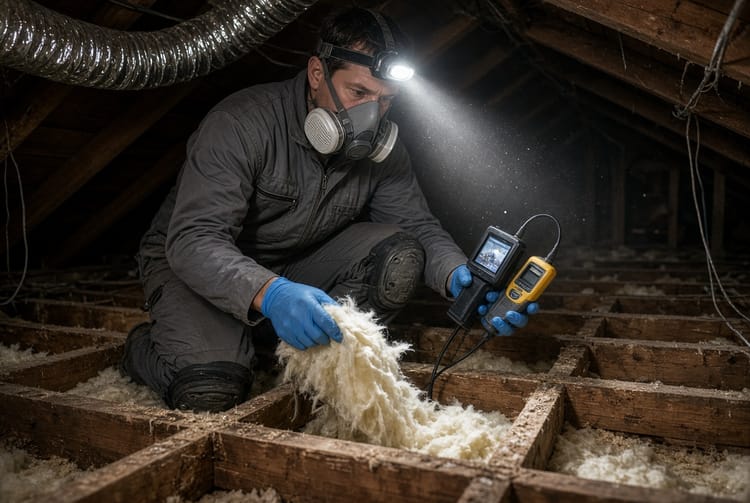
- Detailed attic assessment using advanced tools to map the full extent of the invasion.
- Strategic placement of one-way doors and temporary deterrents to encourage natural departure.
- Continuous monitoring to verify all squirrels have exited safely.
- Precision sealing of every gap, vent, and seam with squirrel-proof materials.
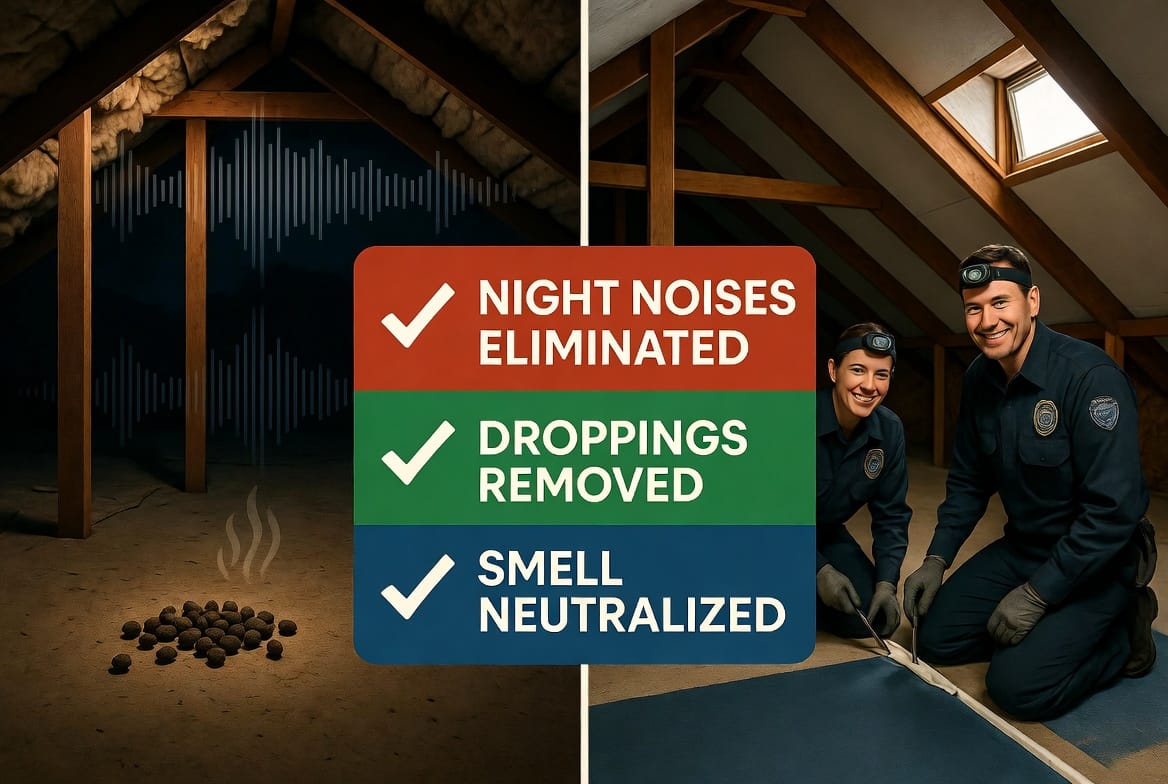
- Attic restoration including removal of nesting material, droppings, and odor neutralization.
- Preventive reinforcement such as installing metal flashing and mesh guards on vulnerable areas.
Every step is documented, and we provide a clear report so you understand exactly what was done and why.
Prevention Strategies for Long-Term Attic Protection
Once the gliders are gone, prevention keeps them that way. Regular attic inspections, especially after storms or seasonal changes, catch new gaps early. Trim tree branches at least ten feet from your roofline to reduce easy gliding access. Install chimney caps, soffit vents with proper mesh, and metal edge guards around fascia boards.
Maintaining dry, well-ventilated attic conditions discourages nesting. Our technicians can also recommend cost-effective upgrades during the eviction process that provide years of protection without ongoing maintenance worries.
Why Homeowners Trust Our Attic Wildlife Specialists
Dealing with flying squirrels in attics requires specialized knowledge that most general pest control services simply do not possess. Our team consists of certified wildlife removal professionals trained in humane techniques, local regulations, and the unique behaviors of nocturnal gliders. We arrive on time, explain every step, and stand behind our work with a satisfaction guarantee.
Professional Flying Squirrel Eviction Experts – Call Today