The Fine Fescue Lawn: Low-Maintenance Grass for Shade and Dry Conditions
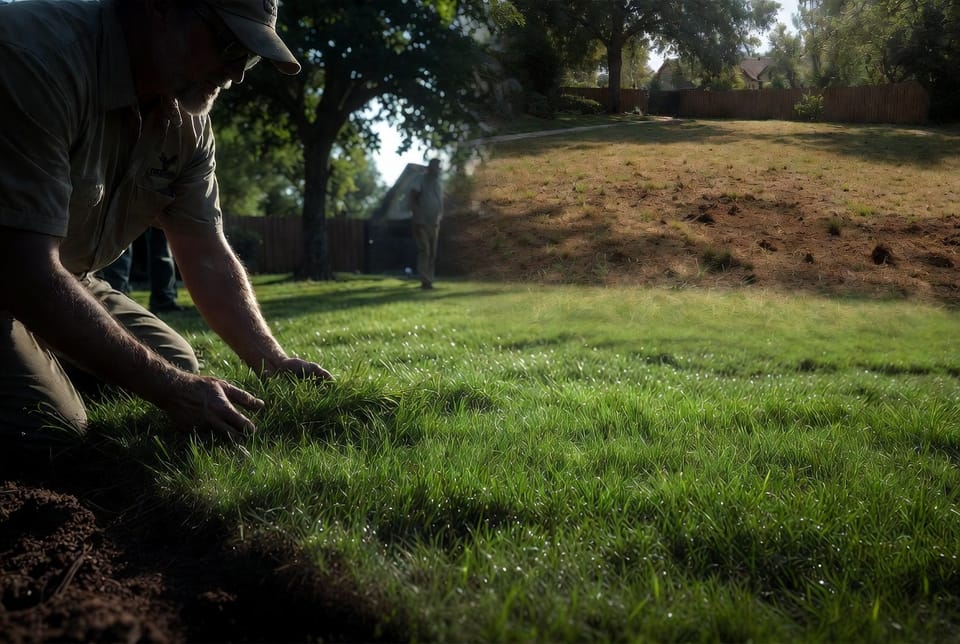
In today’s demanding landscapes, many homeowners face the frustration of thin, patchy lawns under heavy tree cover or in areas with limited water access. Traditional grasses struggle and fade, leaving bare spots that invite weeds and erosion. Yet there is a proven solution that delivers lasting results with far less effort: the fine fescue lawn.
Grow Grass Where Others Fail – Call Now!
Fine fescue stands out as the premier low-maintenance grass for shade and dry conditions. This cool-season turf type transforms difficult spaces into lush, resilient carpets that stay green longer and require minimal inputs. Whether you manage a shaded backyard, a north-facing slope, or a property with inconsistent irrigation, fine fescue offers the reliable performance you need.
This comprehensive guide explores everything you need to know about establishing and enjoying a thriving fine fescue lawn. From its unique characteristics to practical establishment steps and ongoing care, you will discover why this grass type continues to earn praise from lawn professionals and homeowners alike. With the right approach, you can grow grass where others fail—creating a beautiful, sustainable landscape that saves time, money, and water.
What Makes Fine Fescue the Ideal Choice for Challenging Areas
Fine fescue refers to a group of closely related cool-season grasses known for their exceptionally fine leaf blades and adaptable nature. Varieties commonly used include creeping red fescue, chewings fescue, hard fescue, and sheep fescue. Each contributes unique strengths, but together they form a versatile blend perfectly suited to tough environments.
Unlike coarser grasses that demand full sun and frequent watering, fine fescue thrives where light is limited and moisture can be scarce. Its compact growth habit and efficient root system allow it to conserve resources while maintaining density. This makes it the go-to shade tolerant grass for areas under mature trees, along fence lines, or in urban settings with buildings that block sunlight.
Homeowners and property managers appreciate fine fescue because it delivers professional-quality results without the high-maintenance demands of Kentucky bluegrass or perennial ryegrass. Once established, it forms a dense, uniform turf that resists wear and recovers quickly from minor stress.
Key Characteristics That Set Fine Fescue Apart
The success of any fine fescue lawn stems from its distinctive biological advantages. Here are the primary traits that make it superior in shade and dry conditions:
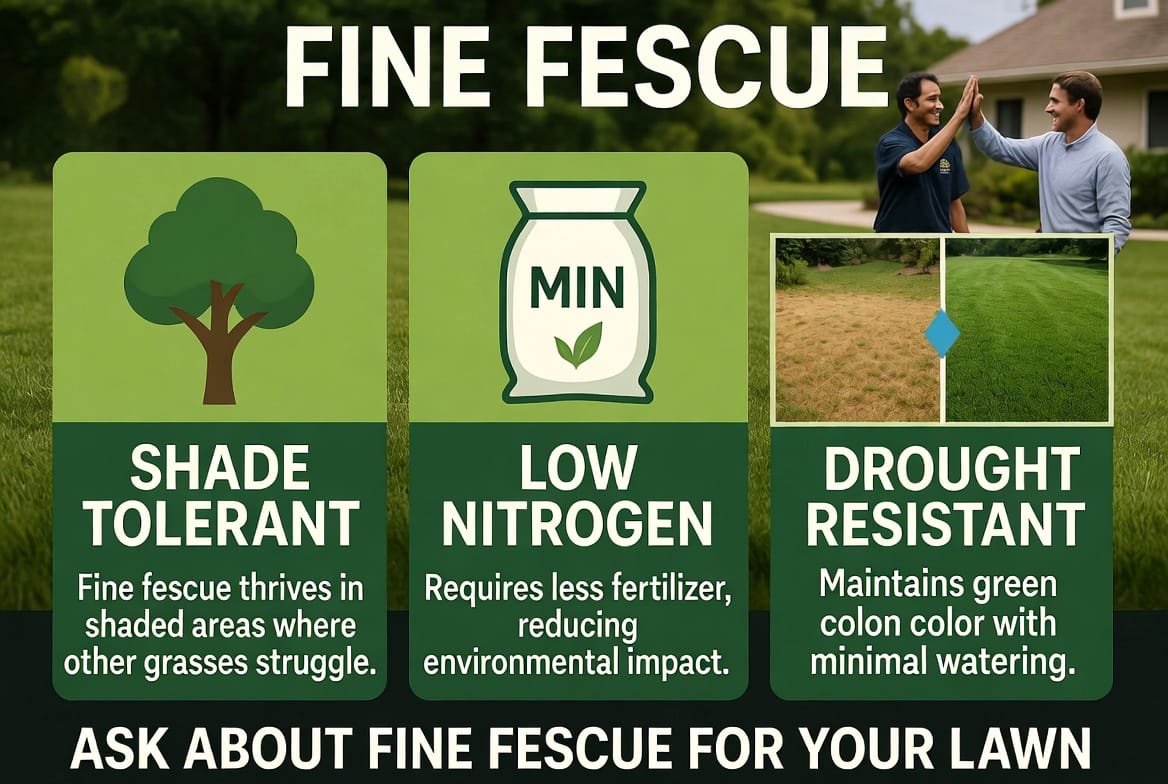
- Exceptional shade tolerance: Fine fescue performs well with as little as four hours of direct sunlight daily. Its narrower leaf blades capture available light more efficiently, preventing the thinning and yellowing common in other species.
- Drought resistance: Once the root system develops, fine fescue withstands extended dry periods better than many cool-season alternatives. It enters a protective dormancy during severe stress and rebounds quickly when moisture returns.
- Low fertilizer needs: This grass requires significantly less nitrogen than high-maintenance varieties. A single or twice-yearly light application keeps it healthy, reducing costs and minimizing runoff into local waterways.
- Fine texture and slow growth: The delicate blades create a soft, luxurious feel underfoot while the moderate growth rate means fewer mowing sessions—often just once every 10 to 14 days during peak season.
- Disease and pest resistance: In low-light, low-fertility settings, fine fescue naturally resists many common lawn diseases that plague sun-loving grasses.
These characteristics combine to create a resilient low-maintenance grass that fits busy lifestyles and environmentally conscious landscapes.
Ideal Applications for Fine Fescue Lawns
Fine fescue excels in locations where other grasses simply cannot sustain healthy growth. Property owners turn to this versatile turf for:
- Heavy shade beneath large deciduous or evergreen trees
- North-facing slopes and foundations that receive minimal afternoon sun
- Dry, well-drained soils that challenge moisture-loving varieties
- Transition zones between full sun and deep shade
- Low-traffic ornamental areas, parks, and commercial campuses
- Eco-friendly landscapes seeking reduced water and fertilizer use
Because it tolerates poor soil conditions and competes effectively with tree roots, fine fescue prevents erosion on slopes while maintaining an attractive appearance year-round in cooler climates.
Step-by-Step Guide to Establishing Your Fine Fescue Lawn
Successful establishment is the foundation of a long-lasting fine fescue lawn. Follow these proven steps for best results:
- Test and prepare the soil – Conduct a soil test to confirm pH between 5.5 and 7.0. Amend with organic matter if needed to improve drainage without over-fertilizing.
- Choose the right seed blend – Select a premium mix containing multiple fine fescue varieties for maximum adaptability.
- Time your seeding correctly – Early fall or spring provides the coolest temperatures and consistent moisture fine fescue prefers.
- Seed at the proper rate – Apply 5 to 8 pounds of seed per 1,000 square feet for new lawns; lightly overseed existing areas at half that rate.
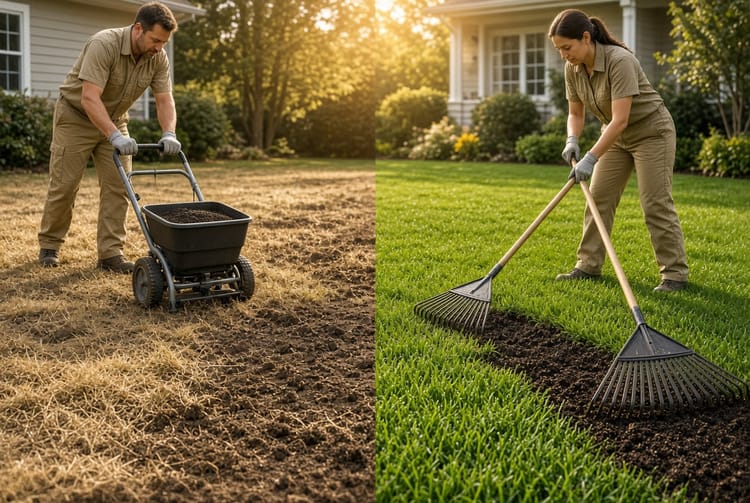
- Ensure good seed-to-soil contact – Rake or roll the seed gently into the prepared surface and keep the top inch of soil consistently moist until germination (usually 7–14 days).
- Provide light protection – Use straw mulch or erosion blankets on slopes to retain moisture and prevent washout.
With proper preparation, seedlings emerge quickly and begin developing the deep, efficient root system that powers drought resistance.
Low-Maintenance Care That Delivers Professional Results
One of the greatest advantages of a fine fescue lawn is how little ongoing work it requires. Once established, follow this simple schedule:
- Mowing: Keep blades at 2.5 to 3.5 inches. The slow growth means you mow less often, reducing fuel use and labor.
- Watering: Deep, infrequent irrigation encourages strong roots. Most established lawns need only 0.5 to 1 inch per week, even during dry spells.
- Fertilizing: Apply a low-nitrogen, slow-release product once or twice per year—far less than traditional lawns demand.
- Weed and pest management: Dense growth naturally crowds out weeds. Spot-treat only when necessary to preserve the natural balance.
This minimal intervention keeps your lawn looking pristine while protecting the environment.
Comparing Fine Fescue to Other Popular Grasses
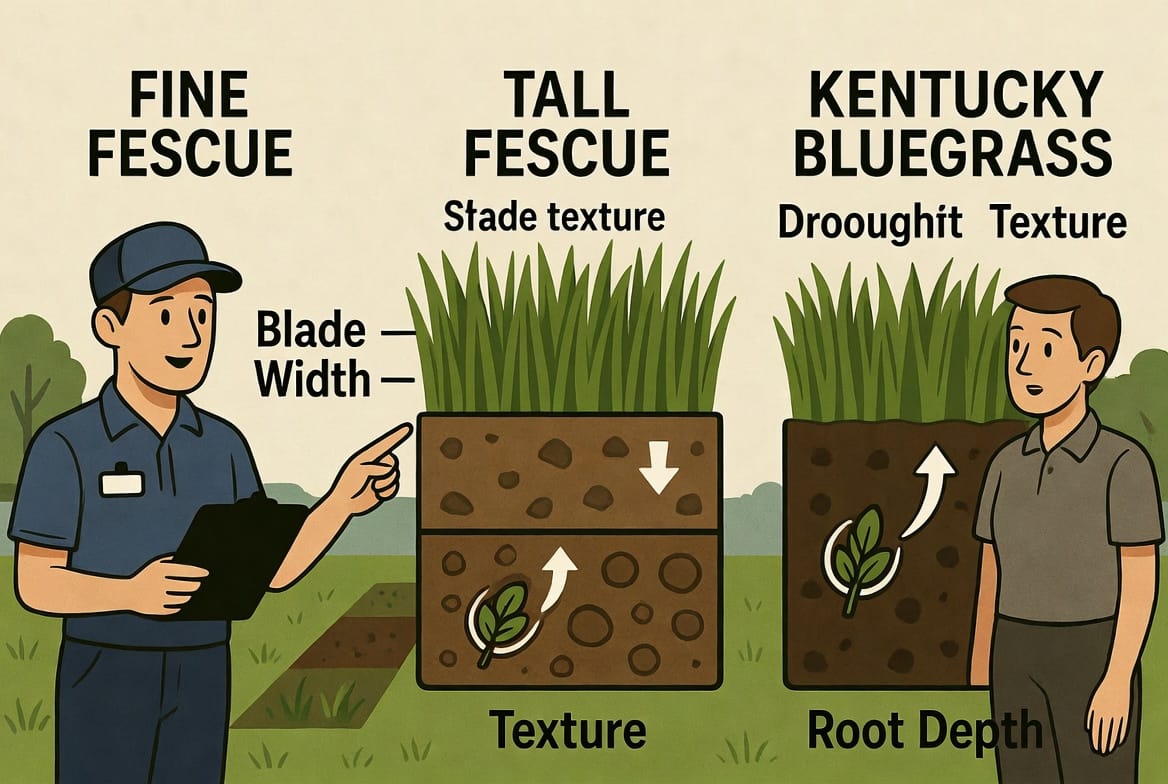
When evaluating options, the differences become clear. Kentucky bluegrass demands full sun and frequent watering, quickly thinning in shade. Tall fescue offers drought tolerance but produces a coarser texture that feels less luxurious. Fine fescue combines the best traits—superior shade performance, lower resource needs, and a refined appearance—making it the clear winner for challenging sites.
The Top Benefits of Choosing Fine Fescue
Property owners who install fine fescue consistently report these advantages:
- Shade tolerance that keeps lawns green under tree canopies
- Low nitrogen requirement that cuts fertilizer costs by up to 50%
- Drought resistance that reduces water bills and conserves resources
- Reduced mowing frequency that saves time and equipment wear
- Natural disease resistance in low-light environments
- Improved soil health through efficient root systems
These benefits translate into lower maintenance costs, fewer headaches, and a more sustainable landscape.
Overcoming Common Challenges with Confidence
Even the best grasses face occasional hurdles. Fine fescue may show minor thinning during extreme heat or prolonged drought, but quick recovery follows with light supplemental watering. Proper variety selection and soil preparation minimize insect pressure. When issues arise, our experienced team provides targeted solutions that restore health without disrupting the low-maintenance profile you expect.
Why Fine Fescue Delivers Long-Term Value
Investing in a fine fescue lawn means choosing sustainability and simplicity. Over time, you spend less on water, fertilizer, and labor while enjoying a consistently attractive landscape. The grass adapts to your site’s unique conditions, delivering reliable performance season after season.
Homeowners across varying climates report higher satisfaction and fewer complaints after switching to fine fescue. The transformation is visible within the first growing season and continues to improve as the root system strengthens.
Ready to Grow Grass Where Others Fail?
A beautiful, resilient lawn is within reach—even in the shadiest, driest spots on your property. Fine fescue offers the perfect combination of shade tolerance, drought resistance, and low-maintenance care that busy homeowners and property managers demand.
Contact our lawn care specialists today to learn more about fine fescue options tailored to your specific site conditions. Whether you need a full renovation or strategic overseeding, we provide expert guidance and professional installation that guarantees results.
Get a Low-Maintenance Fine Fescue Lawn Today