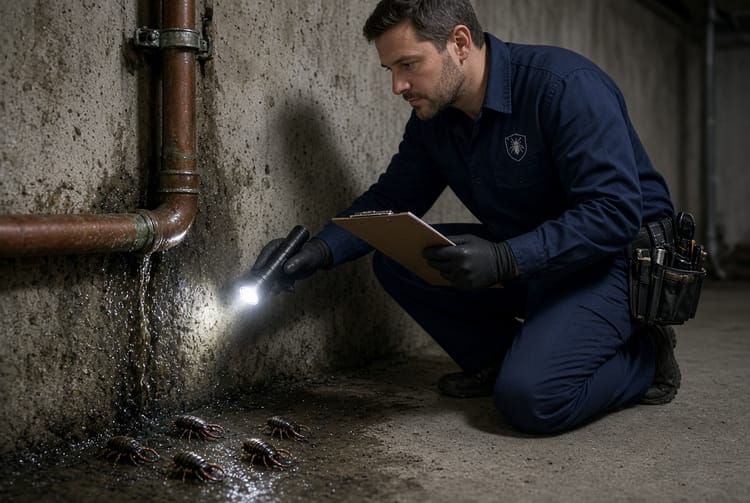
The Crayfish Burrow: Managing Aquatic Crustaceans on Property
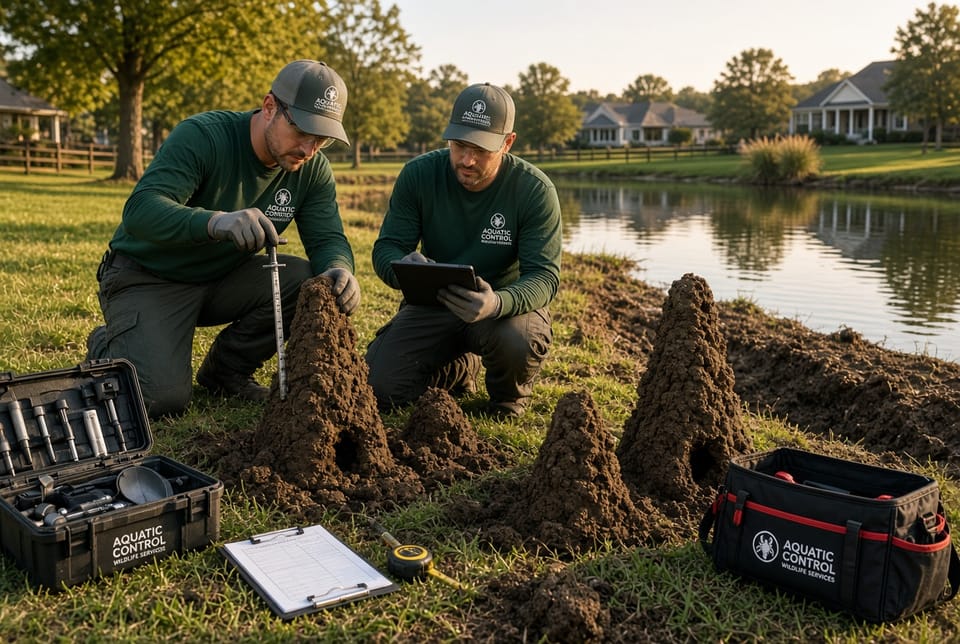
Property owners near ponds, streams, lakes, or even poorly drained yards often notice unusual mounds of soil appearing overnight. These are not random dirt piles. They signal the presence of crayfish—also known as crawfish or crawdads—burrowing into banks and lawns. Left unchecked, these aquatic crustaceans can undermine turf, accelerate erosion, and create ongoing moisture-related challenges. Understanding their behavior, recognizing early signs, and applying proven management steps restores stability and protects your landscape investment.
Manage Crayfish Burrows Today – Call Now!
This guide delivers clear, actionable insight into crayfish activity on residential and commercial properties. It focuses on practical solutions that reduce habitat appeal, address existing burrows, and prevent recurrence—always with a calm, results-oriented approach.
Understanding Crayfish Behavior Around Water Features
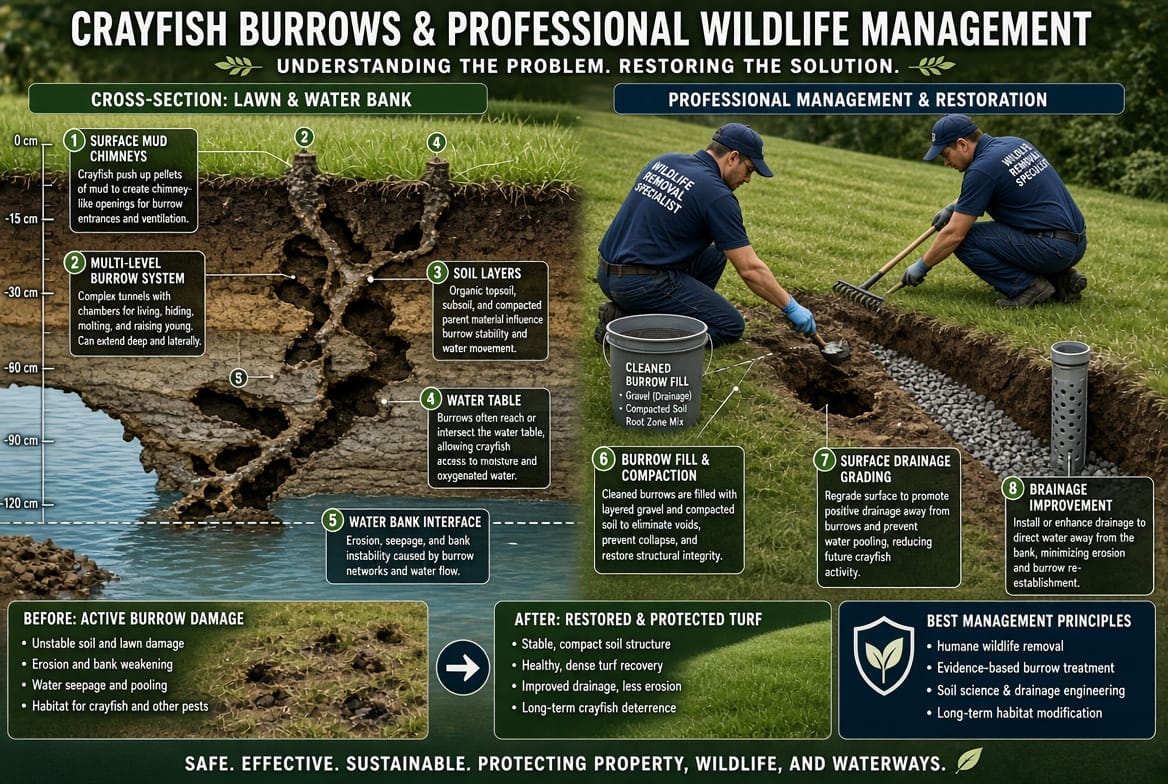
Crayfish are freshwater crustaceans that thrive in moist environments. They dig extensive tunnel systems primarily for shelter, protection from predators, and regulation of moisture during dry spells or seasonal changes. When surface water levels drop or soil remains consistently damp, they construct vertical shafts that open at the surface with distinctive mud chimneys.
These chimneys form as the crayfish excavates soil and packs it into tower-like structures. Burrows can extend several feet deep and branch horizontally under lawns, garden beds, or pond banks. Activity peaks at night, when individuals forage for decaying plant matter, small invertebrates, and algae. During the day they remain hidden, making the chimneys the most visible evidence of occupancy.
On properties with irrigation systems, leaking pipes, or compacted soil that holds water, conditions become ideal. Crayfish do not intentionally target human structures, yet their natural digging can soften ground, create voids, and contribute to surface settling. Recognizing this behavior removes the element of surprise and shifts focus toward effective control.
Key aspects of their lifestyle include:
- Preference for soft, saturated soils near permanent or temporary water sources
- Construction of chimneys that can reach several inches high and serve as both entrance and ventilation
- Seasonal movement patterns that intensify after heavy rains or during drought when they seek deeper moisture
- Ability to survive in temporary burrows even when surface water disappears for short periods
By mapping these patterns, property owners gain the upper hand. Reducing excess moisture and disrupting tunnel networks interrupts the cycle without harsh measures.
Recognizing the Signs of Crayfish Activity
Early detection prevents minor presence from expanding into widespread landscape disruption. The most reliable indicators appear on the surface and require only careful visual inspection.
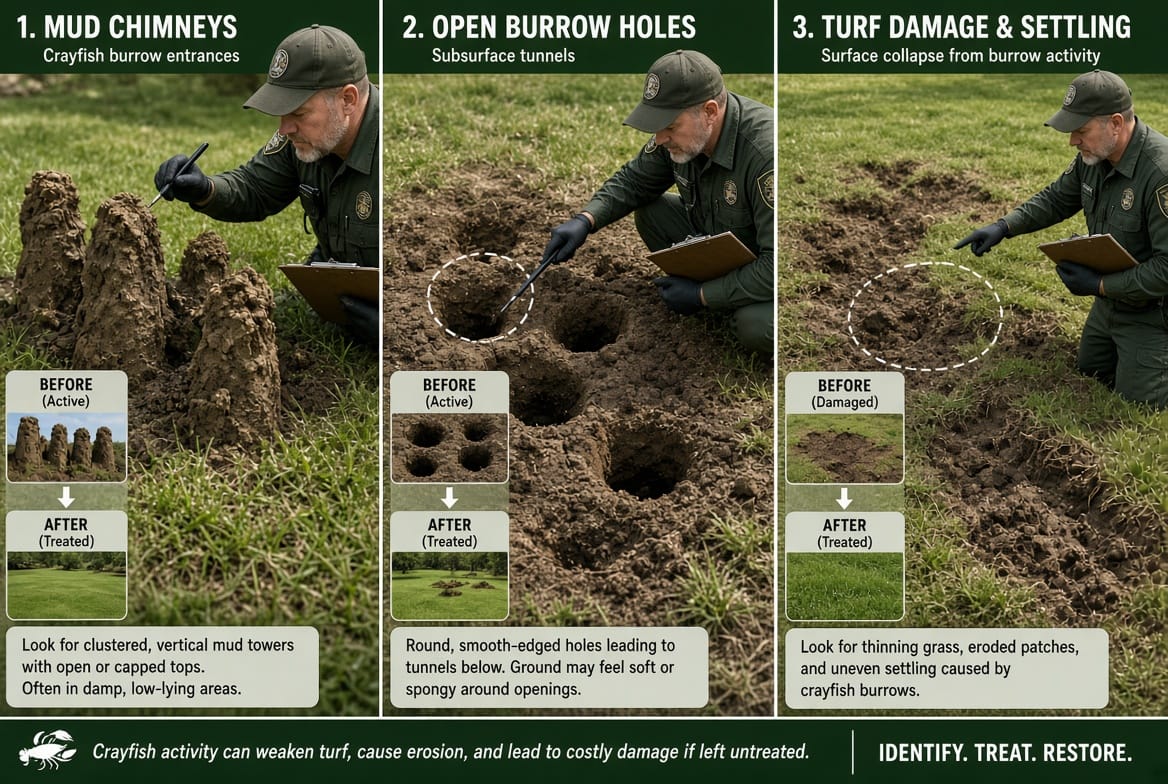
Mud chimneys stand out first. These cylindrical or conical piles of excavated soil often cluster near water edges, low spots in lawns, or along drainage swales. Fresh chimneys feel damp and crumbly; older ones harden and may partially collapse.
Surface holes accompany the chimneys. Look for round openings roughly the diameter of a finger or larger, sometimes partially hidden by grass. Soft or spongy ground around these spots signals underlying tunnels.
Additional clues include:
- Localized sinking or uneven turf that feels hollow underfoot
- Accelerated bank erosion along ponds or ditches where tunnels weaken the soil structure
- Increased standing water in areas that previously drained well, as burrows can alter subsurface flow
- Occasional sightings of the crayfish themselves at dusk near water margins
A systematic walk of the property after rainfall reveals the fullest picture. Note clusters of activity rather than isolated chimneys; concentration indicates a favorable micro-habitat that benefits from targeted attention.
Potential Risks to Lawns, Banks, and Overall Property Stability
While crayfish pose no direct threat to people or pets under normal circumstances, their burrowing introduces several landscape concerns. Softened soil around tunnels can lead to uneven surfaces that complicate mowing or create trip hazards. On steeper banks, repeated excavation accelerates soil loss into adjacent water, increasing turbidity and requiring more frequent shoreline repair.
Moisture retention within abandoned or active tunnels may encourage secondary issues such as fungal growth in turf or the attraction of other moisture-loving organisms. In extreme cases near foundations or retaining walls, extensive networks contribute to gradual settling—though this remains uncommon when addressed promptly.
The reassuring reality is that these risks remain fully manageable. Crayfish populations respond well to habitat modification. Property owners who act at the first appearance of chimneys typically restore firm ground within a single season. Professional intervention further accelerates recovery and provides long-term monitoring.
Practical Management Strategies That Deliver Results
Successful control rests on three coordinated pillars: moisture reduction, physical burrow treatment, and, when needed, professional removal. Each step builds on the previous one for comprehensive results.
Reduce Excess Moisture Across the Site
Crayfish abandon areas that no longer supply reliable dampness. Begin by correcting drainage problems:
- Grade low spots so water flows toward intended outlets rather than pooling
- Repair or redirect irrigation heads that oversaturate lawns
- Clear clogged French drains, downspouts, or culverts
- Install or maintain buffer plantings that absorb excess water without creating dense shade preferred by some crustaceans
Consistent surface drying discourages new burrow establishment and encourages existing occupants to relocate toward more suitable natural habitats.
Fill and Compact Existing Burrows
Once moisture is under control, address the tunnels themselves. Carefully collapse surface chimneys and fill openings with a mixture of native soil and coarse sand or fine gravel. Compact each layer to eliminate air pockets that could invite reoccupation. Avoid simply covering holes; thorough filling from the entrance downward restores structural integrity.
For deeper systems, repeated filling after rainfall often proves effective, as residual water reveals remaining voids. Monitor treated areas for several weeks and re-treat any reappearing openings.
Engage Professional Removal When Populations Persist
Large or established colonies benefit from specialist techniques that locate and extract individuals humanely while sealing complex tunnel networks. Trained teams assess the full extent of activity, apply targeted habitat adjustments, and provide follow-up inspections. This approach proves especially valuable on properties with extensive water frontage or where DIY efforts have only partially succeeded.
Combining all three elements—moisture management, filling, and professional support—creates lasting stability. Most properties show marked improvement within weeks, with complete resolution following a full seasonal cycle of monitoring.
Long-Term Prevention and Property Resilience
After active management, simple ongoing practices keep crayfish pressure low. Maintain consistent drainage, avoid prolonged saturation from overwatering, and inspect water edges seasonally. Healthy, dense turf outcompetes bare soil that invites digging. Where banks require reinforcement, native vegetation with strong root systems stabilizes soil more effectively than hardscape alone.
Periodic professional check-ups, especially after major weather events, catch any new activity early. Property owners who integrate these habits rarely experience significant recurrence.
Restoring Confidence in Your Outdoor Spaces
Crayfish burrows represent a manageable water-related challenge rather than an unsolvable crisis. By learning their behavior, identifying signs promptly, and applying moisture reduction, filling techniques, and expert assistance when required, any property can regain firm, attractive ground. The process emphasizes prevention and precision, delivering reliable outcomes without unnecessary disruption.
Take the next step toward a stable, crayfish-free landscape. Manage crayfish burrows on your property.
Call Now for Expert Aquatic Crustacean Control