The Crabgrass Prevention Window: Timing Pre-Emergent Application for Maximum Effectiveness
Crabgrass is one of the most persistent and frustrating weeds homeowners face each year. It spreads aggressively, chokes out desirable grass, and creates patchy, unsightly lawns that require far more effort to fix later. The good news? You can stop it before it ever starts. The secret lies in understanding and acting within the crabgrass prevention window—a narrow but powerful period defined by soil temperature.
Stop Crabgrass Before It Starts – Call Now!
At our lawn care service, we’ve helped thousands of homeowners achieve thick, green, crabgrass-free lawns simply by getting the timing right. Pre-emergent herbicides form an invisible barrier in the soil that prevents crabgrass seeds from germinating. But that barrier only works when applied at the exact right moment. Miss it, and you’ll spend the rest of the season fighting an uphill battle.
In this comprehensive guide, we’ll walk you through the science, the monitoring techniques, the natural signs, and the real-world consequences of missing the window. By the end, you’ll know exactly when and how to act for maximum effectiveness.
Why Timing Is Everything for Pre-Emergent Success
Pre-emergent herbicides don’t kill existing weeds—they stop new ones from emerging. They create a protective layer that blocks crabgrass seeds from breaking through the soil surface. For this barrier to form properly, the application must happen before the seeds begin to germinate.
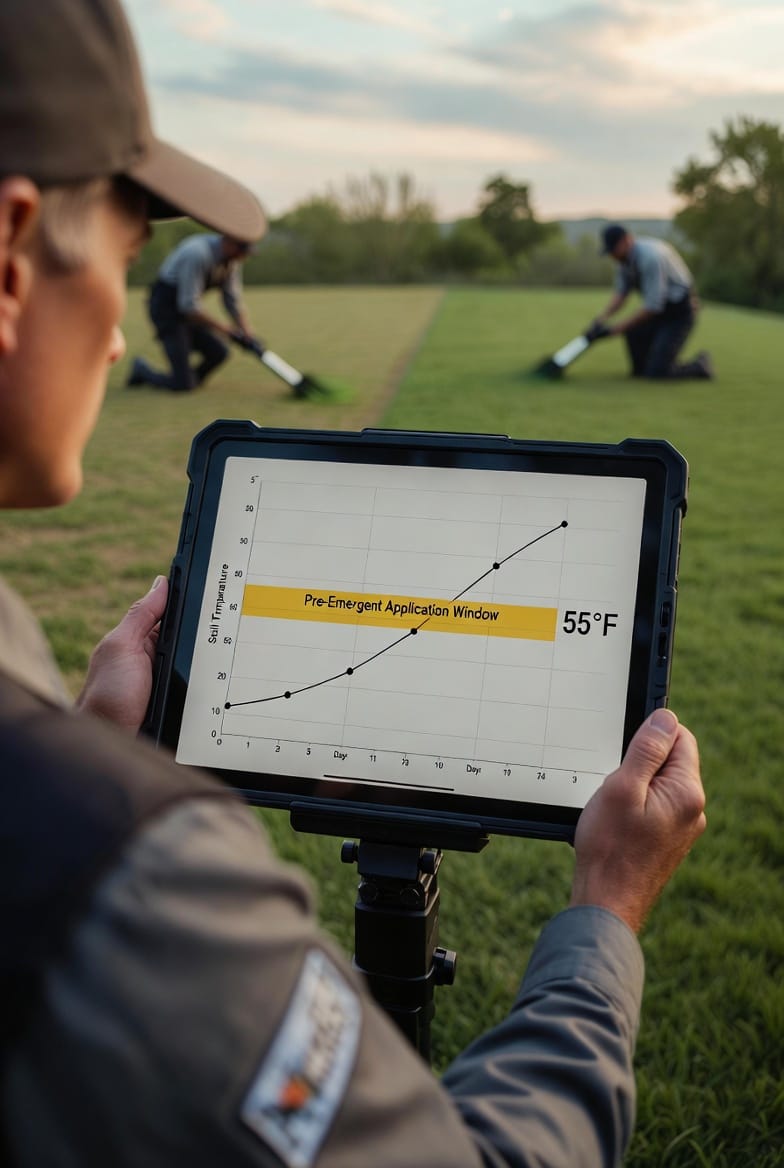
Crabgrass germination is triggered by one key factor: soil temperature. When the soil at a depth of one to two inches consistently reaches 55°F for three consecutive days, crabgrass seeds wake up and start growing. Apply too early, and the product may break down before the threat arrives. Apply too late, and the seeds have already begun their invasion.
This 55°F for 3 days window is the gold standard used by professional lawn care teams nationwide. It gives the herbicide time to activate and bond with soil particles, creating a long-lasting shield that lasts through the critical spring germination period.
The Science Behind the 55°F Soil Temperature Threshold
Soil temperature, not air temperature, controls crabgrass germination. Air can be warm while the ground stays cool, or vice versa. That’s why relying on calendar dates or weather apps alone leads to inconsistent results.
Research and field experience show that crabgrass begins germinating reliably once soil holds steady at 55°F for three days in a row. Why three days? It ensures the temperature isn’t just a brief spike caused by a sunny afternoon—it’s a sustained warming trend that signals spring has truly arrived for the weed seeds.
Different soil types warm at different rates. Sandy soils heat up faster than heavy clay soils. Shaded areas lag behind sunny spots. That’s why we always recommend taking multiple readings across your lawn and averaging them for the most accurate picture.
Bold reminder: The crabgrass prevention window is short—often just 7 to 14 days depending on your location and spring weather patterns. Acting within this window delivers up to 90% control when combined with proper application techniques.
How to Monitor Soil Temperature Accurately
Monitoring soil temperature is simpler than most homeowners realize, and it’s the single most important step you can take for effective pre-emergent application.
Here’s exactly how to do it right:
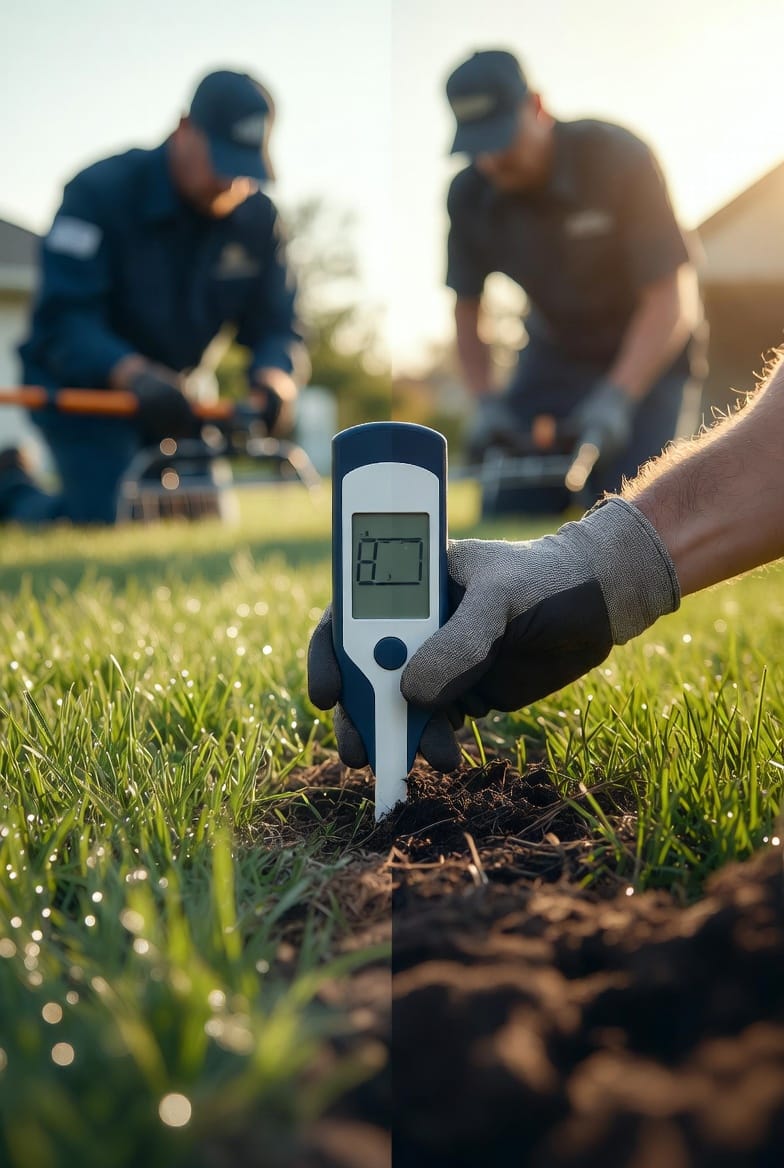
- Use the right tool — A quality soil thermometer (digital probe style preferred) inserted 1–2 inches deep.
- Take readings at the right time — Measure in the morning before the sun heats the surface.
- Check multiple locations — Test sunny areas, shaded spots, and slopes separately, then average the results.
- Track daily — Begin checking in early March (or February in warmer zones) and continue through April.
- Record consistently — Note the date and temperature each day until you hit 55°F for 3 consecutive days.
Many of our clients tell us they feel confident once they start tracking. It removes the guesswork and gives you peace of mind knowing you’re protecting your investment at the perfect moment.
If you prefer not to monitor yourself, our lawn care professionals handle this for you. We use calibrated tools and local weather data to pinpoint the exact day your lawn needs treatment—no stress, no missed windows.
Natural Signs That Confirm It’s Time to Apply
While soil temperature is the most reliable indicator, nature provides helpful visual cues that align perfectly with the 55°F threshold.
- Forsythia blooming — When bright yellow forsythia flowers open, it’s your signal to prepare for application within days.
- Soil temperature at 55°F — Apply immediately once this holds for three days.
- Soil feels warm to the touch — A quick hand test in the morning can confirm the trend.
These signs work together. When you see forsythia in full bloom and your soil thermometer confirms 55°F, you know the crabgrass prevention window is wide open.
Pro tip: Mark your calendar the day forsythia begins blooming in your neighborhood. Then double-check with your soil thermometer. This simple combination has helped our clients achieve near-perfect results year after year.
What Happens When You Miss the Crabgrass Prevention Window
Missing the window is more costly than most realize. Once crabgrass germinates, it grows rapidly, producing thousands of seeds per plant. Those seeds can remain viable in your soil for years.
Consequences include:
- Dense crabgrass patches that crowd out your turf grass and create thin, weak areas.
- Increased water and fertilizer needs because crabgrass is a heavy consumer of resources.
- Higher long-term costs — post-emergent treatments are more expensive, require multiple applications, and can stress your lawn.
- Reduced curb appeal — unsightly clumps that make even the best-maintained yards look neglected.
- Extra labor — hand-pulling or repeated chemical treatments that take time away from enjoying your outdoor space.
We’ve seen lawns go from beautiful to battle-scarred in a single season simply because the pre-emergent was applied two weeks too late. The good news is that with proper timing, this scenario is completely avoidable.
Best Practices for Applying Pre-Emergent Herbicide
Once you confirm the 55°F for 3 days window:
- Choose a high-quality pre-emergent product labeled for crabgrass.
- Apply evenly using a calibrated spreader or professional spray equipment.
- Water lightly immediately after application (usually ½ inch) to activate the barrier.
- Avoid heavy foot traffic or mowing for 24–48 hours.
- Follow up with your regular lawn care program—healthy dense turf is your second line of defense.
Professional application ensures even coverage, proper rates, and timing down to the day. Many homeowners who once struggled with DIY results now rely on our service for consistent, worry-free protection.
Regional Timing Variations Across the US
Spring arrives at different times depending on your location. Northern states may see the window open in mid-to-late April, while southern regions could trigger as early as February. Microclimates within your own yard matter too—south-facing slopes warm faster than north-facing ones.
Our technicians are trained to read local conditions and adjust timing precisely for your property. This personalized approach is why clients in every climate zone report outstanding crabgrass control.
Common Mistakes That Reduce Effectiveness
Even experienced homeowners sometimes get timing wrong. Avoid these pitfalls:
- Applying on a calendar date instead of soil temperature.
- Using last year’s leftover product that may have lost potency.
- Skipping the light watering step after application.
- Applying during heavy rain forecasts that wash the product away before activation.
By focusing on soil temperature and following professional guidelines, you eliminate these risks entirely.

Building a Crabgrass-Free Lawn for Years to Come
Proper timing of pre-emergent application is just one piece of a complete lawn care strategy. When combined with regular mowing at the correct height, balanced fertilization, and consistent watering, your lawn becomes naturally resistant to weeds.
Healthy, dense turf shades the soil, making it harder for crabgrass seeds to find the light and space they need. By staying ahead of the crabgrass prevention window each spring, you set your lawn up for success all season long.
Stop Crabgrass Before It Starts
You don’t have to watch crabgrass take over your yard this year. The crabgrass prevention window is your opportunity to act decisively and enjoy the beautiful lawn you deserve.
Our expert team monitors soil temperatures daily, applies pre-emergent at the precise moment for maximum effectiveness, and backs every treatment with our satisfaction guarantee.
Protect Your Lawn This Spring – Schedule Your Pre-Emergent Today
We’re ready to help you protect your lawn with professional precision and care. Your thick, green, weed-free yard is just one perfectly timed application away.