The Boiler Pressure Relief Valve: Why Water Leaks from Your Heating System
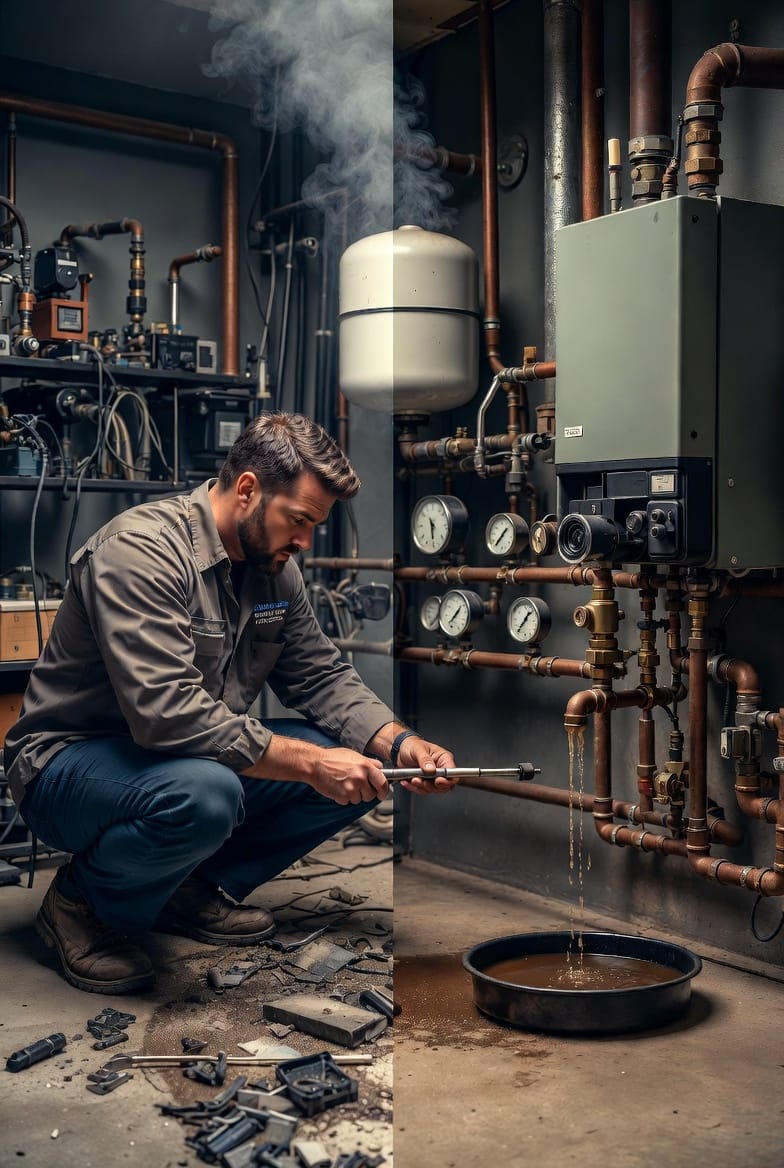
Hydronic heating systems provide efficient, even warmth to homes across Texas, including many Dallas-area properties. Yet homeowners often face a concerning issue: unexplained water leaks from the boiler pressure relief valve. This safety component is crucial, but when it malfunctions, it signals potential problems that demand prompt attention.
Fix Your Leaking Pressure Relief Valve Today
In this comprehensive guide, we explore the role of the pressure relief valve, common causes of leaks, warning signs, and reliable solutions. Understanding this helps protect your system, prevent costly damage, and ensure reliable comfort during chilly winters.
If you notice persistent dripping or pooling water near your boiler, rest assured — professional intervention can restore safety and efficiency quickly.
Understanding Hydronic Heating Systems
Hydronic systems circulate hot water through pipes and radiators or in-floor tubing to heat your living spaces. Unlike forced-air systems, they rely on a closed-loop design where water is heated in a boiler and continuously recirculated.
This closed environment maintains specific pressure levels for optimal performance. However, as water heats, it expands, increasing system pressure. Without proper controls, this buildup could lead to dangerous failures.
Key components working together include:
- The boiler itself
- Expansion tank (absorbs volume changes)
- Pressure gauge
- Pressure relief valve (the critical safety release)
These elements maintain balance. When they function correctly, your system delivers consistent heat without issues.
What Does the Boiler Pressure Relief Valve Do?
The pressure relief valve (often called the PRV or safety valve) acts as your system's primary safeguard. It automatically opens to release excess pressure and water when levels exceed safe limits — typically around 30 psi for residential boilers.
This prevents catastrophic ruptures in pipes, the boiler tank, or connected components. By discharging small amounts of water, it relieves pressure and protects your entire hydronic setup.
In normal operation, the valve remains tightly closed. Occasional brief discharges during startup or high-demand periods are acceptable. However, constant leaking indicates a problem requiring attention.
Homeowners in Dallas and surrounding suburbs often rely on these systems in basements or utility closets, where leaks can go unnoticed until water damage appears.
Recognizing Signs of a Failing Pressure Relief Valve
Early detection prevents escalation. Watch for these common indicators:
- Persistent dripping or steady water flow from the valve's discharge pipe
- Puddles or wet spots on the floor beneath the boiler
- Reduced heating efficiency as the system loses water and pressure
- Frequent cycling of the boiler as it struggles to maintain temperature
- Unusual noises like gurgling or banging in pipes
- Rising or fluctuating readings on the pressure gauge
If you observe any of these, avoid ignoring them. Continued operation with a faulty valve risks water damage, corrosion, or even boiler failure.
Pro Tip: Place a bucket or pan under the discharge pipe temporarily while arranging professional service to contain leaks safely.
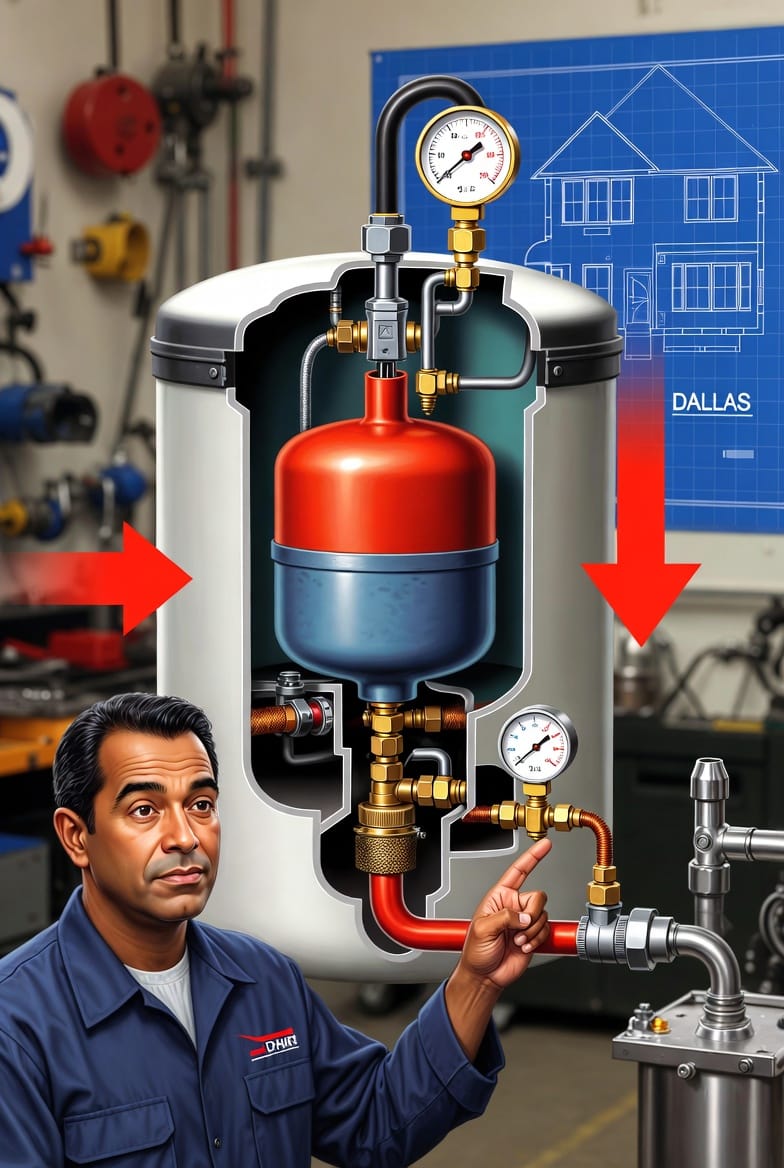
Primary Causes of Water Leaks from the Relief Valve
Several issues commonly trigger inappropriate discharge. Identifying the root cause is essential for lasting repairs.
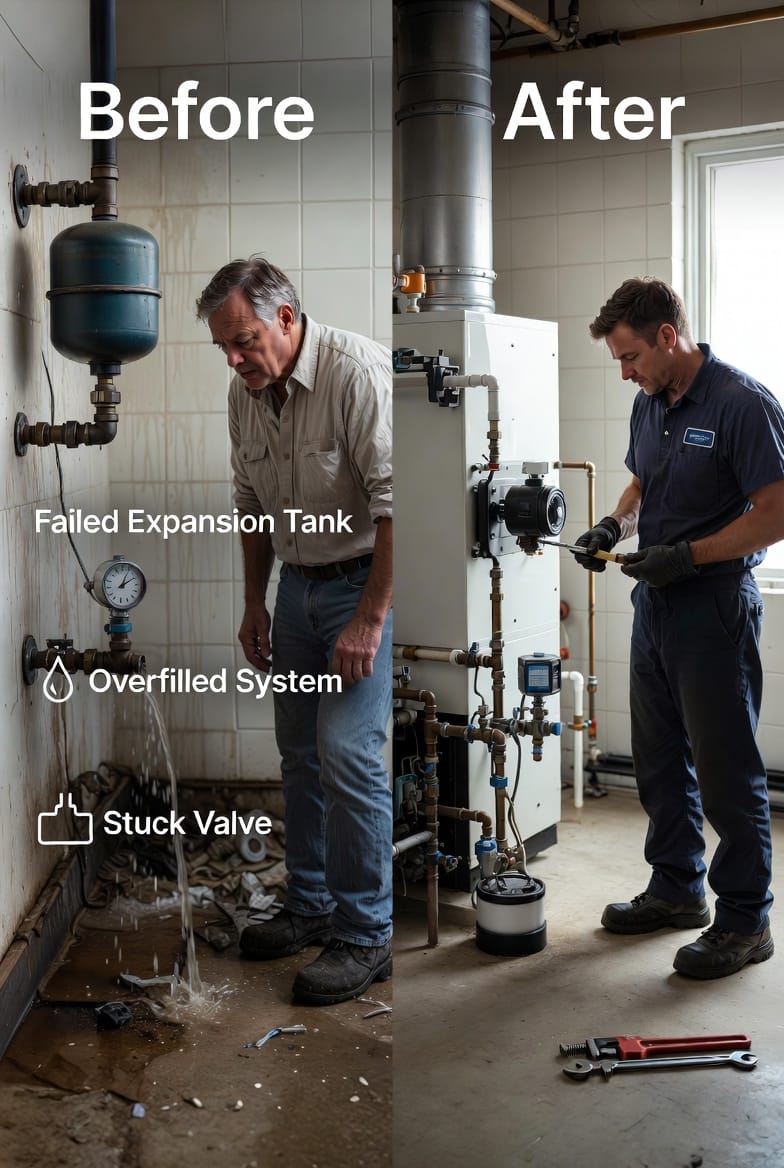
1. Expansion Tank Failure
The expansion tank absorbs increased water volume as it heats. When its diaphragm or bladder fails, pressure spikes force the relief valve to activate repeatedly.
This is one of the most frequent causes in older systems. Without proper absorption, even normal heating cycles cause leaks.
2. Overfilled System or Incorrect Pressure Settings
Adding too much water manually or improper initial filling creates excessive baseline pressure. Faulty automatic fill valves can also contribute by continuously introducing more water.
In Texas homes with varying seasonal demands, improper maintenance exacerbates this risk.
3. Stuck or Worn Valve Itself
Mineral buildup, corrosion, or age can cause the valve seat to stick open. Once compromised, it fails to reseal properly, leading to chronic dripping.
Other contributing factors include:
- Thermal expansion issues from rapid temperature changes
- System blockages restricting normal flow
- Pump problems creating pressure imbalances
- General wear after 5–10 years of service
Diagnosing the Problem Safely
Diagnosis requires caution. Never attempt complex repairs without proper training, as boilers involve high temperatures and pressurized systems.
Start by:
- Checking the pressure gauge when the system is cold (should read 12–20 psi typically)
- Inspecting the expansion tank for proper air charge
- Verifying the discharge pipe routes safely outdoors or to a drain
- Noting any error codes on modern boiler displays
Professional technicians use specialized tools to test components accurately. They can distinguish between a simple valve replacement and deeper system issues.
Effective Solutions and Repair Steps
Addressing leaks promptly restores safety and efficiency. Common repairs include:
- Replacing the pressure relief valve — a relatively straightforward procedure when it's the sole issue.
- Repairing or replacing the expansion tank to restore proper pressure absorption.
- Draining and refilling the system to correct overfill conditions.
- Flushing the system to remove sediment and mineral deposits.
- Upgrading components for better longevity in high-demand homes.
After repairs, technicians verify proper pressure settings and test the full system. Modern replacements often feature improved durability and easier maintenance access.
For Dallas homeowners, local conditions like hard water can accelerate wear, making regular professional service particularly valuable.
Preventing Future Boiler Pressure Issues
Proactive maintenance minimizes risks and extends system life. Follow these best practices:
- Schedule annual boiler inspections by qualified hydronic specialists.
- Monitor pressure gauge readings monthly during heating season.
- Test the relief valve annually (gentle lift test — never force it).
- Ensure proper expansion tank sizing and air charge.
- Address any water quality concerns with appropriate treatments.
- Keep the boiler area clean and well-ventilated.
These steps reduce unexpected leaks and help maintain optimal efficiency, potentially lowering energy bills.
The Risks of Ignoring Leaks
Continuing to operate a leaking system can lead to:
- Extensive water damage to flooring, walls, and structural elements
- Corrosion throughout the hydronic loop
- Reduced heating performance and higher utility costs
- Potential boiler failure requiring expensive replacement
- Safety hazards from compromised pressure control
Timely action protects your investment and maintains a safe, comfortable home environment.
When to Call Professional Hydronic Heating Experts
While basic monitoring is helpful, valve and boiler repairs demand expertise. Certified technicians possess the knowledge, tools, and parts to resolve issues correctly the first time.
They also provide valuable insights into overall system health, recommending upgrades when beneficial.
Stop boiler leaks at the safety valve. If you're experiencing water dripping from your pressure relief valve or other hydronic heating concerns, don't wait. Our experienced team serves Dallas and surrounding Texas communities with prompt, reliable service to restore your system's safety and performance.
Expert Hydronic Heating Repair – Call Now!