The Bat Guano Cleanup: Health Risks and Professional Remediation
Bat guano poses serious health threats that many homeowners underestimate. When bats roost in attics, walls, or chimneys, their droppings accumulate rapidly and create hidden dangers. Professional bat guano cleanup is not optional — it is essential for protecting your family’s health and restoring a safe living environment.
Call Now for Safe Bat Guano Cleanup
Leaving bat droppings untreated can lead to severe respiratory illnesses. Histoplasmosis, a fungal infection caused by spores in dried guano, is the primary concern. Understanding these risks and the proper remediation process helps homeowners make informed decisions.
Understanding the Hidden Danger of Bat Droppings
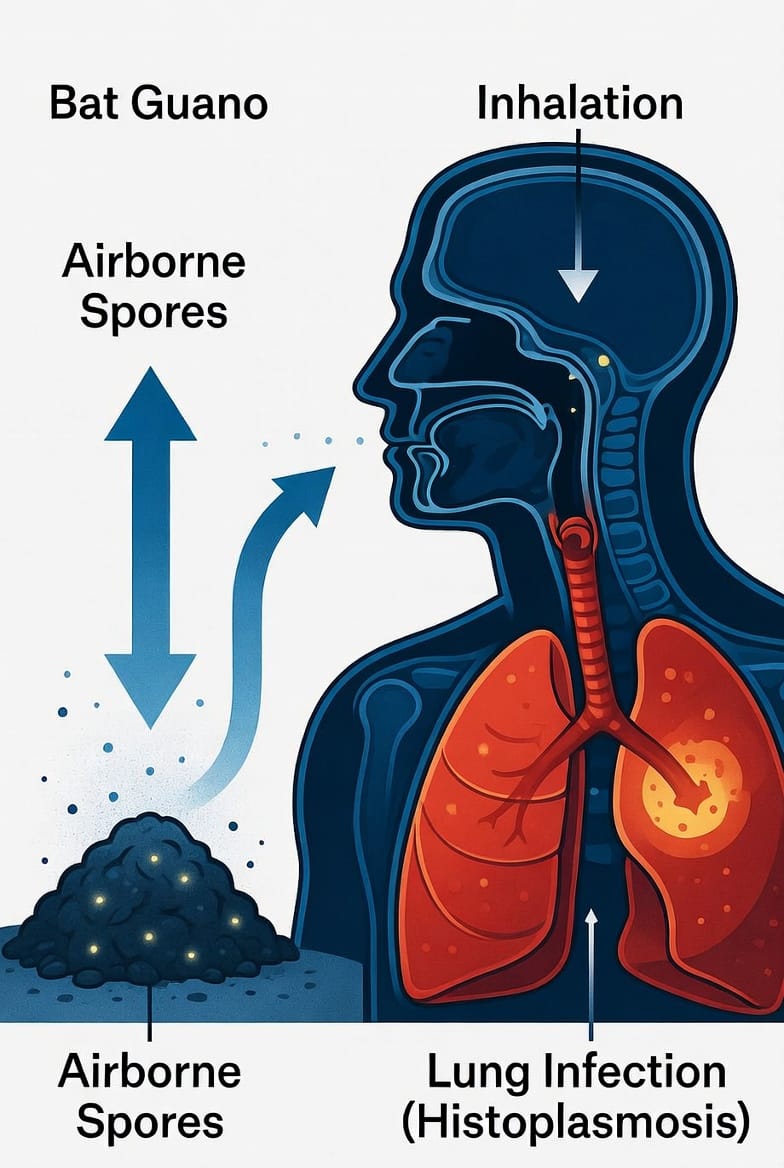
Bat guano looks harmless at first glance — dark, crumbly, and similar to soil. However, as it dries, it becomes a breeding ground for Histoplasma capsulatum, a microscopic fungus. When disturbed during cleaning or renovation, these fungal spores become airborne and easily inhaled.
Once inside the lungs, the spores can trigger histoplasmosis. Most healthy adults experience mild flu-like symptoms, but the infection can become life-threatening for infants, elderly individuals, pregnant women, and anyone with a weakened immune system.
Key health risks include:
- Acute respiratory distress and persistent coughing
- Chronic lung disease resembling tuberculosis in severe cases
- Disseminated histoplasmosis that spreads beyond the lungs to other organs
- Long-term fatigue and reduced quality of life even after recovery
Children playing in affected areas or homeowners attempting DIY cleanup face the highest exposure. Airborne spores travel through HVAC systems, spreading contamination throughout the entire house.
Why Professional Bat Guano Cleanup Is Essential
Attempting to clean bat guano yourself often worsens the problem. Sweeping, vacuuming with standard equipment, or using fans stirs up millions of fungal spores, turning a localized issue into a whole-home hazard.
Professional remediation follows strict safety protocols that protect both workers and occupants. Certified technicians use specialized equipment designed for biohazard cleanup, ensuring spores are contained and safely removed.
Homeowners who choose DIY methods risk:
- Cross-contamination of living spaces
- Incomplete removal leaving hidden spores behind
- Personal health exposure without proper respiratory protection
- Structural damage from improper handling of contaminated insulation
Professional wildlife removal experts understand local bat behavior, legal protections for bats, and the most effective ways to eliminate both the guano and the source of future infestation.
The Complete Professional Bat Guano Remediation Process
Effective bat guano cleanup follows a systematic, multi-step approach. Each stage is designed to contain, remove, disinfect, and restore the affected area while minimizing health risks.
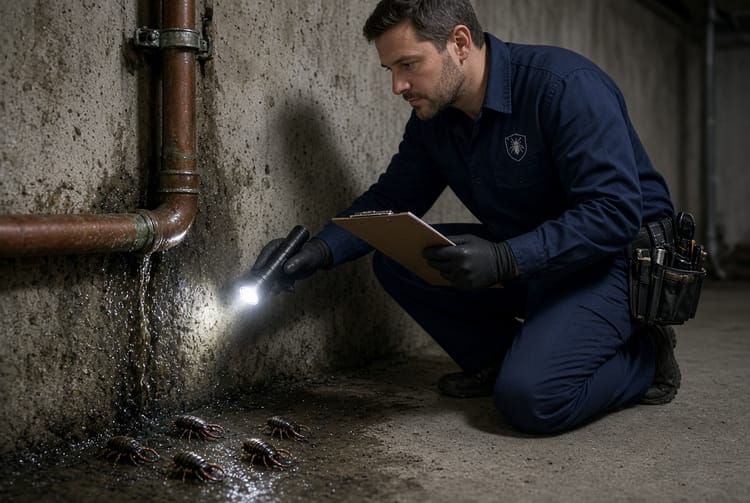
Step 1: Thorough Inspection and Containment
Technicians begin with a detailed assessment of the infestation extent. They identify all roosting sites and establish containment zones using heavy-duty plastic sheeting and negative air pressure machines. This prevents spores from migrating into clean areas of the home.
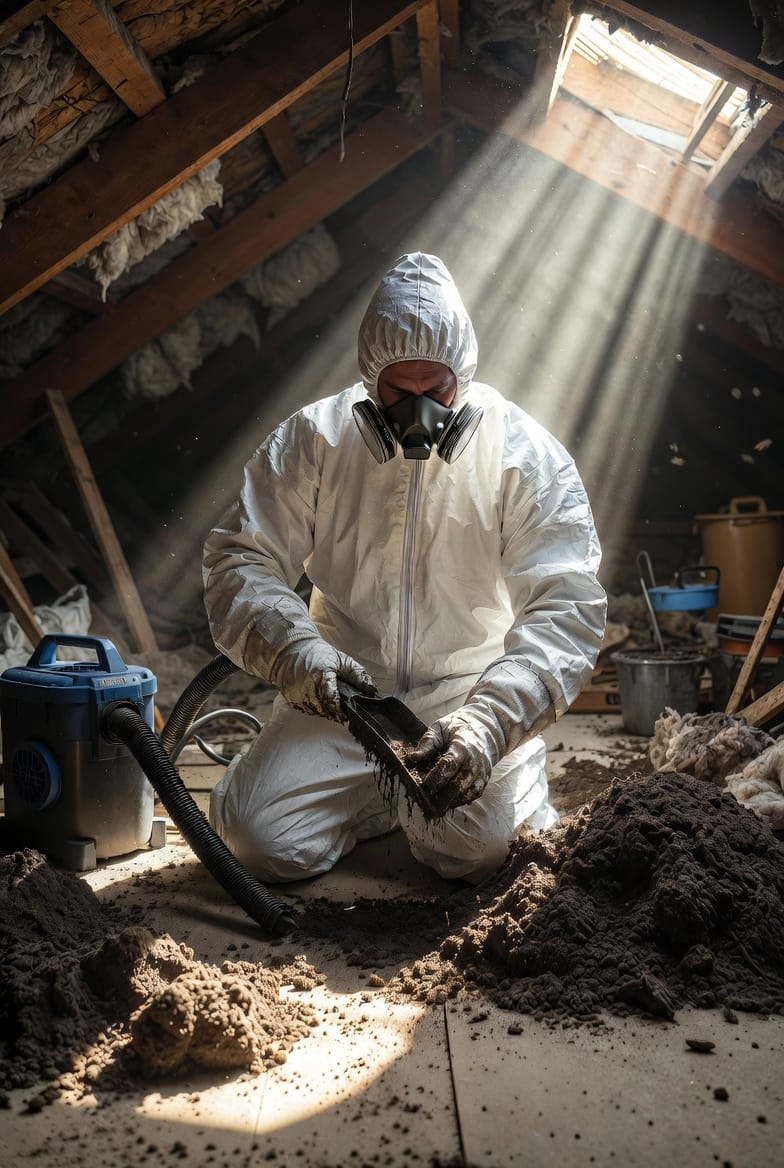
Step 2: Safe Removal of Bat Guano
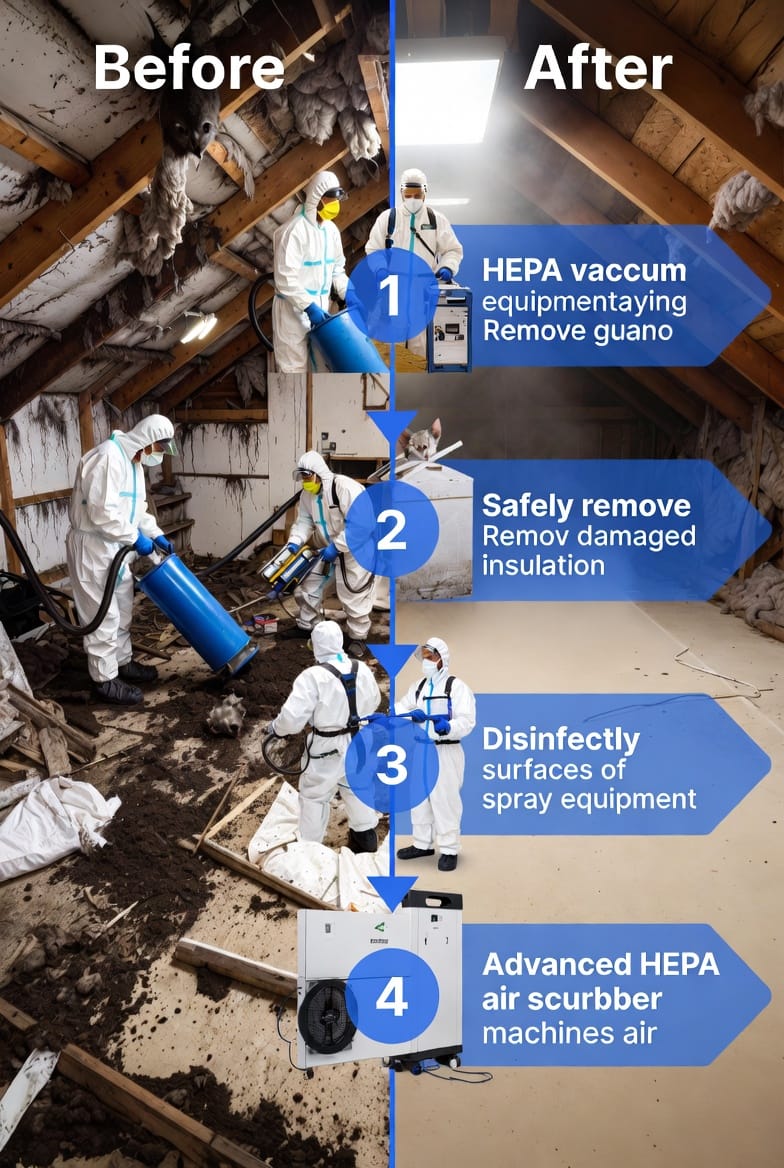
Using HEPA-filtered vacuums and specialized scraping tools, crews carefully remove bulk droppings. Every action prioritizes containment. Workers wear full hazmat suits, respirators with appropriate filters, and double-layered gloves to eliminate any risk of exposure.
Step 3: Insulation Removal and Disposal
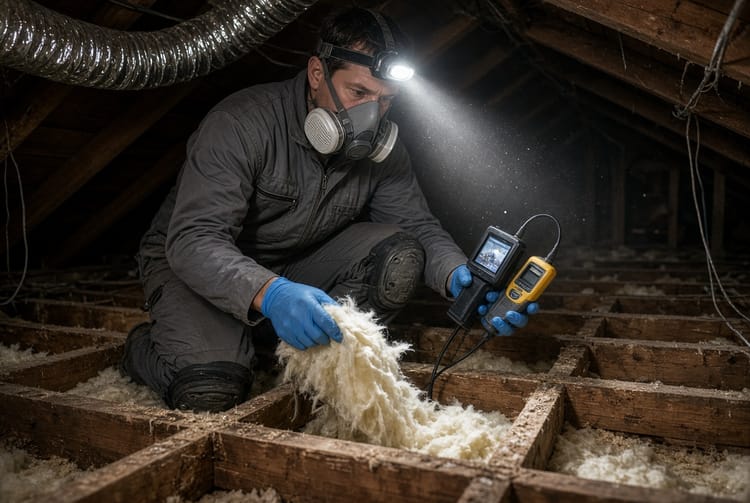
Bat guano often saturates attic insulation, making it impossible to clean effectively. Professionals remove and dispose of all contaminated insulation as biohazard waste. Fresh, clean insulation is installed only after the area passes rigorous safety checks.
Step 4: Surface Disinfection and Sanitization
All exposed surfaces — wood beams, drywall, ductwork, and flooring — receive hospital-grade disinfectants specifically effective against fungal spores. Multiple applications ensure complete neutralization of any remaining Histoplasma capsulatum.
Step 5: Air Scrubbing and Quality Testing
Powerful HEPA air scrubbers run continuously to filter microscopic particles from the air. Post-cleanup testing with air sampling equipment confirms that spore levels have returned to safe, normal background levels.
Step 6: Prevention and Bat Exclusion
Cleanup alone is not enough. Professionals install one-way bat exclusion devices and seal all entry points to prevent future roosting. This long-term solution protects your home while respecting wildlife regulations that often prohibit harming bats.
Health Benefits of Professional Remediation
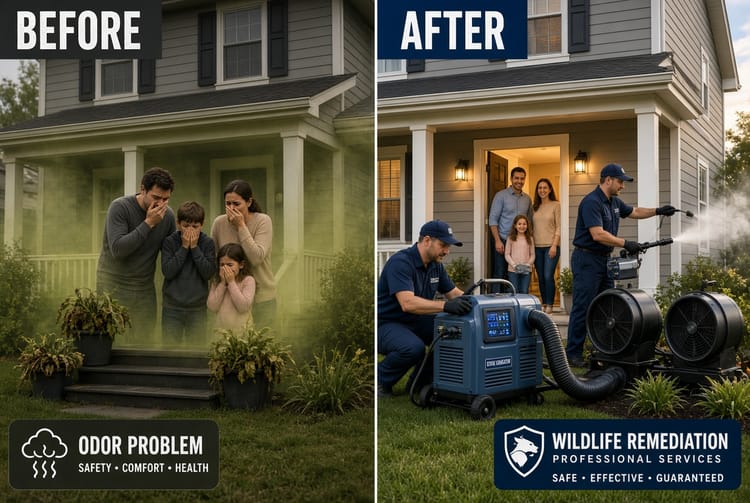
After proper bat guano cleanup, families report immediate improvements in air quality and peace of mind. Respiratory symptoms that developed during infestation often resolve once the source is professionally eliminated.
Professional service also protects property value. Real estate transactions frequently require disclosure of wildlife issues, and documented professional remediation provides peace of mind for future buyers.
When to Suspect a Bat Guano Problem in Your Home
Early detection prevents major health and financial consequences. Watch for these warning signs:
- Musty or ammonia-like odors coming from the attic or walls
- Dark stains or droppings accumulating near eaves, chimneys, or vents
- Unusual scratching or fluttering sounds at dusk or dawn
- Increased insect activity around the home (bats consume large quantities of insects)
- Sudden onset of respiratory issues among household members without clear cause
If you notice any combination of these signs, contact a licensed wildlife removal specialist immediately rather than investigating yourself.
Choosing the Right Wildlife Removal Company
Not all cleanup services are equal. Look for companies that specialize in bat guano remediation with:
- Proper certifications for biohazard handling
- Insurance coverage specifically for wildlife damage and health risks
- Experience with histoplasmosis-related cleanups
- Transparent pricing with no hidden fees
- Guarantees on both cleanup effectiveness and bat exclusion
A reputable provider will explain every step, answer questions about health risks, and provide documentation for your records.
Protecting Your Family Starts with Expert Action
Bat guano is far more than a nuisance — it is a recognized biohazard capable of causing serious illness. Delaying professional intervention only increases exposure time and cleanup complexity.
Trained technicians complete the entire remediation process efficiently while maintaining the highest safety standards. Their expertise ensures your home returns to a healthy, clean condition without unnecessary disruption to your daily life.
Don’t risk your family’s health with DIY attempts or inadequate services. Professional bat guano cleanup delivers lasting results and complete peace of mind.
Protect Your Family from Histoplasmosis – Call Now