The Bat Exclusion: One-Way Doors for Attic Eviction
Discovering bats in your attic can feel alarming. The sudden flutter at dusk, the distinctive odor of accumulated droppings, or the sight of small bodies clustered in a dark corner often leaves homeowners unsure of the next step. The good news is that a proven, humane removal technique exists that protects both your family and the bats themselves. That method is bat exclusion using one-way doors.
Call Now for Safe, Humane Bat Removal
This article explains exactly what a one-way door is, why timing is critical, and why professional installation is not optional. When performed correctly, exclusion allows every bat to leave your home of its own accord and never return. No trapping. No killing. No leftover colony.
Why Bats Choose Attics
Attics offer bats three things they need: darkness, warmth, and protection from predators. In spring and summer, female bats seek these spaces to form maternity colonies. A single small colony can grow quickly as pups are born. By late summer the attic may hold dozens or even hundreds of individuals.
Bats do not chew new holes the way rodents do. They exploit existing gaps—ridge vents, soffit intersections, chimney flashing, warped fascia, or tiny openings around pipes. Once inside they deposit guano and urine. Over time these accumulations create staining, strong odor, and a potential health concern from fungal spores associated with histoplasmosis. The presence of bats also raises legitimate questions about rabies risk, even though most bats are not infected.
The responsible response is never indiscriminate killing or sealing bats inside. Both approaches create larger problems and, in many jurisdictions, violate wildlife protection laws. The accepted standard is humane eviction followed by permanent sealing.
What a One-Way Door Actually Is
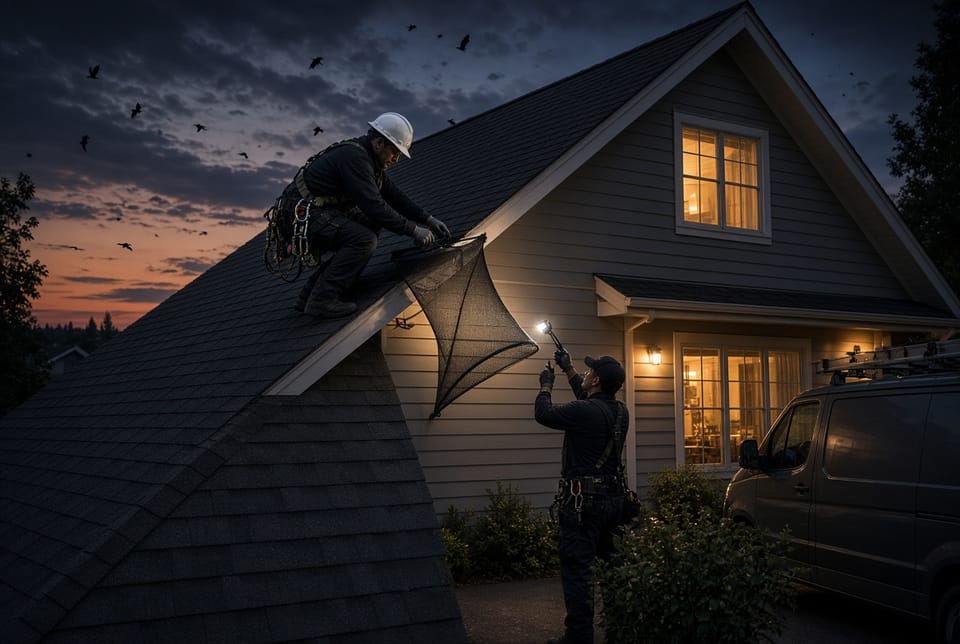
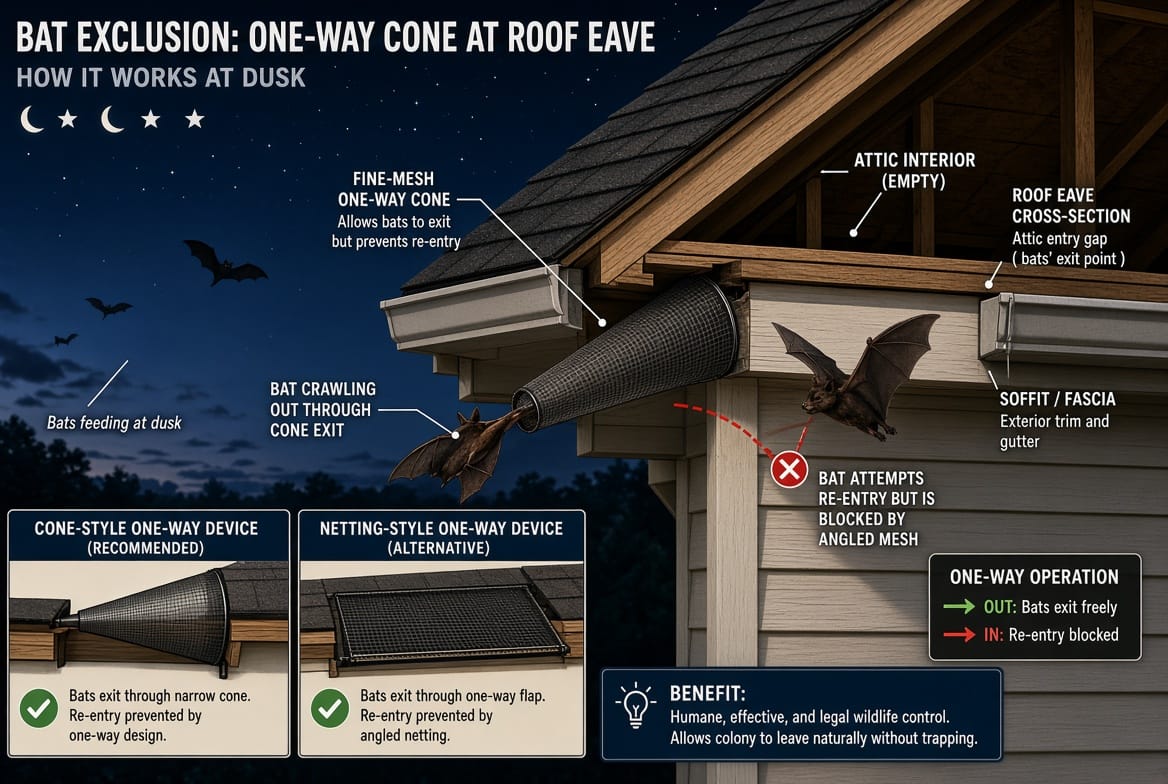
A one-way door—sometimes called an exclusion cone, exclusion netting, or one-way valve—is a simple but precise device. It is installed over an identified exit point. Bats can crawl or drop out through the opening, yet the design prevents them from crawling back in.
Common constructions include:
- Fine plastic or metal mesh formed into a cone or tube
- Lightweight netting draped and secured so it hangs away from the building
- Rigid plastic or vinyl sleeves that create a downward funnel
The key principle is directional flow. Bats leave at dusk to feed. When they return they encounter a surface they cannot grip or an opening too small and awkwardly angled for re-entry. They simply fly away and seek another roost.
The device itself does not harm the animal. It merely interrupts the cycle of leaving and returning until the entire colony has departed.
How One-Way Doors Work in Practice
Successful exclusion depends on two facts of bat behavior. First, bats are creatures of habit; they use the same exit points night after night. Second, they will not remain inside once they cannot re-enter after foraging.
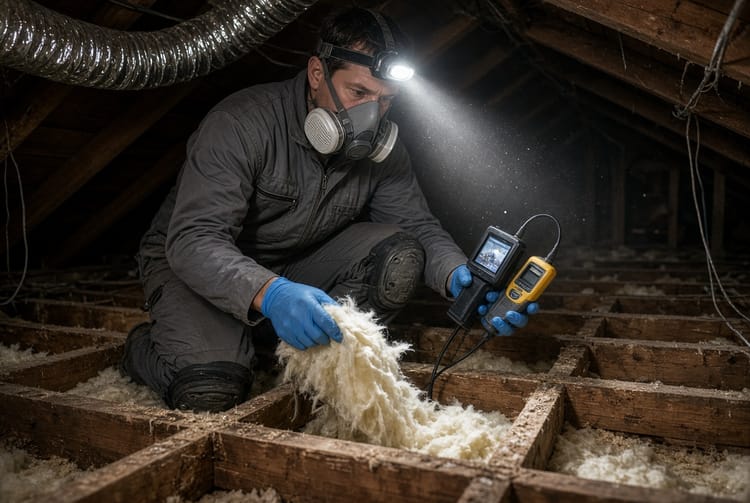
A technician first identifies every active opening by observing emergence at dusk and by interior inspection of the attic. All secondary gaps are sealed immediately so bats have only the prepared one-way devices as exits. The devices stay in place for several nights—typically five to ten days, sometimes longer depending on weather and colony size—until activity ceases.
Once no bats remain, the devices are removed and the openings are sealed permanently with materials that match the building: flashing, hardware cloth, expanding foam rated for wildlife work, or custom-fitted metal.
This sequence—identify, restrict, evict, seal—forms the backbone of professional attic bat removal.
Critical Timing: Wait Until Pups Can Fly
Timing is the single most important factor in humane exclusion. Female bats give birth in late spring or early summer. Newborn pups cannot fly for three to five weeks. They remain in the roost while mothers forage. Installing a one-way door during this maternity period would separate flightless young from their mothers. The pups would starve, creating both a tragic outcome and a serious odor problem inside the attic.
Responsible exclusion therefore waits until all young are volant—able to fly on their own. In most of North America this window opens in late summer or early fall, after mid-August in many regions. Local climate and species vary, so the exact date must be confirmed by observation rather than a calendar.
Winter exclusion is possible in some climates if bats are not hibernating inside the structure, but it requires extra caution. The safest and most widely accepted period remains the post-maternity window when every bat can leave under its own power.
Attempting exclusion at the wrong time is one of the most common and costly mistakes homeowners make. It is also one of the clearest reasons professional assessment is essential.
Why Professional Installation Is Essential
A one-way door looks simple. Installing it correctly is not. Several risks arise when the work is done without training and specialized equipment.
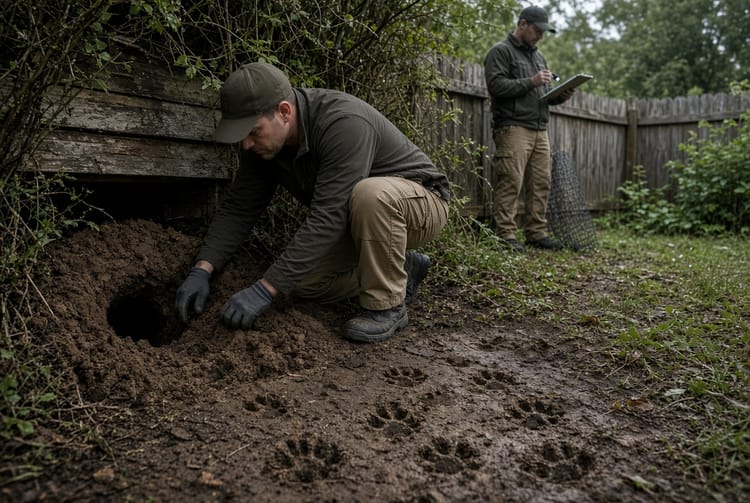
Incomplete inspection. Bats use multiple, often tiny, openings. Missing even one allows the colony to remain or to re-enter after the devices are removed.
Improper device placement. If the cone or netting is too close to the wall, bats can crawl around it. If it is too large or poorly secured, wind or the bats themselves can dislodge it.
Sealing at the wrong moment. Closing openings while bats are still inside traps them. Trapped bats die, decompose, and create intense odor plus insect problems.
Safety hazards. Attic work involves heat, confined space, possible exposure to droppings, and the small but real chance of a bat bite. Professionals use respirators, protective clothing, and established protocols.
Legal compliance. Bats are protected in most states and provinces. Killing them or sealing them in can result in fines. Licensed wildlife control operators understand local regulations and obtain any required permits.
Guano cleanup and disinfection. Exclusion is only half the job. Accumulated droppings must be removed and the area treated to reduce fungal risk. This is specialized work that belongs with trained technicians.
A professional team brings thermal imaging, emergence surveys, custom-fitted devices, and a documented follow-up plan. The result is a complete, lasting solution rather than a temporary or partial one.
The Professional Process, Step by Step
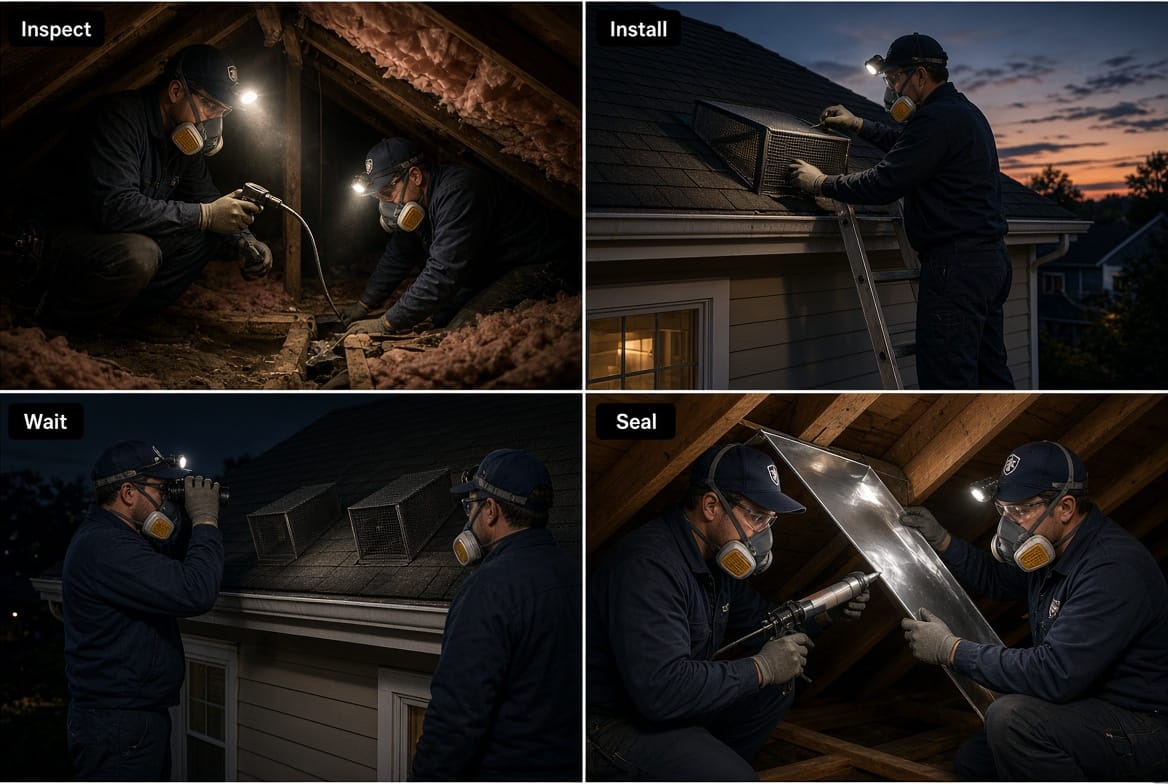
A typical humane exclusion follows a clear sequence:
- Comprehensive interior and exterior inspection to locate every entry and to assess colony size and species.
- Installation of one-way devices on primary exits and immediate sealing of all secondary gaps.
- Monitoring period of several nights while bats leave and cannot return.
- Confirmation that activity has stopped, followed by permanent sealing of every opening.
- Attic cleanup, insulation inspection, and recommendations for long-term prevention.
Homeowners receive a written report and often a limited warranty on the sealing work. The process is methodical, documented, and designed to succeed the first time.
After the Bats Have Left
Once exclusion is complete, two remaining tasks protect the home. First, all former entry points receive durable, weather-resistant seals. Second, the attic itself is cleaned. Guano is removed, stained insulation is replaced if necessary, and surfaces are treated to inhibit fungal growth. Proper ventilation and moisture control further discourage future wildlife use.
Prevention after exclusion is straightforward: maintain the building envelope, keep trees trimmed away from the roof, and schedule periodic inspections. Bats will look for the easiest available roost. A well-sealed structure is no longer that roost.
Peace of Mind Through Humane Action
Living with bats in the attic is unnecessary. A properly executed one-way door exclusion solves the problem without harming the animals or endangering the household. The method is widely recognized by wildlife agencies as the gold standard for humane bat eviction.
The difference between a successful, lasting result and a frustrating repeat infestation almost always comes down to timing, thoroughness, and professional skill. When those three elements are in place, the colony leaves quietly, the attic is restored, and the home stays bat-free.
Evict bats humanely with one-way doors.
Professional Bat Exclusion Starts Here – Call Now