The Wireless Security System: Reliability, Range, and Installation Flexibility
In today’s fast-paced world, protecting your home and family has never been more essential. Wireless security systems have revolutionized home protection by delivering powerful reliability, exceptional range, and unmatched installation flexibility without the drawbacks of traditional wired setups. These advanced systems use cutting-edge technology to keep your property secure while fitting seamlessly into any lifestyle or living space.
Ready for Wire-Free Protection? Call Now for a Free Consultation
Homeowners often worry about complex installations, ongoing maintenance, or systems that fail when power goes out. A wireless security system addresses all these concerns head-on. Whether you own your home, rent an apartment, or manage a larger property, these solutions provide peace of mind that is both sophisticated and practical. This guide walks you through how modern wireless technology works, its standout advantages, key range considerations, and why its signal reliability often surpasses older hardwired options. By the end, you’ll understand why so many families are making the switch to flexible, dependable protection.
Understanding Modern Wireless Security Technology
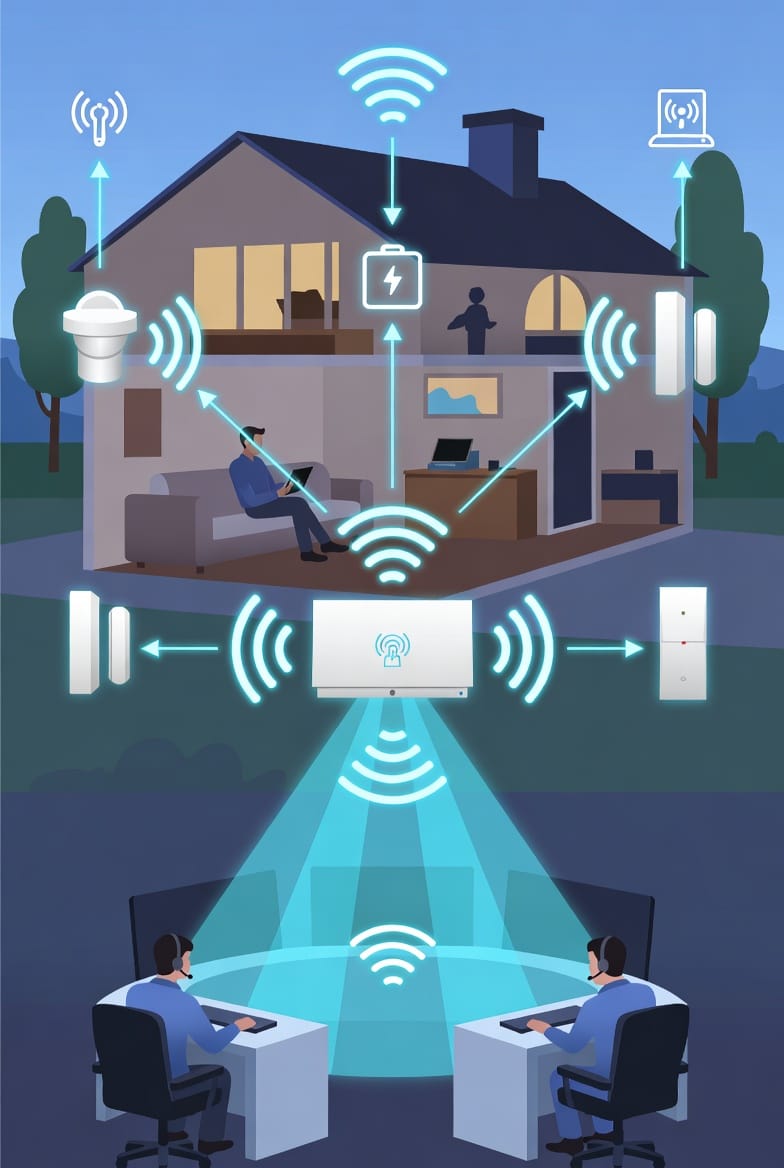
Modern wireless security systems rely on secure radio frequency (RF) communication to connect every component instantly and reliably. Unlike outdated systems that used simple one-way signals, today’s models employ two-way encrypted communication protocols. These protocols confirm that each sensor is active and reporting accurately, reducing false alarms and increasing overall trust in the system.
Key technological advancements include:
- Strong encryption standards such as AES-128 or higher, which protect against unauthorized interception or hacking attempts.
- Supervised sensor check-ins that automatically verify connectivity multiple times per hour.
- Mesh networking that lets devices relay signals through one another, extending coverage without extra hardware in many cases.
- Hybrid connectivity options that combine local RF with cellular backup, ensuring alerts reach monitoring centers even during internet outages.
At the heart of the system sits the central control panel, which receives real-time data from door and window sensors, motion detectors, glass-break sensors, and optional cameras. When an event occurs, the panel instantly notifies you via a mobile app while simultaneously contacting a professional monitoring center if you choose that service.
This technology has evolved rapidly, making wireless security systems more dependable than ever. Families appreciate knowing their system stays vigilant around the clock, adapting intelligently to daily routines while remaining invisible until needed. The result is protection that feels intuitive rather than intrusive, giving you confidence that your home remains safe whether you’re present or away.
Key Advantages of Wireless Systems
The true value of a wireless security system shines through its practical benefits that directly solve common homeowner frustrations. These systems are engineered for real-life use, delivering convenience without compromising protection.
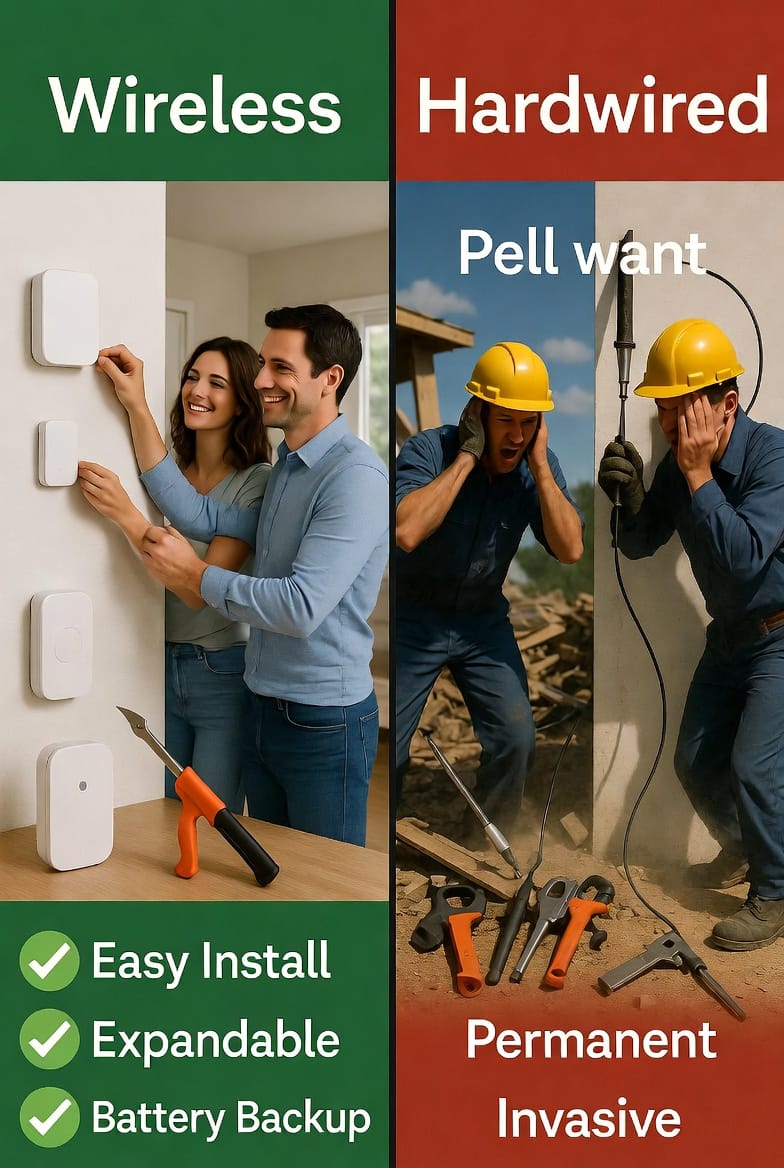
No drilling or wiring required – Installation uses strong adhesive mounts or minimal hardware, preserving your walls, ceilings, and overall home aesthetics. No need to fish wires through insulation or patch holes afterward. This feature is especially reassuring for renters or those living in historic homes where structural changes are restricted.
Expandable design – Begin with essential coverage for entry points and scale effortlessly by adding new sensors, smart cameras, or environmental monitors. Whether your family grows or your property changes, the system grows with you. Adding a garage sensor or backyard camera takes minutes rather than days of construction.
Built-in battery backup – During power outages, rechargeable batteries keep the control panel and critical sensors operational for extended periods. This redundancy ensures your home stays protected precisely when external threats might increase, offering genuine peace of mind.
These advantages translate into tangible lifestyle improvements. Families report reduced stress because the system installs quickly, operates quietly in the background, and requires minimal upkeep. Professional installers or confident DIY users alike find the process straightforward, turning what once felt like a major project into a simple afternoon upgrade. With wireless security systems, protection becomes an empowering choice rather than a complicated obligation.
Range Considerations for Optimal Coverage
Range plays a vital role in ensuring complete home protection. Most contemporary wireless security systems deliver open-air transmission distances between 300 and 1,000 feet or more, depending on the model. Real-world performance accounts for typical household obstacles, yet smart design keeps coverage strong and consistent.
Important factors that influence wireless range include:
- Building materials such as thick walls, metal framing, or concrete that naturally attenuate signals.
- Potential interference from Wi-Fi routers, microwaves, or neighboring devices operating on similar frequencies.
- Physical distance and layout across multiple floors or outbuildings.
Fortunately, solutions are readily available. Strategically placing the control panel in a central location maximizes reach. Many systems include range extenders or repeaters that automatically strengthen weak signals. Advanced mesh networks further optimize paths by letting devices communicate through the strongest available route.
Professional assessment or simple app-based signal testing helps identify and eliminate any dead zones. Homeowners often discover that proper planning results in flawless coverage even for larger properties with detached garages or expansive yards. This thoughtful approach ensures your wireless security system performs reliably across every square foot you need to protect.
Signal Reliability Compared to Hardwired Systems
Many homeowners wonder whether wireless security systems truly match the reliability of traditional hardwired installations. Today’s technology provides a clear answer: modern wireless solutions often deliver equal or superior performance while eliminating common wired vulnerabilities.
Hardwired systems depend on physical cables that can be damaged by pests, aging, or renovations, creating potential failure points. In contrast, wireless systems remove these risks entirely. They incorporate anti-jamming technology that detects and alerts on interference attempts. Supervised communication ensures the panel knows immediately if any sensor loses connection. Cellular backup provides a completely independent communication channel, keeping monitoring active even if landlines or internet fail.
Current wireless security systems feature:
- High-frequency bands engineered to resist everyday household interference.
- Bidirectional verification that confirms both commands and status updates.
- Proactive low-battery alerts sent well in advance, making maintenance simple and predictable.
Real-world experience and testing confirm that well-designed wireless setups achieve excellent uptime. Homeowners frequently note fewer false alarms thanks to intelligent sensors that differentiate genuine threats from normal activity. The flexibility of wireless technology therefore combines with proven reliability, making it a confident choice for long-term home protection.
Installation Flexibility: A Game-Changer for Every Homeowner
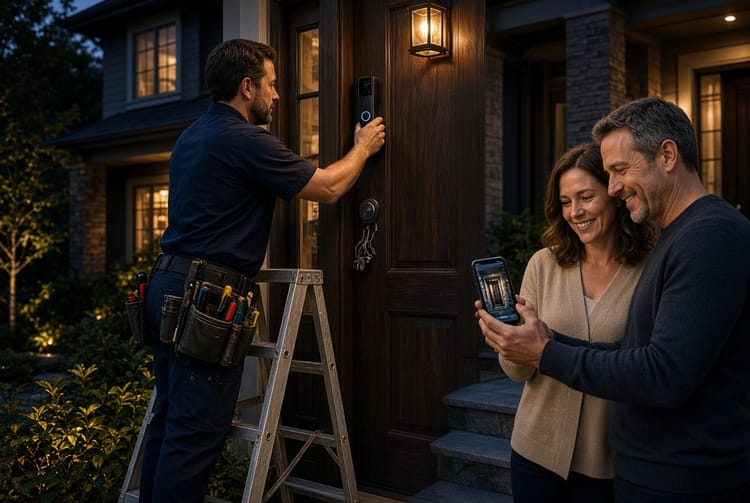
Installation flexibility sets wireless security systems apart as the smart solution for virtually any property. Professional technicians can often complete the entire setup in a single visit with almost no disruption to your daily routine. For those who enjoy hands-on projects, many systems support straightforward DIY installation using clear app guidance.
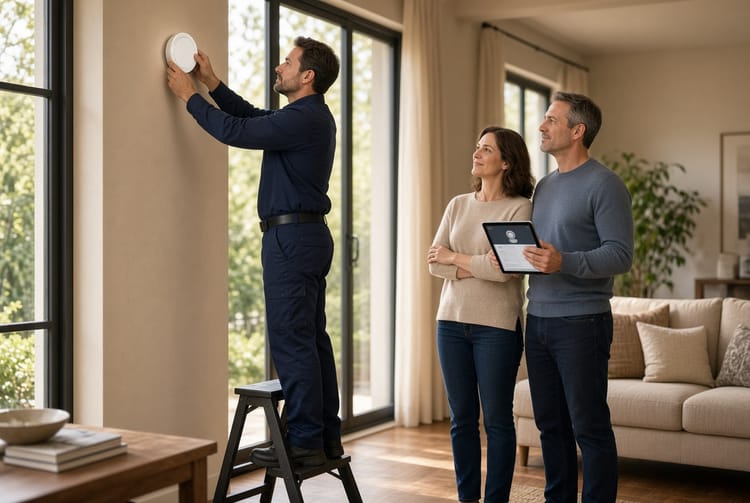
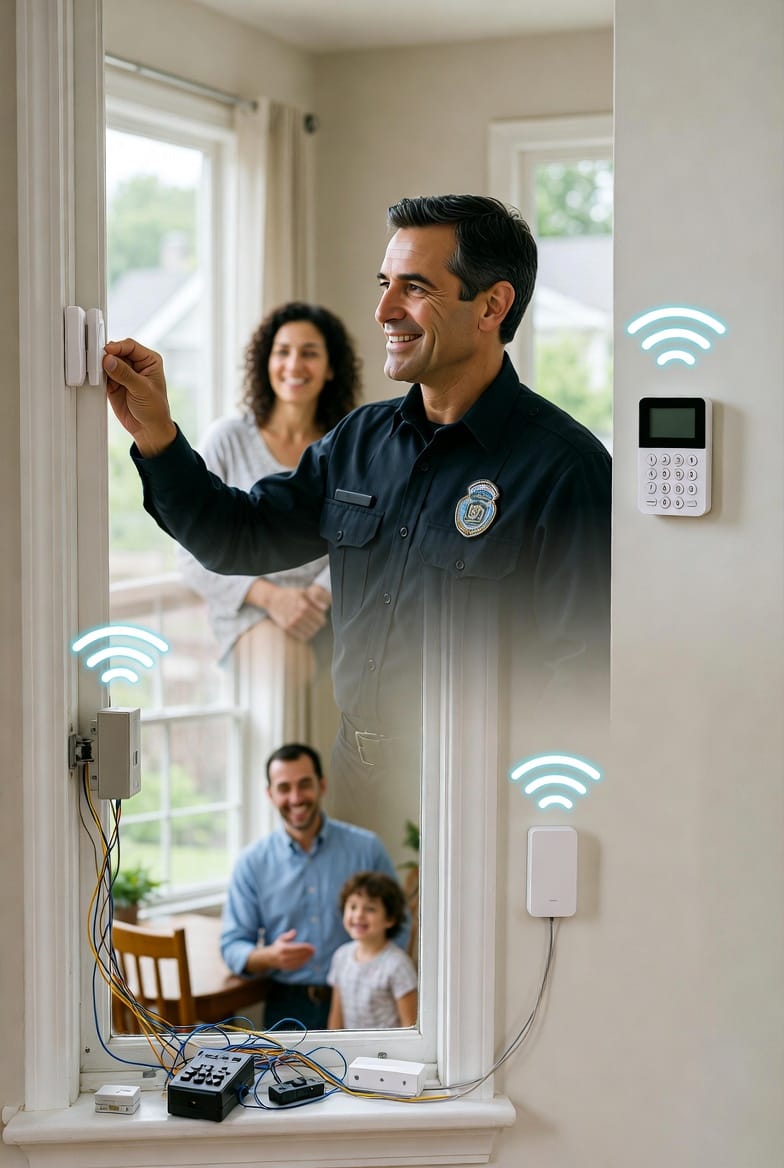
The process typically involves mounting the control panel centrally, attaching sensors to key entry points, pairing devices, and running a quick system test. No heavy tools, no drywall repair, and no weeks of waiting. This adaptability makes wireless ideal for renters who cannot make permanent changes, new homeowners customizing their space, or growing families needing quick upgrades.
You maintain full control over sensor placement and can relocate components if you rearrange furniture or move to a new address. The system travels with you, protecting your investment long-term rather than being tied to one location. This level of freedom reassures homeowners that security can adapt to life’s changes instead of dictating them.
Experience Flexible Wireless Security – Call for Expert Advice