The Home Security Assessment: Identifying Vulnerabilities
A professional home security assessment is far more than a quick look around the property. It is a structured, expert-led evaluation designed to reveal hidden weaknesses before they can be exploited. In a time when families want reliable protection without unnecessary complexity, this process delivers clarity, prioritized recommendations, and lasting peace of mind.
Protect Every Entry Point – Book Your Expert Assessment
Many homeowners invest in cameras, alarms, or new locks without first understanding the full picture of their property’s defenses. The result is often incomplete coverage. A thorough home security assessment changes that equation. Trained specialists examine the entire site—structure, surroundings, hardware, and daily use patterns—to create a realistic, actionable security plan.
This article explains what a professional evaluation actually involves, the core areas it covers, and how the findings translate into stronger protection. The goal is not to generate alarm but to give homeowners the knowledge they need to make informed, effective decisions.
Why a Professional Evaluation Matters
A casual walkthrough by the homeowner rarely uncovers every risk. Specialists bring pattern recognition developed from evaluating hundreds of properties. They notice the unlocked basement window behind dense shrubs, the motion light that no longer covers the side yard, or the strike plate that would fail under modest force.
The assessment is systematic. It considers both obvious entry points and less visible contributing factors such as sight lines, lighting gaps, and landscaping that can conceal movement. The outcome is a written report that ranks issues by severity and suggests practical, cost-effective remedies.
Homeowners who complete this process typically report two immediate benefits: they stop guessing which upgrades matter most, and they gain documented evidence that can support insurance discussions or future improvements. The evaluation itself is non-invasive and respectful of the family’s time and privacy.
What a Comprehensive Assessment Covers
A professional evaluation examines four primary categories plus supporting elements. Each category is inspected both individually and in combination with the others, because security failures often occur at the intersections.
Entry Points
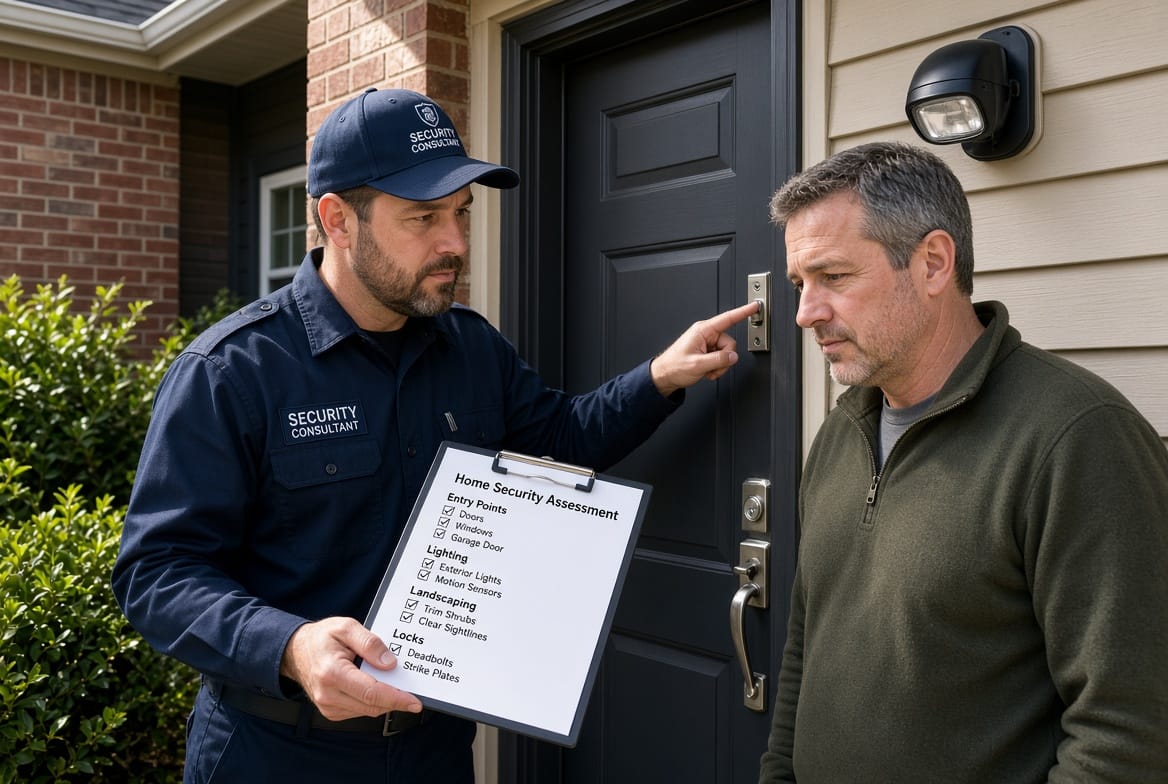
Doors, windows, garage access, and any other openings receive close attention. Specialists check alignment, weather stripping, glass type, and whether frames have been reinforced. They test whether a door can be forced or whether a window can be lifted from the outside. Side and rear entries frequently receive extra scrutiny because they are less visible from the street.
The assessment also notes secondary entry points such as pet doors, crawl-space vents, and attic access that many owners overlook. The specialist records current hardware condition and notes whether existing locks match the door’s construction.
Lighting
Inadequate lighting is one of the most common and easily corrected vulnerabilities. The evaluation maps existing fixtures, tests coverage after dusk (or simulates it), and identifies dark zones around doors, walkways, and potential hiding spots. Motion-activated and timer-controlled lights are checked for proper placement and sensitivity.
Specialists look at both security lighting and ambient lighting that affects visibility for residents returning home. Poorly aimed lights that create glare or leave deep shadows are flagged because they can hinder rather than help.
Landscaping and Visibility
Overgrown shrubs, tall hedges, and dense foundation plantings can provide concealment for someone approaching the house. The assessment applies principles of natural surveillance: vegetation should not block windows or create blind spots near entry points. Trees that allow roof or second-story access are also noted.
The specialist considers seasonal growth and recommends trimming or relocation that improves sight lines without sacrificing curb appeal. Fencing, gates, and property boundaries are reviewed for gaps or climbable features.
Locks and Hardware
Locks receive a detailed inspection. Specialists evaluate lock type, installation quality, strike-plate reinforcement, and whether the hardware matches the door or window. A standard spring-latch lock on an exterior door is typically flagged as insufficient. Deadbolt locks with adequate throw and properly installed strike plates are the baseline recommendation for most exterior doors.
Window locks, sliding-door bars, and garage-door mechanisms are tested. The assessment notes whether keys are controlled and whether any locks show signs of wear or previous tampering.
Additional items routinely included are existing alarm or camera systems (to confirm they actually cover identified weak spots), mailbox security, and any outbuildings.
The Assessment Process Step by Step
A typical professional evaluation follows a consistent sequence that respects the homeowner’s schedule.
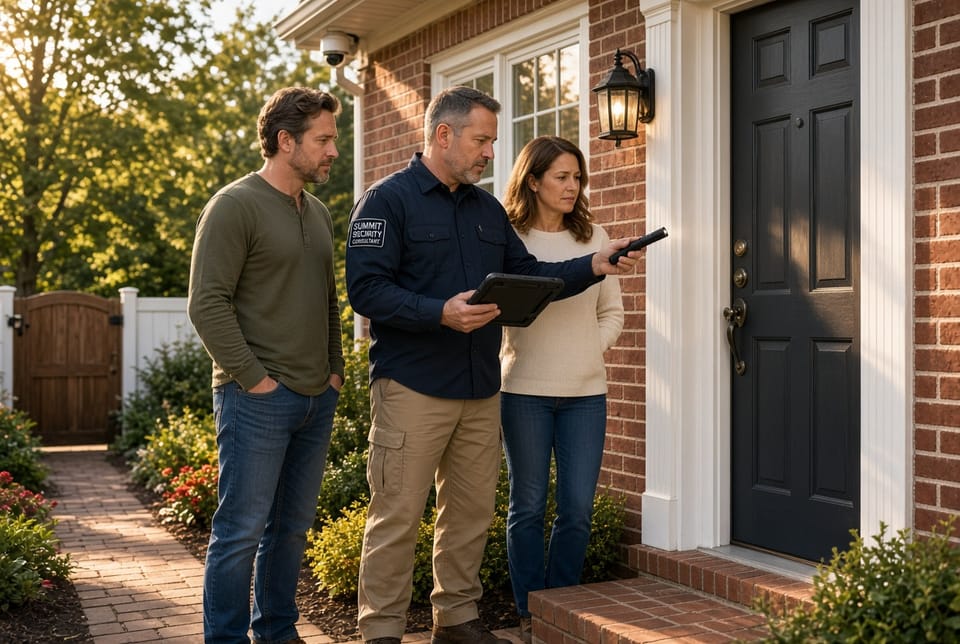
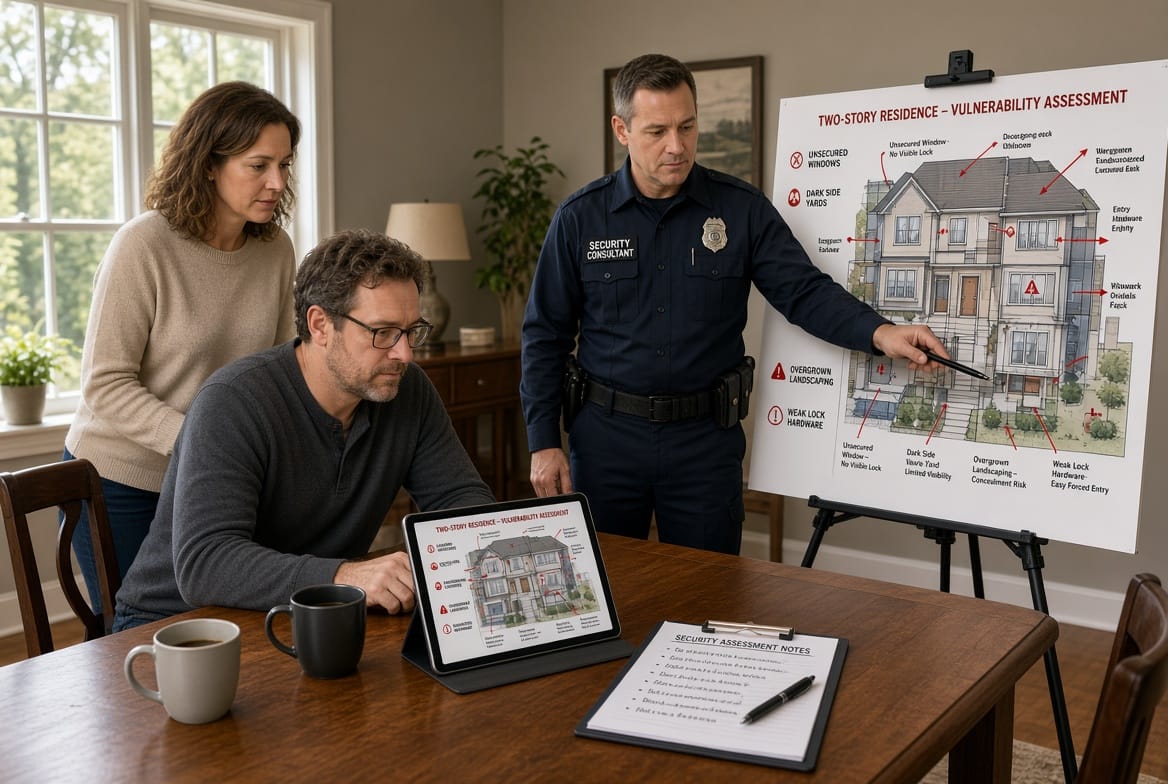
The visit begins with a brief conversation about daily routines, previous incidents, and any existing security measures. This context helps the specialist interpret physical findings. The exterior walk-through comes next, usually starting at the front and moving systematically around the property. Interior rooms that contain accessible windows or doors are then examined.
Measurements, photographs (with permission), and notes are recorded on-site. The specialist may test lighting after dark or return at dusk if the initial visit occurs during daylight. The entire on-site portion generally lasts 60 to 90 minutes for an average single-family home.
Within a short time after the visit, the homeowner receives a written report. The document lists observed vulnerabilities, explains why each item matters, and offers prioritized recommendations ranging from low-cost adjustments to more substantial upgrades. The tone remains practical rather than alarmist.
How Identifying Vulnerabilities Improves Security
The real value of the assessment lies in turning observations into targeted action. Once weak spots are documented, improvements can be sequenced logically.
Addressing entry points first often yields the highest return. Reinforcing a door frame or adding a quality deadbolt immediately raises the effort required for forced entry. Correcting lighting and landscaping next removes concealment and increases the chance that unusual activity will be noticed. Hardware upgrades then lock in the gains.
Because the report ranks issues, homeowners avoid scattered spending. A family might discover that trimming two overgrown shrubs and adding one motion light at the side gate produces more practical improvement than buying additional indoor cameras. The assessment also helps existing systems perform better by confirming they actually cover the newly identified risk areas.
Over time, the documented evaluation supports insurance discussions and provides a baseline for future reviews. Many families schedule a follow-up assessment after major renovations or when occupancy patterns change.
The psychological benefit is equally important. Knowing that an independent professional has examined the property and that the most significant gaps have been closed produces genuine peace of mind. Residents no longer wonder whether they have overlooked something obvious.
Preparing for Your Assessment and What Happens Next
Homeowners can make the visit more efficient by gathering existing alarm or camera documentation, noting any prior incidents, and ensuring the specialist can access all sides of the house. No special cleaning or preparation is required.
After receiving the report, most families implement recommendations in phases. Immediate, low-cost items such as vegetation trimming or bulb replacement can often be completed the same week. Hardware and lighting upgrades follow according to budget and priority. The specialist remains available to answer questions about the findings.
The process is designed to be reassuring rather than overwhelming. Recommendations are presented as practical options, not mandates. The homeowner retains full control over which improvements to pursue and when.
A professional home security assessment is the most reliable way to move from assumption to verified knowledge. It identifies the specific vulnerabilities that matter on your property and supplies a clear path to address them.
Strengthen Your Home’s Defenses – Request an Assessment