The Security System Video Doorbell: Installation and Features
Front-door security has evolved far beyond a simple chime and peephole. A modern video doorbell gives homeowners real-time visibility, instant communication, and recorded evidence the moment someone approaches the property. Among the most widely adopted devices is the Ring Video Doorbell, a system that combines high-definition video, intelligent detection, and straightforward app control. This guide explains how these devices function, the features that matter most, and the proper way to install them so the system performs reliably for years.
Protect Your Front Door – Schedule Expert Setup Today
A professionally installed video doorbell does more than record visitors. It deters opportunistic activity, lets you speak with delivery drivers without opening the door, and sends timely alerts even when you are away. When the hardware is mounted correctly and connected to a stable network, it becomes a quiet, always-on layer of protection that most families quickly consider indispensable.
How Video Doorbells Work
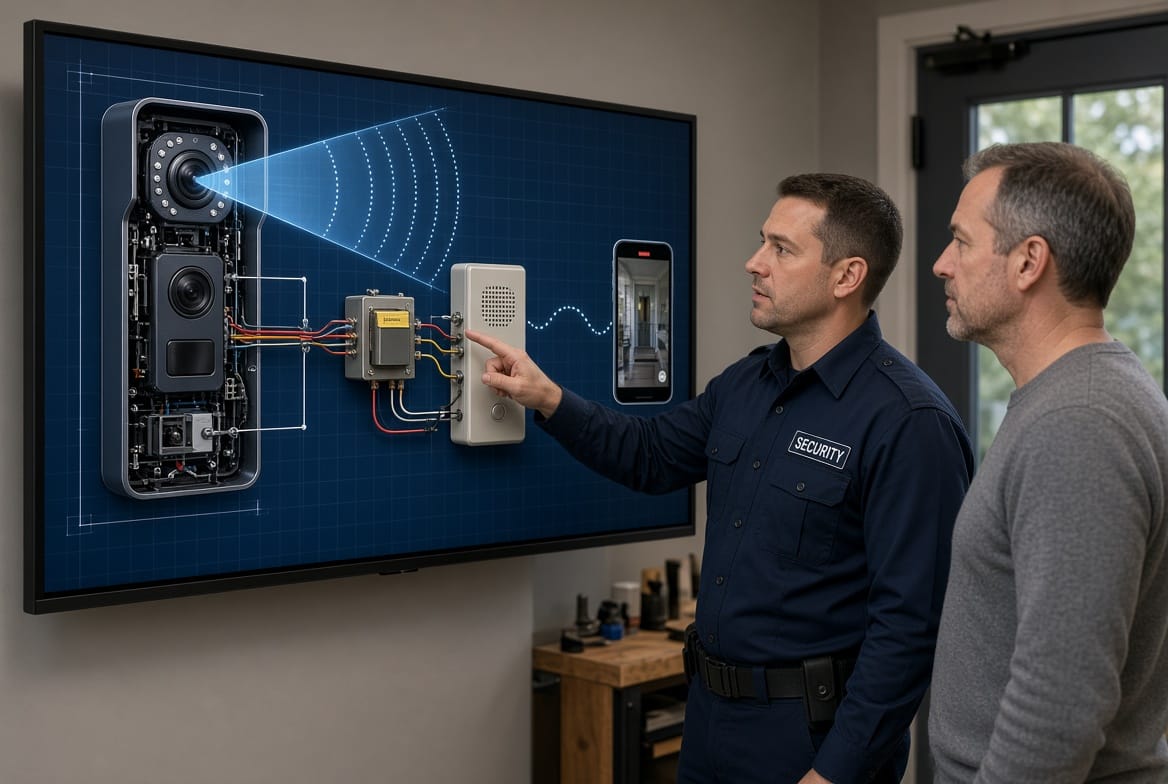
At the core of every capable video doorbell are three coordinated systems: the camera, motion detection, and two-way audio. Understanding each component helps owners appreciate why professional setup produces better results than a hurried do-it-yourself attempt.
The Camera and Optics
The camera is a compact, weather-sealed unit typically offering 1080p or higher resolution with a wide field of view. It captures color video during daylight and switches to infrared night vision after dark. The lens is positioned to cover the porch, walkway, and immediate approach path. High-quality models include anti-glare coatings and automatic exposure adjustment so faces remain recognizable even when strong sunlight or porch lights create contrast.
Video streams travel over the home’s Wi-Fi network to the manufacturer’s cloud servers and simultaneously to the owner’s smartphone app. A stable 2.4 GHz or dual-band connection is essential; weak signal strength produces lag, dropped frames, or missed events. Professional installers measure signal strength at the exact mounting location before finalizing placement.
Motion Detection Technology
Motion detection uses a combination of passive infrared sensors and, on newer units, computer-vision analysis. When heat or movement crosses a customizable zone, the device wakes, begins recording, and pushes an alert. Advanced settings let owners draw activity zones that ignore sidewalks or neighboring driveways, reducing false notifications from passing cars or animals.
The system can distinguish people from packages or vehicles on many current models. This intelligence keeps the alert stream useful rather than overwhelming. Recording usually starts a few seconds before the trigger and continues for a set duration afterward, creating a complete clip of the event.
Two-Way Talk
Built-in microphones and speakers enable two-way talk. The homeowner hears the visitor and can reply in real time through the app. Noise-cancellation algorithms filter wind and background traffic so voices stay clear. Some units add a siren or pre-recorded messages that can be triggered remotely, giving an extra layer of presence even when no one is home.
These three functions operate together. Motion wakes the camera, the camera records and streams, and two-way audio lets the owner intervene immediately. The result is a responsive security point that works around the clock.
Essential Features of a Leading Video Doorbell
Popular devices such as the Ring Video Doorbell package several practical capabilities into a single weatherproof housing. The features below represent the capabilities most homeowners rely on daily.
- Night vision with infrared LEDs that illuminate the porch without visible glare, producing usable black-and-white or color-enhanced footage after sunset.
- Motion-activated recording stored in the cloud (with an optional subscription) or on local storage, creating a searchable history of every approach.
- Instant app alerts that appear on smartphones and tablets within seconds, complete with a live-view thumbnail.
- Customizable motion zones and people-only detection that cut down on irrelevant notifications.
- Two-way audio with echo reduction so conversations remain natural.
- Integration with existing smart-home platforms for voice announcements or automated lighting.
- Weather resistance rated for rain, heat, and cold so the unit remains operational year-round.
These capabilities work best when the device is powered consistently and positioned at the correct height and angle. Battery models require periodic charging; hardwired models draw low-voltage power from the existing doorbell transformer and stay online indefinitely.
Professional Installation Process
Correct installation determines whether the video doorbell delivers clear video, reliable alerts, and long-term durability. While some homeowners attempt self-installation, many prefer a trained technician who can evaluate wiring, network strength, and mounting surface in a single visit.
Pre-Installation Assessment
The technician first inspects the existing doorbell or the intended mounting location. Key checks include transformer voltage (typically 16–24 volts AC for wired models), wire condition, and Wi-Fi signal at the door. If the current transformer is undersized or the wiring is damaged, the technician upgrades components before mounting the new device. This step prevents flickering video, frequent disconnects, or premature battery drain.
The mounting height is usually 48 inches from the ground so the camera captures faces rather than just the tops of heads. The technician also confirms the field of view covers the walkway without including excessive street traffic.
Mounting and Wiring
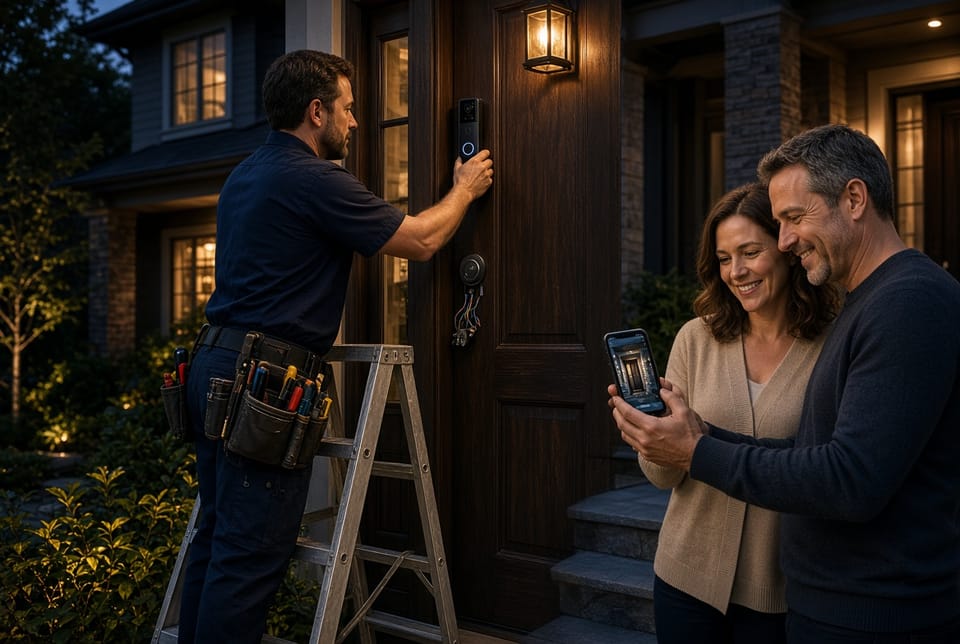
For hardwired units the old doorbell is removed, the new mounting bracket is secured with the supplied hardware, and the low-voltage wires are connected to the labeled terminals. A small power kit or resistor is sometimes added to maintain compatibility with the indoor chime. Battery-powered models skip the wiring step but still require a securely anchored bracket and a fully charged battery.
Once the unit is seated, the technician levels it, tightens fasteners, and applies weatherproofing where needed. The device is then powered on and guided through the manufacturer’s setup sequence using the official app.
Network Pairing and Testing
The technician connects the doorbell to the home Wi-Fi network, updates firmware, and configures motion zones. Live video, two-way talk, and night-vision performance are tested on-site. Alerts are sent to the homeowner’s phone so both parties confirm the system behaves as expected. Any dead spots in Wi-Fi coverage can be addressed with a recommended extender or mesh node before the technician leaves.
Professional installation typically takes 45–90 minutes for a standard replacement. The result is a device that is both aesthetically aligned with the home’s exterior and technically optimized for consistent operation.
Everyday Benefits and Practical Considerations
A properly installed video doorbell changes how a household manages the front door. Package deliveries can be monitored and signed for verbally. Unexpected visitors can be screened without opening the door. Recorded clips provide useful documentation if an incident occurs. Many owners report a noticeable drop in porch-related disturbances simply because the camera is visible.
A few practical points keep the system performing well. Keep the lens clean; a quick wipe removes dust or cobwebs that can degrade night vision. Review motion-zone settings seasonally if landscaping changes. Maintain the cloud subscription if continuous recording history is important. Most importantly, treat the device as one component of a broader home security approach rather than a complete solution by itself.
Privacy features on leading models include end-to-end encryption options and the ability to disable recording in specific zones. Owners retain control over who can view the live feed and how long clips are stored.
Adding Reliable Front-Door Protection
A video doorbell is one of the most cost-effective upgrades a homeowner can make. It delivers visibility, communication, and recorded evidence at the single point where most uninvited activity begins. When the device is chosen carefully and installed by experienced technicians, it operates quietly in the background until it is needed.
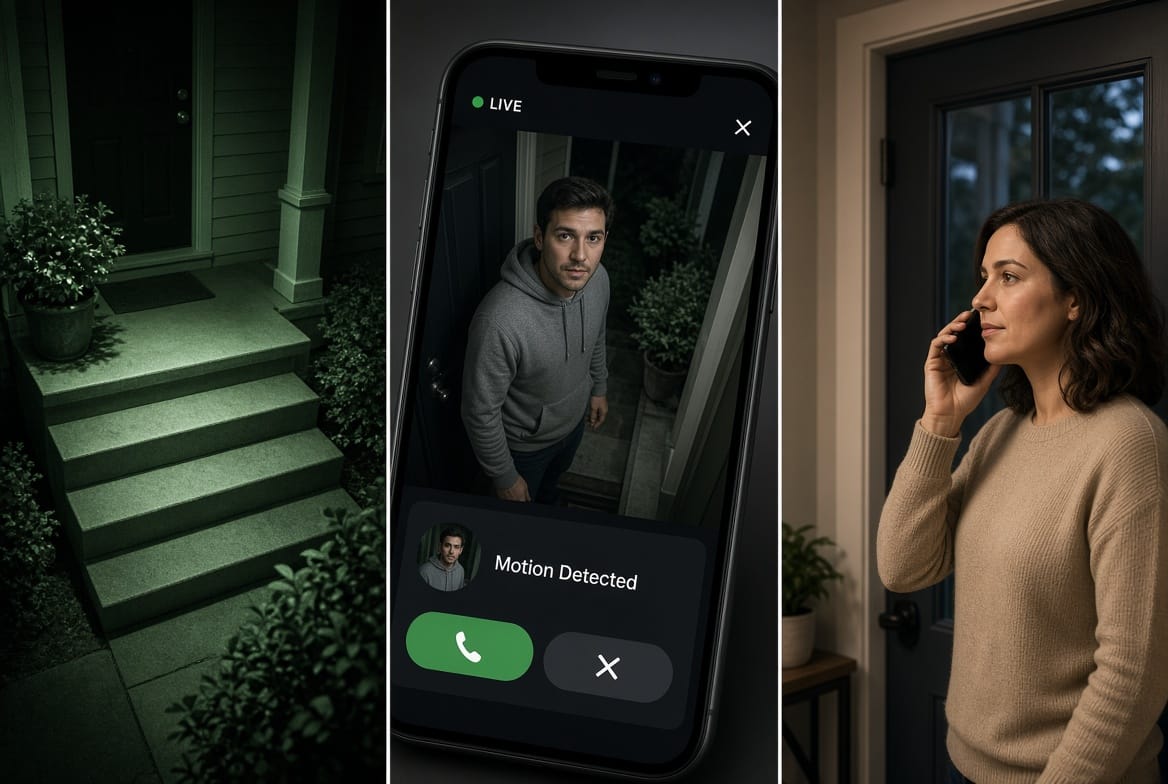
Add a video doorbell for front-door security. Professional installation ensures the camera, wiring, and network all perform at their intended level from the first day. For a complimentary assessment and expert installation. A technician can evaluate your existing setup, recommend the most suitable model, and complete the work so you gain reliable protection without the guesswork.
Call Now to Install Night Vision & Two-Way Talk Protection