The Window Tinted Glass: UV Protection and Energy Savings
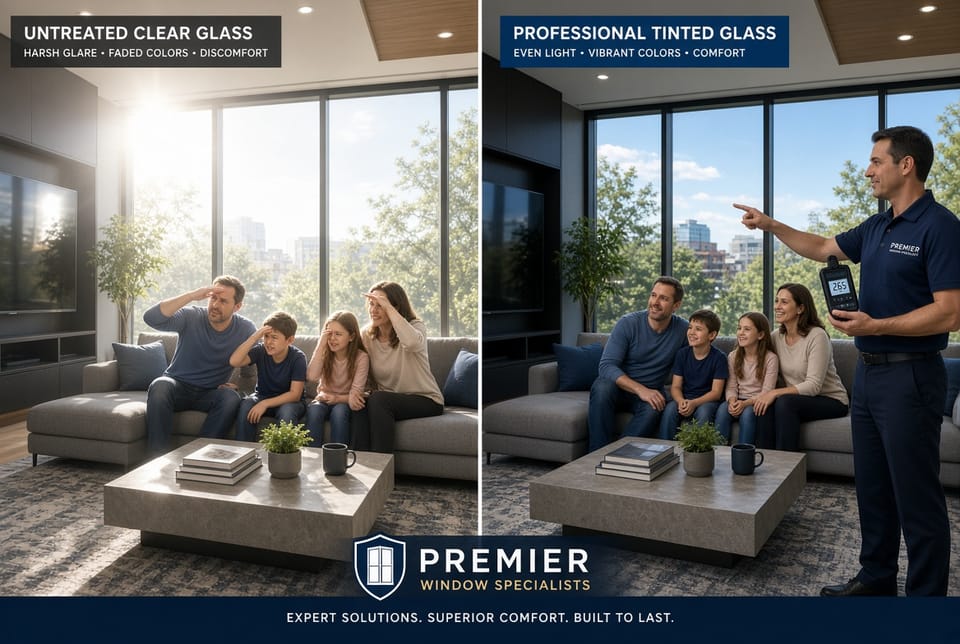
Homeowners across every climate face the same daily challenge: beautiful windows that invite natural light also invite unwanted ultraviolet radiation, excess heat, and distracting glare. Tinted glass offers a proven, long-term solution that addresses all three issues at once while supporting lower energy bills and greater indoor comfort. This comprehensive guide explains exactly what tinted glass does, the two primary types available, and the practical benefits it delivers for residential properties.
Reduce Heat and Glare Today – Call for Tinted Glass
What Tinted Glass Actually Does
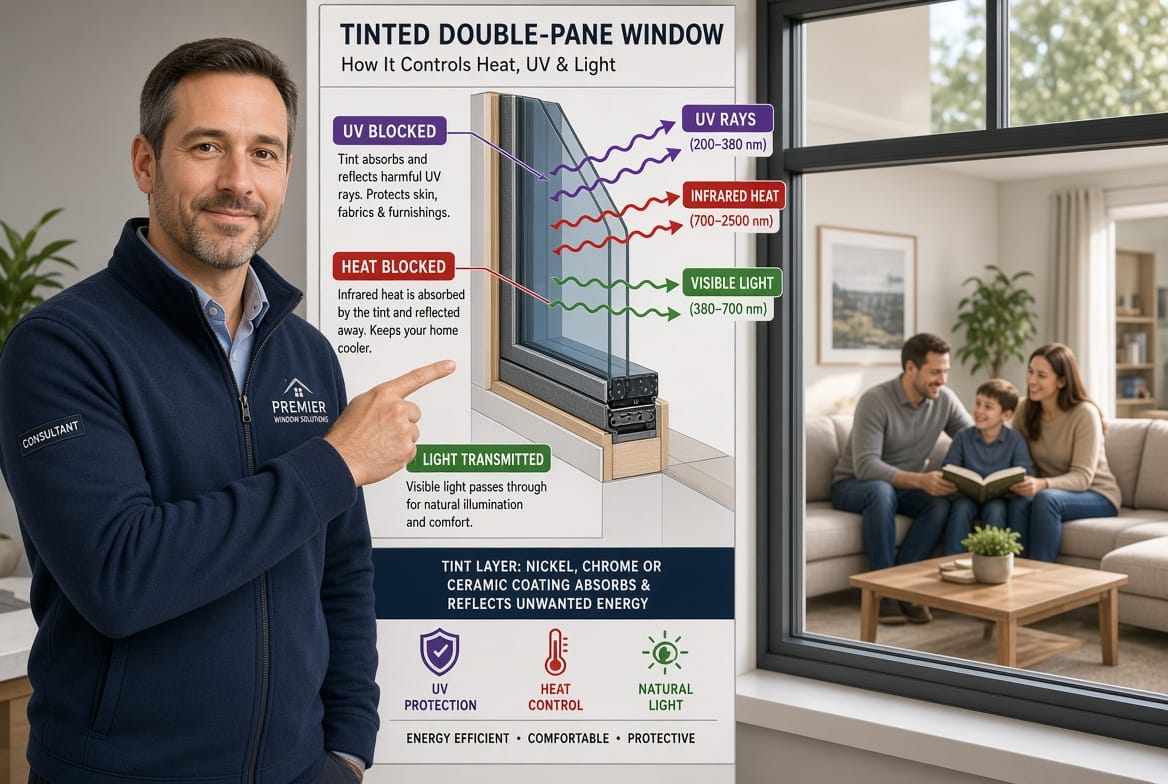
Tinted glass is not simply colored glass. It is an engineered product designed to manage the solar energy that strikes a window. The three primary functions are UV ray reduction, heat control, and glare management.
Ultraviolet radiation from the sun damages furniture, flooring, artwork, and even human skin. Quality tinted glass blocks a substantial percentage of these rays before they enter the living space. At the same time, the glass absorbs or reflects a portion of infrared radiation—the component responsible for heat—so rooms stay cooler in summer. Visible light still enters, but its intensity is softened, which eliminates the sharp glare that makes screens unreadable and rooms uncomfortable.
The result is a more stable indoor environment. You keep the views and daylight you want while reducing the problems that typically come with large expanses of glass.
Factory-Tinted Glass Versus Applied Window Film
Two distinct approaches exist for achieving tint on residential windows. Understanding the difference helps you choose the option that best matches your home, budget, and long-term goals.
Factory-tinted glass is manufactured with metal oxides or other compounds mixed into the molten glass itself. The color and performance characteristics are permanent. Because the tint is part of the glass, it cannot peel, bubble, or fade the way some surface treatments can. Factory-tinted units are typically installed as complete insulated glass assemblies, often with low-emissivity coatings and argon fills for even better thermal performance.
Applied window film is a thin, multi-layer polyester material professionally adhered to existing glass. Modern films can achieve UV rejection and heat reduction comparable to many factory options. Film is an excellent retrofit choice when replacing entire windows is not practical. High-quality films include scratch-resistant coatings and come with substantial warranties when installed by certified technicians.
Both methods work. Factory-tinted glass generally offers the most durable, integrated appearance and is ideal for new construction or full window replacement. Applied film provides flexibility and faster installation for existing homes. A qualified window consultant can evaluate your current glass, climate, and aesthetic preferences to recommend the better path.
Key Benefits of Tinted Glass for Homes
The advantages of properly specified tinted glass extend well beyond simple appearance. Here are the most important benefits homeowners experience:
- Superior UV Protection
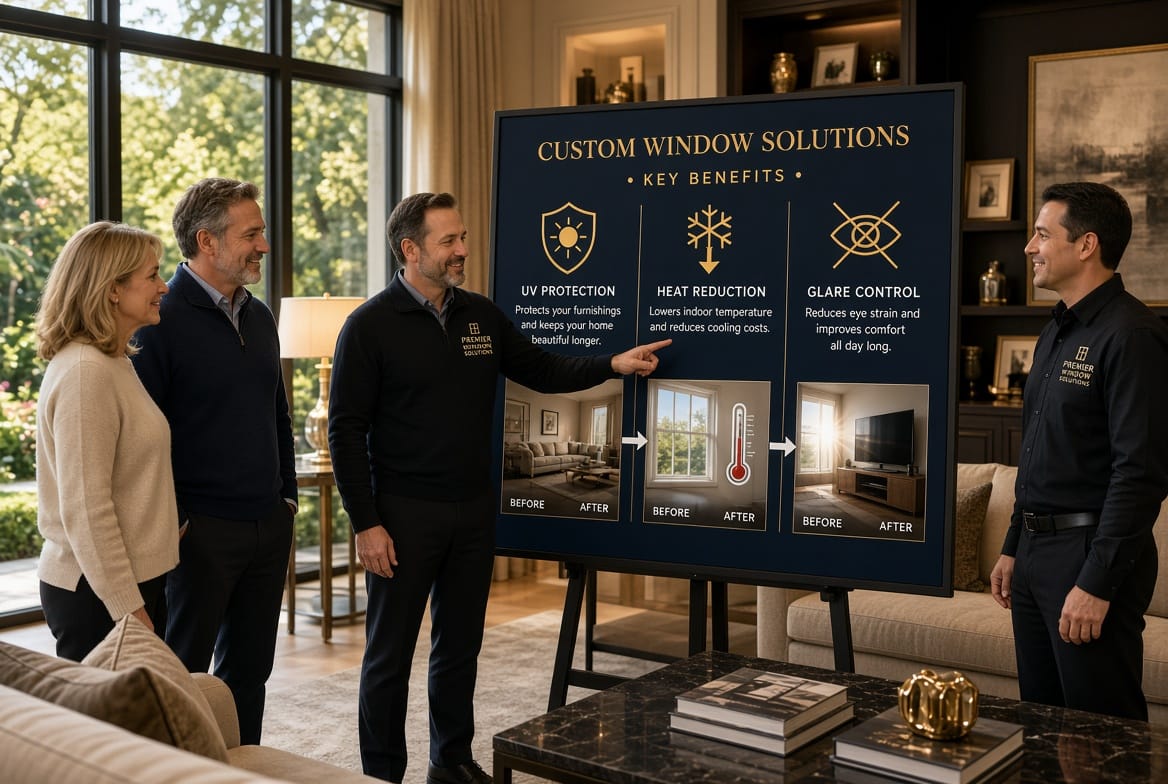
Quality tinted glass and professional window film routinely block 99 percent or more of harmful ultraviolet rays. This protection helps prevent fading of hardwood floors, upholstery, curtains, and family photographs. It also reduces a source of skin damage for anyone who spends time near windows. - Meaningful Heat Reduction
By limiting solar heat gain, tinted glass keeps interior temperatures more consistent. Rooms that previously required constant air-conditioning use stay comfortable with less mechanical cooling. In many homes this translates into lower monthly energy costs, especially during peak summer months. - Effective Glare Control
Harsh sunlight bouncing off glass, water, or neighboring buildings can make televisions, computers, and reading areas unusable at certain times of day. Tinted glass softens that intensity without turning rooms into caves. The result is usable daylight throughout the day. - Enhanced Privacy and Daytime Security
Many tints create a subtle mirroring effect from the outside during daylight hours, making it more difficult for passersby to see inside. At night the effect reverses, so interior lighting remains visible from outside unless additional treatments are used. - Furniture and Flooring Preservation
The combination of UV blocking and reduced heat slows the deterioration of interior finishes. Homeowners often notice that rugs, leather, and wood retain their original color far longer after tinted glass is installed. - Potential Energy Savings
Less heat entering the home means air-conditioning systems cycle less frequently. In cooling-dominated climates the reduction in cooling load can be noticeable on utility bills. When tinted glass is paired with high-performance insulated frames and low-e coatings, the overall energy performance of the window assembly improves further.
These benefits compound over time. A one-time investment in the right glass or film continues to deliver protection and comfort year after year.
How Tinted Glass Contributes to Energy Savings
Energy savings from tinted glass come primarily from reduced solar heat gain. When sunlight strikes a window, a portion of that energy is transmitted into the room as heat. Tinted glass intercepts a significant share of that energy at the glass surface.
The exact percentage depends on the specific product. Some factory-tinted and film options reject 50 percent or more of total solar energy while still allowing ample visible light. In practical terms, a west-facing living room that once felt like an oven in late afternoon can remain comfortable without running the air conditioner at maximum.
Savings are greatest in homes with large glass areas, poor existing insulation, or rooms that receive direct sun for many hours. Combining tinted glass with other efficiency measures—proper attic insulation, ceiling fans, and programmable thermostats—amplifies the results.
It is important to set realistic expectations. Tinted glass is not a substitute for a complete energy-efficiency upgrade, but it is a high-impact improvement for the window portion of the building envelope.
Selecting the Right Level of Tint
Not every home needs the darkest possible tint. The ideal choice balances light transmission, heat rejection, and appearance.
Lighter tints preserve more natural brightness and are often preferred in rooms that already have limited daylight. Medium tints offer a strong combination of performance and aesthetics for most living areas. Darker tints maximize privacy and heat rejection but can make interiors feel dimmer, especially on cloudy days.
Color also matters. Neutral gray and bronze tints are popular because they complement a wide range of exterior colors and do not dramatically alter the view. Some specialty tints add a subtle green or blue hue. A professional can show samples on your actual windows so you see the real-world effect before committing.
Local building codes and homeowner-association rules sometimes limit how dark a tint may be or whether reflective films are permitted. An experienced installer will check these requirements in advance.
Professional Installation Makes the Difference
Whether you choose factory-tinted replacement windows or applied film, professional installation is essential for performance and appearance.
Factory-tinted units must be measured precisely, flashed correctly, and sealed to prevent air and water infiltration. Applied film requires thorough glass cleaning, careful handling to avoid dust or bubbles, and proper edge finishing. Poor installation can lead to peeling, haze, or reduced effectiveness.
Certified technicians follow manufacturer specifications and usually provide warranties that cover both materials and workmanship. They can also advise on complementary products such as low-e coatings or upgraded frames that further improve energy performance.
Maintenance and Longevity
Tinted glass and quality window film require very little special care. Regular cleaning with a mild soap solution and a soft cloth is sufficient. Abrasive cleaners and rough sponges should be avoided, particularly on film.
Factory-tinted glass lasts as long as the window unit itself—often 20 years or more. Premium window films carry warranties of 10 to 15 years or longer when professionally installed. In both cases the performance characteristics remain stable over time when the product is properly specified and maintained.
Addressing Common Concerns
Some homeowners worry that tinted glass will make rooms too dark or that the color will look dated. Modern products are available in a wide range of light-transmission levels, and many look virtually identical to standard glass from the interior. Others wonder about resale value. Energy-efficient windows and documented UV protection are generally viewed as upgrades by informed buyers.
A consultation with a window specialist removes guesswork. Measurements, product samples, and performance data allow you to make a confident decision tailored to your specific home.
Tinted glass is a practical, proven way to protect your home, improve comfort, and support lower energy use. The technology has matured to the point that you no longer have to choose between natural light and protection from the sun’s damaging effects.
Reduce heat and UV with tinted glass. An experienced specialist will evaluate your existing windows, explain the options that fit your home, and provide a clear recommendation so you can enjoy cooler rooms, preserved interiors, and greater peace of mind.
Protect Your Home from UV Rays – Call Today