The Window Solar Coating: Low-E vs. Heat Reflective
Selecting the right window solar coating is one of the most effective decisions a homeowner can make for year-round comfort, energy efficiency, and long-term savings. Two leading technologies dominate modern glass performance: Low-E coatings and heat-reflective coatings. Understanding how each works, where each excels, and how climate shapes the best choice removes uncertainty and delivers lasting peace of mind.
Get Expert Low-E & Heat-Reflective Guidance – Call Now!
This guide compares both options in clear, practical terms so you can match the coating to your specific needs with confidence.
Understanding Window Solar Coatings
Modern windows do far more than let in light. Advanced solar coatings applied to glass surfaces manage heat, light, and energy transfer with remarkable precision. These microscopically thin layers improve indoor comfort while reducing the workload on heating and cooling systems.
Without the correct coating, windows become the weakest link in a home’s thermal envelope. Summer heat pours in. Winter warmth escapes. Utility bills rise. Occupants feel drafts or glare. The right coating reverses those problems and turns windows into high-performance assets.
Two primary coating families address these challenges differently:
- Low-E (low-emissivity) coatings focus on controlling heat flow through emissivity management.
- Heat-reflective coatings emphasize blocking solar radiation with a more mirror-like surface.
Both deliver excellent results when applied correctly. The key is matching the technology to climate, orientation, and lifestyle priorities.
What Is Low-E Coating?
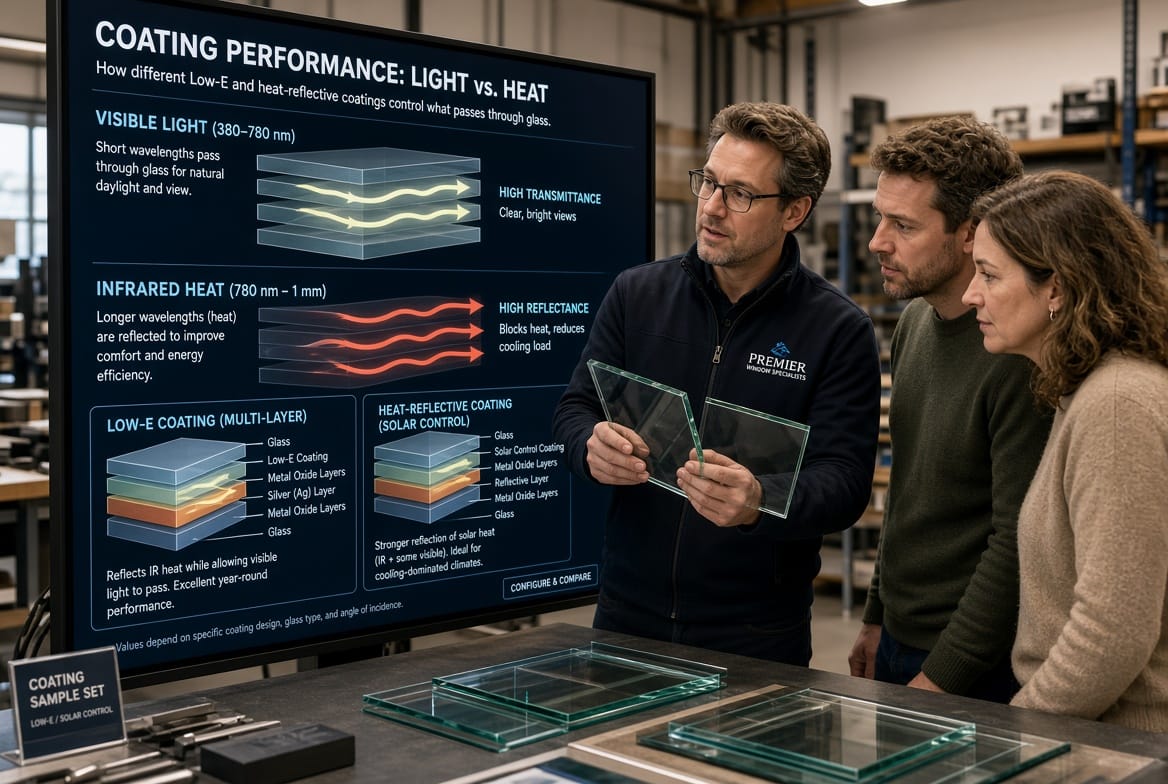
Low-E coating is a microscopically thin, virtually invisible metallic layer deposited onto glass during manufacturing. Its primary purpose is emissivity control. Emissivity measures how readily a surface emits thermal radiation. Standard uncoated glass has high emissivity and readily transfers heat. Low-E glass dramatically lowers that value.
How Low-E Works
In winter, the coating reflects interior heat back into the room, reducing heat loss through the glass. In summer, it limits the amount of outdoor heat that enters. Many modern Low-E products also incorporate solar-control properties that selectively manage near-infrared radiation while preserving high visible light transmission.
Key performance traits of Low-E glass include:
- High visible light transmittance for bright, natural interiors
- Strong infrared reflection to keep heat where it belongs
- Neutral or lightly tinted appearance that blends with architecture
- Excellent U-factor improvement for better insulation
- Compatibility with double- and triple-pane insulated glass units
Low-E coatings come in two main categories: passive Low-E (optimized for colder climates to maximize solar heat gain in winter) and solar-control Low-E (balanced for mixed or warmer climates). Both remain highly transparent, avoiding the mirrored look sometimes associated with older reflective products.
Homeowners appreciate Low-E because it delivers comfort without sacrificing daylight or views. Rooms stay warmer in cold months and cooler in hot months, all while looking nearly identical to standard clear glass.
What Is Heat-Reflective Coating?
Heat-reflective coating creates a more pronounced reflective surface designed primarily to reject solar heat before it enters the building. These coatings often appear slightly mirrored or tinted and excel at blocking a large percentage of the sun’s infrared and ultraviolet energy.
How Heat-Reflective Works
The coating acts like a selective mirror for solar radiation. Visible light still passes through (though usually at a lower percentage than Low-E), while a significant portion of the heat-carrying infrared wavelengths bounces away. This makes heat-reflective glass particularly effective in intense sun exposures and hot climates.
Distinct characteristics include:
- Higher solar reflectance values
- Noticeable reduction in solar heat gain coefficient (SHGC)
- Ability to minimize glare and fading of interior furnishings
- Often a subtle metallic or tinted exterior appearance
- Strong performance on sun-facing elevations
Because the reflective layer is more aggressive at blocking solar energy, these coatings shine in regions where cooling loads dominate the energy budget. They also help protect furniture, flooring, and artwork from UV damage over time.
While the exterior can show a soft mirror effect under certain lighting conditions, interior views remain clear and the glass does not create the extreme darkness of older reflective films.
Side-by-Side Performance Comparison
Both coatings improve energy performance, yet they prioritize different mechanisms.
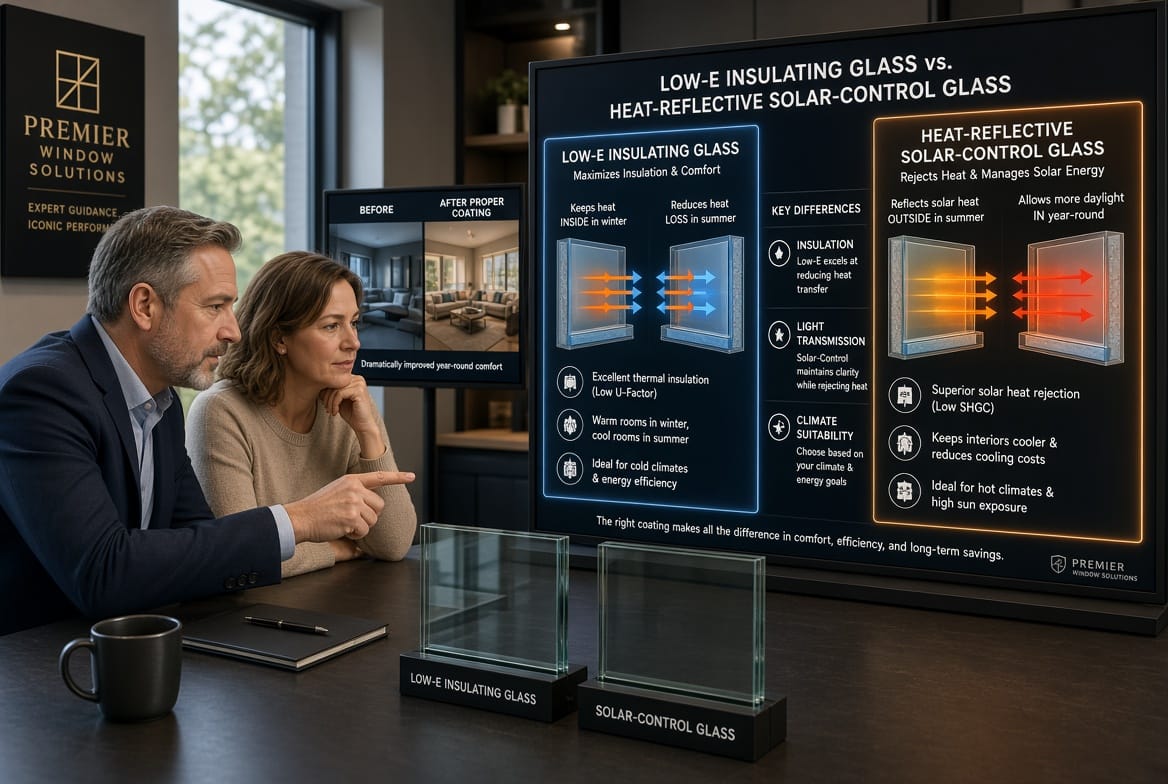
Low-E coatings excel at insulating the home by managing long-wave infrared radiation (the heat already inside or outside the building). They keep winter heat in and summer heat out with minimal impact on daylight.
Heat-reflective coatings specialize in solar control by reflecting short-wave solar radiation before it becomes indoor heat. They deliver lower solar heat gain, which is invaluable when the sun is intense.
In practical terms:
- Cold climates benefit most from the insulating strength of Low-E.
- Hot climates gain the greatest advantage from the solar-blocking power of heat-reflective surfaces.
- Mixed climates often find modern solar-control Low-E offers the best of both worlds.
Neither option is universally superior. Performance depends on climate zone, window orientation, and whether heating or cooling dominates annual energy use.
Climate-Specific Applications
Matching the coating to local weather patterns maximizes return on investment and daily comfort.
Cold and Heating-Dominated Climates
In regions with long, cold winters, Low-E coatings (especially passive Low-E) deliver outstanding results. By reflecting interior heat back into living spaces, they reduce the amount of energy needed to maintain comfortable temperatures. Homes feel warmer near windows, cold spots diminish, and heating systems run less frequently.
Homeowners in northern areas often report noticeable reductions in winter heating bills and improved comfort on the coldest days. The high visible light transmission also helps combat the darker winter months by maximizing natural daylight.
Hot and Cooling-Dominated Climates
Where summers are long and intense, heat-reflective coatings or solar-control Low-E products keep indoor temperatures more stable. By rejecting a large portion of solar radiation, these coatings lower the cooling load significantly. Rooms that previously overheated in the afternoon stay comfortable longer, and air-conditioning systems experience less strain.
In desert or southern coastal environments, the solar-control advantage translates into lower electricity use during peak summer months and reduced fading of interior materials.
Mixed and Transitional Climates
Many regions experience both cold winters and hot summers. Here, advanced solar-control Low-E coatings frequently provide the most balanced solution. These products combine strong insulating properties with selective solar rejection, adapting well to seasonal changes without requiring different treatments on different elevations.
Proper product selection still considers window orientation. South- and west-facing glass may benefit from stronger solar control, while north-facing openings can prioritize higher light transmission and insulation.
Additional Benefits Beyond Temperature Control
Choosing the right window solar coating delivers advantages that extend far past energy bills.
- UV protection: Both technologies block a high percentage of ultraviolet rays that fade fabrics, artwork, and flooring.
- Glare reduction: Controlled light transmission softens harsh sunlight without darkening rooms excessively.
- Condensation resistance: Improved surface temperatures of Low-E glass reduce the likelihood of indoor condensation in cold weather.
- Noise contribution: When combined with proper insulated glass units, both coatings support quieter interiors.
- Aesthetic flexibility: Modern formulations offer a range of subtle tints and neutral appearances that complement any architectural style.
- Durability: Factory-applied coatings are extremely hard and long-lasting when protected within an insulated glass unit.
These secondary benefits reinforce the primary goal of creating a more comfortable, efficient, and protected living environment.
Common Misconceptions Clarified
Some homeowners worry that high-performance coatings will make rooms too dark or create unwanted mirror effects. In reality, today’s Low-E products maintain excellent clarity and light levels. Heat-reflective options have also evolved; the mirror appearance is far more subtle than older generations of reflective glass.
Another frequent concern involves cost. While coated glass carries a higher initial price than clear glass, the long-term energy savings, comfort improvements, and potential contribution to higher home value typically offset the difference quickly. Many utility companies and energy programs also recognize these products with incentives or rebates.
Finally, some believe one coating works everywhere. Climate and orientation matter. A product ideal for a northern heating climate may underperform in a southern cooling climate, and vice versa. Professional assessment removes guesswork.
How to Choose the Right Coating for Your Home
Begin by identifying your climate zone and primary energy challenge—heating, cooling, or both. Next, evaluate window orientations and any specific comfort issues such as afternoon overheating or winter drafts.
Consider these practical questions:
- Do you prioritize maximum daylight and winter heat retention? Lean toward high-performance Low-E.
- Is intense summer sun your biggest concern? Explore heat-reflective or strong solar-control Low-E options.
- Do you want a balanced year-round solution? Modern dual-purpose Low-E coatings often excel.
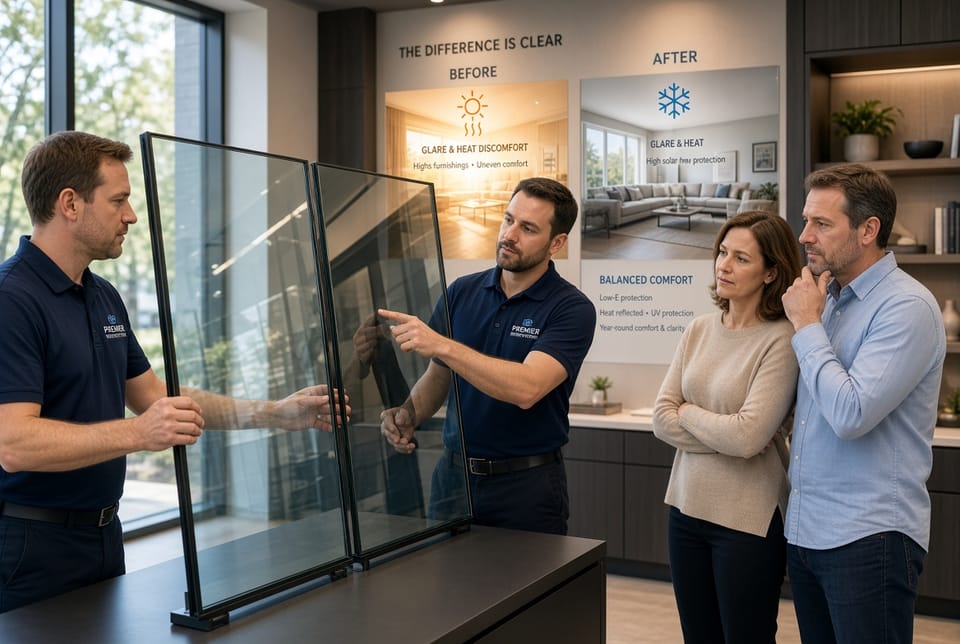
- Are views and exterior aesthetics important? Request samples so you can see exact appearance under real lighting conditions.
Working with experienced window professionals ensures the selected coating integrates properly with the full insulated glass unit, frame system, and installation details. Quality manufacturing and correct installation protect the coating’s performance for decades.
Long-Term Value and Peace of Mind
Investing in the appropriate window solar coating is an investment in daily comfort and reduced operating costs. Homes with properly specified Low-E or heat-reflective glass maintain more consistent indoor temperatures, place less demand on HVAC equipment, and create more enjoyable living spaces.
Occupants notice fewer hot or cold spots near windows. Energy statements improve. Furniture and finishes last longer thanks to superior UV protection. The overall quality of the indoor environment rises.
Because these coatings are factory-applied and sealed within the glass unit, they require no special maintenance beyond normal window cleaning. Their performance remains consistent year after year when the insulated glass unit stays intact.
Making the Decision with Confidence
The choice between Low-E and heat-reflective coatings does not need to feel complicated. Both technologies represent proven, reliable advances in window performance. When selected according to climate and home-specific conditions, either delivers measurable improvements in comfort and efficiency.
Start by understanding your primary seasonal challenges. Review sample glass under real lighting. Consult professionals who can calculate expected energy impact and recommend the optimal specification. The result is windows that work with your climate rather than against it.
Choose the right glass coating for your climate. Whether Low-E insulating performance or heat-reflective solar control better matches your needs, expert guidance ensures the best outcome.
Call Today for Climate-Perfect Window Coatings