The Window Glazing Compound: Traditional vs. Modern Materials
Choosing the right window glazing compound is one of the most important decisions homeowners and property managers make when restoring or maintaining windows. The material that seals glass into the frame directly affects energy efficiency, weather resistance, appearance, and long-term durability. Today’s market offers two primary categories: traditional putty and modern glazing compounds. Understanding their differences helps you select the best solution for classic restoration projects or contemporary high-performance needs.
Get Expert Window Glazing Advice – Call Now!
This comprehensive guide compares oil-based traditional putty with silicone and acrylic modern alternatives. You will learn composition details, curing times, application methods, ideal uses, and practical considerations so you can make an informed, confident choice.
Understanding Window Glazing Compounds
A window glazing compound is a specially formulated material that holds the glass pane securely in the sash or frame while creating a weather-tight seal. It must remain flexible enough to accommodate thermal expansion and contraction yet firm enough to resist wind, rain, and UV exposure.
Over decades, glazing technology has evolved dramatically. What once relied solely on natural oils and fillers now includes advanced polymers engineered for faster installation and superior longevity. Both traditional and modern options still serve valuable purposes depending on the window style, age of the structure, and performance goals.
Traditional Putty: The Classic Oil-Based Solution
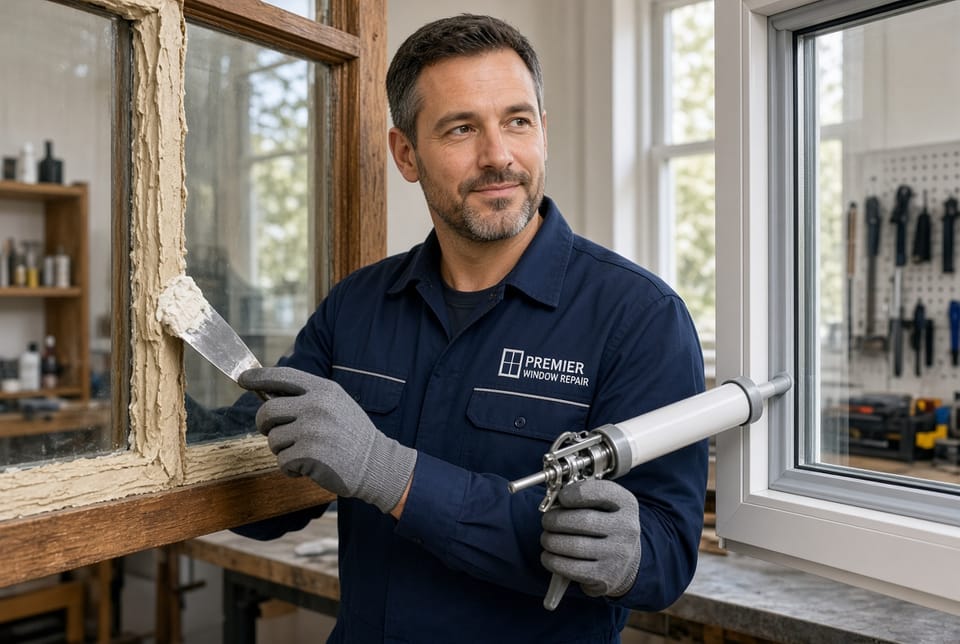
Traditional putty, often called linseed-oil putty or glazier’s putty, has been the standard for centuries. It is made primarily from finely ground chalk or calcium carbonate mixed with boiled linseed oil. Some formulations include additional drying oils or pigments for color matching.
Key Characteristics of Traditional Putty
- Oil-based composition that cures through oxidation rather than chemical reaction
- Long drying time – surface skin may form in a few days, but full hardening can take weeks or even months
- Classic, slightly textured finish that blends beautifully with historic woodwork
- Requires skilled hand application with a putty knife for a smooth, professional look
Because traditional putty hardens slowly, installers must allow ample curing time before painting. Once fully cured and painted, it creates a durable, authentic seal that has protected windows for generations.
Advantages of Traditional Putty
- Authentic appearance ideal for historic and period homes
- Excellent adhesion to wood frames when properly prepared
- Easy to tool and shape for custom profiles
- Cost-effective for large restoration projects
Limitations and Considerations
The extended curing period is the primary drawback. During this time the putty remains soft and vulnerable to damage. Temperature and humidity strongly influence drying speed, and unpainted putty can eventually crack or shrink if not maintained. Regular inspection and occasional touch-ups help preserve performance.
Ideal Applications for Traditional Putty
Traditional putty shines in heritage restorations, single-pane wooden windows, and any project where visual authenticity is essential. Craftsmen restoring Victorian, Craftsman, or Colonial-era homes frequently choose oil-based putty to maintain original character. It is also preferred when matching existing glazing on older buildings where modern materials would look out of place.
Modern Glazing Compounds: Silicone, Acrylic, and Beyond
Modern glazing compounds represent a significant advancement in materials science. The two most common families are silicone-based and acrylic-based formulations, each offering faster curing and enhanced flexibility.
Silicone Glazing Compounds
Silicone compounds are synthetic polymers that cure through moisture in the air. They remain permanently elastic, resist extreme temperatures, and provide outstanding adhesion to glass, metal, vinyl, and wood.
Acrylic Glazing Compounds
Acrylic compounds are water-based or solvent-based formulations that dry relatively quickly and can be painted soon after application. They offer good flexibility and are often formulated for easier cleanup.
Key Characteristics of Modern Compounds
- Faster curing – many products skin over in hours and reach handling strength within 24 hours
- High elasticity that accommodates movement without cracking
- Excellent resistance to UV, moisture, and temperature extremes
- Available in a wide range of colors and formulations for specific substrates
Advantages of Modern Glazing Compounds
- Dramatically reduced project timelines
- Superior long-term flexibility and weather resistance
- Compatible with contemporary window materials such as vinyl, aluminum, and fiberglass
- Many products are paintable shortly after application
Potential Drawbacks
Some pure silicone compounds cannot be painted, which may limit aesthetic options. Certain formulations require careful surface preparation to achieve maximum adhesion. In historic applications, the sleek, modern appearance may not match original craftsmanship.
Ideal Applications for Modern Compounds
Modern glazing compounds excel in new construction, replacement windows, commercial buildings, and any project where speed and performance take priority. They are the preferred choice for energy-efficient double-pane units, coastal properties exposed to harsh weather, and high-rise installations where durability is critical.
Side-by-Side Performance Comparison
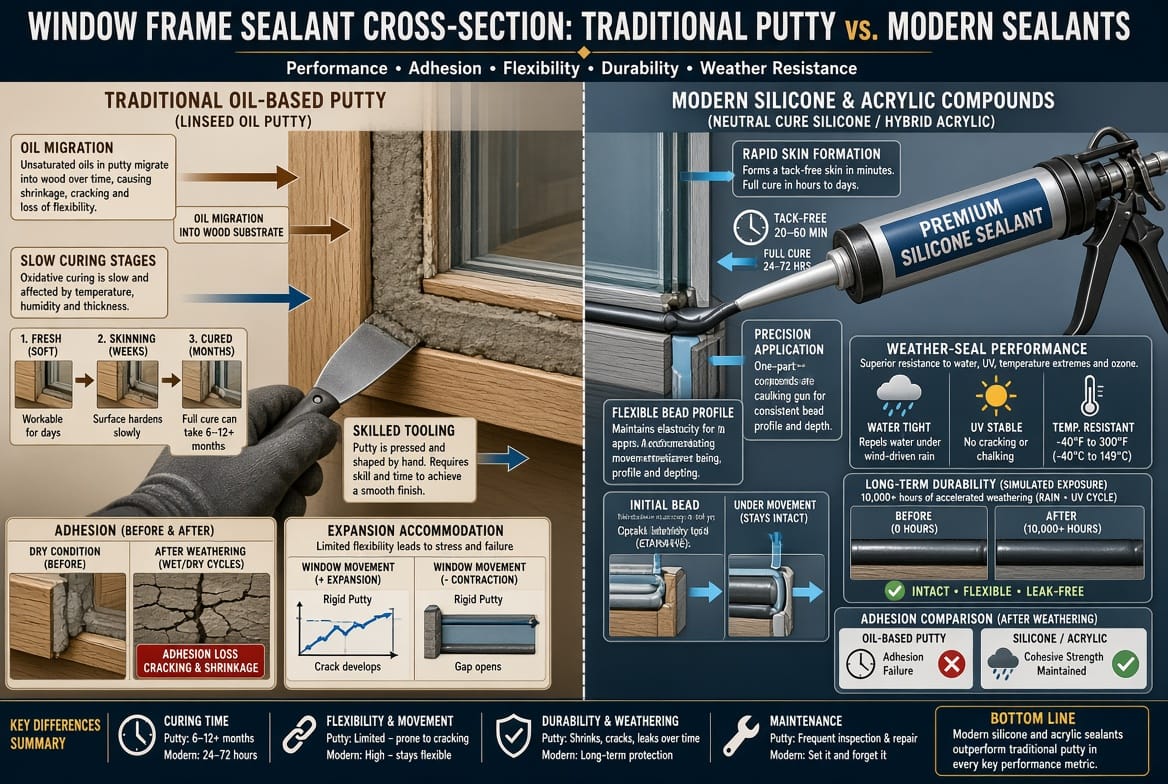
When evaluating traditional putty versus modern glazing compounds, several practical factors determine the best fit for your project.
Curing and Installation Time
Traditional putty demands patience. Full curing can stretch over weeks, delaying painting and final installation. Modern compounds, by contrast, often allow painting within 24–48 hours and deliver faster project completion. This difference is especially valuable for commercial timelines or weather-sensitive outdoor work.
Flexibility and Movement Accommodation
Oil-based putty becomes relatively rigid once fully cured. While this rigidity provides a solid hold, it can lead to cracking if the frame experiences significant expansion and contraction. Modern silicone and acrylic compounds remain elastic throughout their service life, absorbing movement and maintaining the seal for decades.
Weather and UV Resistance
Both categories can perform well when properly applied and maintained. However, modern compounds generally offer superior resistance to ultraviolet degradation and extreme temperature cycles without the need for frequent repainting.
Aesthetic Considerations
Traditional putty produces a classic, slightly irregular profile that complements historic architecture. Modern compounds create clean, uniform beads that suit contemporary designs. Paintable acrylics bridge the gap, offering modern performance with traditional color-matching flexibility.
Maintenance Requirements
Traditional putty typically needs more frequent inspection and occasional re-glazing over a 20–30 year span. High-quality modern compounds can last 30–50 years or longer with minimal intervention, reducing long-term ownership costs.
Choosing the Right Glazing for Your Windows
Selecting between traditional and modern materials depends on several project-specific factors:
- Age and architectural style of the building
- Desired completion timeline
- Exposure to harsh weather or coastal conditions
- Preference for authentic appearance versus high-performance seals
- Compatibility with existing frame materials
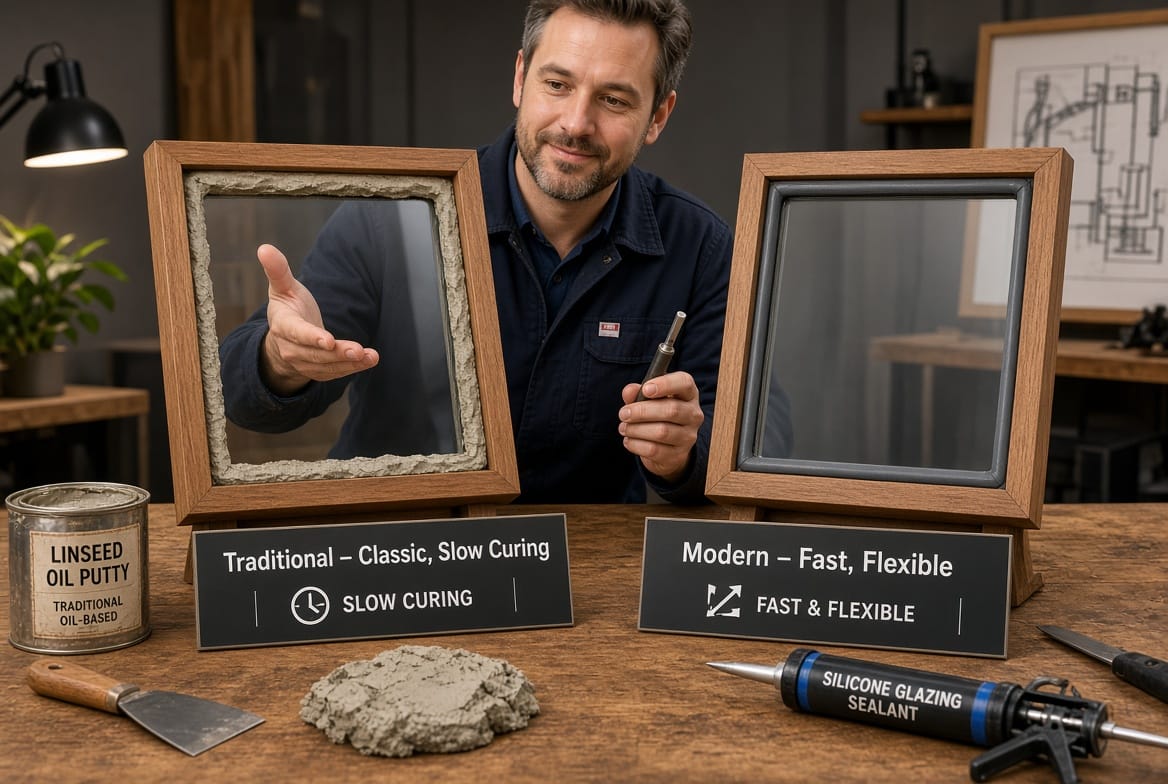
For historic homes where character preservation is paramount, traditional oil-based putty remains the gold standard. For energy upgrades, new construction, or properties requiring minimal maintenance, modern silicone or acrylic compounds deliver clear advantages.
Many professional glaziers maintain expertise in both systems. They assess frame condition, glass type, and environmental demands before recommending the optimal compound. Proper surface preparation—cleaning, priming when required, and correct tooling—remains essential regardless of the material chosen.
Practical Tips for Successful Application
Whether you choose traditional or modern compounds, follow these best practices:
- Ensure the glass and frame are clean, dry, and free of old compound residue
- Apply consistent pressure for uniform thickness
- Tool the bead promptly to create a smooth, watertight profile
- Protect the finished work from rain or extreme temperatures during initial curing
- Paint traditional putty only after it has adequately skinned over
Professional installation significantly reduces the risk of future leaks, drafts, or glass movement. Experienced technicians understand the subtle differences in working times and adhesion characteristics that DIY efforts may overlook.
Long-Term Value and Peace of Mind
Investing in the appropriate window glazing compound protects your home’s comfort, appearance, and energy efficiency for years. Traditional putty offers timeless beauty and proven reliability when properly maintained. Modern compounds provide speed, flexibility, and extended service life that align with today’s performance expectations.
By understanding the strengths of each option, you can avoid common pitfalls such as premature cracking, incomplete seals, or mismatched aesthetics. The right choice delivers quiet, draft-free rooms, lower heating and cooling costs, and windows that continue to enhance your property’s value.
When windows show signs of failing glazing—cracked putty, loose glass, or drafts—prompt attention prevents more extensive damage. Addressing issues early keeps repair costs manageable and maintains the integrity of the entire window system.
Final Recommendations
Traditional oil-based putty continues to serve classic architecture with unmatched authenticity and a long track record. Modern silicone and acrylic compounds meet the demands of contemporary construction with faster curing and superior elasticity. Neither option is universally superior; each excels in the right context.
Evaluate your specific windows, timeline, and performance priorities. Then select the compound that best supports those goals. Professional guidance ensures the material is applied correctly for maximum longevity and appearance.
Choose the right glazing for your windows. Whether restoring a historic treasure or upgrading modern units, expert evaluation makes the difference. They will help you achieve durable, attractive results that stand the test of time.
Protect Your Windows with Lasting Seals – Call Today!