The Whole-House Surge Protector: Protection from Lightning and Grid Spikes
Every modern home depends on a steady flow of clean electricity to power the devices, appliances, and systems that make daily life convenient and comfortable. Yet that same electrical supply can suddenly deliver destructive energy in the form of voltage surges. These brief but intense spikes can originate from distant lightning strikes, utility grid switching, or even large motors cycling on and off within the neighborhood. When such energy reaches sensitive electronics, the result can range from subtle performance degradation to complete and costly failure.
Call Now for Expert Surge Protector Installation
A whole-house surge protector stands as the most effective and comprehensive solution available to homeowners today. Mounted directly at the main electrical panel, this critical device intercepts dangerous over-voltages the moment they enter the property and safely diverts excess energy to ground. Unlike limited point-of-use devices, it shields every circuit and every appliance connected to the home’s electrical system. The following guide explains exactly how a whole-house surge protector works, why it outperforms ordinary power strips, how professional installation ensures maximum performance, and why this single upgrade represents one of the smartest investments a homeowner can make.
Understanding Electrical Surges and Their Hidden Dangers
Electrical surges are temporary increases in voltage that travel along power lines. A normal household voltage in North America is approximately 120 volts on standard circuits and 240 volts on larger appliance circuits. A surge can push that voltage hundreds or even thousands of volts higher for a fraction of a second.
Lightning is the most dramatic source. A single strike near power lines can induce massive transient voltages that race toward every connected building. Grid spikes, however, occur far more frequently. Utility companies routinely switch capacitors, restore power after outages, or manage load balancing; each of these actions can create secondary surges. Even everyday events inside the home—such as an air-conditioner compressor starting or a refrigerator cycling—generate smaller internal spikes that accumulate damage over time.
Without proper protection, these events gradually degrade circuit boards, power supplies, and microprocessors. Televisions may develop intermittent picture issues, refrigerators may lose temperature control, and expensive smart-home hubs may fail without obvious warning. In severe cases, a single large surge can destroy multiple high-value items simultaneously. The financial and emotional cost of replacing damaged equipment far exceeds the modest investment required for robust, whole-home protection.
What a Whole-House Surge Protector Actually Does
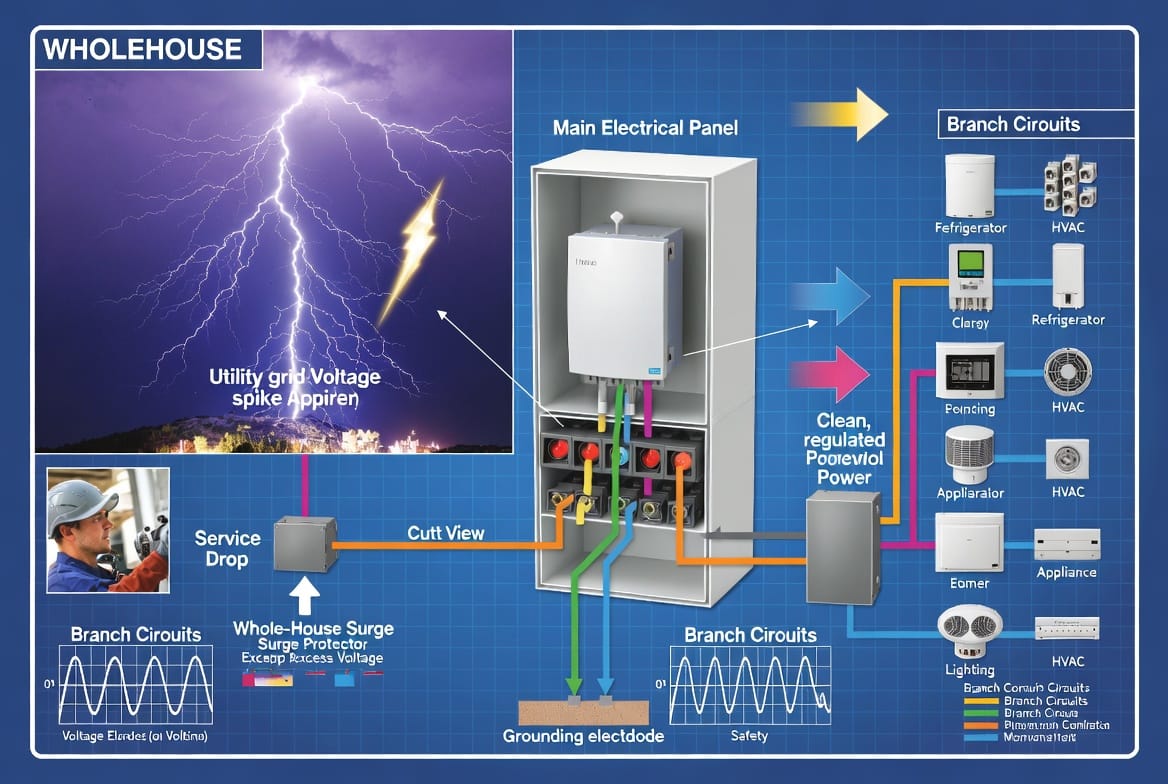
A whole-house surge protector is a specialized electrical component installed at the service entrance or main breaker panel. Its primary function is to clamp high voltage the instant it exceeds a safe threshold. Inside the device are metal-oxide varistors (MOVs) or similar components that remain dormant under normal conditions. When voltage rises above the rated clamping level—typically around 330 to 400 volts for residential units—the MOVs rapidly change state and create a low-resistance path that shunts the excess energy safely into the grounding system.
Because the protector sits at the panel, it intercepts the surge before the energy can travel down individual branch circuits. Clean power then continues to flow to lights, outlets, and hard-wired appliances. Most quality units also include indicator lights or monitoring features that confirm the device remains fully functional. Some advanced models even communicate with smart-home systems so homeowners receive alerts if protection capacity has been reduced after a major event.
This panel-level defense is continuous and automatic. There is no need to remember to plug devices into special strips or to unplug equipment during storms. Every receptacle, every switch, and every permanently connected load benefits from the same high-performance shielding.
How Whole-House Protection Differs from Ordinary Power Strips
Many homeowners rely on plug-in surge strips or power conditioners. While these devices offer limited help for the items plugged directly into them, they leave the majority of the home completely exposed. A typical power strip protects only the television, computer, or entertainment center connected to it. The refrigerator, washing machine, HVAC system, security cameras, garage-door openers, and every other circuit remain vulnerable.
Moreover, the protective components inside inexpensive strips degrade quickly after repeated smaller surges. Once the MOVs are spent, the strip may still provide power but no longer clamp voltage—creating a false sense of security. In contrast, a properly sized whole-house surge protector is engineered for the full service capacity of the home, usually 100, 200, or 400 amps. It is designed to withstand multiple high-energy events and typically carries a longer service life measured in years rather than months.
Another critical distinction is grounding quality. Panel-mounted units connect directly to the home’s grounding electrode system, providing the lowest possible impedance path for diverted energy. Plug-in strips rely on the quality of the outlet’s ground path, which can be compromised by older wiring or long circuit runs. The result is that whole-house protection consistently outperforms point-of-use devices in both coverage and reliability.
Professional Installation: Panel-Mounted Precision
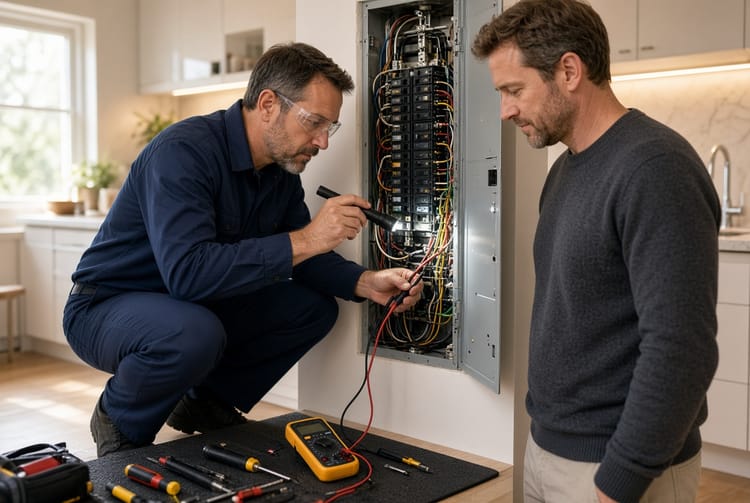
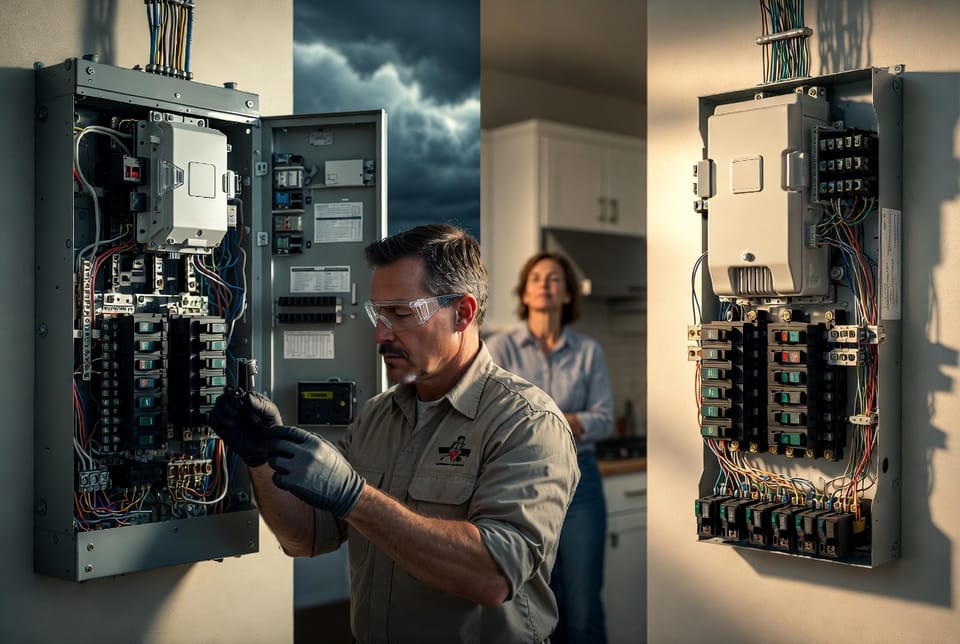
Because a whole-house surge protector connects directly to the main electrical service, installation must be performed by a licensed electrician. The process begins with a thorough evaluation of the existing panel, grounding system, and available breaker spaces. The technician then selects a unit whose surge current rating matches or exceeds the expected exposure for the geographic area and utility infrastructure.
Mounting occurs either inside the panel on a dedicated two-pole breaker or in a separate enclosure adjacent to the panel, depending on local code and panel design. Heavy-gauge conductors link the protector to the hot bus bars and to the neutral/ground bus. Torque specifications are followed precisely to ensure long-term connection integrity. After installation, the electrician verifies proper operation with testing equipment and explains the indicator lights or monitoring features to the homeowner.
Attempting a do-it-yourself installation is strongly discouraged. Working inside a live service panel carries serious risk of shock, arc flash, or improper connections that could leave the home unprotected or create fire hazards. Professional installation guarantees code compliance, optimal performance, and often includes manufacturer warranties that remain valid only when installed by qualified personnel.
Long-Term Benefits That Deliver Lasting Value
The advantages of installing a whole-house surge protector extend well beyond the immediate peace of mind during thunderstorm season.
- Comprehensive appliance protection – Every device in the home, whether plugged in or hard-wired, receives equal shielding. High-value items such as smart refrigerators, induction ranges, heat-pump systems, and home-theater equipment are safeguarded without the need for individual strips.
- Extended equipment lifespan – By eliminating the cumulative stress of repeated small surges, electronic components last longer and maintain peak performance. Homeowners frequently notice fewer unexplained glitches and longer intervals between replacements.
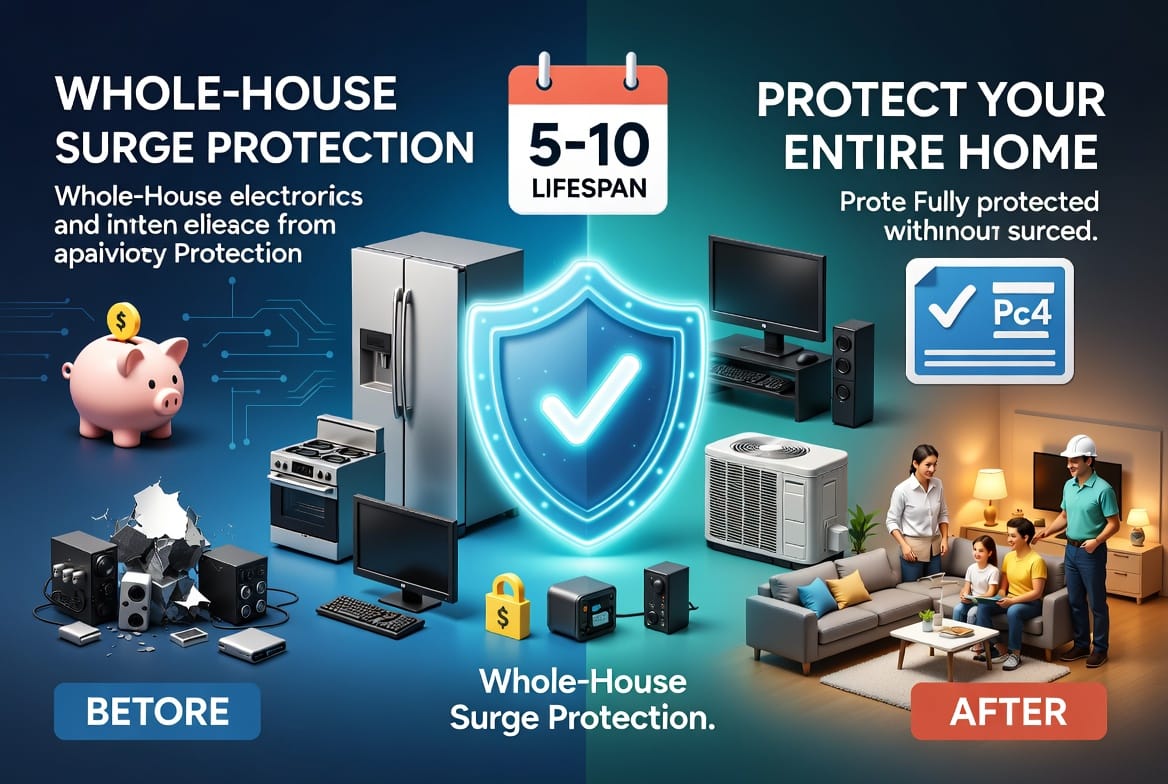
- Service life of five to ten years – Quality units are rated for multiple high-energy events and typically remain effective for half a decade or more under normal conditions. Many manufacturers offer replacement programs or warranties that cover the protected equipment itself.
- Inexpensive insurance – Compared with the cost of replacing a single major appliance or an entire entertainment system, the price of a professional whole-house installation is modest. It functions as continuous, low-cost insurance against an unpredictable risk.
- Increased home value and marketability – Real-estate professionals increasingly highlight modern electrical protection features. Prospective buyers recognize the foresight of owners who have already invested in whole-home surge defense.
- Compatibility with renewable and smart systems – Homes equipped with solar inverters, battery storage, or advanced energy-management systems benefit especially, because these technologies contain sensitive power electronics that are highly susceptible to voltage transients.
Taken together, these benefits create a compelling return on investment measured in both dollars saved and stress avoided.
Recognizing When Protection Is Most Critical
Certain situations elevate the urgency of installing a whole-house surge protector. Homes located in regions with frequent thunderstorms, properties served by overhead power lines, or residences that have experienced previous surge-related damage should prioritize this upgrade. Newer homes filled with microelectronics and smart devices are particularly vulnerable because modern circuitry operates at lower voltages and is less tolerant of transients. Older homes that have recently undergone panel upgrades or have added significant new loads also benefit greatly, because the original wiring may not have been designed with today’s sensitive electronics in mind.
Even urban apartments or condominiums can suffer grid-induced spikes that travel through shared transformers. In every case, the principle remains the same: the earlier the protective barrier is placed, the fewer opportunities a surge has to cause harm.
Maintenance and Ongoing Reliability
Once installed, a whole-house surge protector requires minimal attention. Homeowners should periodically check the status indicators—usually a green light for full protection and a red or amber light if the unit has sacrificed itself after a major event. After an especially severe storm or nearby lightning strike, it is wise to have the device inspected by the original installing electrician. Most units are modular, allowing individual protective modules to be replaced without removing the entire assembly.
Keeping the grounding system in good condition further enhances performance. Periodic checks of ground rods, bonding connections, and water-pipe bonding ensure that diverted energy has an effective path to earth. These simple steps preserve the long service life that quality protectors are designed to deliver.
A Smart Decision for Modern Living
In an era when homes contain more electronic value than ever before, leaving the electrical system unprotected is an unnecessary gamble. A whole-house surge protector provides continuous, automatic, and comprehensive defense against both dramatic lightning events and the quieter but equally damaging grid spikes that occur throughout the year. By clamping excess voltage at the panel, the device ensures that every circuit and every appliance receives only clean, safe power.
Professional installation guarantees correct sizing, secure connections, and full code compliance. The resulting benefits—universal appliance protection, multi-year reliability, and highly affordable insurance—make the investment one of the most practical upgrades any homeowner can choose.
Warning & CTA: Surge protection for your entire home is no longer optional in today’s electrically intensive world. Protect every appliance, every circuit, and every investment inside your house with a professionally installed whole-house surge protector.
Call Today for Complete Home Surge Defense