The Electrical Safety Inspection: What It Covers and Why You Need One
An electrical safety inspection is one of the most valuable protective services a homeowner can schedule. Electricity powers nearly every comfort and necessity in a modern house, yet it remains one of the least visible systems. Faulty wiring, overloaded panels, missing GFCI protection, and outdated components can exist for years without obvious warning signs—until a shock, fire, or outage occurs. A professional inspection evaluates the condition of your electrical system, documents hazards, and gives you a clear path to safer living.
Protect Your Home from Hidden Electrical Risks – Call Today
This service is not a sales pitch for unnecessary work. It is a structured, code-informed assessment designed to protect people and property. Whether you live in an older home, recently completed a renovation, or are preparing to buy or sell, understanding what the inspection covers and why it matters can prevent costly surprises and serious injury.
What an Electrical Safety Inspection Actually Is
A qualified electrician conducts a systematic review of accessible electrical components against current safety standards and manufacturer guidelines. The goal is to identify immediate hazards, code deficiencies, wear and aging, and conditions that increase the risk of fire or shock. The inspector documents findings, explains their significance in plain language, and recommends prioritized corrections.
Unlike a simple visual glance, a proper inspection combines observation, testing, and professional judgment. It is reassuring because it replaces guesswork with facts. You receive an authoritative snapshot of system health rather than hoping everything is “probably fine.”
What the Inspection Covers
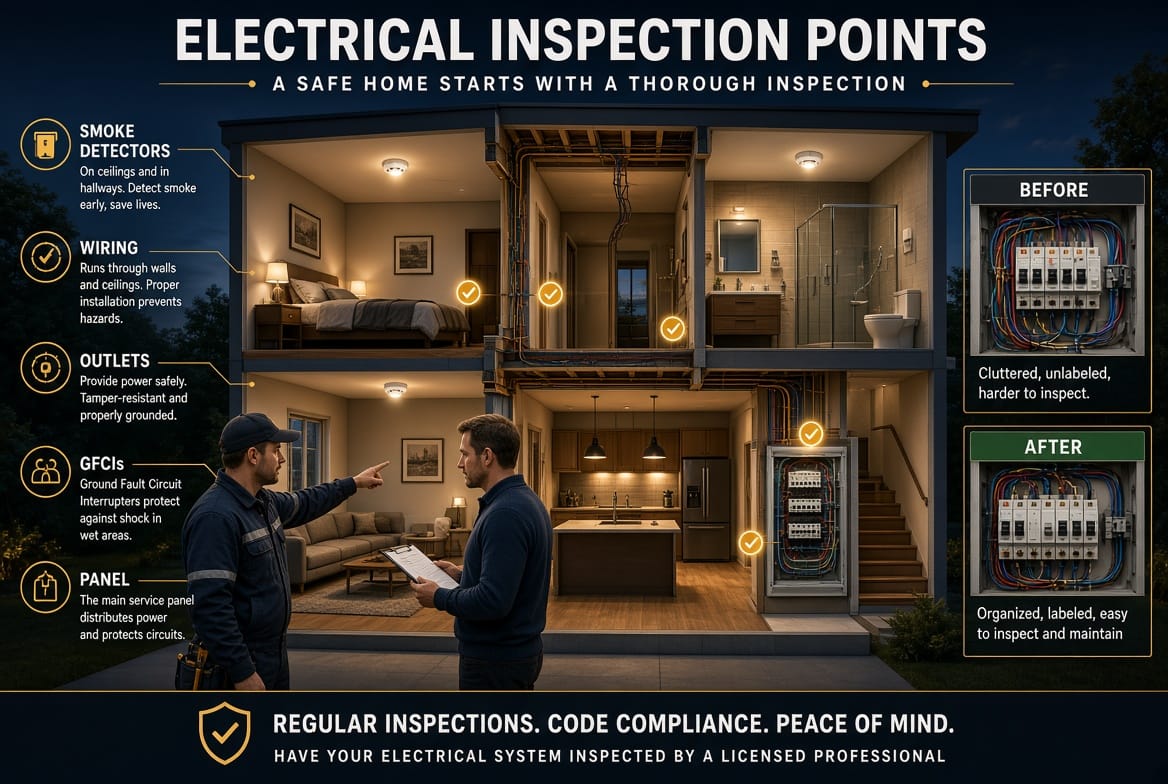
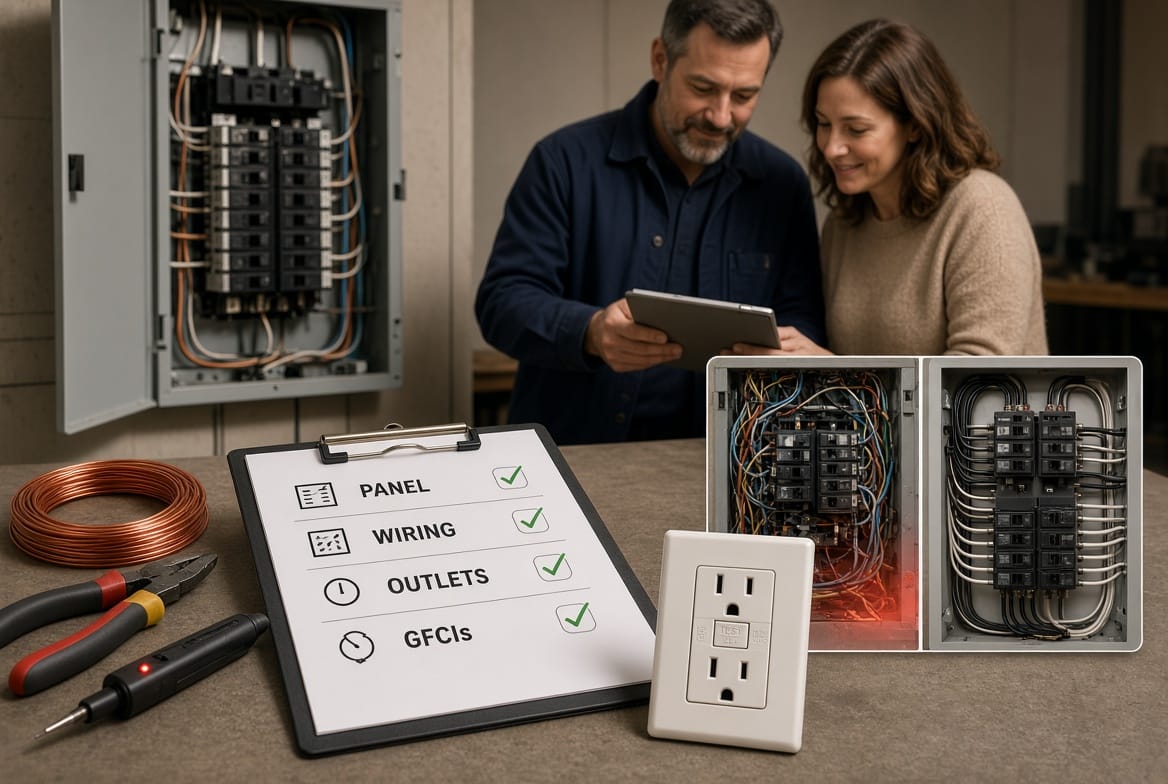
A thorough electrical safety inspection examines the core components that keep power flowing safely through your home.
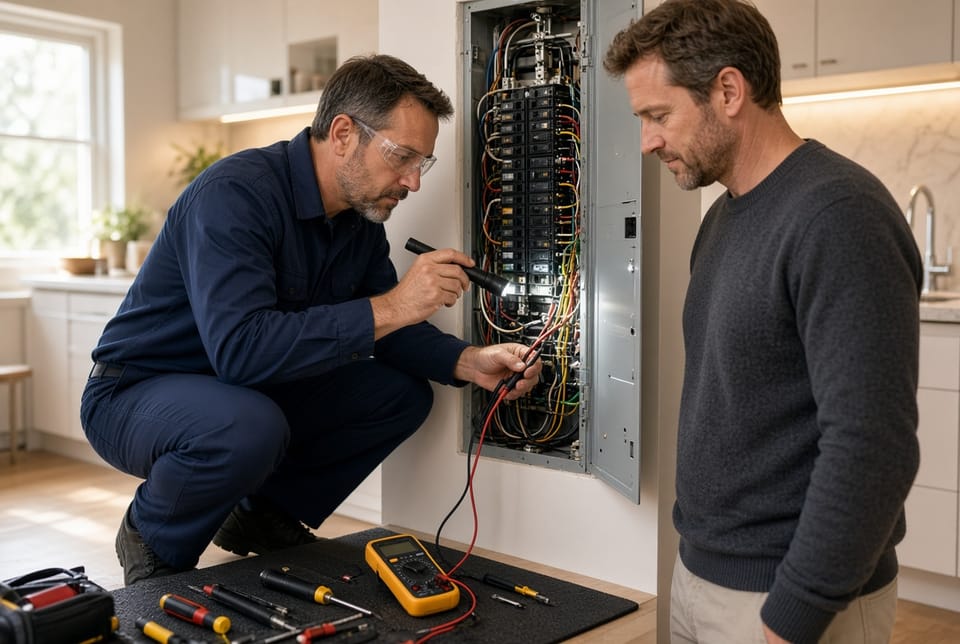
Electrical Panel and Service Equipment
The electrical panel (breaker box or fuse box) is the heart of the system. The inspector checks:
- Panel condition, labeling, and proper cover
- Breaker types, ratings, and signs of overheating or corrosion
- Double-tapped breakers and other improper connections
- Adequate capacity for current household demand
- Grounding and bonding integrity
- Service entrance cable and meter-base condition (where accessible)
An undersized or deteriorating panel is a leading contributor to overheating and fire risk. Clear documentation here often reveals whether an upgrade is advisable or whether simple corrections restore safety.
Wiring Throughout the Home
Inspectors evaluate visible and accessible wiring for:
- Insulation condition (cracking, fraying, or heat damage)
- Proper wire gauge for circuit load
- Use of outdated materials such as knob-and-tube or ungrounded wiring in older homes
- Secure connections in junction boxes
- Signs of amateur modifications or exposed conductors
Damaged or undersized wiring can overheat under normal use. Identifying these issues early prevents hidden deterioration from becoming a fire source.
Outlets, Switches, and Receptacles
Every accessible outlet and switch is reviewed for:
- Secure mounting and cover plates
- Proper polarity and grounding
- Signs of scorching, loose fit, or wear
- Correct placement relative to water sources and countertops
- Function of two-prong versus three-prong receptacles
Loose or ungrounded outlets increase shock risk and can damage electronics. The inspection flags these before they fail.
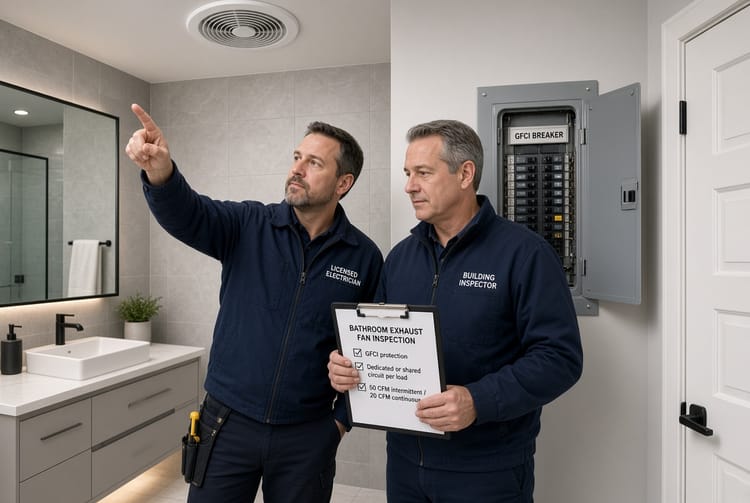
GFCI Protection
Ground Fault Circuit Interrupters (GFCIs) are critical in kitchens, bathrooms, garages, basements, outdoors, and anywhere water is present. The inspector tests:
- Presence of GFCI protection where required
- Proper operation of GFCI outlets and breakers
- Correct wiring (line versus load)
- Reset functionality and trip response
A non-functioning or missing GFCI is one of the most common and easily corrected safety gaps. Testing confirms these devices will actually interrupt power during a ground fault.
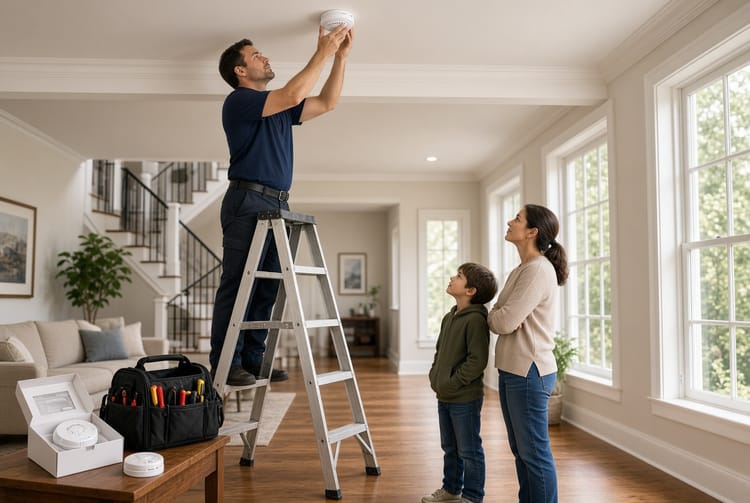
Smoke Detectors and Related Life-Safety Devices
Although sometimes treated separately, interconnected smoke detectors and carbon monoxide alarms are frequently included or recommended during an electrical safety inspection because they rely on the electrical system or battery backup tied to it. The review typically covers:
- Adequate number and placement
- Interconnection where required
- Power source reliability
- Age of units (most have a 10-year service life)
Working detectors save lives. Confirming they are powered and positioned correctly is a natural extension of electrical safety.
Additional items often reviewed include AFCI protection on bedroom and living-area circuits, lighting fixtures, ceiling fans, appliance circuits, and outdoor equipment. The inspector notes anything that presents an elevated electrical hazard.
When You Need an Electrical Safety Inspection
Timing matters. Certain situations dramatically increase the value of a professional review.
Older Homes
Homes built before modern grounding, GFCI, and AFCI requirements often contain original wiring that has aged. Insulation becomes brittle, connections loosen, and capacity no longer matches today’s appliance load. An inspection in a home 20, 40, or 70 years old frequently uncovers conditions that were acceptable when installed but no longer meet safety expectations.
After Renovations or Additions
Remodeling can strain existing circuits or introduce new connections. Even well-intentioned work may leave ungrounded outlets, overloaded breakers, or missing GFCI protection in wet areas. An inspection after construction verifies that new work integrates safely with the original system.
Before Buying a Home
A pre-purchase electrical inspection (often part of a broader home inspection or as a standalone specialist visit) reveals costly or dangerous conditions before closing. Buyers gain negotiating leverage and peace of mind; sellers can address issues proactively and avoid last-minute surprises.
Other high-value moments include after a lightning strike or power surge, when adding high-demand equipment (EV charger, hot tub, workshop tools), after noticing flickering lights or warm outlets, or simply as periodic preventive maintenance every few years.
Benefits of Scheduling the Inspection
The advantages extend well beyond a checklist.
- Risk reduction: Early identification of fire hazards, shock risks, and overloaded circuits protects occupants.
- Informed decisions: You receive prioritized recommendations rather than vague worry.
- Insurance and resale value: Documented safety work can support insurance requirements and strengthen a home’s market position.
- Energy and reliability: Finding loose connections or failing components often improves performance and reduces nuisance trips.
- Peace of mind: Knowing a qualified professional has examined the system is inherently reassuring.
An inspection does not automatically mean expensive upgrades. Many findings are modest corrections—replacing a few outlets, adding GFCI protection, or tightening connections—that deliver outsized safety gains.
What Happens During the Visit
A typical appointment lasts one to three hours depending on home size and complexity. The electrician:
- Reviews the service and panel.
- Tests representative outlets, GFCIs, and AFCIs.
- Examines accessible wiring and junction points.
- Checks smoke and CO detector function where included.
- Notes observations and photographs key findings.
- Walks you through results and answers questions.
You remain in control. The inspector explains risks in clear language so you can decide next steps with confidence.
Common Findings and Why They Matter
Inspectors regularly document:
- Missing or failed GFCI protection near water
- Overloaded or unlabeled panels
- Ungrounded outlets in older rooms
- Damaged insulation or improper splices
- Outdated smoke detectors
- Signs of previous overheating (discoloration, melting)
Each of these conditions has a documented association with residential electrical fires or injuries. Addressing them is not cosmetic; it is preventive.
How to Prepare and What to Expect Afterward
Clear access to the panel, attic or basement wiring runs where safe, and outdoor equipment helps the visit go smoothly. Afterward you receive findings and recommended actions. Urgent hazards should be corrected promptly; lower-priority items can be scheduled. Keep the report with your home records.
Choose a licensed, insured electrician experienced in residential safety inspections rather than a general handyman. Ask about their process, what they test, and how they document results. A professional, authoritative approach builds trust.
Protecting What Matters Most
Electricity is reliable until it is not. Hidden deterioration does not announce itself with a convenient warning light. An electrical safety inspection brings those hidden conditions into the open so you can act from knowledge rather than hope.
Whether your home is decades old, newly renovated, or about to change owners, the inspection is a practical, high-value service. It covers the panel, wiring, outlets, GFCIs, smoke detectors, and related components that keep your family safe. The benefits—reduced fire risk, fewer shocks, better reliability, and documented peace of mind—far outweigh the modest time and cost of the visit.
Warning: Do not ignore flickering lights, warm outlets, frequent breaker trips, or burning smells. These can indicate active electrical hazards. An inspection is the responsible next step.
Ensure your home’s electrical safety. A licensed technician can schedule a convenient visit, explain findings clearly, and help you keep your home safe for years to come.
Get Your Electrical System Inspected Today