The Whole-House Surge Protector: Choosing the Right Joule Rating
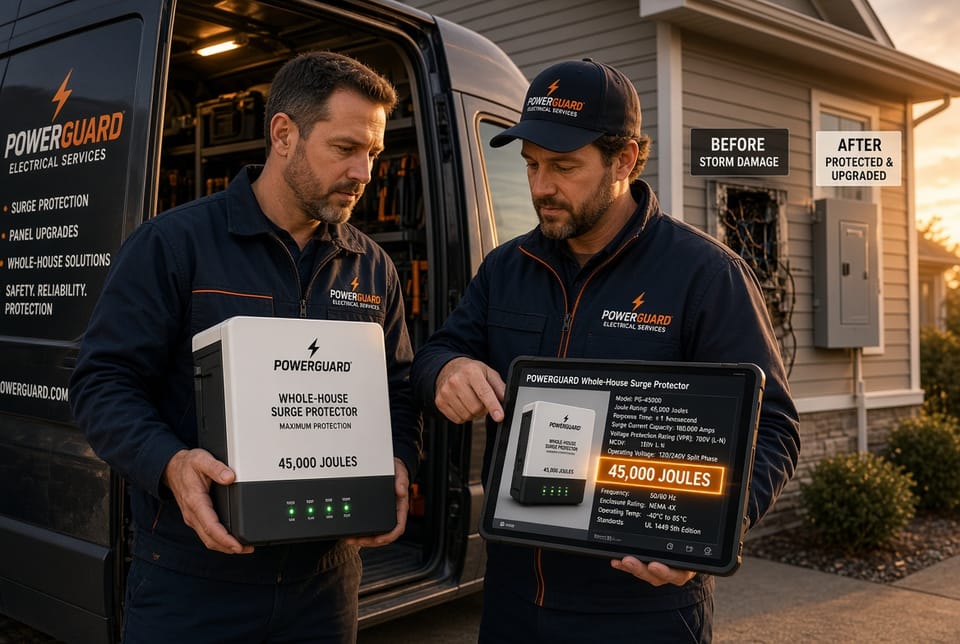
Power surges remain one of the most underestimated threats to modern households. A single spike traveling through utility lines can silently destroy refrigerators, smart televisions, computers, HVAC systems, and even the delicate electronics inside your home’s control panels. The most effective defense is a properly selected whole-house surge protector. Among every technical detail printed on the unit, one specification stands above the rest: the joule rating. Understanding this number is the difference between reliable protection and expensive disappointment.
Get the Right Joule Rating Today – Call Now!
This guide explains exactly what the joule rating measures, why the recommended range of 30,000 to 50,000 joules matters for whole-house applications, and why selecting a higher rating consistently delivers superior long-term security. By the end you will feel confident choosing the right device and scheduling professional installation that keeps every circuit safe.
Understanding the Joule Rating: The Energy Absorption Capacity
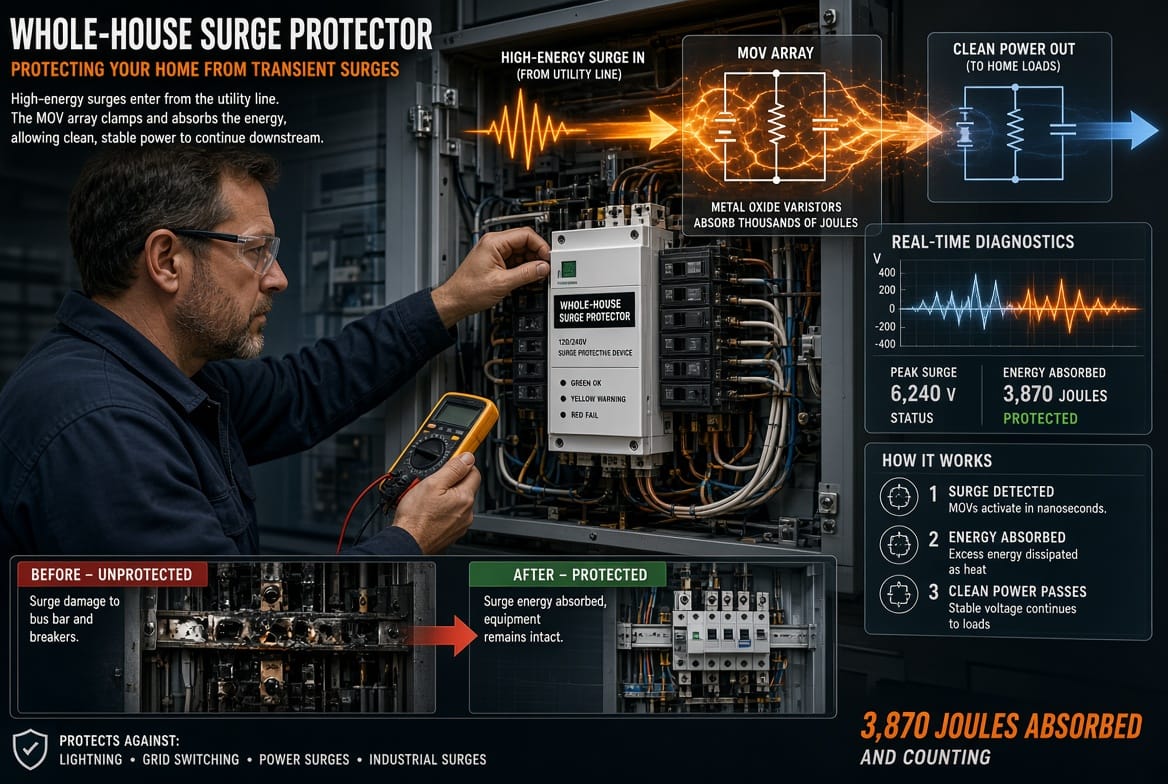
The joule rating quantifies the total amount of energy a surge protector can absorb before it can no longer divert excess voltage. One joule equals the energy required to push one ampere of current through one ohm of resistance for one second. In practical terms, every time a surge arrives, the protector’s metal-oxide varistors (MOVs) clamp the voltage and dissipate the unwanted energy as heat. The higher the joule number, the greater the cumulative energy the device can handle across its service life.
Think of the joule rating as a reservoir. A modest 10,000-joule unit resembles a small bucket that fills quickly during repeated or intense events. A robust 40,000-joule or 50,000-joule whole-house protector functions more like a large cistern, absorbing multiple severe surges without immediate failure. Because whole-house units sit at the main service panel, they intercept every incoming spike before it reaches branch circuits. Their joule capacity must therefore be substantially larger than the ratings found on individual plug-in strips.
Why Whole-House Protectors Demand Higher Ratings
Point-of-use strips protect single devices and typically carry ratings between 1,000 and 4,000 joules. A whole-house surge protector, by contrast, guards dozens of circuits simultaneously. Utility-side events, lightning-induced transients, and internal load switching all funnel through the main panel. Industry experience shows that devices rated below 30,000 joules often reach end-of-life after only a few significant storms. Units engineered for 30,000–50,000 joules maintain clamping performance far longer, preserving sensitive electronics year after year.
Higher ratings also provide a built-in safety margin. Real-world surges rarely arrive in neat, textbook sizes. A single lightning-related event can exceed 20,000 joules in a fraction of a second. When successive smaller spikes follow, a marginal protector may degrade rapidly. Selecting the upper end of the recommended range ensures the device continues functioning after the first major incident.
Recommended Joule Ratings for Reliable Whole-House Protection
For most single-family homes the following guidelines deliver balanced, authoritative protection:
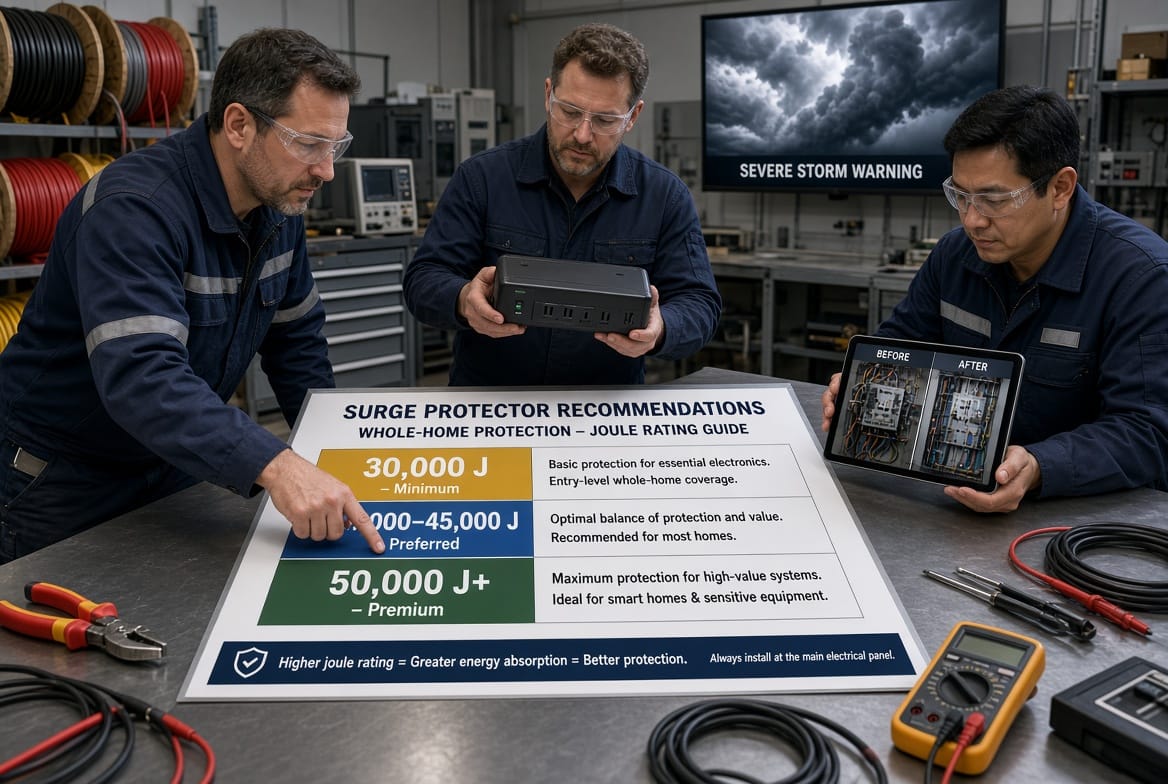
- Minimum acceptable rating: 30,000 joules
Suitable for smaller homes in areas with moderate lightning activity and stable utility service. - Preferred everyday rating: 40,000–45,000 joules
Offers excellent longevity for typical suburban residences with multiple high-value electronics. - Premium protection level: 50,000 joules and above
Ideal for larger homes, properties in high-lightning regions, or households containing extensive smart-home systems, home theaters, and sensitive medical equipment.
These thresholds are not arbitrary. They reflect decades of field data collected by electrical professionals who replace failed units after major weather events. Choosing anything lower leaves the home vulnerable; choosing higher simply extends the protective window.
Why Higher Joule Ratings Are Consistently Better
A higher joule rating does not change the clamping voltage; it multiplies the total energy the unit can withstand before the protective components wear out. Every surge, no matter how small, consumes a portion of the available joule capacity. Over months and years those micro-events accumulate. A 50,000-joule protector simply possesses more “life” than a 25,000-joule counterpart.
Additional advantages include:
- Extended service intervals – fewer replacements mean lower long-term ownership cost.
- Greater resilience during multi-strike storms – successive lightning pulses do not immediately exhaust the device.
- Compatibility with modern loads – today’s homes contain far more electronics than homes of even ten years ago; higher capacity matches that increased demand.
- Peace of mind during utility switching – power companies frequently perform capacitor bank operations that generate repetitive surges; a robust rating handles them gracefully.
Selecting the highest practical rating within budget is therefore a rational, forward-looking decision rather than an extravagance.
Additional Factors That Complement the Joule Rating
While the joule rating remains the headline specification, several supporting features enhance overall performance:
- Clamping voltage (also called let-through voltage) should stay at or below 400 volts for 120/240-volt systems.
- Response time measured in nanoseconds ensures the device reacts before sensitive microprocessors can be damaged.
- Indicator lights or remote monitoring alert homeowners when the unit has reached end-of-life.
- UL 1449 Type 1 or Type 2 listing confirms independent safety testing.
- Warranty length and connected-equipment coverage provide financial reassurance should a catastrophic event occur.
None of these secondary traits can compensate for an inadequate joule rating. Always begin selection with the energy-absorption number, then refine based on the supporting characteristics.
The Critical Role of Professional Installation
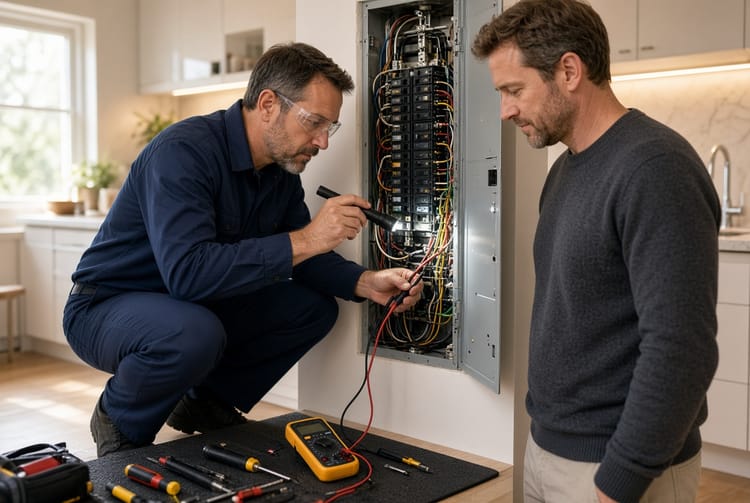
Even the highest-rated whole-house surge protector delivers limited benefit if installed incorrectly. Proper placement requires direct connection to the main service panel with the shortest possible lead lengths. Long wire runs introduce impedance that reduces clamping effectiveness. Licensed electricians understand grounding requirements, bonding techniques, and local electrical codes that govern these installations. Attempting a do-it-yourself approach risks improper torque on lugs, neutral-ground bonding errors, or violation of utility regulations.
Professional installation also includes a full-system evaluation. Technicians verify that the existing grounding electrode system meets current standards, measure voltage at the panel, and confirm that the chosen protector matches the home’s amperage rating. This comprehensive approach transforms a simple component into a complete protective strategy.
Common Risks of Choosing an Insufficient Joule Rating
Homeowners sometimes select lower-rated units to reduce upfront cost. The consequences appear only after the first major surge season:
- Premature failure of the protector itself, leaving the home unprotected without warning.
- Cumulative damage to connected appliances that manifests as shortened equipment life.
- Voided warranties on high-value electronics when manufacturers discover inadequate upstream protection.
- Repeated service calls and replacement expenses that quickly exceed the original savings.
In contrast, investing in a properly rated device eliminates these recurring costs and preserves the integrity of every electronic system in the house.
Long-Term Benefits of Correct Joule Selection
Families who install whole-house protectors rated between 30,000 and 50,000 joules report measurable advantages:
- Noticeably fewer unexplained equipment failures.
- Greater confidence during thunderstorm season.
- Potential insurance premium considerations in certain regions.
- Higher resale value when prospective buyers learn of the upgraded electrical protection.
- Seamless compatibility with future smart-home expansions.
These outcomes stem directly from matching the joule capacity to real-world energy threats rather than relying on minimal specifications.
Making the Final Decision with Confidence
Begin by assessing your home’s size, geographic lightning risk, and the value of the electronics you wish to protect. Most homeowners discover that a 40,000- to 50,000-joule unit offers the optimal balance of performance and longevity. Confirm that the chosen model carries current UL listing, clear status indicators, and a meaningful warranty. Then schedule installation with qualified professionals who treat the project as a complete system upgrade rather than a simple part swap.
The joule rating is not merely a number printed on a box; it is the quantitative measure of how much destructive energy your home can safely absorb. Selecting the right capacity transforms an ordinary electrical panel into a resilient barrier against one of nature’s most unpredictable forces.
Warning: Choosing an undersized surge protector leaves every connected device exposed to irreversible damage. Protect your investment and your family’s safety by selecting a properly rated whole-house unit today.
Experienced technicians stand ready to evaluate your panel, recommend the ideal joule rating for your specific home, and complete a code-compliant installation that delivers lasting peace of mind.
Secure Your Electronics – Call for Expert Installation Now