The White Oak vs. Red Oak: Choosing the Right Oak

Selecting the ideal hardwood for your floors is one of the most important decisions you will make when enhancing your home. Among the many options available, white oak and red oak stand out as two classic hardwoods that have earned lasting respect from homeowners, designers, and flooring professionals alike. Both deliver timeless elegance, proven strength, and versatile performance. Understanding their subtle yet meaningful differences allows you to match the right oak to your lifestyle, design vision, and long-term needs with complete confidence.
Choose Your Perfect Oak Floors – Call Now!
In this comprehensive guide, we explore the key distinctions in grain, color, durability, and ideal applications so you can make an informed choice. Whether you prefer a clean contemporary look or a warm traditional atmosphere, the right oak flooring will elevate every room while providing decades of reliable service.
Understanding These Two Classic Hardwoods
Oak has been a preferred flooring material for generations because of its natural beauty and resilience. White oak and red oak both belong to the same family yet develop unique characteristics that influence how they appear and perform in real homes.
White oak grows with a denser cellular structure that creates a more refined appearance. Red oak, by contrast, offers a slightly more open feel that many people find inviting and familiar. Neither is superior in every situation. The better choice depends on the atmosphere you want to create and the practical demands of your household.
Professionals consistently recommend both species for residential and light commercial projects because they balance aesthetics with everyday durability. When installed correctly and maintained with care, either oak will serve your family for many years.
Grain Patterns: Subtlety Versus Character
One of the most noticeable differences appears in the grain.
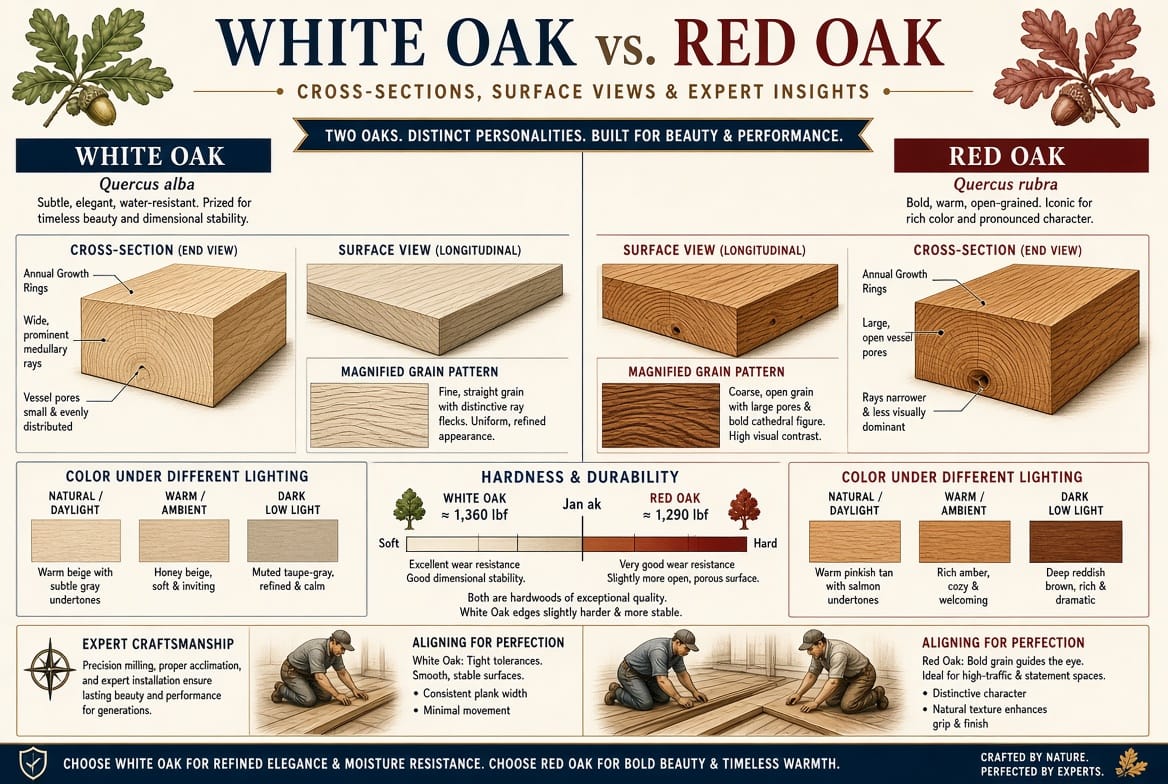
White oak typically displays a more muted, tighter grain. The lines run in a refined, consistent pattern that feels calm and sophisticated. This quieter visual texture allows the floor to blend seamlessly with modern furnishings, minimalist décor, and open-concept spaces. Many designers favor the restrained grain of white oak because it creates a sense of spaciousness and understated luxury.
Red oak presents a more pronounced, open grain with distinctive cathedral patterns and occasional peaks. These features give the wood greater visual movement and personality. The stronger grain works beautifully in traditional homes, farmhouse-style interiors, and rooms where you want the floor to become a warm focal point.
Neither pattern is better—only different. If you prefer floors that recede gracefully into the background and let furniture and artwork take center stage, the muted grain of white oak often proves ideal. If you enjoy floors that contribute character and visual interest on their own, the bolder grain of red oak delivers exactly that quality.
- White oak grain: tighter, more uniform, quieter overall appearance
- Red oak grain: more open, cathedral-style figures, greater visual depth
- Both accept stains and finishes evenly when prepared by skilled technicians
Color Characteristics: Cool Neutrals Versus Warm Tones
Color is another decisive factor.
White oak tends toward cooler, lighter tones that range from soft beige to gentle grayish-brown. These hues pair effortlessly with contemporary palettes, cool-toned walls, and metallic accents. Because the base color is more neutral, white oak accepts a wide variety of stains while still retaining a fresh, modern presence.
Red oak carries warmer undertones that lean pinkish or reddish-brown. This inherent warmth creates an inviting glow that complements traditional furnishings, rich wood cabinetry, and earth-toned interiors. Many homeowners appreciate how red oak makes rooms feel cozier and more lived-in from the first day of installation.
Lighting plays a significant role in how each species appears. Natural northern light can emphasize the cooler qualities of white oak, while southern or western exposure enhances the inviting warmth of red oak. Professional installers often bring sample boards into the actual rooms so you can evaluate both options under your home’s unique lighting conditions before making a final decision.
Durability and Everyday Performance
When it comes to strength and longevity, white oak and red oak perform very similarly. Both rank high on the Janka hardness scale, making them suitable for active households, children, and pets.
White oak offers slightly greater resistance to moisture because of its closed cellular structure. This advantage makes it a reassuring choice for areas that may experience occasional humidity fluctuations, such as kitchens or entryways near exterior doors. Red oak remains highly durable under normal residential traffic and handles daily wear with equal reliability when finished properly.
Both species respond well to professional sanding, staining, and sealing. A quality polyurethane or hardwax-oil finish protects the surface against scratches, spills, and fading. With routine care—regular sweeping, prompt attention to moisture, and periodic refinishing every 10–15 years—either oak floor will maintain its beauty and structural integrity for decades.
Homeowners often express concern about dents or scratches. The good news is that both oaks develop a gentle, lived-in patina rather than looking damaged. Minor surface marks can usually be blended during routine maintenance, preserving the overall elegance of the floor.
Ideal Applications and Design Styles
The choice between these two oaks often comes down to the overall style of your home.
White oak excels in contemporary, Scandinavian, mid-century modern, and transitional interiors. Its muted grain and cooler tones create clean lines and a sense of calm sophistication. Wide-plank white oak floors have become especially popular in open-plan living spaces because they visually expand the room and provide a neutral foundation for bold furniture or artwork.
Red oak remains the classic choice for traditional, colonial, craftsman, and rustic designs. The warmer color and more expressive grain complement antique furniture, detailed millwork, and richer color schemes. Many historic restorations and family homes continue to specify red oak because it feels authentic and welcoming.
Both species adapt successfully to various plank widths, from traditional 2¼-inch strips to modern 5-inch or wider planks. Engineered versions of either oak also perform well over radiant heat systems or in multi-story installations where solid hardwood might present dimensional challenges.
Consider traffic patterns and room function as well. High-traffic areas benefit equally from both oaks when finished with a durable topcoat. For moisture-prone zones, the slight edge of white oak can provide extra peace of mind.
Practical Considerations for Installation and Maintenance
Professional installation remains essential for either species. Proper acclimation, subfloor preparation, and moisture testing ensure the floor performs as expected for years to come. Experienced technicians understand the unique working properties of each oak and select the best fastening or floating methods accordingly.
Maintenance routines are nearly identical:
- Sweep or vacuum regularly with a soft brush attachment
- Wipe spills promptly with a slightly damp cloth
- Use manufacturer-approved cleaners only
- Place felt pads under furniture legs
- Maintain consistent indoor humidity between 30 % and 50 %
Refinishing is straightforward for both. White oak often requires fewer stain adjustments because of its more uniform base color, while red oak may benefit from a light wash or toner to balance its natural warmth if a cooler look is desired later.
Cost differences between the two species are usually modest and depend more on grade, width, and finish than on the type of oak itself. Higher grades of either wood command premium pricing because of clearer appearance and fewer natural characteristics.
Making the Confident Choice for Your Home
The decision ultimately rests on the atmosphere you wish to create.
If your vision includes clean lines, contemporary furnishings, and a calm neutral backdrop, white oak will support that aesthetic beautifully. If you prefer warmth, traditional character, and a floor that feels inviting the moment you walk through the door, red oak is an outstanding partner.
Many homeowners find it helpful to view full-size sample boards in their own lighting and to discuss lifestyle factors—pets, children, sunlight exposure, and future design plans—with a knowledgeable flooring advisor. This collaborative approach removes uncertainty and ensures the finished floor exceeds expectations.
Both oaks represent excellent long-term investments. They increase home value, reduce the need for frequent replacement, and deliver daily enjoyment that synthetic materials simply cannot match. When installed by trained professionals and cared for thoughtfully, either species will reward you with enduring beauty and reliable performance.

Choose the Right Oak for Your Home
You now have a clear understanding of the meaningful differences between these two classic hardwoods. White oak offers muted grain and cooler tones ideal for contemporary spaces, while red oak provides warmer color and more expressive grain suited to traditional interiors. Both deliver comparable durability and long-term value when properly installed and maintained.
The next step is simple and reassuring. Speak with a trusted flooring specialist who can show you quality samples, discuss your specific rooms, and recommend the best options for your lifestyle and budget.
Choose the right oak for your home.
Our experienced team is ready to answer every question, provide detailed samples, and guide you through the entire process—from selection to professional installation—so you can enjoy beautiful, lasting oak floors with complete confidence.
Get Expert White Oak vs. Red Oak Advice Today