The Vinyl Plank vs. Laminate: Which Is Better for Your Home
Choosing new floors is one of the most visible and lasting decisions you will make for your house. Two of the most popular options today are vinyl plank flooring and laminate flooring. Both can deliver a beautiful wood look at a fraction of the cost of hardwood. Both can be installed faster than traditional materials. Yet they are not the same product, and treating them as interchangeable is one of the most common—and expensive—mistakes homeowners make.
Get the Right Floor for Your Home – Call Today
This guide gives you a clear, practical comparison so you can match the material to your rooms, your lifestyle, and your budget. We will look at construction, waterproof performance, durability, appearance, cost, installation, maintenance, and the rooms where each option truly shines. By the end, you will know which floor solves your problem instead of creating a new one.
What Vinyl Plank Flooring Really Is
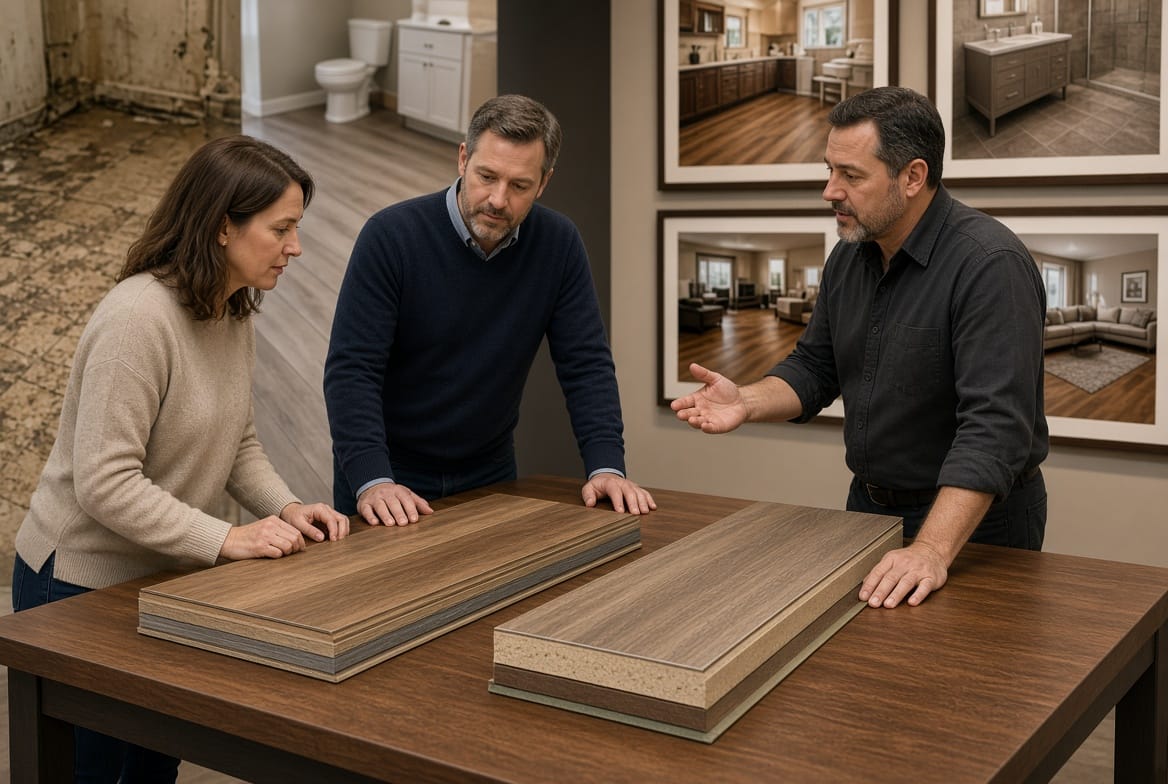
Luxury vinyl plank (LVP)—often simply called vinyl plank—is a resilient flooring product built in layers. A typical high-quality plank includes:
- A tough wear layer that resists scratches, scuffs, and stains
- A high-resolution printed design layer that mimics wood grain, stone, or tile
- A rigid or flexible vinyl core
- A backing layer that adds stability and sometimes comfort underfoot
The defining advantage is simple: quality vinyl plank is 100% waterproof. Water sits on the surface. It does not swell the core. That single property changes where you can safely install it.
Modern vinyl plank also feels more substantial than older sheet vinyl. Many products use a rigid core (often called WPC or SPC) that lies flatter, reduces telegraphing of subfloor imperfections, and gives a more premium sound and feel. The wood visuals have improved dramatically. Wide planks, authentic bevels, and varied grain patterns now look convincing in living rooms and bedrooms—not only in utility spaces.
Vinyl plank is also available in click-lock and glue-down formats. Click-lock systems are popular for DIY-friendly or fast professional installs. Glue-down can be the better choice in commercial-style or high-traffic areas that need maximum stability.
What Laminate Flooring Really Is
Laminate flooring is a different construction. It typically consists of:
- A clear wear layer
- A photographic image layer that provides the wood look
- A dense fiberboard core (usually HDF—high-density fiberboard)
- A backing layer for balance
Laminate’s great strength has always been appearance at a lower price. The printed layer can look remarkably like oak, walnut, or hickory. Many homeowners choose laminate because it delivers a classic hardwood aesthetic without the cost or maintenance of real wood.
The critical limitation is the core. HDF is a wood-based product. When water reaches the seams or edges and soaks into that core, laminate can swell, peak, and permanently warp. Some newer “water-resistant” or “waterproof-core” laminates improve surface performance, but they are not automatically equal to a fully waterproof vinyl plank system. Standing water, repeated mopping, pet accidents, and humid basements remain higher-risk situations for traditional laminate.
Laminate is usually a floating, click-lock floor. It installs quickly over a suitable underlayment. It feels hard underfoot—often harder than vinyl—and can sound hollow if the underlayment and subfloor are not specified correctly.
The Differences That Actually Matter
Waterproof Performance
This is the decision-maker for many homes.
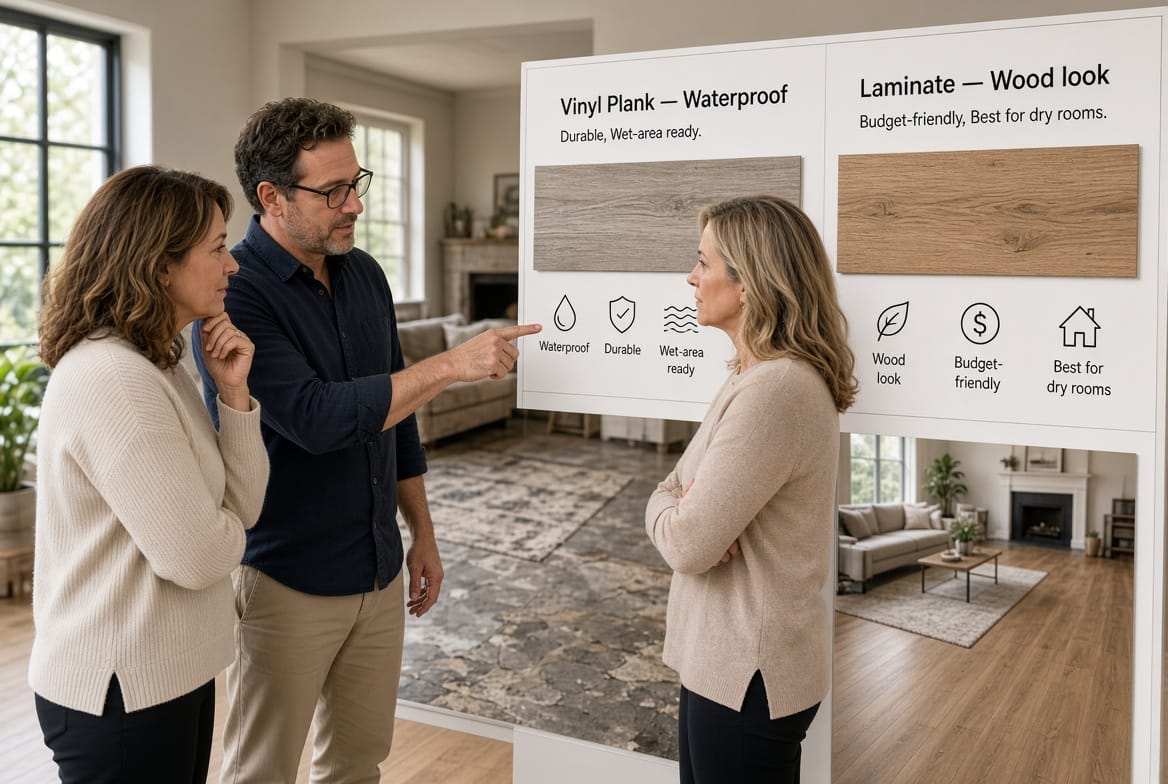
- Vinyl plank: Fully waterproof when properly installed. Ideal for kitchens, bathrooms, laundry rooms, mudrooms, and basements.
- Laminate: Generally not waterproof. Surface spills should be wiped promptly. Standing water is a serious risk.
If your household includes kids, pets, frequent cooking, or a below-grade space, waterproofing is not a luxury feature. It is protection for your investment.
Durability and Daily Wear
Both products can last many years when you buy a reputable wear layer and install them correctly.
Vinyl plank resists moisture damage and often handles dropped items and rolling chairs well. Very heavy point loads can still dent some vinyl products, especially softer cores. Choosing the right wear-layer thickness and core type reduces that risk.
Laminate has a hard surface that resists fading and can stand up to foot traffic. It may be more prone to chipping at edges if something sharp strikes a seam. Once the core is compromised by water, the damage is usually not reversible.
Neither floor is indestructible. Both benefit from felt pads on furniture, prompt cleanup, and realistic expectations in homes with large dogs or constant rolling traffic.
Look and Realism
Today’s best vinyl plank and best laminate can both look excellent.
Vinyl plank often wins on texture. Embossed-in-register surfaces follow the printed grain more closely, so the feel matches the look. Laminate still excels at crisp, traditional hardwood photography and can be the more “classic wood” choice in formal living areas if moisture is not a concern.
Color range, plank width, and finish sheen matter as much as the category. A cheap version of either product will look cheap. A well-chosen mid-to-premium product in either category can elevate a room.
Cost
Laminate is often the lower-cost option at the material level, especially in basic to mid-grade collections. Vinyl plank pricing varies widely. Entry-level vinyl can compete with laminate; premium rigid-core vinyl plank usually costs more.
The honest way to budget is installed cost, not box price. Underlayment, subfloor prep, transitions, removal of old flooring, and labor change the total. A slightly more expensive waterproof floor can be cheaper over ten years if it prevents a failure in a wet room.
Comfort and Sound
Vinyl plank is generally quieter and slightly more comfortable underfoot. Laminate feels firmer and can transmit more sound if the underlayment is inadequate. In apartments, townhomes, or second-story rooms, acoustic performance should be part of the specification—not an afterthought.
Installation and Subfloor Reality
Both products need a flat, clean, dry subfloor. That requirement is non-negotiable.
Vinyl plank is more forgiving of minor moisture in some applications and can often go over existing floors when conditions allow. Laminate is less forgiving of moisture below or on top of the floor. Expansion gaps, acclimation, and manufacturer guidelines must be followed for both.
Professional installation reduces the two biggest failure points: poor prep and ignored moisture.
Pros and Cons at a Glance
Vinyl Plank — Advantages
- Waterproof construction for kitchens, baths, and basements
- Strong realism when you select textured, quality planks
- Easier cleanup after spills and accidents
- Comfortable, quieter feel in many rigid-core products
- Broad style range, including wood and stone looks
Vinyl Plank — Limitations
- Premium waterproof products cost more than basic laminate
- Some products can dent under heavy, sharp furniture legs
- Quality varies sharply between cheap and well-engineered lines
- Repairing a single damaged plank can be more involved depending on the locking system
Laminate — Advantages
- Attractive wood look at a typically lower material price
- Hard, scratch-resistant surface in good wear-layer products
- Fast floating installation
- Wide availability of classic hardwood visuals
Laminate — Limitations
- Not waterproof in the same way vinyl plank is
- Water damage can cause irreversible swelling
- Can sound hollow without proper underlayment
- Less suitable for bathrooms, laundry rooms, and wet basements
- Edge chipping is possible with impact
Which Rooms Favor Which Floor?
Kitchens: Vinyl plank is usually the smarter long-term choice. Spills, dishwashers, and sinks create constant moisture exposure.
Bathrooms and laundry rooms: Vinyl plank. Laminate is a high-risk choice in these spaces.
Basements: Vinyl plank, especially rigid-core products designed for below-grade use. Moisture and concrete slabs work against traditional laminate.
Living rooms and bedrooms: Either can work. Choose laminate if you want a budget-friendly hardwood look and the space stays dry. Choose vinyl plank if you want one consistent floor that can continue into adjoining wet rooms.
Hallways and entries: High traffic plus tracked-in water favors vinyl plank.
A whole-home plan is often the best approach. Many families use vinyl plank throughout the main living level so transitions stay simple and moisture risk stays low.
Hidden Risks Homeowners Underestimate
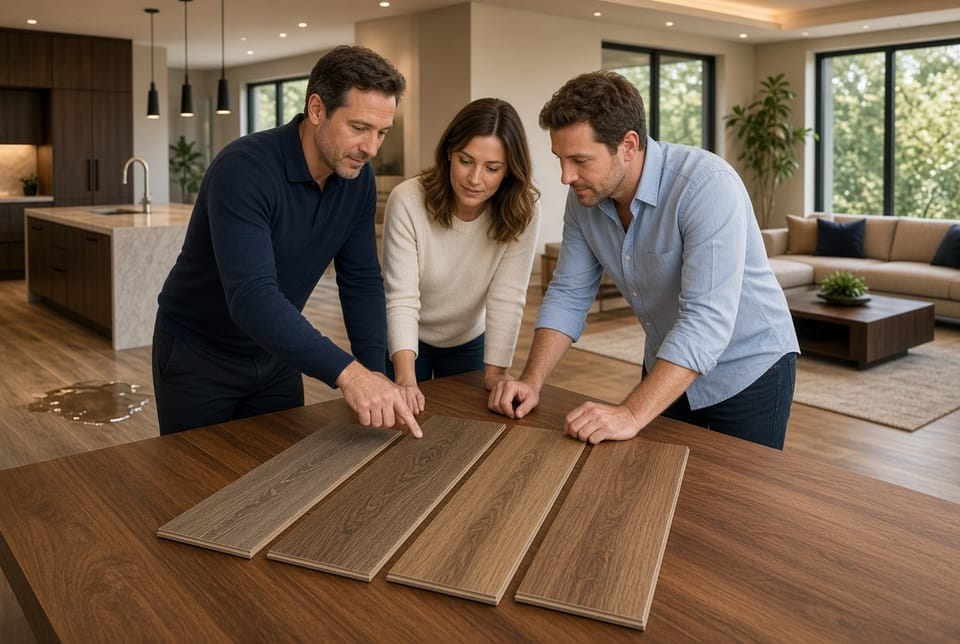
Buying only on sample appearance. A 6-inch sample does not show how a floor handles water, seams, or a busy hallway.
Ignoring the wear layer. Thin wear layers look fine on day one and age quickly.
Skipping moisture testing. Concrete slabs and older subfloors can sabotage even a good product.
Mixing a dry-area product into a wet-area plan. This is the most common laminate failure we see.
Assuming “water-resistant” means “waterproof.” Those words are not interchangeable. Read the warranty and the installation instructions.
None of these risks mean you should fear the project. They mean you should specify the floor for the way you actually live.
How to Choose With Confidence
Ask yourself four questions:
- Will this floor see water, pets, or heavy cleaning?
- Do I want one material that can run through multiple rooms?
- Is the priority lowest upfront cost or lowest risk over 10–15 years?
- Am I prepared to follow prep and maintenance requirements?
If water is in the story, vinyl plank is usually the better answer. If the rooms are dry, the budget is tight, and you love a traditional hardwood photograph, laminate can still be an excellent floor.
There is no universal winner. There is a better match for your home.
Why Professional Guidance Still Matters
Samples, warranties, core types, underlayment, and subfloor conditions all interact. A product that is perfect in a catalog can fail in a humid basement or over an uneven slab. A short consultation prevents that.
A good installer or retailer will not just sell you a box. They will ask about pets, kids, sunlight, existing floors, and which rooms connect. That conversation is part of the product.
The Bottom Line
Vinyl plank wins when you need waterproof performance, easier living in messy spaces, and a floor that can handle real household accidents. Laminate wins when you want a convincing wood look at a lower typical price in rooms that stay dry.
Choose the material that solves the conditions in your house. Do not choose the material that only looks best under showroom lights.
Choose the right flooring for your needs. If you want help comparing options for your rooms, layout, and budget, ask about vinyl plank and laminate solutions. A clear recommendation today is far less expensive than replacing the wrong floor later.
Find Your Best Floor – Vinyl or Laminate